


Recently, it seems fewer people are discussing Strategy (MicroStrategy) anymore. It looks like, as the recent calls for a “bull market comeback” grow louder, many people no longer see Strategy as the big bomb that would blow up in a bear market, as they once did. I remember that from June to August this year, Strategy sold a total of 6,916 bitcoins in four batches (at an average selling price of $62,200). Then just last week, Strategy resumed buying 4,603 bitcoins (at an average purchase price of $80,318).
As for this kind of low-sell, high-buy move, Strategy CEO Phong Le said in a media interview two days ago that he does not regret selling bitcoin at a price close to $60,000 and then buying it back a few weeks later at a higher price; he believes both actions were correct. As shown below.
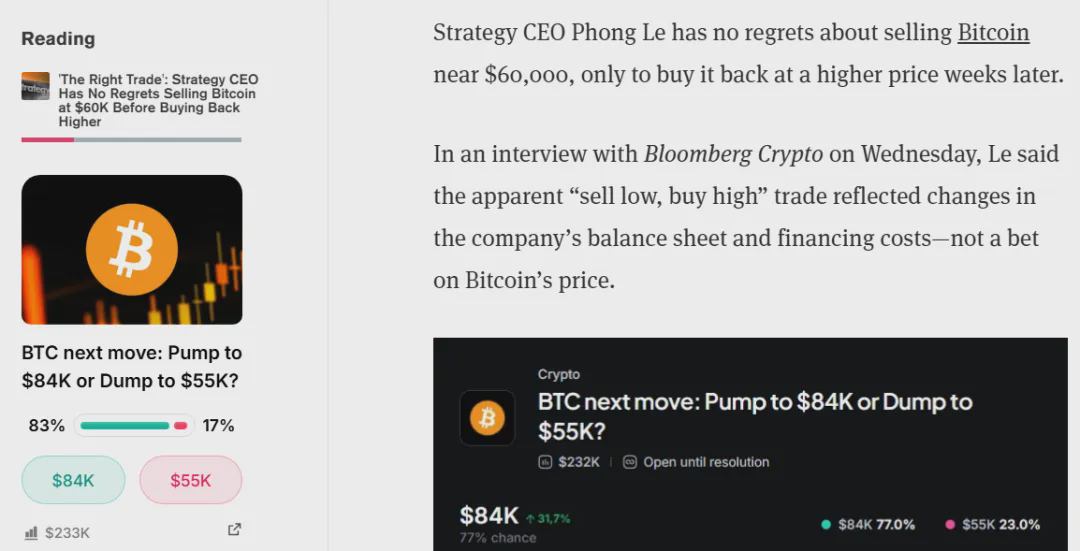
Of course, for behaviors like Strategy’s low-sell high-buy approach, we can’t simply interpret it with the mindset or perspective of a typical “retail leech.” For a public company, what they need is not some so-called belief in Bitcoin, but rather a capital game centered on liquidity.
When market conditions don’t allow it, selling part of the Bitcoin to adjust and improve the company’s cash flow is actually a completely reasonable approach. And when market conditions do allow it, continuing to use leverage to buy more Bitcoin again is also completely reasonable. As we mentioned in earlier articles, Strategy is not some so-called believer that only buys and never sells; at its core, it’s simply a leveraged Bitcoin instrument.
Strategy’s ability to buy Bitcoin (how much it buys) mainly depends on the premium on its stock. And that stock premium, in turn, depends on the price of Bitcoin—which really is a difficult problem. As a leveraged instrument for Bitcoin, this kind of capital game certainly brings very strong returns during a bull market, but in a bear market it becomes a new test. That said, based on what’s going on now, it seems they have already passed this round of bear-market test. But who knows what will happen next—we’ll keep watching and see.
Unknowingly, we’ve kept moving into September, a new month has begun. Now most people are probably still immersed in the bullish sentiment from August. Facing Bitcoin’s 25% month-over-month gain last month (and also the largest single-month rise since November 2024), maybe some are happy, some regret it, some are watching and waiting... As for whether this month can continue the emotional momentum brought by the rally, we may need to wait a bit longer.
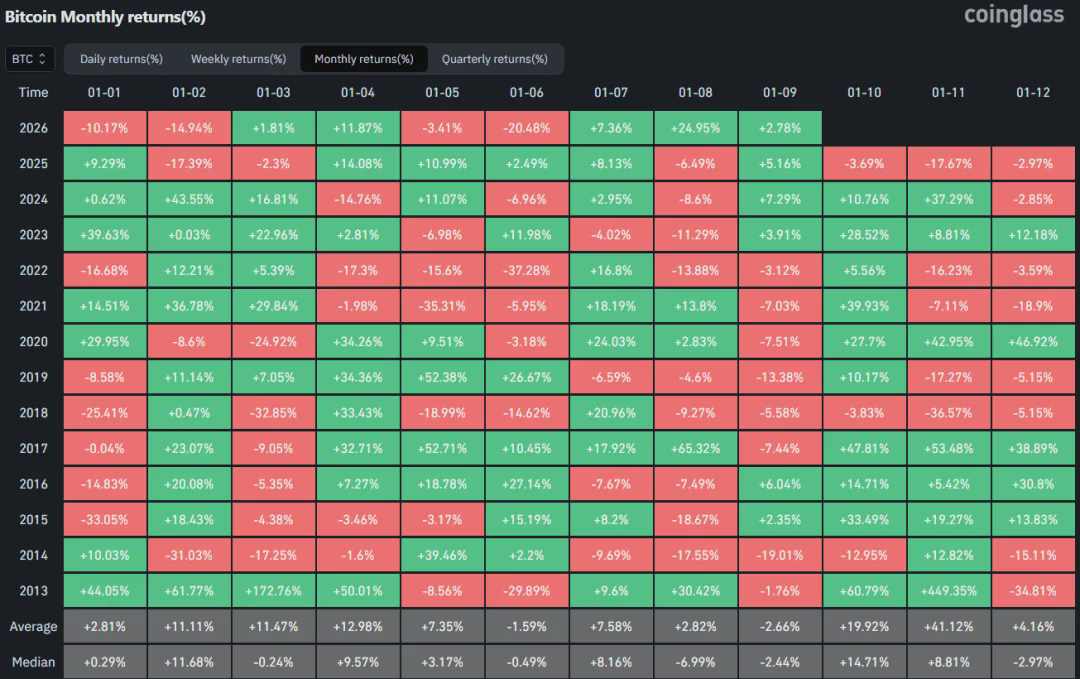
In the previous article, we mentioned that both technical resistance and temptation are right in front of us, and that some new macro uncertainties are also just around the corner. Last week, Fed Chair Waugh, in his speech at Jackson Hole, once again emphasized the problem of high inflation, and said that the inflation improvement in recent months is not enough to prove that the underlying inflation trend has truly improved. If the Fed can’t be confident that inflation is sustainably returning to 2%, then it will still need to further tighten policy. Put simply, the market is more expecting rate cuts or no rate hikes—but Waugh’s latest comments have increased the probability of rate hikes.
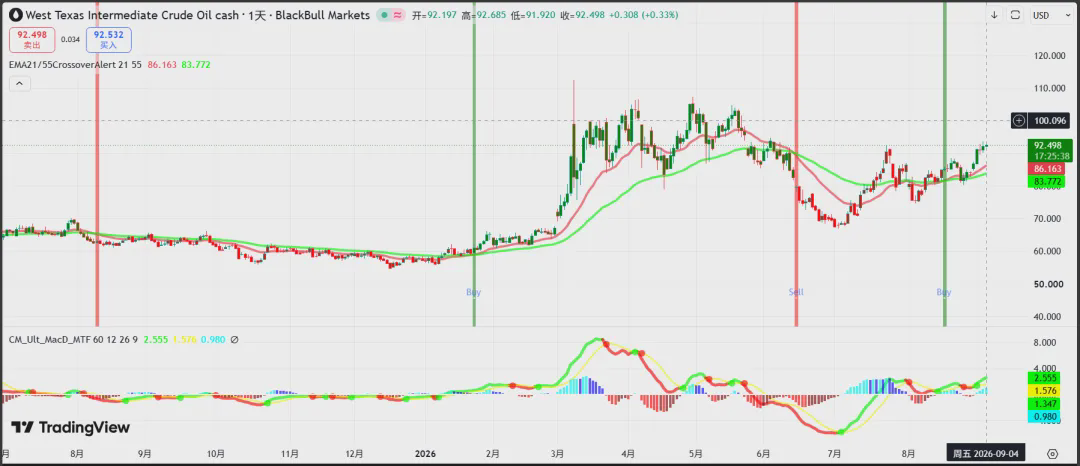
Meanwhile, the U.S. continues to strike Iran. WTI crude oil prices have risen again from around $80 at the end of last month to the current $92, as shown in the chart below.
Also, currently the yield on the U.S. 10-year Treasury has reached about 4.76%, as shown in the figure below. As we mentioned in earlier articles, we can look at the Treasury yield together with DXY. If the Treasury yield continues to rise overall but the U.S. dollar index doesn’t follow, then some funds may choose to enter Bitcoin (and gold) to hedge risk.
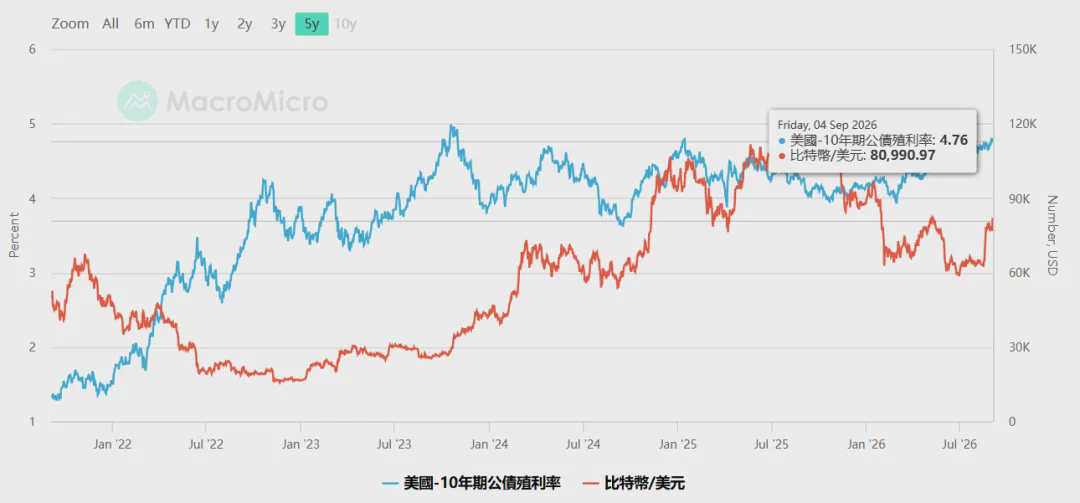
Continuing from the chart below, we can also see that DXY has had a clearly staged decline since the end of July. Combined with changes in Treasury yields, it seems to provide a fairly good macro-level explanation for the recent Bitcoin rally.
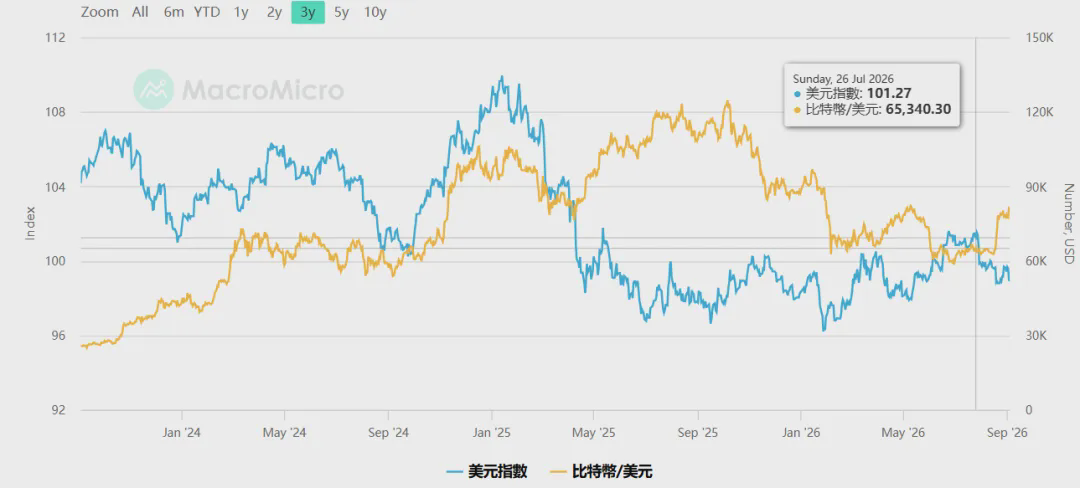
Currently, the DXY has already fallen to around 98. And based on historical experience, when DXY drops to around 97, it often means that Bitcoin is back in a phase of a cyclical high-point range. In other words, if the U.S. Treasury yields continue to stay elevated and DXY still has room to fall, then we still have a chance to see Bitcoin continue to rise in a choppy upward trend—such as climbing further to the $83,000–$86,000 range.
But the other side of the problem is this: when Treasury yields continue to rise due to the Fed’s hawkish policies, and as expectations for rate hikes increase, DXY may also rise again in many cases. And if DXY strengthens again, then from a macro perspective this would be unfavorable for high-risk assets such as Bitcoin.
In other words, war, oil prices, inflation—these still remain certain variables for now. And if macro conditions truly face new resistance in September, then whether it will be enough to continue pushing up Bitcoin’s price the way it did in August, relying only on things like a leveraged rebuy by a treasury-company type entity such as Strategy, and the heat coming from the crypto market itself (currently Robinhood Chain is pretty hot), might be something we should raise a small question mark about in advance.
However, it seems we are not that far from a near-term answer—for example, the U.S. Senate vote on the (CLARITY Act) on September 15th, and the signals from the September 16th FOMC meeting.
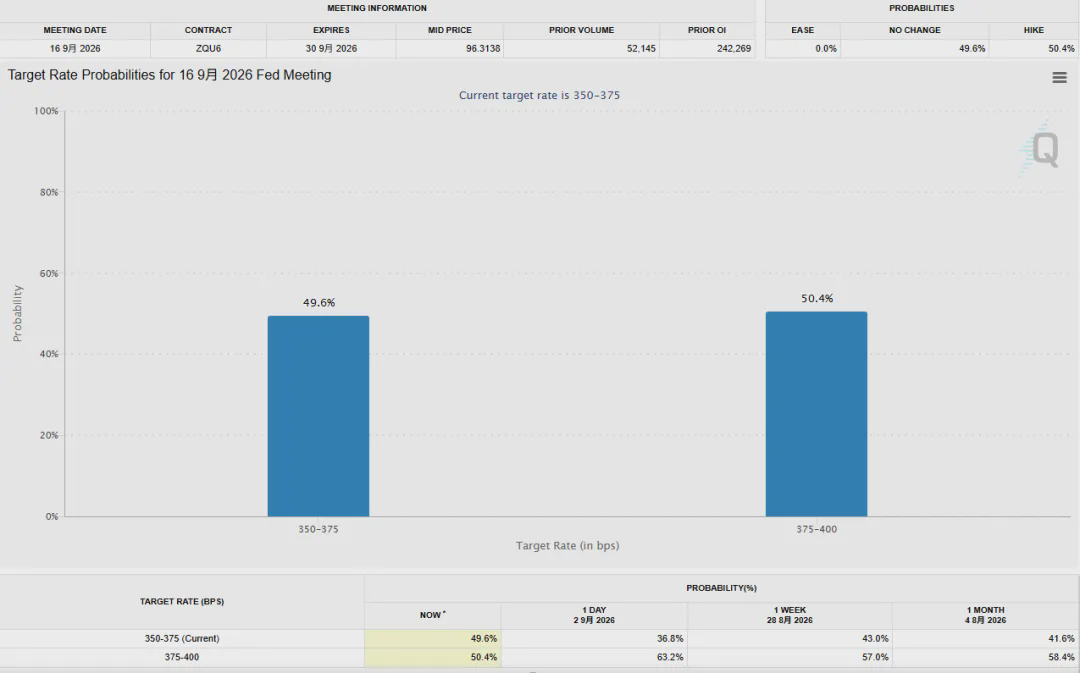
Although there is less than two weeks left until the FOMC, over the past few days Bitcoin’s volatility has been quite noticeable. Yesterday (September 3rd), because Federal Reserve Governor Waller said in an interview that he leans toward supporting keeping rates unchanged at the September policy meeting, his dovish view directly eased the hawkish remarks from last week’s Waugh, which reduced the probability of rate hikes somewhat. The rate-hike probability has fallen from 63.2% a few days ago to 50.4% now, as shown in the chart below. Bitcoin has now also returned above $80,000.
Remember that in April 2025, during an event at the White House, Trump said: “I think I understand interest a lot better than him, because I've had to really use interest rates (I think my understanding of interest rates is much deeper than Powell’s, because in the past I really often had to use interest rates).”
Maybe, in these years, all the things Trump has stirred up—tariffs, wars, and so on—are essentially a chess game centered on U.S. Treasury yields. Some people play the role of actors, some play the role of the audience, some are slowly reaping everything, and some are slowly losing everything. Without exaggeration, it seems that everyone in the market is just a piece on the board in this game.
The real chessboard may not be the crypto market or the stock market, but rather U.S. Treasury bonds. And what we’re seeing—stock volatility, Bitcoin volatility, gold volatility, oil price volatility—looks more like different outcomes reflecting this chess game.
Of course, all of the above is high-level thinking. Having volatility is actually a good thing—because only when the market has volatility do we have a chance to make money.
Back to the crypto market topic—based on my personal guess so far (just a guess), most likely this month the market will still mainly be driven by volatility:
Scenario one: Bitcoin first tries to challenge the $83,000 to $86,000 range mentioned above, and then by the end of September or early October it may again form a phase of a relatively low-point area (for example, pulling back toward around $76,000). Of course, I don’t know the exact prices at that time—we need to see over the next two weeks whether Bitcoin will actually break above the current resistance zone effectively.
Scenario two: the $83,000 to $86,000 range gets a clean, effective breakout. If ETF inflows/outflows can continue to generate a relatively clear net inflow, then it’s not out of the question that the rally could extend further—and even directly reverse into an upward trend.
Of course, maybe there are other scenarios too. Will the market step up to the next level, or step up again from that next level, or will it continue to chop sideways within the current range? The market should give us the answer soon. As for the scenarios above, my personal inclination right now is toward the first one: in terms of the market’s current phase, if you have to choose between digesting positions with time versus digesting positions with price, I personally would pick the former. But here we’ll repeat what we said earlier in the previous article: we don’t recommend making any short-term bets. We also won’t care too much about short-term price fluctuations. As for whether this month (September) is the 11th month of the current bear market that we’re experiencing, or the 1st month of a new bull market—those questions aren’t important. What matters most is: can you continue to maintain your trading discipline, and can you keep sticking to your existing scheduled DCA plan without changing it?
We mentioned Robinhood Chain above. This really is one of the hottest areas in the current “bull run” atmosphere. But as we also mentioned in our earlier article (July 12), the chain’s hype is still mostly concentrated on MemeCoin speculation. From the traditional Meme玩法 (such as CASHCAT), to Pons (a Meme casino), and to today’s popular coin-stock Meme (not paired with stablecoins, but directly paired with a tokenized U.S. stock—e.g., Artificial Inu pairs with NVDA, SPACEHOOD pairs with SPCX, MOO pairs with Micron’s MU). Although the way you play has been changing, it still looks like a negative-sum game for now (unless more new liquidity later joins in this gambling).
And we’ve talked about MemeCoins many times before. The so-called one-day hundred-bagger or thousand-bagger stories are actually low-probability events. The reason you always see these stories of sudden wealth—besides survivorship bias—is mostly because the media and self-media are amplifying them. For most people, MemeCoins are essentially a fast-loss game. That said, if you have extra time and energy to pay attention to these MemeCoins, and you’re also willing to use funds that you can hold even if they go to zero at any time without affecting your mindset, then there’s nothing wrong with trying it. It’s entirely a matter of personal choice.
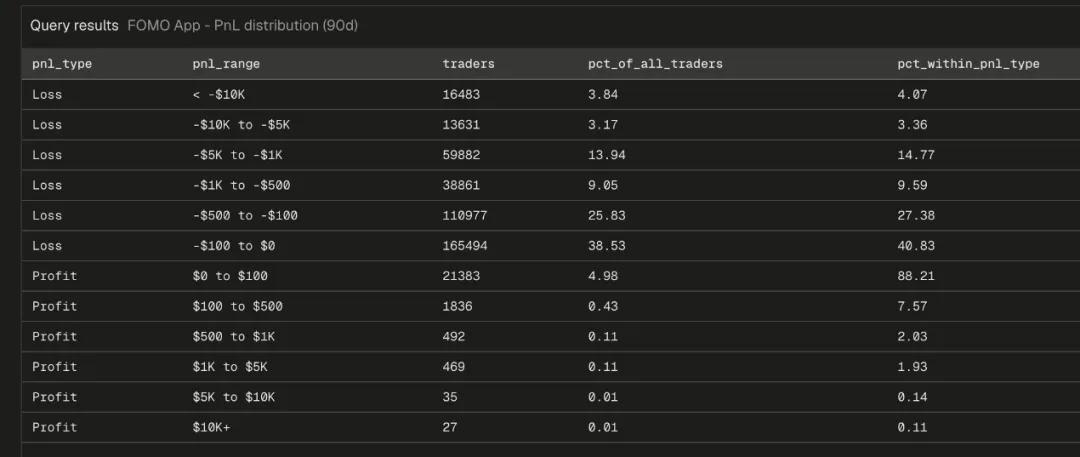
Just the other day I saw someone do a statistic: on the Fomo platform (on Robinhood Chain, out of every two active wallets, one comes from Fomo), among 430,000 MemeCoin traders, only 24,000 (about 5%) are profitable—and only 500 traders have made more than $1,000. 95% of traders are losing money, and most people only make $100 or less. As shown in the figure below.
Of course, where there is heat, there are always various opportunities. Besides hoping to get rich overnight with a MemeCoin, if you have the time and energy, you can also further explore opportunities related to Robinhood Chain—for example, some DeFi projects on that chain (especially tokenized stock protocols). After all, RWA is what Robinhood truly wants to do, and the combination of AI and RWA might also be one of the main narratives in the next bull cycle.
The market keeps moving around, and time keeps moving forward. Many people are all waiting for the future they imagine, but the future never really arrives. Tomorrow after tomorrow—so many tomorrows. What we truly can have is only today. Don’t let an endless future affect yourself today, and don’t let today’s anxiety affect yourself right now. Anxiety is actually a feeling of owing the future. The best way to overcome anxiety is to stick to the present and execute your plan well. We can’t decide tomorrow’s market, but we can control today’s position and do what we’re supposed to do today. Our own tomorrow will naturally come in due course.
Let’s talk about these things for this session (20260904). The above content is entirely my personal views and analysis, and is only for keeping a record of thoughts and for communication. It does not constitute any investment advice.