The anticipation of Federal Reserve rate cuts only marks the beginning of this asset frenzy; what truly pushes both Bitcoin and gold to break to new highs is the underlying, hard-to-reverse fiat-currency credit crisis.
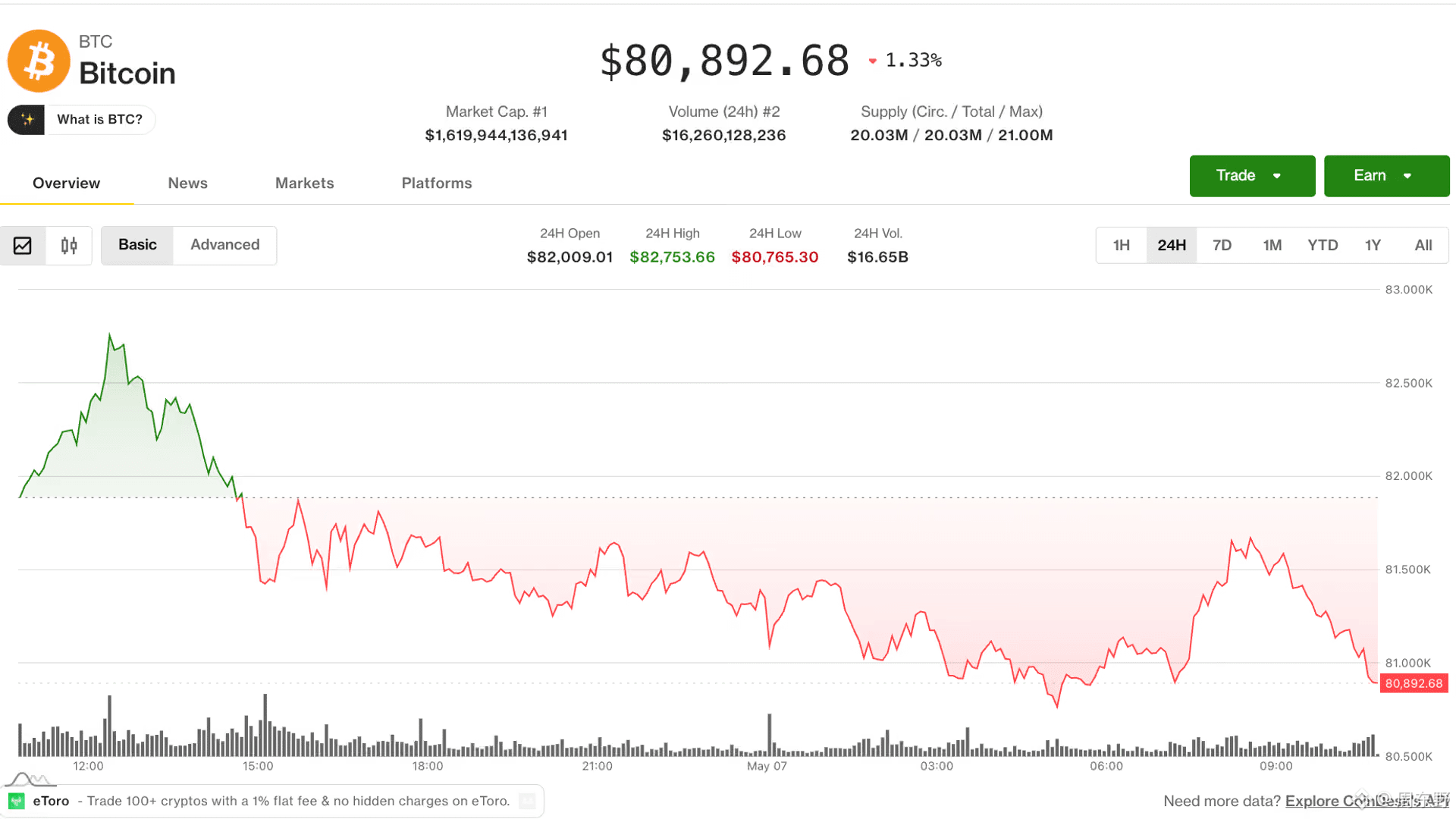
Bitcoin $BTC surged to $82,200, gold futures rose above $4,530 per ounce, and U.S. stocks tied to crypto-related concepts collectively skyrocketed. On the surface, it looks like signals from Fed officials releasing rate-cut expectations lowered funding costs, directly whetting the market’s appetite for high-risk assets.
But explaining the current rally purely as a “rebound in risk appetite” doesn’t fully fit. If it were just rate-cut expectations, a non-yielding safe-haven asset like gold would not show such a strong synchronized uptrend with high-risk crypto assets.
The deeper logic lies in the bottomless pit of U.S. Treasury debt size and the fiscal deficit. To keep long-term interest rates stable, the Treasury has had to conduct massive bond buybacks; and once Fed policy loosens, the market’s worries about the long-term purchasing power of the dollar being diluted are instantly amplified.
Part of the liquid capital in the market is competing for the liquidity premium brought by falling rates, while another portion of long-term capital is preparing in advance to unwind in response to structural high yields in Treasuries and fiat depreciation.
In the past, when dealing with this kind of macro structural risk, institutions had only one real option: gold. Now, however, decentralized Bitcoin—with a hard supply cap—is increasingly being written directly into institutional large-asset allocation ledgers as a hedge against fiat-currency crises.
As long as structural deficits and the impulse to issue debt in major economies cannot be stopped, the resonance between this “digital gold” and “physical gold” won’t be a brief speculation cycle—it will be an inevitable outcome of the fiat-credit overextension period.
Do you find this revised logic—“credit crisis as the main thread, explaining the contradictions between long and short horizons”—reads smoothly? Or do you want it to lean more toward a purely “liquidity rotation” perspective?
#比特币以太坊触及数月高点
Bitcoin $BTC surged to $82,200, gold futures rose above $4,530 per ounce, and U.S. stocks tied to crypto-related concepts collectively skyrocketed. On the surface, it looks like signals from Fed officials releasing rate-cut expectations lowered funding costs, directly whetting the market’s appetite for high-risk assets.
But explaining the current rally purely as a “rebound in risk appetite” doesn’t fully fit. If it were just rate-cut expectations, a non-yielding safe-haven asset like gold would not show such a strong synchronized uptrend with high-risk crypto assets.
The deeper logic lies in the bottomless pit of U.S. Treasury debt size and the fiscal deficit. To keep long-term interest rates stable, the Treasury has had to conduct massive bond buybacks; and once Fed policy loosens, the market’s worries about the long-term purchasing power of the dollar being diluted are instantly amplified.
Part of the liquid capital in the market is competing for the liquidity premium brought by falling rates, while another portion of long-term capital is preparing in advance to unwind in response to structural high yields in Treasuries and fiat depreciation.
In the past, when dealing with this kind of macro structural risk, institutions had only one real option: gold. Now, however, decentralized Bitcoin—with a hard supply cap—is increasingly being written directly into institutional large-asset allocation ledgers as a hedge against fiat-currency crises.
As long as structural deficits and the impulse to issue debt in major economies cannot be stopped, the resonance between this “digital gold” and “physical gold” won’t be a brief speculation cycle—it will be an inevitable outcome of the fiat-credit overextension period.
Do you find this revised logic—“credit crisis as the main thread, explaining the contradictions between long and short horizons”—reads smoothly? Or do you want it to lean more toward a purely “liquidity rotation” perspective?
#比特币以太坊触及数月高点