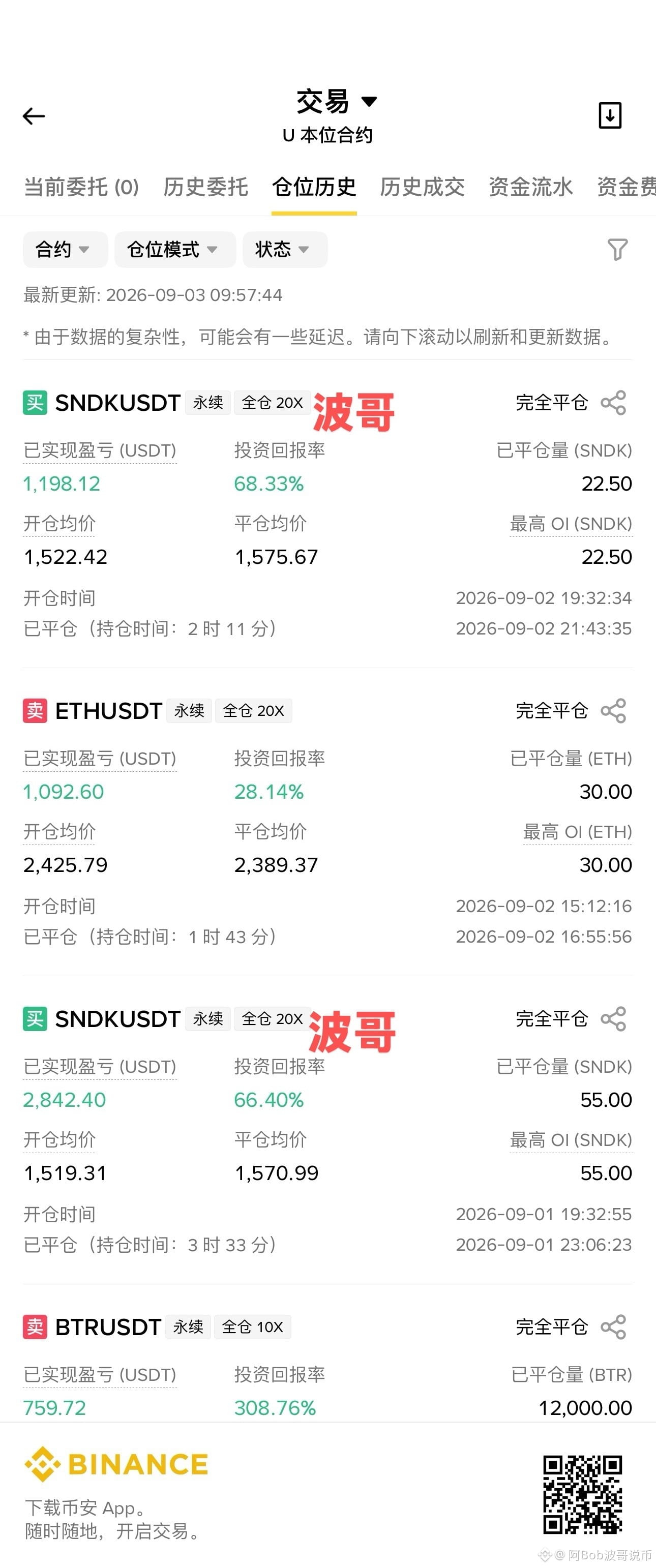
Many people think that trading coins is about technique. Actually, it’s about timing.
Indicators can be learned, candlestick charts can be drawn, and news can be scrolled—but timing is the thing you know when to move and when to stop, so your account can follow.
When the trend hasn’t arrived yet, rushing in is random movement. When the trend arrives but you don’t dare to act, that’s missing the chance. When you should hold a heavy position but you keep it light—when you should exit but you don’t—when you should hold but you can’t hold. Even if you got the direction right, if the timing gets off, you still can’t execute the trade.
How do you find good timing? Three things:
First, set the timeframe. Do short-term trades for short-term goals, and long-term trades for long-term goals—don’t keep switching back and forth. If you try to catch both timeframes at once, in the end you’ll do poorly on both.
Next, control your hands. Don’t trade without signals. When you have a signal, don’t hesitate. Missing the move doesn’t lose money; doing random trades loses money. Most people don’t lose because they’re wrong about direction—they lose because they didn’t wait when they should, and didn’t stop when they should.
Finally, don’t let other people’s timing pull you off course. How much other people make has nothing to do with you. You’re responsible for your own account. If you follow others’ timing, you’ll never find your own path.
Once your timing is on point, even rougher technique can still make money. If your timing is off, no matter how good your technique is, it can’t save your account.@阿Bob波哥说币
#CLARITY法案2026年立法概率15%
Indicators can be learned, candlestick charts can be drawn, and news can be scrolled—but timing is the thing you know when to move and when to stop, so your account can follow.
When the trend hasn’t arrived yet, rushing in is random movement. When the trend arrives but you don’t dare to act, that’s missing the chance. When you should hold a heavy position but you keep it light—when you should exit but you don’t—when you should hold but you can’t hold. Even if you got the direction right, if the timing gets off, you still can’t execute the trade.
How do you find good timing? Three things:
First, set the timeframe. Do short-term trades for short-term goals, and long-term trades for long-term goals—don’t keep switching back and forth. If you try to catch both timeframes at once, in the end you’ll do poorly on both.
Next, control your hands. Don’t trade without signals. When you have a signal, don’t hesitate. Missing the move doesn’t lose money; doing random trades loses money. Most people don’t lose because they’re wrong about direction—they lose because they didn’t wait when they should, and didn’t stop when they should.
Finally, don’t let other people’s timing pull you off course. How much other people make has nothing to do with you. You’re responsible for your own account. If you follow others’ timing, you’ll never find your own path.
Once your timing is on point, even rougher technique can still make money. If your timing is off, no matter how good your technique is, it can’t save your account.@阿Bob波哥说币
#CLARITY法案2026年立法概率15%