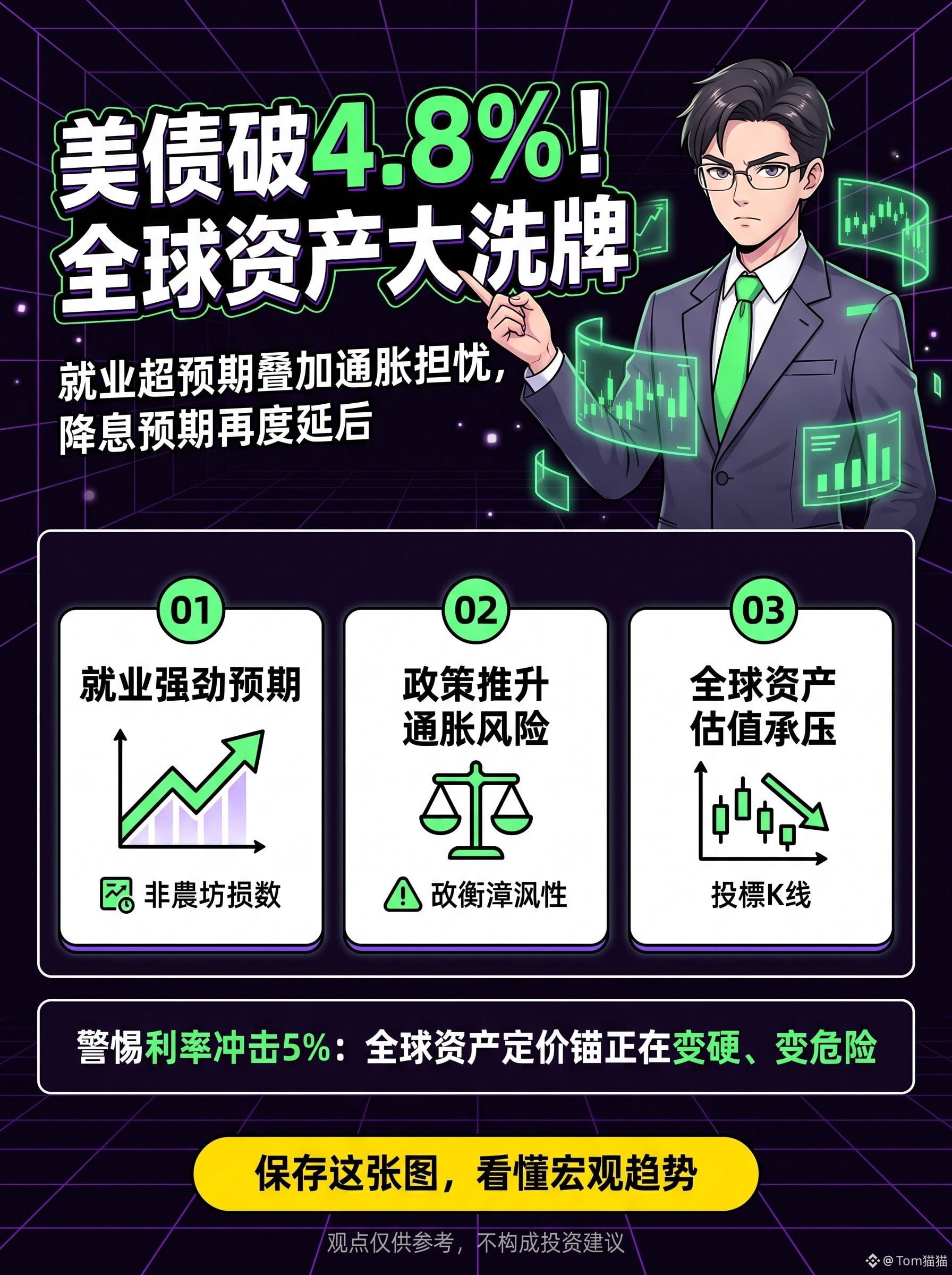
#美国10年期美债收益率触及2023年11月来最高
U.S. 10-year Treasury yields once rose to about 4.805%, reaching the highest level since November 2023, before slipping back to around 4.8%. With each one-basis-point increase in yields, the pressure behind it comes from funds being repriced. Today, the market no longer believes that “inflation will automatically disappear,” nor is it rushing to bet on the Federal Reserve cutting rates quickly.
The immediate trigger for this upward move is stronger-than-expected U.S. employment data. In December, the number of nonfarm payroll jobs in the U.S. increased by 256,000, well above the market’s forecast of about 160,000; the unemployment rate fell to 4.1%, and wage growth remains resilient. With employment not showing clear signs of cooling, consumption is unlikely to quickly stall, and service-sector inflation is also unlikely to recede easily.
What’s more troubling is that potential policies from the new Trump administration—tariffs, tax cuts, and expanded fiscal spending—are reigniting market concerns about a widening fiscal deficit and “second-round inflation.” In other words, the U.S. economy is not clearly slowing, and policy could continue to stoke demand. Bond investors therefore are unwilling to lock in their funds for the long term at low yields, so they sell Treasuries and drive yields higher.
What truly deserves caution is not the number 4.8% itself, but the logic behind it has changed.
In the past, rising yields were often interpreted as a sign that the economy was getting better. Now, what the market is more worried about is this: the U.S. economy is too strong, fiscal policy is too loose, and inflation is too stubborn—further compressing the Fed’s room to cut rates. Higher yields will directly lift corporate financing costs, mortgage rates, and government interest expenditure, and they will also continue to squeeze the valuations of overvalued tech and growth stocks. The worst scenario Wall Street dislikes is becoming reality: the economy is not in recession, yet interest rates won’t come down.
My view is very clear: U.S. Treasury yields may still face the risk of continuing to challenge the 5% level in the near term. As long as employment, consumption, or inflation data remain on the hot side, the market will further delay expectations for rate cuts. At that point, global asset prices will have to find a new equilibrium again—led by a stronger U.S. dollar, choppy gold, increased volatility in equities, and mounting pressure on emerging-market funding, leaving little chance for them to avoid negative impact.
4.8% is the 10-year U.S. Treasury yield.
It’s like a warning bell: the real pricing anchor for global financial markets is becoming higher, tougher, and more dangerous.
U.S. 10-year Treasury yields once rose to about 4.805%, reaching the highest level since November 2023, before slipping back to around 4.8%. With each one-basis-point increase in yields, the pressure behind it comes from funds being repriced. Today, the market no longer believes that “inflation will automatically disappear,” nor is it rushing to bet on the Federal Reserve cutting rates quickly.
The immediate trigger for this upward move is stronger-than-expected U.S. employment data. In December, the number of nonfarm payroll jobs in the U.S. increased by 256,000, well above the market’s forecast of about 160,000; the unemployment rate fell to 4.1%, and wage growth remains resilient. With employment not showing clear signs of cooling, consumption is unlikely to quickly stall, and service-sector inflation is also unlikely to recede easily.
What’s more troubling is that potential policies from the new Trump administration—tariffs, tax cuts, and expanded fiscal spending—are reigniting market concerns about a widening fiscal deficit and “second-round inflation.” In other words, the U.S. economy is not clearly slowing, and policy could continue to stoke demand. Bond investors therefore are unwilling to lock in their funds for the long term at low yields, so they sell Treasuries and drive yields higher.
What truly deserves caution is not the number 4.8% itself, but the logic behind it has changed.
In the past, rising yields were often interpreted as a sign that the economy was getting better. Now, what the market is more worried about is this: the U.S. economy is too strong, fiscal policy is too loose, and inflation is too stubborn—further compressing the Fed’s room to cut rates. Higher yields will directly lift corporate financing costs, mortgage rates, and government interest expenditure, and they will also continue to squeeze the valuations of overvalued tech and growth stocks. The worst scenario Wall Street dislikes is becoming reality: the economy is not in recession, yet interest rates won’t come down.
My view is very clear: U.S. Treasury yields may still face the risk of continuing to challenge the 5% level in the near term. As long as employment, consumption, or inflation data remain on the hot side, the market will further delay expectations for rate cuts. At that point, global asset prices will have to find a new equilibrium again—led by a stronger U.S. dollar, choppy gold, increased volatility in equities, and mounting pressure on emerging-market funding, leaving little chance for them to avoid negative impact.
4.8% is the 10-year U.S. Treasury yield.
It’s like a warning bell: the real pricing anchor for global financial markets is becoming higher, tougher, and more dangerous.