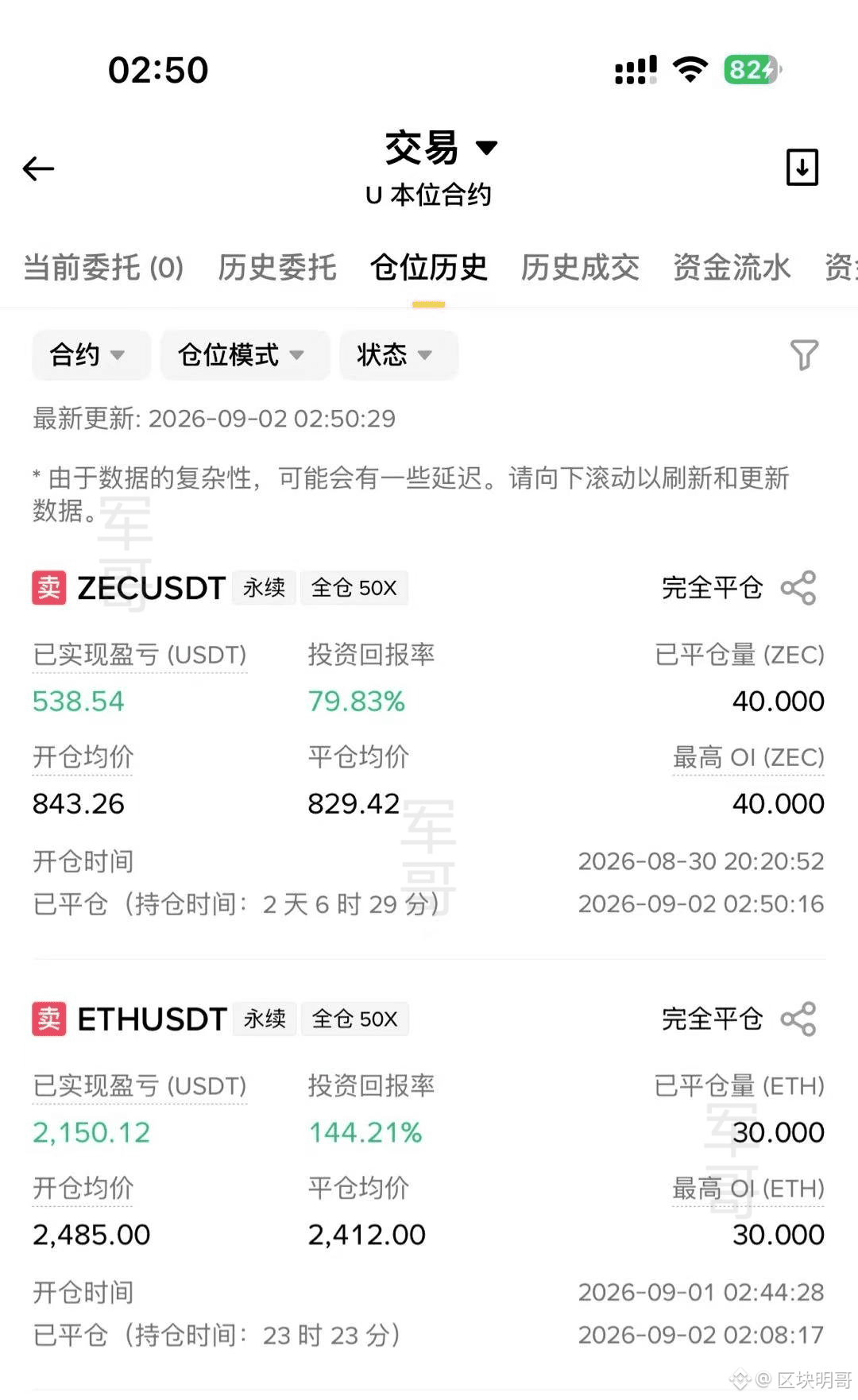
Volatility isn’t what you should prioritize—certainty is. In an uptrend, only trade the strong ones; in a downtrend, only short the weak ones. For example, when the market is strengthening, focus on the leading movers and wait for pullbacks to enter. When the market is falling, prioritize shorting the main leading coins—it's far safer than chasing small-cap coins, and it’s much less likely to get wiped out by extreme rebounds. #HangSengCloses18PointsLower
Most people trade short-term, so setting take-profit levels is hard to get right, and their position-management skills are limited. That means the entry point matters more than anything. If your position is correct, the room for error naturally becomes larger. In practice: when you’re in profit, take some off first to lock in gains, and then set break-even stop-loss for the remainder and continue holding. That’s the way to achieve long-term stability. Strategically, it’s simply to trade in the direction of the trend—first look at the bigger picture. When the trend becomes clear, then act. Focus on the breakout points, the direction choice after consolidation, or the pullback-and-rebound levels within the trend. $BTC
When the direction is right, profit comes after your judgment is confirmed—then consider gradually adding to the position to expand returns. Don’t leave the trade before the trend is fully over, but if you’re wrong on direction, you must exit decisively. Remember discipline—discipline, and then more discipline. Trading isn’t getting rich overnight; it’s about repeatedly accumulating small profits. $BTR
Most people trade short-term, so setting take-profit levels is hard to get right, and their position-management skills are limited. That means the entry point matters more than anything. If your position is correct, the room for error naturally becomes larger. In practice: when you’re in profit, take some off first to lock in gains, and then set break-even stop-loss for the remainder and continue holding. That’s the way to achieve long-term stability. Strategically, it’s simply to trade in the direction of the trend—first look at the bigger picture. When the trend becomes clear, then act. Focus on the breakout points, the direction choice after consolidation, or the pullback-and-rebound levels within the trend. $BTC
When the direction is right, profit comes after your judgment is confirmed—then consider gradually adding to the position to expand returns. Don’t leave the trade before the trend is fully over, but if you’re wrong on direction, you must exit decisively. Remember discipline—discipline, and then more discipline. Trading isn’t getting rich overnight; it’s about repeatedly accumulating small profits. $BTR