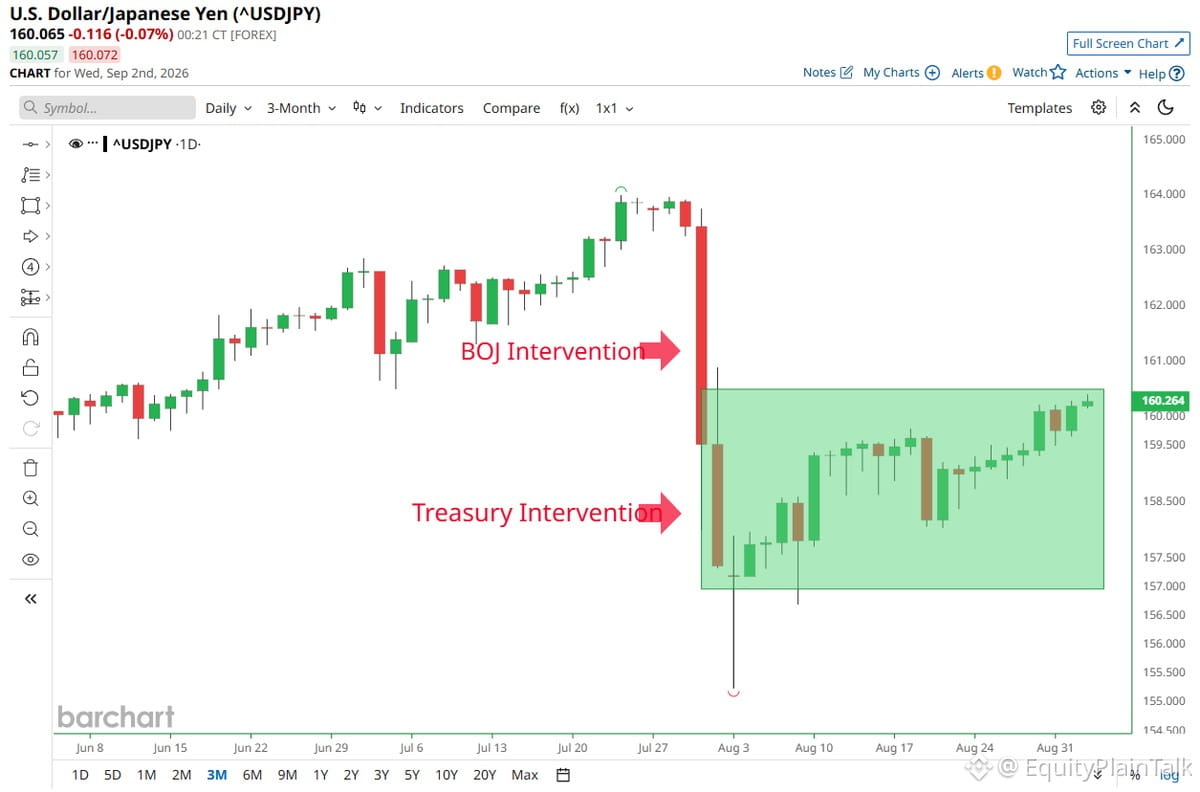
The Japanese Yen just hit its weakest point against the dollar since the BOJ last stepped in to prop it up.
This isn't just a currency story—it's a window into how far central bank policies have diverged. The Fed's been holding rates high while the BOJ keeps theirs near zero. That gap creates pressure, and now we're seeing it play out in real time.
When the yen weakens this much, Japanese importers pay more for everything priced in dollars—energy, commodities, raw materials. That feeds into their inflation problem. Meanwhile, Japanese exporters get a boost since their goods become cheaper abroad.
For U.S. investors, a weak yen can impact companies with heavy Japan exposure and shifts in global capital flows. It also raises the question: will the BOJ intervene again, or let it ride?
Watch the exchange rate closely. Currency moves like this often precede bigger shifts in risk appetite and market structure.
This isn't just a currency story—it's a window into how far central bank policies have diverged. The Fed's been holding rates high while the BOJ keeps theirs near zero. That gap creates pressure, and now we're seeing it play out in real time.
When the yen weakens this much, Japanese importers pay more for everything priced in dollars—energy, commodities, raw materials. That feeds into their inflation problem. Meanwhile, Japanese exporters get a boost since their goods become cheaper abroad.
For U.S. investors, a weak yen can impact companies with heavy Japan exposure and shifts in global capital flows. It also raises the question: will the BOJ intervene again, or let it ride?
Watch the exchange rate closely. Currency moves like this often precede bigger shifts in risk appetite and market structure.