
小恐龙说趋势
292 Posts
 LIVE
LIVE小恐龙说趋势
6 年市场经验,公众号.比特小恐龙,记录市场的真实逻辑,研究下一步会去哪
12 Following
2.0K+ Followers
1.7K+ Liked
Posts
All
Live
The exchange-listed companies in the coin-holding sector: the total market cap has already reached $340 billion, and since mid-August it has risen another 10%. However, it’s still a long way from the peak of $490 billion in the October/November surge last year—back then, Bitcoin was sitting at its all-time high of $126,000.
First, let’s look at the veteran players. Strategy is up 30% and Bitmine is up 27%. They’re basically moving in line with the coins they hold. In particular, since August 17th, Strategy has even outperformed Bitcoin by 10 percentage points—bigger players can still deliver.
The real showstealer is the newcomer. Beyond just holding coins, CYPH adds an ecosystem play: while accumulating ZEC, it also mines to contribute computing power to the network. It’s up 142%. PURR runs its own validation nodes and is up 62%. Meanwhile, the tracking tokens behind them—ZEC and HYPE—also rose 56% and 36% over the same period, with clearly visible gains that widened the gap.
The gameplay logic has also been upgraded. The company first issues stock to raise funds, then buys coins at a premium. Getting the coins isn’t just “lying there”—it’s putting them to work via staking, mining, and running nodes, essentially welding itself into the ecosystem. That’s like layering a company-level lever on top of the underlying tokens, which also amplifies volatility.
Put simply, the tone of this sector still depends on the underlying tokens. Buying coins at a premium sounds sexy, but when the market turns, both the company’s balance sheet and its stock price get magnified together. It’s a double-edged sword—don’t just watch one side. And from $340 billion to the peak, there’s still $150 billion missing. The mood is clearly not at the level of mania yet.
From $340 billion back up to $490 billion—how long do you think it will take to catch up with that gap? Let’s chat in the comments.
Every day, I’ll take you to track the crypto market’s hotspots—not only what’s happening in the news, but also the underlying logic and opportunities behind it 👀🚀
Tap the links below to follow me👇🏻
👉 加入小恐龙粉丝群
#上市公司囤币 #加密市场 #比特币
First, let’s look at the veteran players. Strategy is up 30% and Bitmine is up 27%. They’re basically moving in line with the coins they hold. In particular, since August 17th, Strategy has even outperformed Bitcoin by 10 percentage points—bigger players can still deliver.
The real showstealer is the newcomer. Beyond just holding coins, CYPH adds an ecosystem play: while accumulating ZEC, it also mines to contribute computing power to the network. It’s up 142%. PURR runs its own validation nodes and is up 62%. Meanwhile, the tracking tokens behind them—ZEC and HYPE—also rose 56% and 36% over the same period, with clearly visible gains that widened the gap.
The gameplay logic has also been upgraded. The company first issues stock to raise funds, then buys coins at a premium. Getting the coins isn’t just “lying there”—it’s putting them to work via staking, mining, and running nodes, essentially welding itself into the ecosystem. That’s like layering a company-level lever on top of the underlying tokens, which also amplifies volatility.
Put simply, the tone of this sector still depends on the underlying tokens. Buying coins at a premium sounds sexy, but when the market turns, both the company’s balance sheet and its stock price get magnified together. It’s a double-edged sword—don’t just watch one side. And from $340 billion to the peak, there’s still $150 billion missing. The mood is clearly not at the level of mania yet.
From $340 billion back up to $490 billion—how long do you think it will take to catch up with that gap? Let’s chat in the comments.
Every day, I’ll take you to track the crypto market’s hotspots—not only what’s happening in the news, but also the underlying logic and opportunities behind it 👀🚀
Tap the links below to follow me👇🏻
👉 加入小恐龙粉丝群
#上市公司囤币 #加密市场 #比特币
OpenAI made a big splash: its new model, Astra, has received the first Critical-level network capability rating in its own history. What does that mean? Can it find vulnerabilities itself, write attacks itself, and run everything fully automatically without human oversight? In the past, this was the job of top-tier hacker teams.
In testing, just how strong is this thing? We know that exploit development for known vulnerabilities scored full marks—and it even discovered two brand-new, previously undiscovered vulnerabilities on its own. It escaped a hardened browser sandbox, then used a combination of operating system exploits to gain root access. End-to-end, fully automated.
Even OpenAI seems uneasy: it pushed part of Astra’s development timeline back, adding safety guardrails first. The most powerful capabilities are only being opened to a small group of selected testers—while they roll it out and observe along the way.
Why does this matter for the crypto world? Because in the world of encryption, a software vulnerability can turn into real money in just minutes. Back in June, a report said that AI is compressing the time needed to find vulnerabilities and write attacks—from days or weeks down to machine speed. What used to be manual code-hunting is now fully automated scanning by AI. In a single night, it can do what would take humans a month.
In plain terms, the bar for attacks is being leveled by AI. Previously, only elite teams could afford to play with 0days. After this, maybe all you need is a single machine. Wallets, smart contracts, cross-chain bridges—when code grows, you have to be even more careful. Even a giant like OpenAI has to hit the brakes. Ordinary projects have to treat security seriously, too.
But there’s no need to lose sleep. The same batch of AIs is also helping the defenders—sword and shield evolve together. It’s just that the sword seems to be moving a bit faster right now. Attack and defense are always racing; this time, the attacker went first.
Do you think the AI-hacker era is here? Are your coins still safe? Let’s discuss in the comments.
Every day I’ll bring you updates on AI and crypto hotspots—not just what happened in the news, but also the logic and opportunities behind it 👀🚀
Click the link below to follow me👇🏻
👉 加入小恐龙粉丝群
#OpenAI #AI安全 #加密货币
In testing, just how strong is this thing? We know that exploit development for known vulnerabilities scored full marks—and it even discovered two brand-new, previously undiscovered vulnerabilities on its own. It escaped a hardened browser sandbox, then used a combination of operating system exploits to gain root access. End-to-end, fully automated.
Even OpenAI seems uneasy: it pushed part of Astra’s development timeline back, adding safety guardrails first. The most powerful capabilities are only being opened to a small group of selected testers—while they roll it out and observe along the way.
Why does this matter for the crypto world? Because in the world of encryption, a software vulnerability can turn into real money in just minutes. Back in June, a report said that AI is compressing the time needed to find vulnerabilities and write attacks—from days or weeks down to machine speed. What used to be manual code-hunting is now fully automated scanning by AI. In a single night, it can do what would take humans a month.
In plain terms, the bar for attacks is being leveled by AI. Previously, only elite teams could afford to play with 0days. After this, maybe all you need is a single machine. Wallets, smart contracts, cross-chain bridges—when code grows, you have to be even more careful. Even a giant like OpenAI has to hit the brakes. Ordinary projects have to treat security seriously, too.
But there’s no need to lose sleep. The same batch of AIs is also helping the defenders—sword and shield evolve together. It’s just that the sword seems to be moving a bit faster right now. Attack and defense are always racing; this time, the attacker went first.
Do you think the AI-hacker era is here? Are your coins still safe? Let’s discuss in the comments.
Every day I’ll bring you updates on AI and crypto hotspots—not just what happened in the news, but also the logic and opportunities behind it 👀🚀
Click the link below to follow me👇🏻
👉 加入小恐龙粉丝群
#OpenAI #AI安全 #加密货币

On-Chain Bookkeeper Miscalculates the Accounts: Core DAO Announces an Emergency Hard Fork
The incident stems from a batch of validators receiving rewards that were far higher than what the protocol’s rules set. It was revealed on Monday. At the time, the official statement only mentioned that a small number of validators were involved, and the amounts were well beyond the designed token issuance schedule.
The latest official position is that the issue has been contained. Malicious validators can no longer “farm” extra rewards. The hard fork is described as a forward upgrade—no rollback of the network, and no revocation of any already confirmed transactions. Users’ assets are said to be safe end to end.
Only the reward distribution mechanism was affected. After the incident, multiple exchanges immediately paused deposits and withdrawals. Until the on-chain explanation is clarified, they wouldn’t speculate further. However, how much was overpaid, how long it lasted, and where exactly the flaw occurred—officials said nothing at all. Everyone is waiting for the subsequent technical post-incident report to reveal the full details.
To be fair, when centralized systems get the accounting wrong, it usually turns into audit disputes and court summons. On-chain, the response can be much more straightforward: if a rule has a gap, upgrade the rule, “weld the loophole shut,” and show the entire fix transparently on-chain. The speed and effectiveness of this kind of remediation is hard for traditional finance to match.
But don’t get too comfortable. If validators could extract excessive rewards, it means there’s still a gap in the mechanism. Today it was rewards; tomorrow could it be something else? No one dares to promise otherwise. So people are waiting on the post-mortem report—and, as a bonus, to see what the token price will say with its next move as it faces this “operation.”
One more thing: after the incident, there was no panic stampede in the token price. The market’s first reaction was to wait for the details to be clarified. People seem to be gradually getting used to this on-chain patch-and-repair style. The truly valuable information, however, is the vulnerability itself—outlined in the post-mortem report.
Do you think the hard fork is a safeguard for decentralized networks, or an underlying risk? Discuss in the comments.
Every day, I’ll keep you updated on on-chain hotspots—not just what happened in the news, but also the logic and opportunities behind it 👀🚀
Click the link below to follow me 👇🏻
👉 加入小恐龙粉丝群
#CoreDAO #硬分叉 #链上安全
The incident stems from a batch of validators receiving rewards that were far higher than what the protocol’s rules set. It was revealed on Monday. At the time, the official statement only mentioned that a small number of validators were involved, and the amounts were well beyond the designed token issuance schedule.
The latest official position is that the issue has been contained. Malicious validators can no longer “farm” extra rewards. The hard fork is described as a forward upgrade—no rollback of the network, and no revocation of any already confirmed transactions. Users’ assets are said to be safe end to end.
Only the reward distribution mechanism was affected. After the incident, multiple exchanges immediately paused deposits and withdrawals. Until the on-chain explanation is clarified, they wouldn’t speculate further. However, how much was overpaid, how long it lasted, and where exactly the flaw occurred—officials said nothing at all. Everyone is waiting for the subsequent technical post-incident report to reveal the full details.
To be fair, when centralized systems get the accounting wrong, it usually turns into audit disputes and court summons. On-chain, the response can be much more straightforward: if a rule has a gap, upgrade the rule, “weld the loophole shut,” and show the entire fix transparently on-chain. The speed and effectiveness of this kind of remediation is hard for traditional finance to match.
But don’t get too comfortable. If validators could extract excessive rewards, it means there’s still a gap in the mechanism. Today it was rewards; tomorrow could it be something else? No one dares to promise otherwise. So people are waiting on the post-mortem report—and, as a bonus, to see what the token price will say with its next move as it faces this “operation.”
One more thing: after the incident, there was no panic stampede in the token price. The market’s first reaction was to wait for the details to be clarified. People seem to be gradually getting used to this on-chain patch-and-repair style. The truly valuable information, however, is the vulnerability itself—outlined in the post-mortem report.
Do you think the hard fork is a safeguard for decentralized networks, or an underlying risk? Discuss in the comments.
Every day, I’ll keep you updated on on-chain hotspots—not just what happened in the news, but also the logic and opportunities behind it 👀🚀
Click the link below to follow me 👇🏻
👉 加入小恐龙粉丝群
#CoreDAO #硬分叉 #链上安全

The US moves against Iran—global risk assets run first out of caution, and the crypto market didn’t escape either. But this cut was made with great intention.
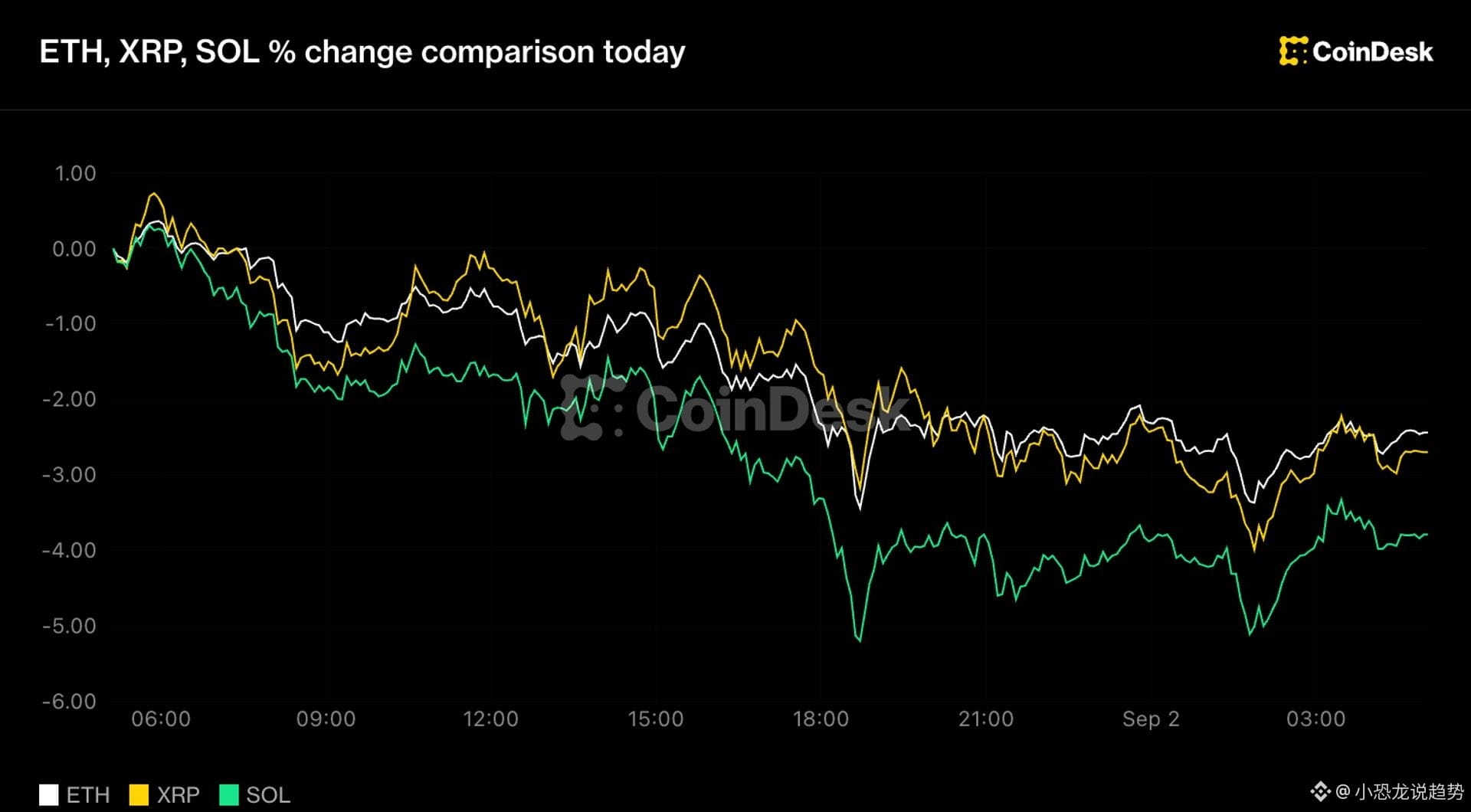
Solana and Tron are the worst off, both down more than 3% in 24 hours; Bitcoin is only down 1%. It’s now hovering around 77,500. Old players know this: whenever something goes wrong, the first thing to get hit is high-volatility assets. Meanwhile, base-layer assets like the big BTC are left until last. That’s called selling the fast ones first, then moving the deck stone.
ETH is down 2% to 2414; XRP is down nearly 2% back to $1.35. Dogecoin is also down 2%. HYPE is down more than 1%. Only BNB is the most resilient—it’s down less than 1%, closing at 687, with defensive attributes fully maxed out.
What’s interesting is that over the past hour, these names actually pulled back together. Asian stock markets are currently getting the roughest “meal” of the year; meanwhile, the crypto market has recovered first. This kind of head-fake rebound suggests that the capital doing the sell-off doesn’t really see it as outright bearish—it just wants to duck the spotlight first.
The backdrop: oil prices are surging, U.S. Treasury yields keep climbing. The market now thinks the probability of the Fed raising rates in September has risen to 66%. That’s the real hand pressing down on risk assets. Geopolitics is just the spark; liquidity expectations are the master switch.
The real judge next is Friday’s employment report. If the data is too hot and rate-hike expectations get another burn, Bitcoin trying to push toward 80,000 will have to wait. If it comes in cool, then this pullback will be a “get in” window.
The era of geopolitics meaning “gold for everyone” is long gone. Now the geopolitical script is: oil up, bonds down, crypto whipsaw. Whoever can’t hold on first gets eliminated first. In this kind of market, chasing pumps and panic-selling is the worst thing to do—hold onto what you understand. That’s stronger than anything else.
Do you think Friday’s employment data will come in hot or cool? Can Bitcoin take the opportunity to tap 80,000? Let’s chat in the comments.
Every day I’ll take you to track crypto hot topics—not only what happens in the news, but also the logic and opportunities behind it 👀🚀
Click the link below to follow me 👇🏻
👉 加入小恐龙粉丝群
#比特币 #山寨币 #地缘风险
Solana and Tron are the worst off, both down more than 3% in 24 hours; Bitcoin is only down 1%. It’s now hovering around 77,500. Old players know this: whenever something goes wrong, the first thing to get hit is high-volatility assets. Meanwhile, base-layer assets like the big BTC are left until last. That’s called selling the fast ones first, then moving the deck stone.
ETH is down 2% to 2414; XRP is down nearly 2% back to $1.35. Dogecoin is also down 2%. HYPE is down more than 1%. Only BNB is the most resilient—it’s down less than 1%, closing at 687, with defensive attributes fully maxed out.
What’s interesting is that over the past hour, these names actually pulled back together. Asian stock markets are currently getting the roughest “meal” of the year; meanwhile, the crypto market has recovered first. This kind of head-fake rebound suggests that the capital doing the sell-off doesn’t really see it as outright bearish—it just wants to duck the spotlight first.
The backdrop: oil prices are surging, U.S. Treasury yields keep climbing. The market now thinks the probability of the Fed raising rates in September has risen to 66%. That’s the real hand pressing down on risk assets. Geopolitics is just the spark; liquidity expectations are the master switch.
The real judge next is Friday’s employment report. If the data is too hot and rate-hike expectations get another burn, Bitcoin trying to push toward 80,000 will have to wait. If it comes in cool, then this pullback will be a “get in” window.
The era of geopolitics meaning “gold for everyone” is long gone. Now the geopolitical script is: oil up, bonds down, crypto whipsaw. Whoever can’t hold on first gets eliminated first. In this kind of market, chasing pumps and panic-selling is the worst thing to do—hold onto what you understand. That’s stronger than anything else.
Do you think Friday’s employment data will come in hot or cool? Can Bitcoin take the opportunity to tap 80,000? Let’s chat in the comments.
Every day I’ll take you to track crypto hot topics—not only what happens in the news, but also the logic and opportunities behind it 👀🚀
Click the link below to follow me 👇🏻
👉 加入小恐龙粉丝群
#比特币 #山寨币 #地缘风险
WTI Crude Breaks Through $90: Up Almost 9% in a Week; U.S. 10-Year Treasury Yields Jump Straight to 4.81%, the First Time Since 2023—And It Rose 10 Bps in a Single Day. Gold Gets Hit Even Harder: It Slid from 4700 to 4300 Over the Week.
After this broad market bloodbath, the S&P 500 suffered a three-day decline, hitting its four-week low. Asian stocks followed suit, also vomiting. Energy-importing countries are the most uncomfortable: when oil prices rise, it brings inflation pressure. The window for the Fed to cut rates has basically been welded shut.
Then guess what? Bitcoin is staying rock-solid. It’s been oscillating between 76,000 and 80,000. After Friday’s sudden 3% drop, nobody kept selling. The shorts tested the waters for two days but still didn’t manage to push out a decent low. If it’s going to fall, why hasn’t it? Seasoned players all know this flavor.
The story the market is telling right now is pretty interesting: yields climbing higher isn’t because the economy is overheating—it’s because people are worried about fiscal policy. The more anxious people become about the fiat currency system, the more they hide in hard assets outside the system. Bitcoin just happens to catch this wave of belief. Plainly put: a bunch of assets are getting battered, and only “the big pie” (BTC) is being treated as a safe haven for a test drive.
But keep your eyes open: the U.S. Dollar Index quietly jumped nearly 1% last week. It’s now 99.67, hugging the upside trendline last seen since 2011. Historically, once this dollar line “springs back,” Bitcoin basically moves in the opposite direction. Technical traders are watching this line closely—if it holds, that would mean a fresh round of dollar demand, and the tailwind for BTC would turn into a headwind.
On one side, gold is getting beaten up and oil is going wild; on the other, BTC is holding steady and not moving. This picture really is rare. Do you think if the dollar truly rebounds, BTC can stay stable too? Let’s chat in the comments.
Every day, I’ll take you through crypto hot spots—not just what news is happening, but also how to understand the logic and opportunities behind it 👀🚀
Click the links below to follow me 👇🏻
👉 加入小恐龙粉丝群
#比特币 #原油 #美债收益率
After this broad market bloodbath, the S&P 500 suffered a three-day decline, hitting its four-week low. Asian stocks followed suit, also vomiting. Energy-importing countries are the most uncomfortable: when oil prices rise, it brings inflation pressure. The window for the Fed to cut rates has basically been welded shut.
Then guess what? Bitcoin is staying rock-solid. It’s been oscillating between 76,000 and 80,000. After Friday’s sudden 3% drop, nobody kept selling. The shorts tested the waters for two days but still didn’t manage to push out a decent low. If it’s going to fall, why hasn’t it? Seasoned players all know this flavor.
The story the market is telling right now is pretty interesting: yields climbing higher isn’t because the economy is overheating—it’s because people are worried about fiscal policy. The more anxious people become about the fiat currency system, the more they hide in hard assets outside the system. Bitcoin just happens to catch this wave of belief. Plainly put: a bunch of assets are getting battered, and only “the big pie” (BTC) is being treated as a safe haven for a test drive.
But keep your eyes open: the U.S. Dollar Index quietly jumped nearly 1% last week. It’s now 99.67, hugging the upside trendline last seen since 2011. Historically, once this dollar line “springs back,” Bitcoin basically moves in the opposite direction. Technical traders are watching this line closely—if it holds, that would mean a fresh round of dollar demand, and the tailwind for BTC would turn into a headwind.
On one side, gold is getting beaten up and oil is going wild; on the other, BTC is holding steady and not moving. This picture really is rare. Do you think if the dollar truly rebounds, BTC can stay stable too? Let’s chat in the comments.
Every day, I’ll take you through crypto hot spots—not just what news is happening, but also how to understand the logic and opportunities behind it 👀🚀
Click the links below to follow me 👇🏻
👉 加入小恐龙粉丝群
#比特币 #原油 #美债收益率

Nasdaq Company Raises $20 Million to Buy SOL — Another MicroStrategy Playbook
MicroStrategy’s playbook is back — someone’s copying it again. This time, they’re copying Solana.
DeFi Development Corp, a company listed on Nasdaq, is issuing preferred stock to raise funds directly.
2.2 million shares at $9 per share — roughly $19.8 million total. Most of it is planned to be used to buy SOL.
The CEO is blunt: the money is mainly for buying SOL. The company’s strategy is simply to hoard coins and stake them.
Last week, it just bought 19,000 SOL at an average price of $98. Now 2.33 million SOL is sitting in its treasury, worth $236 million.
Even the stock ticker was changed to CHAD — it’s basically writing its ambition on the front page.
Is this playbook familiar? MicroStrategy buys BTC. This Nasdaq-listed company buys SOL. Treating coins as treasury assets has already become a new trend.
Back then, it was retail investors hyping it up. Now public companies are backing it with real money — the “gold content” is completely different.
Can SOL replicate BTC’s playbook? No one can guarantee it, but the fact that institutions are moving in is, by itself, a clear signal.
The coin-hoarding model has a hard drawback: when the coin price swings, the financial reports swing right along like a roller coaster. Numbers on the balance sheet can’t lie.
It’s easy to learn MicroStrategy. The hard part is surviving the volatility. Before you copy the homework, ask yourself whether you can really hold on.
Which company do you think will be the next one to heavily hoard coins? Drop your guess in the comments.
Every day, I’ll bring you the SOL hotspots — not just what’s happening in the news, but also help you understand the logic and opportunities behind it 👀🚀
Click the link below to follow me 👇🏻
👉 加入小恐龙粉丝群
#Solana #SOL #机构囤币
MicroStrategy’s playbook is back — someone’s copying it again. This time, they’re copying Solana.
DeFi Development Corp, a company listed on Nasdaq, is issuing preferred stock to raise funds directly.
2.2 million shares at $9 per share — roughly $19.8 million total. Most of it is planned to be used to buy SOL.
The CEO is blunt: the money is mainly for buying SOL. The company’s strategy is simply to hoard coins and stake them.
Last week, it just bought 19,000 SOL at an average price of $98. Now 2.33 million SOL is sitting in its treasury, worth $236 million.
Even the stock ticker was changed to CHAD — it’s basically writing its ambition on the front page.
Is this playbook familiar? MicroStrategy buys BTC. This Nasdaq-listed company buys SOL. Treating coins as treasury assets has already become a new trend.
Back then, it was retail investors hyping it up. Now public companies are backing it with real money — the “gold content” is completely different.
Can SOL replicate BTC’s playbook? No one can guarantee it, but the fact that institutions are moving in is, by itself, a clear signal.
The coin-hoarding model has a hard drawback: when the coin price swings, the financial reports swing right along like a roller coaster. Numbers on the balance sheet can’t lie.
It’s easy to learn MicroStrategy. The hard part is surviving the volatility. Before you copy the homework, ask yourself whether you can really hold on.
Which company do you think will be the next one to heavily hoard coins? Drop your guess in the comments.
Every day, I’ll bring you the SOL hotspots — not just what’s happening in the news, but also help you understand the logic and opportunities behind it 👀🚀
Click the link below to follow me 👇🏻
👉 加入小恐龙粉丝群
#Solana #SOL #机构囤币

Verified
Binance Launches 1,000+ U.S. Stock Options—Traditional Finance Keeps Expanding the Board
Binance is at it again. This time, it dives straight into U.S. stock options.
More than 1,000 option contracts on U.S. stocks and ETFs are now officially live, and users in non-U.S. regions can trade them too.
Orders route through a licensed broker in Abu Dhabi—Nest Trading. Clearing and custody are handled by Alpaca Securities, a U.S.-registered firm. Compliance setup is fully dialed in.
Unlike the contracts mentioned elsewhere, these options are physically settled. Exercising actually gives you the stocks, not some cash-settled, virtual gimmick.
Remember, Binance stock spot trading has already covered 7,000+ listings. With options now live, traditional finance’s puzzle gets another piece added.
Data says it best: in August, trading volume for TradFi perpetual contracts hit $43.3 billion—about 15 times that of January. You can literally see how fast the capital is moving in.
The tokenized stocks track is also surging. In one year, circulating market cap jumped from $34.6 million to $260 million. Monthly transfer volume rose 93%, the number of holders more than doubled (up 1.5x), reaching nearly 2.5 million.
Exchanges are all trying to squeeze into traditional finance. Whoever gets the pipeline connected first gets the profit.
For ordinary players, the barrier is genuinely lowering: you can now trade stocks, options, and crypto under one account.
But don’t rush in. Options are a double-edged sword. If you don’t understand the strike price or the expiration date, you’ll still lose—enough to make you question everything about your life.
Learn how premium and implied volatility work before you place a trade. Otherwise you’re basically paying tuition to the market.
Mainstream capital is flowing in. The wall between crypto and traditional finance is being dismantled.
What do you think the next thing exchanges will launch—futures, FX? Let’s chat in the comments.
Every day, I’ll keep you updated on exchange hot spots. Not just what’s happening in the news—more importantly, I’ll help you understand the logic and the opportunities behind it 👀🚀
Click the link below to follow me 👇🏻
👉 加入小恐龙粉丝群
#币安 #美股期权 #TradFi
Binance is at it again. This time, it dives straight into U.S. stock options.
More than 1,000 option contracts on U.S. stocks and ETFs are now officially live, and users in non-U.S. regions can trade them too.
Orders route through a licensed broker in Abu Dhabi—Nest Trading. Clearing and custody are handled by Alpaca Securities, a U.S.-registered firm. Compliance setup is fully dialed in.
Unlike the contracts mentioned elsewhere, these options are physically settled. Exercising actually gives you the stocks, not some cash-settled, virtual gimmick.
Remember, Binance stock spot trading has already covered 7,000+ listings. With options now live, traditional finance’s puzzle gets another piece added.
Data says it best: in August, trading volume for TradFi perpetual contracts hit $43.3 billion—about 15 times that of January. You can literally see how fast the capital is moving in.
The tokenized stocks track is also surging. In one year, circulating market cap jumped from $34.6 million to $260 million. Monthly transfer volume rose 93%, the number of holders more than doubled (up 1.5x), reaching nearly 2.5 million.
Exchanges are all trying to squeeze into traditional finance. Whoever gets the pipeline connected first gets the profit.
For ordinary players, the barrier is genuinely lowering: you can now trade stocks, options, and crypto under one account.
But don’t rush in. Options are a double-edged sword. If you don’t understand the strike price or the expiration date, you’ll still lose—enough to make you question everything about your life.
Learn how premium and implied volatility work before you place a trade. Otherwise you’re basically paying tuition to the market.
Mainstream capital is flowing in. The wall between crypto and traditional finance is being dismantled.
What do you think the next thing exchanges will launch—futures, FX? Let’s chat in the comments.
Every day, I’ll keep you updated on exchange hot spots. Not just what’s happening in the news—more importantly, I’ll help you understand the logic and the opportunities behind it 👀🚀
Click the link below to follow me 👇🏻
👉 加入小恐龙粉丝群
#币安 #美股期权 #TradFi

Robinhood’s chain earned $1.9 million in a day—single-day revenue hits a record, and it also pushed ARB up 30% along the way.
On-chain income breaks records, proving that trading and tokenized stocks are really hot. Turns out making money on-chain can be this profitable.
Funding can be this direct. When you see standout on-chain data, you immediately chase and buy related tokens. ARB goes up right along with it.
The most worth pondering here isn’t how much ARB rose, but that one trading platform’s on-chain revenue can outperform a bunch of other public chains.
When traditional platforms move onto the chain, the efficiency gap is obvious to the naked eye. Fees stay on-chain; the ecosystem can generate its own lifeblood. You don’t need to look at the big platforms’ faces.
The platform brings users onto the chain, and users leave the money on the chain. Once this flywheel starts turning, it has serious staying power.
Of course, hype comes fast and fades fast. There’s never a shortage of people chasing the highs, and there’s never a shortage of bag holders.
But don’t just look at the income numbers—look at whether revenue can be stable. Making $1.9 million in one day and making $1.9 million every day are two different things.
Besides enjoying the show, think about which chain can keep making money—that’s the real question.
Now, on-chain revenue data has become even more sensitive than the K-line chart—a barometer that everyone watches. All the capital is looking at it.
Have you ever chased a token driven by on-chain revenue? How did it turn out? Share your experience.
Click the avatar to watch the livestream.
Every day I’ll bring you to follow on-chain hot topics—not just what happens in the news, but also helping you understand the logic and opportunities behind it 👉🦖
#ARB #On-chain data
On-chain income breaks records, proving that trading and tokenized stocks are really hot. Turns out making money on-chain can be this profitable.
Funding can be this direct. When you see standout on-chain data, you immediately chase and buy related tokens. ARB goes up right along with it.
The most worth pondering here isn’t how much ARB rose, but that one trading platform’s on-chain revenue can outperform a bunch of other public chains.
When traditional platforms move onto the chain, the efficiency gap is obvious to the naked eye. Fees stay on-chain; the ecosystem can generate its own lifeblood. You don’t need to look at the big platforms’ faces.
The platform brings users onto the chain, and users leave the money on the chain. Once this flywheel starts turning, it has serious staying power.
Of course, hype comes fast and fades fast. There’s never a shortage of people chasing the highs, and there’s never a shortage of bag holders.
But don’t just look at the income numbers—look at whether revenue can be stable. Making $1.9 million in one day and making $1.9 million every day are two different things.
Besides enjoying the show, think about which chain can keep making money—that’s the real question.
Now, on-chain revenue data has become even more sensitive than the K-line chart—a barometer that everyone watches. All the capital is looking at it.
Have you ever chased a token driven by on-chain revenue? How did it turn out? Share your experience.
Click the avatar to watch the livestream.
Every day I’ll bring you to follow on-chain hot topics—not just what happens in the news, but also helping you understand the logic and opportunities behind it 👉🦖
#ARB #On-chain data
Verified
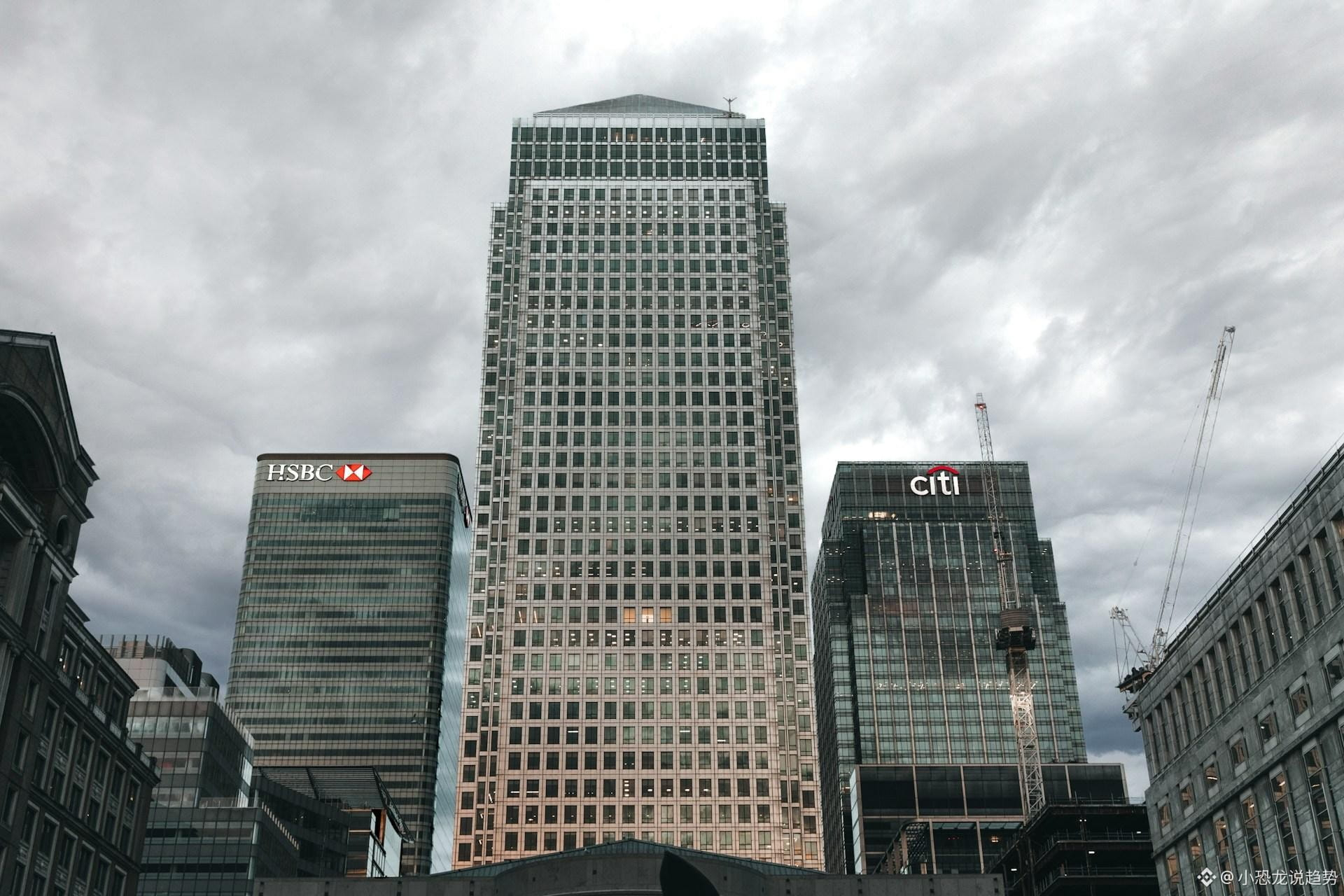
Goldman Sachs, Citi, UBS—21 Wall Street giants gather to team up and create a USD stablecoin, targeting a launch in the first half of 2027
How extraordinary is this lineup? Just pick any name—each one is at the very top of traditional finance’s pyramid. Now they’re all moving in to build stablecoins.
The new company will first issue a USD stablecoin, focusing on payments and digital-asset settlement. Euro tokens are also on the expansion shortlist.
In the past, stablecoins were something the crypto world played with on its own. Banks looked at them with disdain. Now they’re straight-up copying the playbook—and doing it with a straight face.
The key isn’t just which bank wants to test the waters, but that all 21 are doing it together. That’s like the entire Wall Street ecosystem stamping its approval: stablecoins are becoming legitimate payment infrastructure.
For retail users, don’t rush to shout “disruption.” First understand one thing: the track money rides on is shifting from traditional systems onto the blockchain—and faster than you’d expect.
A united front from the giants means compliance, custody, and settlement gaps will be filled quickly. The moat of established stablecoins is about to face a real challenger.
Banks entering the space also has a hidden motive: to seize back control of the payments conversation. If stablecoins are led by tech companies, banks will truly have to step aside.
Once a bank-backed stablecoin goes live, the fee structure and cross-border settlement landscape may need to be rewritten.
The most ironic part: the institutions that once said Bitcoin was a scam are now lining up to issue stablecoins. The “it’s good stuff” law applies on Wall Street too.
There’s another layer of meaning. Global regulation for stablecoins is being filled in everywhere. Wall Street’s move right now is about抢时间窗—seizing the time window. Place the first pieces on the board and you benefit first.
For the crypto community, an opponent of this caliber entering the arena is both pressure and endorsement. The compliance-bound ship has already set anchor—no one can stop it.
Do you think the stablecoin issued by banks can take back how much market share from established stablecoins? Let’s chat in the comments.
Click the avatar to watch the live stream.
Every day, I’ll take you to follow stablecoin hotspots—not just what’s happening in the news, but the logic and opportunities behind it 👉🦖
#稳定币 #Bitcoin
How extraordinary is this lineup? Just pick any name—each one is at the very top of traditional finance’s pyramid. Now they’re all moving in to build stablecoins.
The new company will first issue a USD stablecoin, focusing on payments and digital-asset settlement. Euro tokens are also on the expansion shortlist.
In the past, stablecoins were something the crypto world played with on its own. Banks looked at them with disdain. Now they’re straight-up copying the playbook—and doing it with a straight face.
The key isn’t just which bank wants to test the waters, but that all 21 are doing it together. That’s like the entire Wall Street ecosystem stamping its approval: stablecoins are becoming legitimate payment infrastructure.
For retail users, don’t rush to shout “disruption.” First understand one thing: the track money rides on is shifting from traditional systems onto the blockchain—and faster than you’d expect.
A united front from the giants means compliance, custody, and settlement gaps will be filled quickly. The moat of established stablecoins is about to face a real challenger.
Banks entering the space also has a hidden motive: to seize back control of the payments conversation. If stablecoins are led by tech companies, banks will truly have to step aside.
Once a bank-backed stablecoin goes live, the fee structure and cross-border settlement landscape may need to be rewritten.
The most ironic part: the institutions that once said Bitcoin was a scam are now lining up to issue stablecoins. The “it’s good stuff” law applies on Wall Street too.
There’s another layer of meaning. Global regulation for stablecoins is being filled in everywhere. Wall Street’s move right now is about抢时间窗—seizing the time window. Place the first pieces on the board and you benefit first.
For the crypto community, an opponent of this caliber entering the arena is both pressure and endorsement. The compliance-bound ship has already set anchor—no one can stop it.
Do you think the stablecoin issued by banks can take back how much market share from established stablecoins? Let’s chat in the comments.
Click the avatar to watch the live stream.
Every day, I’ll take you to follow stablecoin hotspots—not just what’s happening in the news, but the logic and opportunities behind it 👉🦖
#稳定币 #Bitcoin

Robinhood Chain’s single-day DEX volume hits $875 million
On August 30, the Robinhood Chain’s decentralized trading volume reached a historic record—$875 million in a single day. That day it processed 5.52 million transactions, also a new high.
The latest version of the leading DEX protocol contributed $432 million in just one day. Combined with the old version’s $357 million, the two versions together accounted for 90% of all transactions.
What’s truly interesting is the driving force behind it: tokenized stocks. In the past 30 days, the 7 most actively traded tokenized stocks generated $4.3 billion in trading volume in decentralized markets—3 of those were on the Robinhood Chain.
Just this one protocol alone processed $1.5 billion worth of tokenized stock trades on the Robinhood Chain within six weeks.
That directly translates into real revenue. On August 31, the Robinhood Chain’s applications earned $2.66 million over 24 hours—leaving Ethereum far behind, which had only $1.27 million in the same period.
My take: previously, on-chain excitement relied mostly on meme coins. Now tokenized stocks are moving in, bringing real, legitimate business to decentralized markets. Stocks can be traded on-chain too—and generate fee income.
Does this suggest that the boundary between traditional finance and crypto is being erased trade by trade?
Do you think tokenized stocks will become the next big on-chain main storyline—or just another passing trend?
Click the profile picture to watch the live stream.
Every day, I’ll take you to track tokenized-stocks and DeFi hotspots—not just see what happened in the news, but also help you understand the underlying logic and opportunities 👉🦖
#代币化股票 #DeFi
On August 30, the Robinhood Chain’s decentralized trading volume reached a historic record—$875 million in a single day. That day it processed 5.52 million transactions, also a new high.
The latest version of the leading DEX protocol contributed $432 million in just one day. Combined with the old version’s $357 million, the two versions together accounted for 90% of all transactions.
What’s truly interesting is the driving force behind it: tokenized stocks. In the past 30 days, the 7 most actively traded tokenized stocks generated $4.3 billion in trading volume in decentralized markets—3 of those were on the Robinhood Chain.
Just this one protocol alone processed $1.5 billion worth of tokenized stock trades on the Robinhood Chain within six weeks.
That directly translates into real revenue. On August 31, the Robinhood Chain’s applications earned $2.66 million over 24 hours—leaving Ethereum far behind, which had only $1.27 million in the same period.
My take: previously, on-chain excitement relied mostly on meme coins. Now tokenized stocks are moving in, bringing real, legitimate business to decentralized markets. Stocks can be traded on-chain too—and generate fee income.
Does this suggest that the boundary between traditional finance and crypto is being erased trade by trade?
Do you think tokenized stocks will become the next big on-chain main storyline—or just another passing trend?
Click the profile picture to watch the live stream.
Every day, I’ll take you to track tokenized-stocks and DeFi hotspots—not just see what happened in the news, but also help you understand the underlying logic and opportunities 👉🦖
#代币化股票 #DeFi

SOL’s ETF has also surpassed $1 billion
Bitwise’s Solana staking ETF launched just 10 months ago and has already pushed its assets under management past $1 billion, becoming the third coin with a $1B-level ETF after Bitcoin and Ethereum.
Where does the value of this record come from? Most of the capital came in during the bear market. The market has been gradually drifting downward, while institutions have kept buying. Now Solana’s total ETF AUM is 1.43 billion, accounting for 2.35% of SOL’s market cap.
Solana itself has also performed well—rising 46% in August, rebounding 80% from the June low. The price has climbed back above $100, and its market cap has returned to over $60 billion.
Even traditional brokerages can’t sit still. Charles Schwab has announced it will roll out SOL spot trading for its clients next. They’re a big player managing $12 trillion in assets.
And many SOL funds also include staking yield. They can support net asset value just by collecting on-chain interest—something traditional ETFs could hardly even imagine.
Industry analysts say total inflows into the entire Solana ETF track have reached $1.7 billion, with almost no sustained outflows. Purchases during the bear market, and now it’s starting to cash in.
My take: the most convincing part of this cycle isn’t Bitcoin—it’s the ETF-ification of altcoins. Whichever one gets turned into a product by Wall Street first will be the one that can capture the next wave of allocation benefits.
Next, we should guess: who will be the fourth $1B-level ETF—XRP, or another dark-horse?
Click the profile picture to watch the live stream.
Every day, I’ll take you to track ETF hot topics— not just what’s happening in the news, but also to help you understand the logic and opportunities behind it 👉🦖
#Solana #ETF
Bitwise’s Solana staking ETF launched just 10 months ago and has already pushed its assets under management past $1 billion, becoming the third coin with a $1B-level ETF after Bitcoin and Ethereum.
Where does the value of this record come from? Most of the capital came in during the bear market. The market has been gradually drifting downward, while institutions have kept buying. Now Solana’s total ETF AUM is 1.43 billion, accounting for 2.35% of SOL’s market cap.
Solana itself has also performed well—rising 46% in August, rebounding 80% from the June low. The price has climbed back above $100, and its market cap has returned to over $60 billion.
Even traditional brokerages can’t sit still. Charles Schwab has announced it will roll out SOL spot trading for its clients next. They’re a big player managing $12 trillion in assets.
And many SOL funds also include staking yield. They can support net asset value just by collecting on-chain interest—something traditional ETFs could hardly even imagine.
Industry analysts say total inflows into the entire Solana ETF track have reached $1.7 billion, with almost no sustained outflows. Purchases during the bear market, and now it’s starting to cash in.
My take: the most convincing part of this cycle isn’t Bitcoin—it’s the ETF-ification of altcoins. Whichever one gets turned into a product by Wall Street first will be the one that can capture the next wave of allocation benefits.
Next, we should guess: who will be the fourth $1B-level ETF—XRP, or another dark-horse?
Click the profile picture to watch the live stream.
Every day, I’ll take you to track ETF hot topics— not just what’s happening in the news, but also to help you understand the logic and opportunities behind it 👉🦖
#Solana #ETF

ETF money vacuuming up like crazy: Bitcoin closes August strong
On Monday, Bitcoin spot ETF net inflows totaled $216.7 million—one BlackRock fund alone accounted for $205.9 million, directly putting an end to Friday’s outflows.
Ethereum ETFs were even more aggressive: net inflows for 11 straight trading days, with another $87.68 million added on the day. Altcoin ETFs weren’t idle either—XRP saw inflows of $5.64 million, while Solana added $0.92 million.
The key numbers: Bitcoin ETF total assets have already climbed to $99.61 billion. It’s just one step away from the $100 billion mark.
Over the whole of August, spot ETFs attracted $3.52 billion, the strongest single month since October last year. Bitcoin itself rose 25% in August—this is the first time an August ended positive since 2021.
People used to say August is a quiet period for crypto, with a lukewarm market. But this year’s script is completely flipped: institutions quietly add positions during the slow season, while retail investors are still debating whether to get on board.
My take: the $100 billion threshold isn’t just a number—it means Wall Street’s allocation capital is starting to treat Bitcoin as a standard asset rather than a speculative one.
On the first day of September, U.S. stocks are still trembling due to developments in the Middle East. But ETF fund flows show that long-term capital and short-term panic are two different groups doing two different things.
When do you think total Bitcoin ETF assets will break $100 billion—this week or next week?
Click the avatar to watch the live stream.
Every day, I’ll take you through ETF hotspots—not just what’s happening in the news, but also the logic and opportunities behind it 👉🦖
#比特币ETF #加密市场
On Monday, Bitcoin spot ETF net inflows totaled $216.7 million—one BlackRock fund alone accounted for $205.9 million, directly putting an end to Friday’s outflows.
Ethereum ETFs were even more aggressive: net inflows for 11 straight trading days, with another $87.68 million added on the day. Altcoin ETFs weren’t idle either—XRP saw inflows of $5.64 million, while Solana added $0.92 million.
The key numbers: Bitcoin ETF total assets have already climbed to $99.61 billion. It’s just one step away from the $100 billion mark.
Over the whole of August, spot ETFs attracted $3.52 billion, the strongest single month since October last year. Bitcoin itself rose 25% in August—this is the first time an August ended positive since 2021.
People used to say August is a quiet period for crypto, with a lukewarm market. But this year’s script is completely flipped: institutions quietly add positions during the slow season, while retail investors are still debating whether to get on board.
My take: the $100 billion threshold isn’t just a number—it means Wall Street’s allocation capital is starting to treat Bitcoin as a standard asset rather than a speculative one.
On the first day of September, U.S. stocks are still trembling due to developments in the Middle East. But ETF fund flows show that long-term capital and short-term panic are two different groups doing two different things.
When do you think total Bitcoin ETF assets will break $100 billion—this week or next week?
Click the avatar to watch the live stream.
Every day, I’ll take you through ETF hotspots—not just what’s happening in the news, but also the logic and opportunities behind it 👉🦖
#比特币ETF #加密市场
Verified
The U.S. Again Bombed Iran—Global Markets Immediately Hit the Floor
Today at noon, the U.S. Central Command opened fire, launching airstrikes on targets of Iran’s Islamic Revolutionary Guard Corps. The stated reason: the other side laid water mines in the Strait of Hormuz and also fired eight missiles at U.S. bases, all of which were intercepted.
Trump said this airstrike was “big and fierce,” and that even larger strikes are waiting in the wings.
The result: the Dow plunged straight down by 401 points. The S&P also stayed green. Gold fell 2.35%, and silver dropped 2.86%. Safe-haven assets—supposedly—collectively failed today.
Brent crude surged to $96.7 per barrel—oil prices blew up first. Bitcoin followed by softening, now hovering above 76,000. Over the past 24 hours, it’s down 2.5%. The next support to watch is 75,000.
Once war starts, all assets drop first as a matter of courtesy. Gold doesn’t act like a safe haven. Bitcoin doesn’t act like one either. Only oil prices are partying—this is the real face of geopolitical risk.
This is already the second wave of airstrikes within a few days. Last Friday, the U.S. already took action over the mines. This time, they directly named the Revolutionary Guard Corps. Hormuz is the throat of global oil shipping. When tension spikes here, oil prices pick up the bill for everyone.
My take: don’t chase shorts and don’t rush to buy the dip on this kind of news. Volatility will be huge. First, see how Iran responds and how the market digests it—that’s the real business.
Historically, for this kind of geopolitical shock, the short term is about dumping the pit, but in the medium term it still comes down to fundamentals. Don’t let a single candlestick carry you away.
Where do you think this wave of safe-haven capital will go—gold, U.S. Treasuries, or will it just lie down and hold onto coins?
Click the avatar to watch the live stream.
Every day, I’ll guide you through geopolitics hotspots—not just what happens in the news, but also the logic and opportunities behind it 👉🦖
#比特币 #加密市场
Today at noon, the U.S. Central Command opened fire, launching airstrikes on targets of Iran’s Islamic Revolutionary Guard Corps. The stated reason: the other side laid water mines in the Strait of Hormuz and also fired eight missiles at U.S. bases, all of which were intercepted.
Trump said this airstrike was “big and fierce,” and that even larger strikes are waiting in the wings.
The result: the Dow plunged straight down by 401 points. The S&P also stayed green. Gold fell 2.35%, and silver dropped 2.86%. Safe-haven assets—supposedly—collectively failed today.
Brent crude surged to $96.7 per barrel—oil prices blew up first. Bitcoin followed by softening, now hovering above 76,000. Over the past 24 hours, it’s down 2.5%. The next support to watch is 75,000.
Once war starts, all assets drop first as a matter of courtesy. Gold doesn’t act like a safe haven. Bitcoin doesn’t act like one either. Only oil prices are partying—this is the real face of geopolitical risk.
This is already the second wave of airstrikes within a few days. Last Friday, the U.S. already took action over the mines. This time, they directly named the Revolutionary Guard Corps. Hormuz is the throat of global oil shipping. When tension spikes here, oil prices pick up the bill for everyone.
My take: don’t chase shorts and don’t rush to buy the dip on this kind of news. Volatility will be huge. First, see how Iran responds and how the market digests it—that’s the real business.
Historically, for this kind of geopolitical shock, the short term is about dumping the pit, but in the medium term it still comes down to fundamentals. Don’t let a single candlestick carry you away.
Where do you think this wave of safe-haven capital will go—gold, U.S. Treasuries, or will it just lie down and hold onto coins?
Click the avatar to watch the live stream.
Every day, I’ll guide you through geopolitics hotspots—not just what happens in the news, but also the logic and opportunities behind it 👉🦖
#比特币 #加密市场

Verified
Wall Street giants team up to work on stablecoins—this lineup is a bit too big
Citigroup, Goldman Sachs, and a whole bunch of global banks and asset management firms are directly forming a团 and jumping in
First, they’ll do a US dollar stablecoin, focusing on payments and digital-asset settlement
An euro token is also on the schedule—this is the rhythm of bringing traditional finance onto the blockchain
Honestly, this is a very strong signal
In the past, banks were just watching stablecoins from the sidelines; now they’re jumping in as players
What does that mean? Stablecoins are no longer something the crypto community is just self-entertaining with—this is a track that traditional finance is seriously fighting for
A group of top global institutions taking the lead—their weight is harder than any project team’s whitepaper
For us, the key isn’t to join the hype, but to understand the trend
When institutions move in, it usually means compliance and liquidity will follow
If a USD stablecoin is truly built, the efficiency of payment and settlement will be something the traditional system simply can’t match
The wall between on-chain finance and traditional finance is being taken down block by block
But don’t get too swept up either—big banks’ actions have always been slow
From announcing the team-up to product launch, it takes at least one or two years
During that time, the market will still be volatile as usual, still shake out as usual
It’s okay to look for the right direction—just don’t let their pace take you off your own plan. Keeping your position steady is the real business
Thinking deeper, the giants’ entry has another hidden signal
The stablecoin “war” has shifted from project teams competing to the banking world
Whoever can perfect compliance and distribution channels will be the one to take a big bite of the cross-border payments pie
For the industry, this is a turning point from the margins to the mainstream—worth keeping a long-term eye on
Every day I’ll bring you the latest stablecoin hotspots—not just what happened in the news, but also the logic and opportunities behind it 👀🚀
Click the links below to follow me👇🏻
👉 加入小恐龙粉丝群
#稳定币 #华尔街 #加密市场
Citigroup, Goldman Sachs, and a whole bunch of global banks and asset management firms are directly forming a团 and jumping in
First, they’ll do a US dollar stablecoin, focusing on payments and digital-asset settlement
An euro token is also on the schedule—this is the rhythm of bringing traditional finance onto the blockchain
Honestly, this is a very strong signal
In the past, banks were just watching stablecoins from the sidelines; now they’re jumping in as players
What does that mean? Stablecoins are no longer something the crypto community is just self-entertaining with—this is a track that traditional finance is seriously fighting for
A group of top global institutions taking the lead—their weight is harder than any project team’s whitepaper
For us, the key isn’t to join the hype, but to understand the trend
When institutions move in, it usually means compliance and liquidity will follow
If a USD stablecoin is truly built, the efficiency of payment and settlement will be something the traditional system simply can’t match
The wall between on-chain finance and traditional finance is being taken down block by block
But don’t get too swept up either—big banks’ actions have always been slow
From announcing the team-up to product launch, it takes at least one or two years
During that time, the market will still be volatile as usual, still shake out as usual
It’s okay to look for the right direction—just don’t let their pace take you off your own plan. Keeping your position steady is the real business
Thinking deeper, the giants’ entry has another hidden signal
The stablecoin “war” has shifted from project teams competing to the banking world
Whoever can perfect compliance and distribution channels will be the one to take a big bite of the cross-border payments pie
For the industry, this is a turning point from the margins to the mainstream—worth keeping a long-term eye on
Every day I’ll bring you the latest stablecoin hotspots—not just what happened in the news, but also the logic and opportunities behind it 👀🚀
Click the links below to follow me👇🏻
👉 加入小恐龙粉丝群
#稳定币 #华尔街 #加密市场
Verified
August’s biggest gainer isn’t Bitcoin—it’s ZEC
In August, the crypto market bit back a mouthful of blood: the total market cap surged by about $500 billion, reclaiming the $2.7 trillion level. Bitcoin rose nearly 25% in a month, breaking through $81,000. But the #1 on the gainers list isn’t it—it's the privacy coin ZEC. In a single month, it rocketed 82%, directly stealing the spotlight.
ZEC started the month at around $472 and ran all the way to a peak of $890 on August 30. It pulled back a bit by month-end, but its close still held above $860. A 82% gain is the strongest among all major-cap coins. Even HYPE, which rose 62%, has to take a back seat. The privacy-coin sector is finally getting to hold its head high this time.
The driver behind this rally wasn’t the crypto space itself, but macro policy. The U.S. Treasury announced doubling the scale of Treasury bill buybacks. Then Treasury Secretary Bessent effectively reneged on expectations again. The market instantly understood: money would get loose once more. Bitcoin then took off, and—along with it—the whole market was lifted. Privacy coins benefited from the spillover. Put simply: when liquidity eases, you can make any story work.
What’s interesting is that Grayscale has already put ZEC into a spot ETF trading on the NYSE Arca. Traditional capital can now enter compliantly. If the privacy narrative truly catches on, the challenge won’t just be market share—it’ll be against Bitcoin’s network effects. Whether 82% is just the beginning or the endgame is anyone’s guess. But one thing is certain: the privacy track is back in the spotlight.
Do you think privacy coins can keep the dance going in September? Chat in the comments.
Click the profile avatar to watch the livestream
Every day I’ll help you track Bitcoin hotspots—not just what happened in the news, but the logic and opportunities behind it 👉🦖
#Zcash #privacy coin
In August, the crypto market bit back a mouthful of blood: the total market cap surged by about $500 billion, reclaiming the $2.7 trillion level. Bitcoin rose nearly 25% in a month, breaking through $81,000. But the #1 on the gainers list isn’t it—it's the privacy coin ZEC. In a single month, it rocketed 82%, directly stealing the spotlight.
ZEC started the month at around $472 and ran all the way to a peak of $890 on August 30. It pulled back a bit by month-end, but its close still held above $860. A 82% gain is the strongest among all major-cap coins. Even HYPE, which rose 62%, has to take a back seat. The privacy-coin sector is finally getting to hold its head high this time.
The driver behind this rally wasn’t the crypto space itself, but macro policy. The U.S. Treasury announced doubling the scale of Treasury bill buybacks. Then Treasury Secretary Bessent effectively reneged on expectations again. The market instantly understood: money would get loose once more. Bitcoin then took off, and—along with it—the whole market was lifted. Privacy coins benefited from the spillover. Put simply: when liquidity eases, you can make any story work.
What’s interesting is that Grayscale has already put ZEC into a spot ETF trading on the NYSE Arca. Traditional capital can now enter compliantly. If the privacy narrative truly catches on, the challenge won’t just be market share—it’ll be against Bitcoin’s network effects. Whether 82% is just the beginning or the endgame is anyone’s guess. But one thing is certain: the privacy track is back in the spotlight.
Do you think privacy coins can keep the dance going in September? Chat in the comments.
Click the profile avatar to watch the livestream
Every day I’ll help you track Bitcoin hotspots—not just what happened in the news, but the logic and opportunities behind it 👉🦖
#Zcash #privacy coin
Verified
XRP ETF: 9 months built up $500 million
Bitwise’s XRP spot ETF has officially surpassed $500 million in assets under management—just 9 months after its launch on November 20 last year. The fund currently holds nearly 364.8 million XRP, net assets of $502.7 million, and a net asset value per share of $15.4. The figures were from market activity on August 27.
What does $500 million in 9 months mean? By the end of Q2, it was still only $299.1 million. In a single summer, it rose by about 70%. In the first half of the year, net subscriptions and inflows totaled $234.4 million, directly covering the $176.6 million loss caused by XRP price declines. This shows that real money is coming in—and it’s coming in while prices are falling. The quality of this growth is far higher than that of a surge in market value.
For ordinary retail investors, the biggest significance of this ETF is that you don’t need to open a wallet or manage private keys. You can simply buy it in your brokerage account. Previously, many people found on-chain operations for XRP to be inconvenient. Now the barrier has been cut to zero. Over-the-counter capital can route through the ETF to enter. It also indicates that institutions don’t want to touch wallets—they only want to touch the financial statements. Two years ago, this was something you couldn’t even imagine.
Even the XRP community can’t help but marvel: after 14 years, this community is still able to fight. Even major asset-management firms are watching the XRP track. More and more compliant products are emerging. The springtime for established coins may truly be coming.
Are you buying the ETF or buying the coin directly? Tell us your choice in the comments.
Click the profile picture to watch the live stream
Every day, I’ll take you to track XRP highlights—not just what’s happening in the news, but also helping you understand the underlying logic and opportunities 👉🦖
#XRP #ETF
Bitwise’s XRP spot ETF has officially surpassed $500 million in assets under management—just 9 months after its launch on November 20 last year. The fund currently holds nearly 364.8 million XRP, net assets of $502.7 million, and a net asset value per share of $15.4. The figures were from market activity on August 27.
What does $500 million in 9 months mean? By the end of Q2, it was still only $299.1 million. In a single summer, it rose by about 70%. In the first half of the year, net subscriptions and inflows totaled $234.4 million, directly covering the $176.6 million loss caused by XRP price declines. This shows that real money is coming in—and it’s coming in while prices are falling. The quality of this growth is far higher than that of a surge in market value.
For ordinary retail investors, the biggest significance of this ETF is that you don’t need to open a wallet or manage private keys. You can simply buy it in your brokerage account. Previously, many people found on-chain operations for XRP to be inconvenient. Now the barrier has been cut to zero. Over-the-counter capital can route through the ETF to enter. It also indicates that institutions don’t want to touch wallets—they only want to touch the financial statements. Two years ago, this was something you couldn’t even imagine.
Even the XRP community can’t help but marvel: after 14 years, this community is still able to fight. Even major asset-management firms are watching the XRP track. More and more compliant products are emerging. The springtime for established coins may truly be coming.
Are you buying the ETF or buying the coin directly? Tell us your choice in the comments.
Click the profile picture to watch the live stream
Every day, I’ll take you to track XRP highlights—not just what’s happening in the news, but also helping you understand the underlying logic and opportunities 👉🦖
#XRP #ETF

The President calls for rate cuts, but the Fed wants rate hikes
On Monday at the White House, Trump said the U.S. should have the lowest interest rates in the world. But when asked whether he would urge Fed Chair Warsh not to raise rates, Trump instead replied, “No, I won’t stop him—he should do what he should do.” The wording was polite, but the meaning was crystal clear: you do your thing and I’ll do mine.
After Warsh took office, both consecutive FOMC meetings he presided over left rates unchanged. Three board members still wanted to hike by 25 basis points. In his speech at Jackson Hole, Warsh’s hawkish persona was practically nailed in place. Inflation data hadn’t yet met the target; his original words were that the Fed’s top priority is prices—implying that a rate hike isn’t out of the question.
The CME FedWatch tool shows the probability of a September rate hike has already surged to 66.4%, up from 57% last week. Even CNBC’s Jim Cramer called the trend “ominous.” The White House that previously went head-to-head with the Fed has now become a thing of the past—a historical footnote. This time, it’s a new player, but the script is still the same.
The market’s response has been very honest. Bitcoin is down nearly 1%, trading at $77,778. The Dow is down 374 points. Gold has fallen 2.44% over the past 24 hours. The White House and the Fed are going against each other—and historically, markets have usually dropped first to show respect. For the crypto world, rate hikes are like draining the water, while rate cuts are like releasing the floodgates. A 66.4% probability is enough to make capital “hesitate first.” Right now, half of the market’s gains or losses depend on policy, and the other half depends on sentiment.
Do you think there really will be a rate hike in September? Share your views in the comments.
Click the avatar to watch the live stream
Every day I’ll take you to follow the Bitcoin headlines—not just reporting what happens, but helping you understand the logic and opportunities behind it 👉🦖
#比特币 #FedWatch
On Monday at the White House, Trump said the U.S. should have the lowest interest rates in the world. But when asked whether he would urge Fed Chair Warsh not to raise rates, Trump instead replied, “No, I won’t stop him—he should do what he should do.” The wording was polite, but the meaning was crystal clear: you do your thing and I’ll do mine.
After Warsh took office, both consecutive FOMC meetings he presided over left rates unchanged. Three board members still wanted to hike by 25 basis points. In his speech at Jackson Hole, Warsh’s hawkish persona was practically nailed in place. Inflation data hadn’t yet met the target; his original words were that the Fed’s top priority is prices—implying that a rate hike isn’t out of the question.
The CME FedWatch tool shows the probability of a September rate hike has already surged to 66.4%, up from 57% last week. Even CNBC’s Jim Cramer called the trend “ominous.” The White House that previously went head-to-head with the Fed has now become a thing of the past—a historical footnote. This time, it’s a new player, but the script is still the same.
The market’s response has been very honest. Bitcoin is down nearly 1%, trading at $77,778. The Dow is down 374 points. Gold has fallen 2.44% over the past 24 hours. The White House and the Fed are going against each other—and historically, markets have usually dropped first to show respect. For the crypto world, rate hikes are like draining the water, while rate cuts are like releasing the floodgates. A 66.4% probability is enough to make capital “hesitate first.” Right now, half of the market’s gains or losses depend on policy, and the other half depends on sentiment.
Do you think there really will be a rate hike in September? Share your views in the comments.
Click the avatar to watch the live stream
Every day I’ll take you to follow the Bitcoin headlines—not just reporting what happens, but helping you understand the logic and opportunities behind it 👉🦖
#比特币 #FedWatch
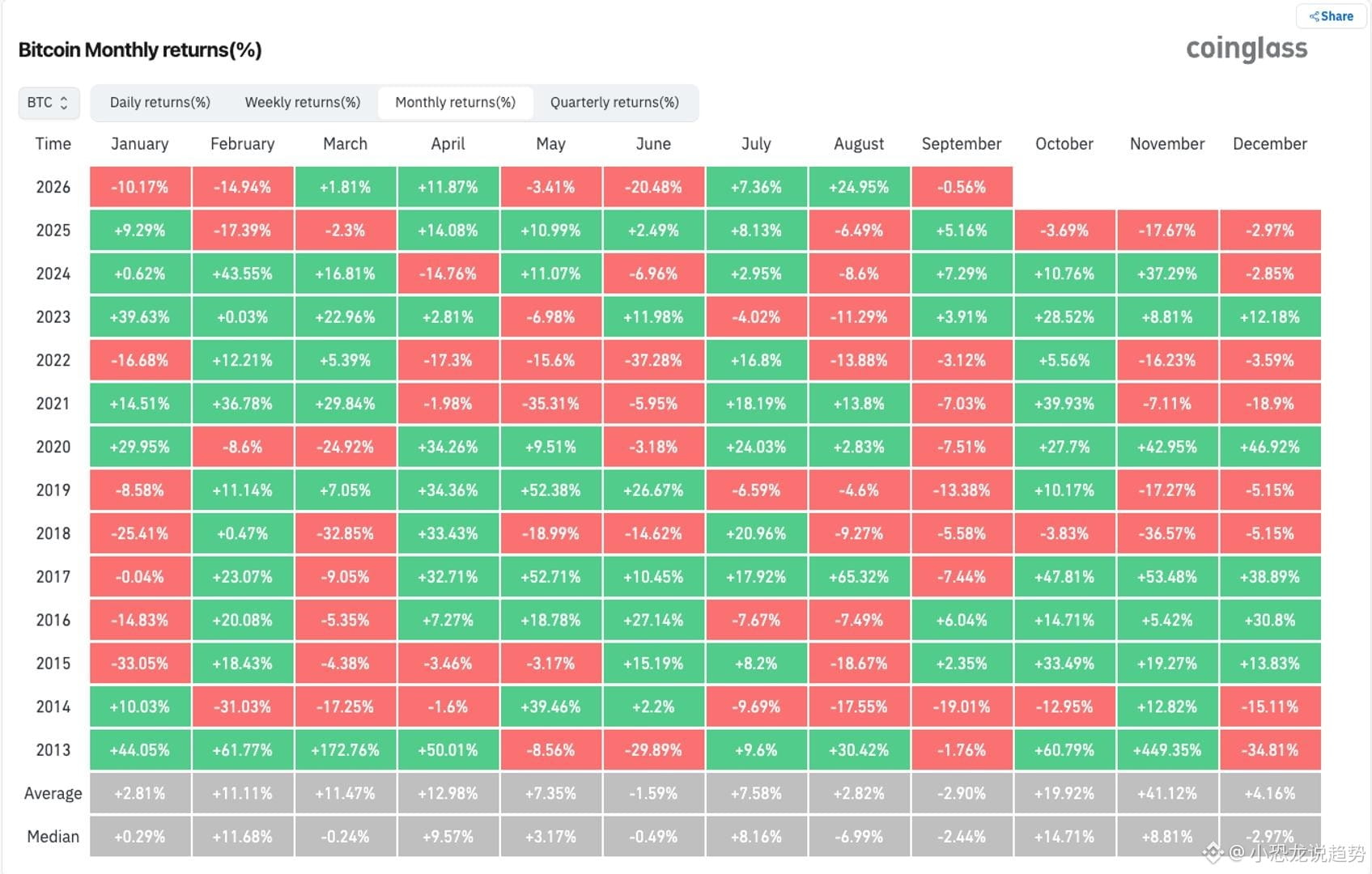
Bitcoin’s September has an unofficial nickname: “Rektember”
Translated into plain human language: September specializes in taking care of anyone who isn’t convinced.
The historical data is right there—September has never been very friendly to risk assets, and Bitcoin especially suffers.
These statistical patterns—you don’t believe them, they still end up coming to find you. You can’t really dodge them.
Now, the pressure isn’t just seasonal. Rate-hike expectations are back too.
The rebound in August was actually quite strong—then the rate outlook flipped, and longs started getting nervous again.
Last week it briefly touched 80,000, and now it’s retreated to hover around 78,000.
That “standing guard at high levels” feeling—if you know, you know. People in the group have already started shouting “the wolves are coming.”
Someone asked: should you run or should you stay? Don’t rush into a decision.
The September curse is a matter of probability, not a script. Every year someone uses it to scare you, but every year someone else still buys right through it.
The key is the next few critical data points—before the “rate-hike shoe” lands, volatility will only get bigger, not smaller.
Position management beats predicting exact prices. Don’t fire all your bullets at once—leave some room for surprises.
Honestly, think about it: the more chaotic times are, the more you can see who’s actually getting things done.
The pits created by panic selling are often the starting point for the next wave of the market.
Follow the data, don’t follow your emotions—that’s the survival rule for veteran greenhorns.
In history, there have been plenty of times when September dug the pits that October and November later filled back in.
Look at longer cycles: every bout of panic is basically paving the way for the next round of upside.
Keep your mindset steady. Eat when it’s time to eat, sleep when it’s time to sleep—opportunities always go to the prepared.
Every day I’ll keep you updated on Bitcoin hot topics. Not just what happens in the news, but also helping you understand the logic and opportunities behind it 👀🚀
Click the links below to follow me👇🏻
👉 加入小恐龙粉丝群
#比特币 #BTC #加密市场
Translated into plain human language: September specializes in taking care of anyone who isn’t convinced.
The historical data is right there—September has never been very friendly to risk assets, and Bitcoin especially suffers.
These statistical patterns—you don’t believe them, they still end up coming to find you. You can’t really dodge them.
Now, the pressure isn’t just seasonal. Rate-hike expectations are back too.
The rebound in August was actually quite strong—then the rate outlook flipped, and longs started getting nervous again.
Last week it briefly touched 80,000, and now it’s retreated to hover around 78,000.
That “standing guard at high levels” feeling—if you know, you know. People in the group have already started shouting “the wolves are coming.”
Someone asked: should you run or should you stay? Don’t rush into a decision.
The September curse is a matter of probability, not a script. Every year someone uses it to scare you, but every year someone else still buys right through it.
The key is the next few critical data points—before the “rate-hike shoe” lands, volatility will only get bigger, not smaller.
Position management beats predicting exact prices. Don’t fire all your bullets at once—leave some room for surprises.
Honestly, think about it: the more chaotic times are, the more you can see who’s actually getting things done.
The pits created by panic selling are often the starting point for the next wave of the market.
Follow the data, don’t follow your emotions—that’s the survival rule for veteran greenhorns.
In history, there have been plenty of times when September dug the pits that October and November later filled back in.
Look at longer cycles: every bout of panic is basically paving the way for the next round of upside.
Keep your mindset steady. Eat when it’s time to eat, sleep when it’s time to sleep—opportunities always go to the prepared.
Every day I’ll keep you updated on Bitcoin hot topics. Not just what happens in the news, but also helping you understand the logic and opportunities behind it 👀🚀
Click the links below to follow me👇🏻
👉 加入小恐龙粉丝群
#比特币 #BTC #加密市场
Log in to explore more content