A real yield rising should bring down gold and bitcoin. 🤷♂️
Since 2022, the two have been rising exactly as real yields rise. A lot of people got left out of this rally because they didn’t understand this break.
The old playbook said that high real yields make an asset too expensive to hold because it requires too much yield.
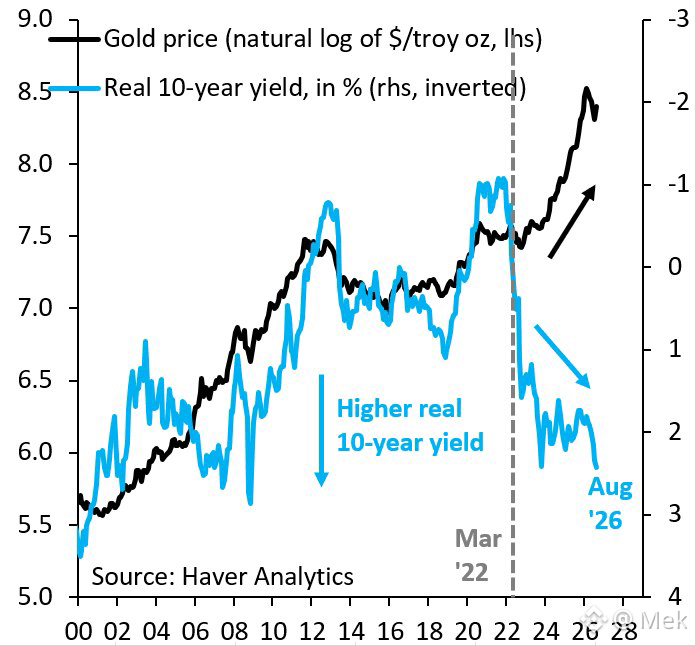
That’s how it was from 2000 to 2022, with a clear inverse correlation between the 10-year real yield and the price of gold.
That relationship broke in March 2022 and has never returned. Today, real yields are rising and gold is rising alongside them. And since this year, bitcoin has started to move glued to gold, with the highest correlation between the two ever recorded.
The explanation is that high real yields stopped meaning attractive yields.
They started signaling fiscal risk, the debt rollover cost, and a higher chance of Treasury intervention to keep the curve under control.
Each rise in yields now increases the probability of a new intervention, and that’s what pushes capital into a scarce asset.
A lot of investors still haven’t understood this.
That’s where the information gap and the edge live.
Since 2022, the two have been rising exactly as real yields rise. A lot of people got left out of this rally because they didn’t understand this break.
The old playbook said that high real yields make an asset too expensive to hold because it requires too much yield.
That’s how it was from 2000 to 2022, with a clear inverse correlation between the 10-year real yield and the price of gold.
That relationship broke in March 2022 and has never returned. Today, real yields are rising and gold is rising alongside them. And since this year, bitcoin has started to move glued to gold, with the highest correlation between the two ever recorded.
The explanation is that high real yields stopped meaning attractive yields.
They started signaling fiscal risk, the debt rollover cost, and a higher chance of Treasury intervention to keep the curve under control.
Each rise in yields now increases the probability of a new intervention, and that’s what pushes capital into a scarce asset.
A lot of investors still haven’t understood this.
That’s where the information gap and the edge live.