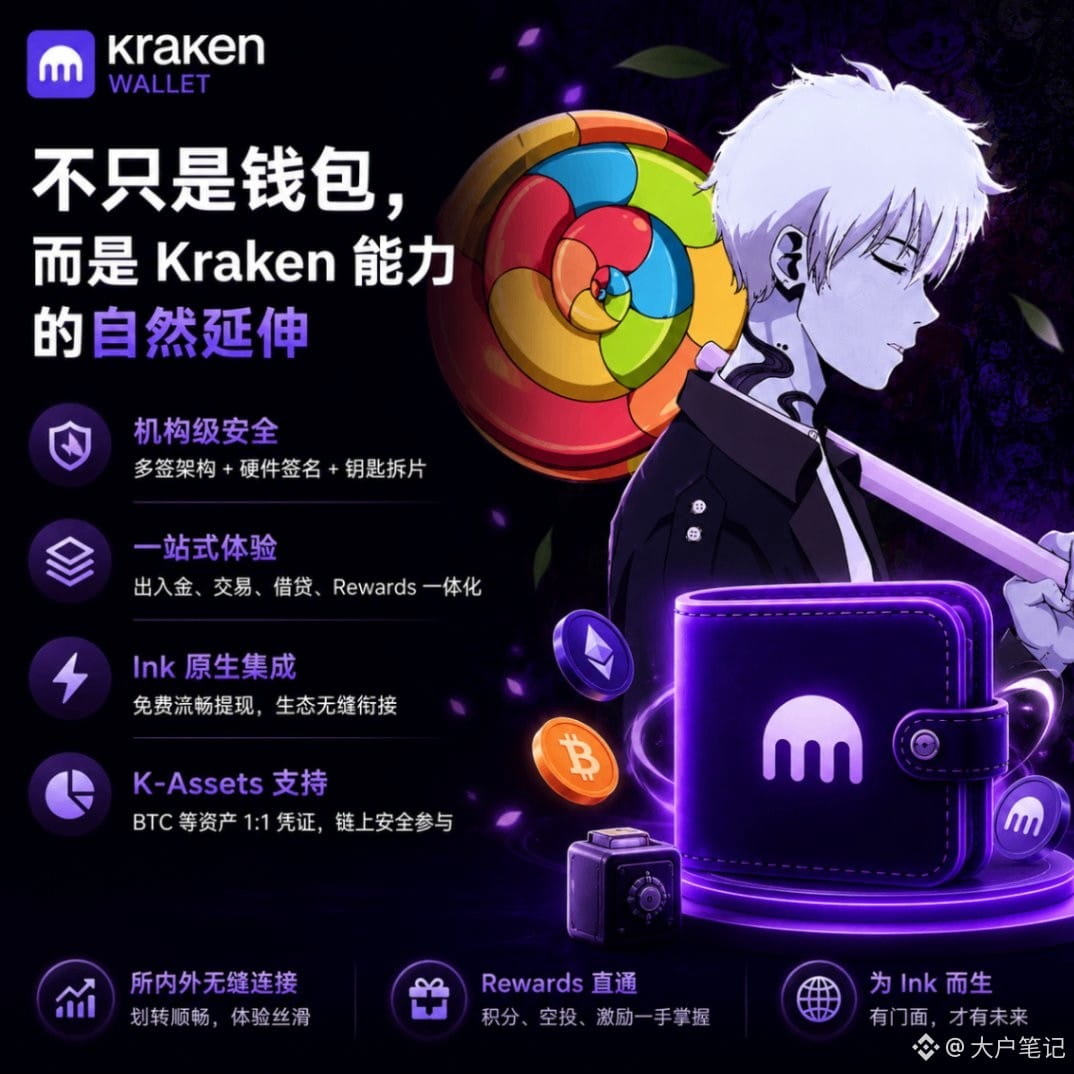

When many people see the Kraken Wallet, their first thought might be:
Another wallet.
Rabby has one. Hardware wallets have one too. What’s the point of Kraken making yet another wallet?
But I think that if you only interpret it as a routine product upgrade, you might be underestimating @krakenfx’s real intent.
The Kraken Wallet is more like extending the exchange’s accumulated capabilities—capital on-ramps, liquidity, custody, security, and compliance—into the side where users themselves hold their assets.
In the past, users mainly bought, sold, handled deposits/withdrawals, and used custody on Kraken. Once assets enter the blockchain, everything becomes more complicated: wallets, private keys, phishing, approvals, cross-chain activity, and all kinds of DApps.
Exchanges are convenient, but users don’t fully control their assets. Self-custody gives freedom, but all security responsibility falls on the user.
What Kraken wants to do might be the missing layer in between.
Big holdings can use multisig; daily operations can use an EOA. For small amounts and automated scenarios, embedded wallets can be used, and hardware signers can also be integrated.
In short:
Asset control is in your hands, but security doesn’t have to rely on only you.
That’s far more interesting than “making another wallet.”
The same logic applies to Ink.
The truly hard part of an L2 isn’t going live—it’s keeping users.
If trading happens in one app, lending happens in another protocol, and assets sit in different wallets, then users are just passing through the ecosystem.
A wallet is the real gateway.
The exchange provides funding and liquidity. Ink connects blockchain-based applications. The wallet becomes the terminal users actually open every day.
The whole path starts to look like this:
Kraken → Wallet → Ink → On-chain finance
The exchange supplies the “blood,” the wallet keeps users, and the blockchain can finally form its own self-sustaining ecosystem loop.
The same applies to K-Assets.
Earlier, when BTC was in custody, it was secure—but largely idle. Once it moves on-chain, it also has to take on smart contract and asset security risks.
What Kraken wants to try is:
Let the underlying assets continue to remain in the custody system, while enabling the corresponding assets to participate in on-chain finance.
This isn’t simply moving traditional assets onto the chain. It’s making “security” and “usability” no longer an either/or choice.
So I think the Kraken Wallet might not be primarily competing for wallet market share.
It may be competing for the entry point into on-chain finance for future users.
In the past:
Your money was on Kraken.
In the future, it might be:
Your money is in your hands, but Kraken’s liquidity, security, custody, and infrastructure can still provide services around your assets.
That’s what makes the Kraken Wallet worth paying attention to.
It’s not just building a wallet—it’s trying to pull together exchanges, custody, the chain, and on-chain finance into a new asset operations system.
Security doesn’t equal idleness.
Self-custody doesn’t have to mean stepping away from institutional capabilities.
Exchanges and on-chain don’t necessarily have to be mutually exclusive.
The Kraken Wallet may be the gateway Kraken wants to place in the middle.
Another wallet.
Rabby has one. Hardware wallets have one too. What’s the point of Kraken making yet another wallet?
But I think that if you only interpret it as a routine product upgrade, you might be underestimating @krakenfx’s real intent.
The Kraken Wallet is more like extending the exchange’s accumulated capabilities—capital on-ramps, liquidity, custody, security, and compliance—into the side where users themselves hold their assets.
In the past, users mainly bought, sold, handled deposits/withdrawals, and used custody on Kraken. Once assets enter the blockchain, everything becomes more complicated: wallets, private keys, phishing, approvals, cross-chain activity, and all kinds of DApps.
Exchanges are convenient, but users don’t fully control their assets. Self-custody gives freedom, but all security responsibility falls on the user.
What Kraken wants to do might be the missing layer in between.
Big holdings can use multisig; daily operations can use an EOA. For small amounts and automated scenarios, embedded wallets can be used, and hardware signers can also be integrated.
In short:
Asset control is in your hands, but security doesn’t have to rely on only you.
That’s far more interesting than “making another wallet.”
The same logic applies to Ink.
The truly hard part of an L2 isn’t going live—it’s keeping users.
If trading happens in one app, lending happens in another protocol, and assets sit in different wallets, then users are just passing through the ecosystem.
A wallet is the real gateway.
The exchange provides funding and liquidity. Ink connects blockchain-based applications. The wallet becomes the terminal users actually open every day.
The whole path starts to look like this:
Kraken → Wallet → Ink → On-chain finance
The exchange supplies the “blood,” the wallet keeps users, and the blockchain can finally form its own self-sustaining ecosystem loop.
The same applies to K-Assets.
Earlier, when BTC was in custody, it was secure—but largely idle. Once it moves on-chain, it also has to take on smart contract and asset security risks.
What Kraken wants to try is:
Let the underlying assets continue to remain in the custody system, while enabling the corresponding assets to participate in on-chain finance.
This isn’t simply moving traditional assets onto the chain. It’s making “security” and “usability” no longer an either/or choice.
So I think the Kraken Wallet might not be primarily competing for wallet market share.
It may be competing for the entry point into on-chain finance for future users.
In the past:
Your money was on Kraken.
In the future, it might be:
Your money is in your hands, but Kraken’s liquidity, security, custody, and infrastructure can still provide services around your assets.
That’s what makes the Kraken Wallet worth paying attention to.
It’s not just building a wallet—it’s trying to pull together exchanges, custody, the chain, and on-chain finance into a new asset operations system.
Security doesn’t equal idleness.
Self-custody doesn’t have to mean stepping away from institutional capabilities.
Exchanges and on-chain don’t necessarily have to be mutually exclusive.
The Kraken Wallet may be the gateway Kraken wants to place in the middle.