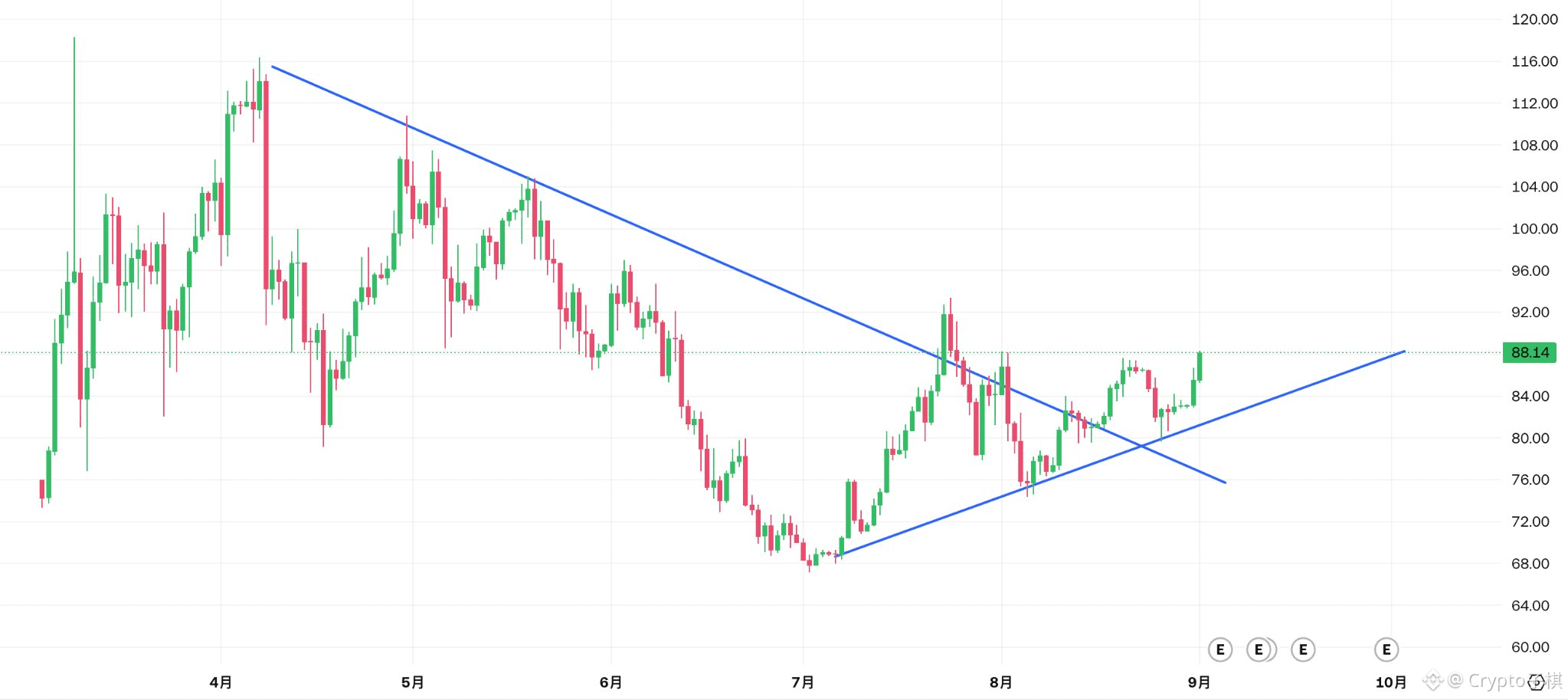

WTI has been lifting its highs and lows from around $68 in July, and has now broken through a long-term downtrend line, reaching around $88.
The technical picture has turned stronger, but the $88 to $92 range is still a dense resistance zone. How much higher it can go depends less on demand and more on whether geopolitical risk will lead to a real supply disruption.
This rally has been driven mainly by the flare-up of clashes between the U.S. and Iran, attacks on oil tankers, and restricted passage through the Strait of Hormuz.
U.S. strategic petroleum reserves are once again at the lowest level since 1982, and the market is repricing supply risk.
OPEC+ plans to increase production by about 188,000 barrels per day in September, but war conditions and shipping constraints may keep some of that additional output on paper only. That can cap crude prices but is unlikely to eliminate the geopolitical premium immediately.
If WTI holds above $90, inflation and interest-rate hike expectations may pick up again, and U.S. Treasury yields could face downward pressure. Energy stocks would benefit relatively, while tech, consumer, airline stocks, and BTC should watch out for a stronger dollar and tighter liquidity.
My view is that in September, Trump will continue using military pressure to secure leverage for negotiations, while also pushing for increased production to cap prices. He needs to pressure Iran and also doesn’t want high oil prices to rebound and fuel inflation.
For September, the benchmark range is $82–$95. If it holds above $92 and the conflict escalates, it could rise to $95–$100. If talks resume and shipping routes improve, it may fall back to $80–$83.
This is not a good time to chase price, nor is there any need to rush to near the top. Wait for the geopolitical premium to cool, while the technical structure weakens, and then reassess for a turning point.
The technical picture has turned stronger, but the $88 to $92 range is still a dense resistance zone. How much higher it can go depends less on demand and more on whether geopolitical risk will lead to a real supply disruption.
This rally has been driven mainly by the flare-up of clashes between the U.S. and Iran, attacks on oil tankers, and restricted passage through the Strait of Hormuz.
U.S. strategic petroleum reserves are once again at the lowest level since 1982, and the market is repricing supply risk.
OPEC+ plans to increase production by about 188,000 barrels per day in September, but war conditions and shipping constraints may keep some of that additional output on paper only. That can cap crude prices but is unlikely to eliminate the geopolitical premium immediately.
If WTI holds above $90, inflation and interest-rate hike expectations may pick up again, and U.S. Treasury yields could face downward pressure. Energy stocks would benefit relatively, while tech, consumer, airline stocks, and BTC should watch out for a stronger dollar and tighter liquidity.
My view is that in September, Trump will continue using military pressure to secure leverage for negotiations, while also pushing for increased production to cap prices. He needs to pressure Iran and also doesn’t want high oil prices to rebound and fuel inflation.
For September, the benchmark range is $82–$95. If it holds above $92 and the conflict escalates, it could rise to $95–$100. If talks resume and shipping routes improve, it may fall back to $80–$83.
This is not a good time to chase price, nor is there any need to rush to near the top. Wait for the geopolitical premium to cool, while the technical structure weakens, and then reassess for a turning point.