
#中国房地产股大涨受房贷新规提振
China’s real estate stocks surged sharply, boosted by new rules on mortgage loans—so is this the ultimate rescue for the market, or does it actually accelerate a shakeout? At first glance, the market looks lifted, but if you think it through, it’s not that simple.
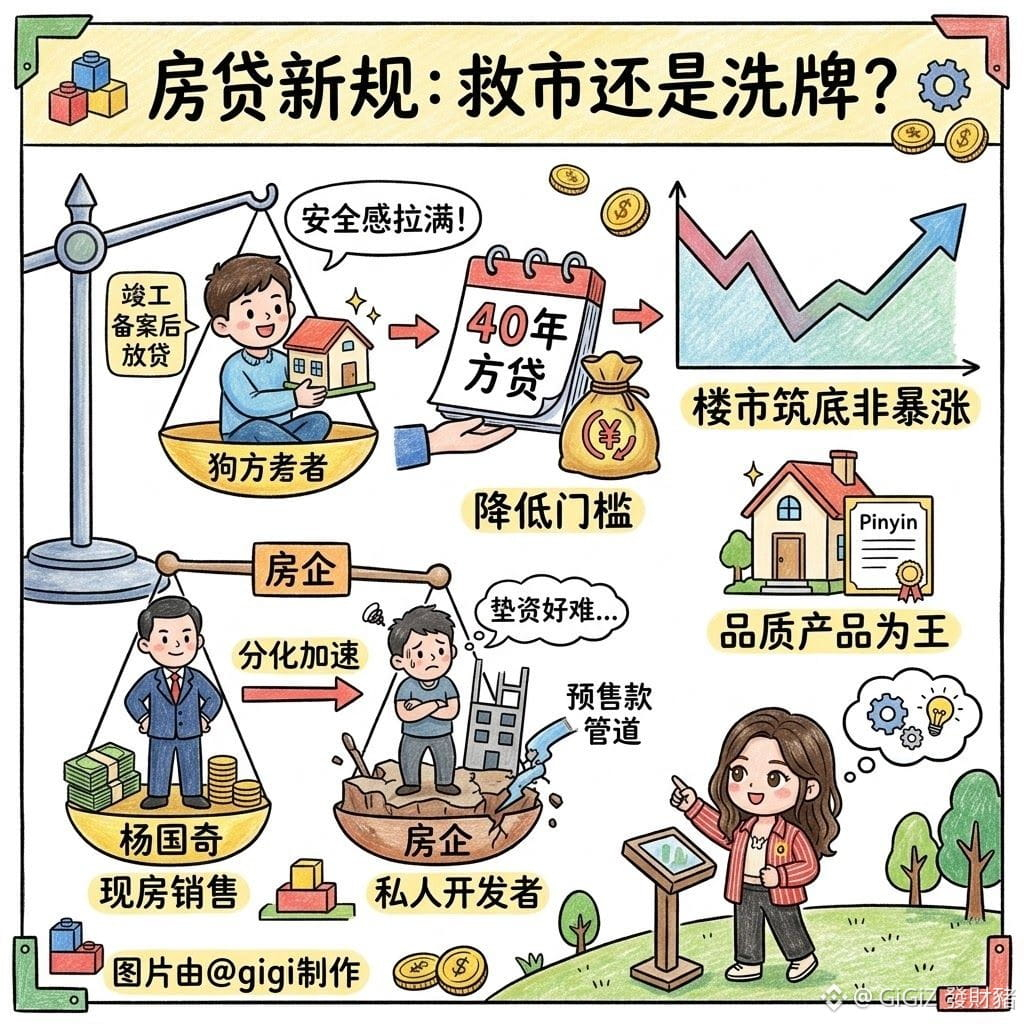
The most crucial “killer feature” in this policy is not extending mortgage terms to 40 years; it’s changing the lending timing. Personal mortgages will only be issued after the project is completed and filed for acceptance.
With a 40-year mortgage deferral, a $1 million loan can save a few hundred yuan per month on payments—effectively lowering the entry barrier on the demand side. But with loans released only after completion, it directly lengthens real estate developers’ cash-recovery cycle. The old model where developers relied on pre-sale proceeds to “recycle cash” has effectively stopped working. Going forward, they must front the funds to build the project themselves before they can receive the final payment.
Based on this shift, there are three clear directions ahead:
⬇️
Rapid divergence among real estate stocks
Goodbye to a broad “rally as a whole” market. Well-capitalized central/state-owned enterprises and stable leading companies can withstand capital “locking,” while private firms with high leverage and reliance on fast turnover face much greater pressure.
Reshaping delivery safety
Eliminate the risk of unfinished projects from the source, boosting homebuyers’ confidence. In the future, only companies that can sell ready-for-occupancy homes and deliver reliable quality will win the market.
Stabilization at the bottom, not a blowout rebound
Extending mortgage terms lowers the near-term threshold, but it cannot fundamentally change expectations for future income. The housing market will remain steady overall, and high-quality projects in core cities will be the first to recover.
At its core, this round of regulation is using short-term pain among real estate developers to achieve long-term deleveraging and prevent unfinished construction. For investors, only top-tier targets with abundant cash flow and the ability to develop ready-for-occupancy properties truly have long-term value.
DYOR
China’s real estate stocks surged sharply, boosted by new rules on mortgage loans—so is this the ultimate rescue for the market, or does it actually accelerate a shakeout? At first glance, the market looks lifted, but if you think it through, it’s not that simple.
The most crucial “killer feature” in this policy is not extending mortgage terms to 40 years; it’s changing the lending timing. Personal mortgages will only be issued after the project is completed and filed for acceptance.
With a 40-year mortgage deferral, a $1 million loan can save a few hundred yuan per month on payments—effectively lowering the entry barrier on the demand side. But with loans released only after completion, it directly lengthens real estate developers’ cash-recovery cycle. The old model where developers relied on pre-sale proceeds to “recycle cash” has effectively stopped working. Going forward, they must front the funds to build the project themselves before they can receive the final payment.
Based on this shift, there are three clear directions ahead:
⬇️
Rapid divergence among real estate stocks
Goodbye to a broad “rally as a whole” market. Well-capitalized central/state-owned enterprises and stable leading companies can withstand capital “locking,” while private firms with high leverage and reliance on fast turnover face much greater pressure.
Reshaping delivery safety
Eliminate the risk of unfinished projects from the source, boosting homebuyers’ confidence. In the future, only companies that can sell ready-for-occupancy homes and deliver reliable quality will win the market.
Stabilization at the bottom, not a blowout rebound
Extending mortgage terms lowers the near-term threshold, but it cannot fundamentally change expectations for future income. The housing market will remain steady overall, and high-quality projects in core cities will be the first to recover.
At its core, this round of regulation is using short-term pain among real estate developers to achieve long-term deleveraging and prevent unfinished construction. For investors, only top-tier targets with abundant cash flow and the ability to develop ready-for-occupancy properties truly have long-term value.
DYOR