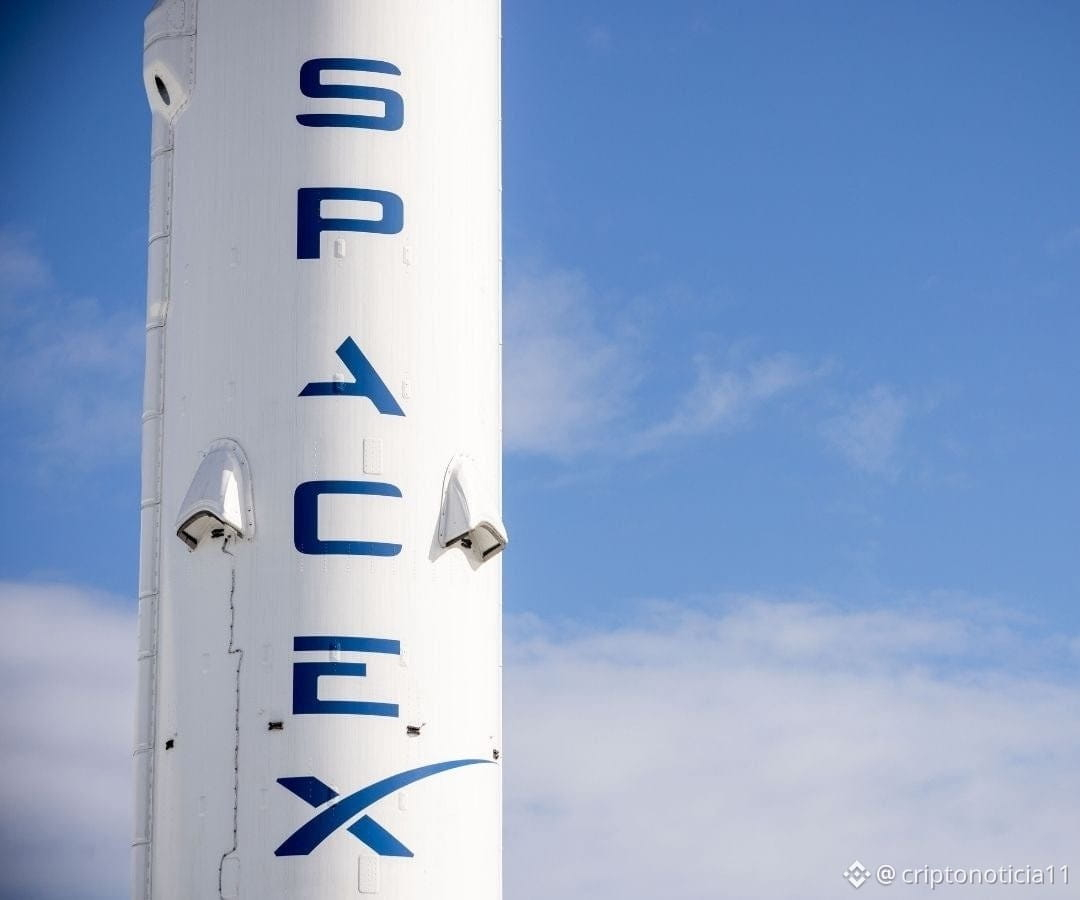
SpaceX Launches NASA’s Space Telescope to Search for Dark Energy The NASA Nancy Grace Roman Space Telescope, aboard SpaceX’s powerful Falcon Heavy rocket, lifted off at 7:26 a.m. local time from Cape Canaveral, Florida.
The NASA telescope, valued at US$4.3 billion, was launched into space on Sunday, marking the start of a mission lasting between five and ten years designed to observe the universe’s most exotic phenomena.
The NASA Nancy Grace Roman Space Telescope, aboard SpaceX’s powerful Falcon Heavy rocket, lifted off at 7:26 a.m. local time from Cape Canaveral, Florida. This launch places the spacecraft on a course to reach its final destination: an orbit approximately 1.6 million kilometers from Earth, where it will begin observing the sky starting in December.
Roman is specifically designed to investigate some of the universe’s most puzzling and mysterious forces. In particular, it will study dark matter and dark energy—an elusive type of matter and energy believed to permeate the cosmos, but that scientists have not been able to observe directly. Roman will attempt to catalog how dark matter and dark energy are shaping distant stars and galaxies, while also helping scientists answer fundamental questions about the expansion of our universe.
“Something fundamental may be missing in physics as we understand it, and the Roman Telescope has the potential to shed light on it,” said Kristen McQuinn, director of the Nancy Grace Roman Space Telescope mission office at the Space Telescope Science Institute, before the launch. “It has the capability to measure this dark energy, this mysterious force, from the very origins of the universe.”
#SPCBX
$SPCXB $SPCX
The NASA telescope, valued at US$4.3 billion, was launched into space on Sunday, marking the start of a mission lasting between five and ten years designed to observe the universe’s most exotic phenomena.
The NASA Nancy Grace Roman Space Telescope, aboard SpaceX’s powerful Falcon Heavy rocket, lifted off at 7:26 a.m. local time from Cape Canaveral, Florida. This launch places the spacecraft on a course to reach its final destination: an orbit approximately 1.6 million kilometers from Earth, where it will begin observing the sky starting in December.
Roman is specifically designed to investigate some of the universe’s most puzzling and mysterious forces. In particular, it will study dark matter and dark energy—an elusive type of matter and energy believed to permeate the cosmos, but that scientists have not been able to observe directly. Roman will attempt to catalog how dark matter and dark energy are shaping distant stars and galaxies, while also helping scientists answer fundamental questions about the expansion of our universe.
“Something fundamental may be missing in physics as we understand it, and the Roman Telescope has the potential to shed light on it,” said Kristen McQuinn, director of the Nancy Grace Roman Space Telescope mission office at the Space Telescope Science Institute, before the launch. “It has the capability to measure this dark energy, this mysterious force, from the very origins of the universe.”
#SPCBX
$SPCXB $SPCX