
橙子Joyce
191 Posts

橙子Joyce
 Square Verified+
价值投资者:以十年为单位投资美股及BTC.ETH.BNB.SOL.推特X:@Joyce88ai

BNB Holder
Frequent Trader
8.7 Years
724 Following
31.9K+ Followers
38.9K+ Liked
Posts
All
Quotes
Videos
Live
G20 finance and technology meeting sets the tone for global monetary policy and new AI regulation rules
Next week, the United States will simultaneously host two key G20 ministerial-level meetings to warm up for the year-end G20 leaders’ summit. The two meetings will run in parallel, covering macro-finance and the technology industry, respectively—setting the tone for the direction of global economic policy and AI regulation.
August 31—September 1: The G20 meeting of finance ministers and central bank governors will focus on global inflation, macro policy coordination, exchange-rate volatility, debt risks, and financial stability. The wording in its communique will directly affect the U.S. dollar, U.S. Treasuries, and the outlook for major global asset classes.
September 1—September 2: The G20 technology ministers’ meeting will be held on top of that, bringing together technology officials worldwide and major tech leaders such as Musk, Jensen Huang, and Sam Altman. It will focus on implementing the U.S. AI “Carroll/AIO” principles, and discuss global AI governance, technological innovation, and the rules of the digital economy.
Tesla officially announces: Cybercab launch event on September 3
Stick to dollar-cost averaging into $BTC, $BNB, and mega-cap technology companies
$TSLAB
$NVDAB
$AAPL.US
Next week, the United States will simultaneously host two key G20 ministerial-level meetings to warm up for the year-end G20 leaders’ summit. The two meetings will run in parallel, covering macro-finance and the technology industry, respectively—setting the tone for the direction of global economic policy and AI regulation.
August 31—September 1: The G20 meeting of finance ministers and central bank governors will focus on global inflation, macro policy coordination, exchange-rate volatility, debt risks, and financial stability. The wording in its communique will directly affect the U.S. dollar, U.S. Treasuries, and the outlook for major global asset classes.
September 1—September 2: The G20 technology ministers’ meeting will be held on top of that, bringing together technology officials worldwide and major tech leaders such as Musk, Jensen Huang, and Sam Altman. It will focus on implementing the U.S. AI “Carroll/AIO” principles, and discuss global AI governance, technological innovation, and the rules of the digital economy.
Tesla officially announces: Cybercab launch event on September 3
Stick to dollar-cost averaging into $BTC, $BNB, and mega-cap technology companies
$TSLAB
$NVDAB
$AAPL.US
Verified
Wach提出九问
Wach raised nine questions in one go, and each of them hit the mark. But he did not give answers on the spot; instead, he said the Federal Reserve’s special working group would study these issues in subsequent reports.
For the Federal Reserve, the most core challenge is how artificial intelligence will affect the employment objective within its dual mandate. Two of the questions are centered on jobs. Historically, general-purpose new technologies like AI have always eliminated some jobs, but the number of new jobs ultimately created has often exceeded the number of jobs lost. Some people’s situation may worsen, but most people can benefit from it.
AI may be different.
AI can see, hear, speak, and perform logical reasoning. In the future, it will also smoothly carry out various physical labor. Therefore, its impact will not be confined to a single industry. Although some new jobs may be created, if supporting policies are lacking, the number of newly added positions will likely be far less than the number of existing jobs today.
AI may have already begun to disrupt employment in the U.S. information sector. This sector includes publishing, broadcasting, media, website operations, and software development, among other areas. Employment in this segment peaked in November 2022, the same month ChatGPT was first released. Since then, industry employment has declined by 11%. However, employment changes are influenced by multiple factors, making it difficult to isolate the impact attributable solely to AI.
The other two questions focus on labor productivity. Productivity is closely tied to employment and is also one of the core drivers of economic growth. Looking back at history, after new technologies are introduced, it often takes years or even decades for productivity benefits to become visible. Past experience suggests that in the early stages—before supporting employee training programs and business processes are fully formed—new technologies tend to put downward pressure on productivity.
Artificial intelligence will significantly shorten this time frame.
Continue with regular investment: #BTC , BNB, and below—large technology companies
$NVDA.US
$AMZNB
$METAB
Wach raised nine questions in one go, and each of them hit the mark. But he did not give answers on the spot; instead, he said the Federal Reserve’s special working group would study these issues in subsequent reports.
For the Federal Reserve, the most core challenge is how artificial intelligence will affect the employment objective within its dual mandate. Two of the questions are centered on jobs. Historically, general-purpose new technologies like AI have always eliminated some jobs, but the number of new jobs ultimately created has often exceeded the number of jobs lost. Some people’s situation may worsen, but most people can benefit from it.
AI may be different.
AI can see, hear, speak, and perform logical reasoning. In the future, it will also smoothly carry out various physical labor. Therefore, its impact will not be confined to a single industry. Although some new jobs may be created, if supporting policies are lacking, the number of newly added positions will likely be far less than the number of existing jobs today.
AI may have already begun to disrupt employment in the U.S. information sector. This sector includes publishing, broadcasting, media, website operations, and software development, among other areas. Employment in this segment peaked in November 2022, the same month ChatGPT was first released. Since then, industry employment has declined by 11%. However, employment changes are influenced by multiple factors, making it difficult to isolate the impact attributable solely to AI.
The other two questions focus on labor productivity. Productivity is closely tied to employment and is also one of the core drivers of economic growth. Looking back at history, after new technologies are introduced, it often takes years or even decades for productivity benefits to become visible. Past experience suggests that in the early stages—before supporting employee training programs and business processes are fully formed—new technologies tend to put downward pressure on productivity.
Artificial intelligence will significantly shorten this time frame.
Continue with regular investment: #BTC , BNB, and below—large technology companies
$NVDA.US
$AMZNB
$METAB
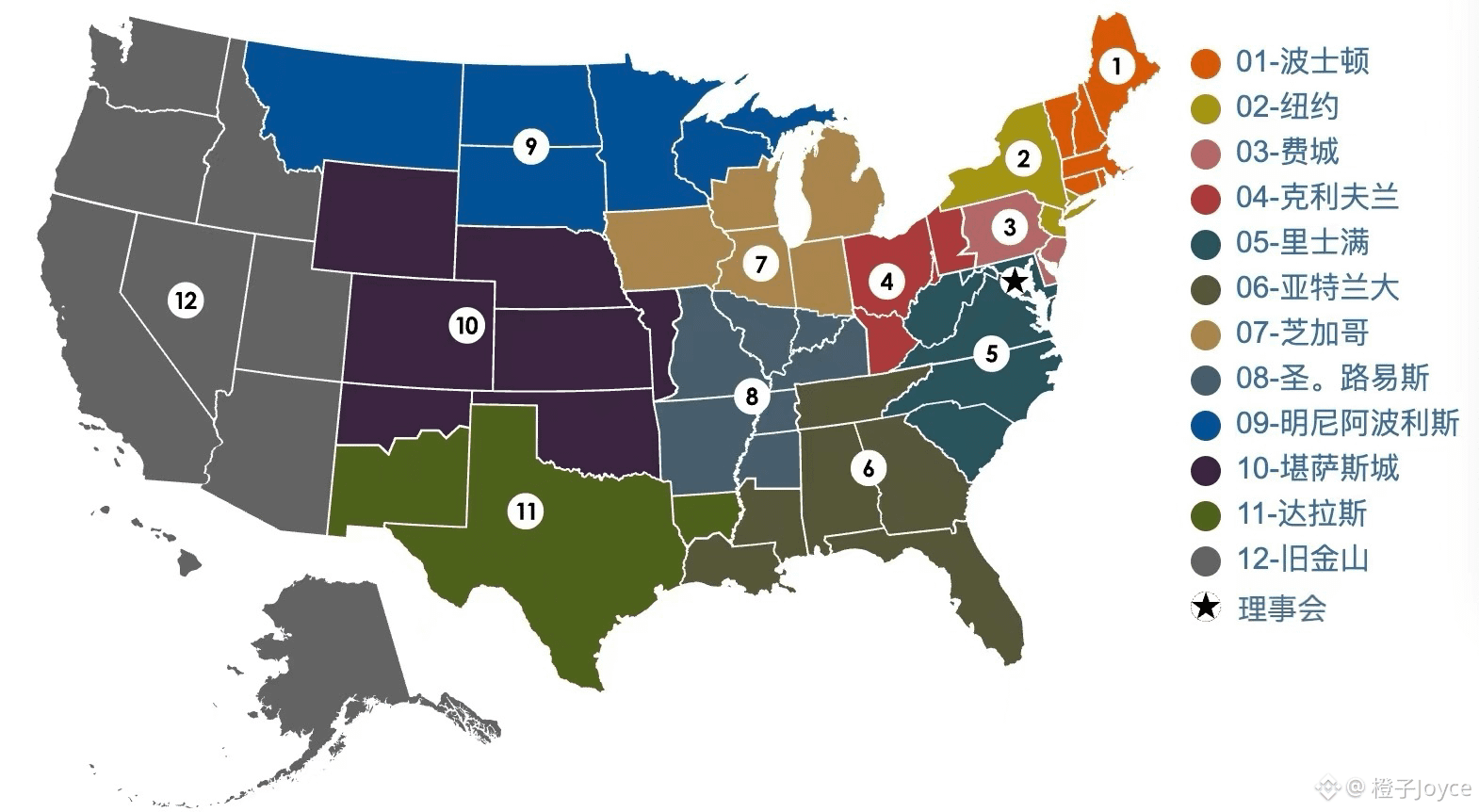


The peak of Bitcoin’s current bull cycle is likely driven by institutional capital and ETF demand outside the United States.
Improved stablecoin liquidity and continued development of tokenized asset infrastructure will expand global market participation.
For example, in South Korea, the country currently lacks spot Bitcoin ETFs, retail investors cannot buy overseas-listed spot Bitcoin ETFs, and most companies cannot open trading accounts to buy Bitcoin. South Korea has begun phasing in access for businesses. The Financial Services Commission (FSC) roadmap covers roughly 3,500 listed companies and eligible professional investors, but financial institutions and other firms are still excluded.
Strategy’s Bitcoin banking industry adopts an index-based assessment of 25 major institutions across areas such as trading, custody, digital asset products, financing, and corporate participation, with an overall adoption rate of 32%. Data shows that the value of globally tokenized distributed assets is $38.63 billion, up 2.65% from 30 days ago. The Bank for International Settlements (BIS) notes that stablecoins have the potential to enable faster, programmable payments, but their current design may introduce risks related to financial integrity, liquidity, and monetary aspects.
In the two years before listing, U.S. spot Bitcoin ETFs accumulated net inflows of about $57 billion.
The next phase will be global institutionalization, when more institutions view Bitcoin as a strategic asset and countries lacking ETFs will further develop their investment channels.
$BTC
$BNB
Improved stablecoin liquidity and continued development of tokenized asset infrastructure will expand global market participation.
For example, in South Korea, the country currently lacks spot Bitcoin ETFs, retail investors cannot buy overseas-listed spot Bitcoin ETFs, and most companies cannot open trading accounts to buy Bitcoin. South Korea has begun phasing in access for businesses. The Financial Services Commission (FSC) roadmap covers roughly 3,500 listed companies and eligible professional investors, but financial institutions and other firms are still excluded.
Strategy’s Bitcoin banking industry adopts an index-based assessment of 25 major institutions across areas such as trading, custody, digital asset products, financing, and corporate participation, with an overall adoption rate of 32%. Data shows that the value of globally tokenized distributed assets is $38.63 billion, up 2.65% from 30 days ago. The Bank for International Settlements (BIS) notes that stablecoins have the potential to enable faster, programmable payments, but their current design may introduce risks related to financial integrity, liquidity, and monetary aspects.
In the two years before listing, U.S. spot Bitcoin ETFs accumulated net inflows of about $57 billion.
The next phase will be global institutionalization, when more institutions view Bitcoin as a strategic asset and countries lacking ETFs will further develop their investment channels.
$BTC
$BNB

Verified
According to Forbes, Arthur Hayes, co-founder of BitMEX and head of the Maelstrom Fund, said that the bond-market support recently pledged by U.S. Treasury Secretary Scott Bessent will push the Federal Reserve to “keep printing money,” and that the price of Bitcoin could reach $250,000. “Get ready, start buying,” Hayes told podcast host Anthony Pompliano. He expects Bitcoin to “perform very well” in the coming years, adding, “We won’t experience a 2008-style large-scale credit crisis, but we will just keep printing money, and eventually you’ll see Bitcoin hit $250,000.” Hayes noted that if the market does not run according to Bessent’s wishes and keeps testing him, he would have to continue printing money, potentially taking actions similar to those of former Treasury Secretary Yellen—draining the Fed’s reverse repo tools and injecting $2.4 trillion in liquidity. This week, reports said Bessent has indicated the Treasury may use nearly $1 trillion from the Treasury General Account (TGA) to fund bond purchases.
Gold, silver, copper, BTC, ETH, BNB, SOL—are all well worth investing in!
$XAUT
$BTC
$BNB
Gold, silver, copper, BTC, ETH, BNB, SOL—are all well worth investing in!
$XAUT
$BTC
$BNB


Verified
Woush Jackson Hole debut sends hawkish signal: inflation still above 2%, and the Fed “still has work to do”
Summary of key points from Fed Chair Woush Jackson Hole speech:
1. On Friday, Fed Chair Kevin Woush reiterated that the central bank’s inflation target is benchmarked to the personal consumption expenditures (PCE) price index in a prepared statement for an economic symposium hosted by the Kansas City Fed. “There should be no misunderstanding: the Fed’s 2% price stability target, measured by the personal consumption expenditures (PCE) price index, is a steadfast and unshakable objective,” he said.
2. Woush confirmed that “short-term interest rates are the main tool for achieving the dual mandate. Unconventional policies intended to stimulate economic activity may be applicable in truly crisis moments, but in other circumstances they should be used with caution—indeed, they may not be used at all.”
3. Woush said that if core inflation is unable to keep falling, officials will have to take action. “We have to be confident that core inflation is moving toward our target—clearly and fast enough. Otherwise, we still have work to do.”
4. Woush said that policymakers should focus on prices for now, adding that recent inflation data that has been better than expected does not mean that “the underlying trend has seen a meaningful improvement. Inflation is still above our 2% target. Therefore, the Fed’s top priority should be prices at present,” he said.
5. Woush also defended its approach of lacking forward guidance. “A quieter Fed, with more targeted communication, will better achieve its goals. And whether we can deliver on the mission—that is the only truly meaningful standard for testing our credibility.”
$GOOGL.US
Google’s stock price is very attractive; its cash flow ratio ranks among the global top ten. The price is really compelling—people are advised to buy.
Summary of key points from Fed Chair Woush Jackson Hole speech:
1. On Friday, Fed Chair Kevin Woush reiterated that the central bank’s inflation target is benchmarked to the personal consumption expenditures (PCE) price index in a prepared statement for an economic symposium hosted by the Kansas City Fed. “There should be no misunderstanding: the Fed’s 2% price stability target, measured by the personal consumption expenditures (PCE) price index, is a steadfast and unshakable objective,” he said.
2. Woush confirmed that “short-term interest rates are the main tool for achieving the dual mandate. Unconventional policies intended to stimulate economic activity may be applicable in truly crisis moments, but in other circumstances they should be used with caution—indeed, they may not be used at all.”
3. Woush said that if core inflation is unable to keep falling, officials will have to take action. “We have to be confident that core inflation is moving toward our target—clearly and fast enough. Otherwise, we still have work to do.”
4. Woush said that policymakers should focus on prices for now, adding that recent inflation data that has been better than expected does not mean that “the underlying trend has seen a meaningful improvement. Inflation is still above our 2% target. Therefore, the Fed’s top priority should be prices at present,” he said.
5. Woush also defended its approach of lacking forward guidance. “A quieter Fed, with more targeted communication, will better achieve its goals. And whether we can deliver on the mission—that is the only truly meaningful standard for testing our credibility.”
$GOOGL.US
Google’s stock price is very attractive; its cash flow ratio ranks among the global top ten. The price is really compelling—people are advised to buy.
GOOGLUS+1.75%
Verified
NVIDIA’s impressive earnings report caused its market value to surge by $442 billion in a single day; after the close, its market cap reached $5.49 trillion, marking the company’s second-largest single-day gain in history and completely breaking the “stock price must fall on earnings day” curse. The strong results dispelled the gloom over AI trading, catching short-sellers off guard, and also boosted the entire technology sector.
Although earnings expectations far exceeded forecasts, they may still be somewhat on the conservative side. The company has clearly described the current situation as “supply constrained.” If supply were not constrained, actual demand growth would be significantly higher.
NVIDIA’s outstanding growth is deeply embedded in Wall Street’s collective perception. Investors generally expect its performance to come in above expectations, which has led to its stock falling on six of the past eight earnings release days. This week, many options traders are still betting on the stock price to drop after the earnings announcement.
“Accelerated growth driven by architecture evolution (1:1 delivery ratio between LPU and NVL rack implementations, as well as the launch of the Vera intelligent CPU rack).”
“Capital returns remain strong. In fiscal 2027’s second quarter, the return amount hit a record $26 billion, including $20 billion in share repurchases and a quarterly dividend of $0.25 per share, totaling $6 billion.”
“Capacity ramp-up for Rubin and LPU is faster than expected. Vera Rubin has started mass production and shipments this month. All hyperscale data center, AI cloud platform, and system OEM vendors have placed orders, making it NVIDIA’s fastest-growing chip to date.
Groq 3 LPX is also now fully in production and will begin mass production and shipping later this quarter, with Neocloud NEBIUS becoming the first adopter. Revenue from the Vera Rubin chips is expected to account for about 20% of data center revenue in fiscal 2027’s third quarter.”
NVIDIA’s latest earnings report lifted Wall Street’s optimism, with a number of major banks—including Morgan Stanley, Citigroup, and Mizuho Bank—raising their target prices. Twenty-six investment banks increased their target price for NVIDIA by $250–$550!
I began investing in NVIDIA stock in the summer of 2020, and my understanding of the company has been very thorough and comprehensive. I have continued to invest in NVIDIA shares. I highly recommend that you allocate and buy NVIDIA stock as part of your investment portfolio.
$NVDA.US
Although earnings expectations far exceeded forecasts, they may still be somewhat on the conservative side. The company has clearly described the current situation as “supply constrained.” If supply were not constrained, actual demand growth would be significantly higher.
NVIDIA’s outstanding growth is deeply embedded in Wall Street’s collective perception. Investors generally expect its performance to come in above expectations, which has led to its stock falling on six of the past eight earnings release days. This week, many options traders are still betting on the stock price to drop after the earnings announcement.
“Accelerated growth driven by architecture evolution (1:1 delivery ratio between LPU and NVL rack implementations, as well as the launch of the Vera intelligent CPU rack).”
“Capital returns remain strong. In fiscal 2027’s second quarter, the return amount hit a record $26 billion, including $20 billion in share repurchases and a quarterly dividend of $0.25 per share, totaling $6 billion.”
“Capacity ramp-up for Rubin and LPU is faster than expected. Vera Rubin has started mass production and shipments this month. All hyperscale data center, AI cloud platform, and system OEM vendors have placed orders, making it NVIDIA’s fastest-growing chip to date.
Groq 3 LPX is also now fully in production and will begin mass production and shipping later this quarter, with Neocloud NEBIUS becoming the first adopter. Revenue from the Vera Rubin chips is expected to account for about 20% of data center revenue in fiscal 2027’s third quarter.”
NVIDIA’s latest earnings report lifted Wall Street’s optimism, with a number of major banks—including Morgan Stanley, Citigroup, and Mizuho Bank—raising their target prices. Twenty-six investment banks increased their target price for NVIDIA by $250–$550!
I began investing in NVIDIA stock in the summer of 2020, and my understanding of the company has been very thorough and comprehensive. I have continued to invest in NVIDIA shares. I highly recommend that you allocate and buy NVIDIA stock as part of your investment portfolio.
$NVDA.US
NVDAUS-4.48%
Verified
Walsh Jackson Hall’s first public speech is about to arrive! The market hopes he will talk more about economic issues, and views on interest-rate prospects are divided.
① Federal Reserve Chair Kevin Walsh will deliver his first keynote address at Jackson Hole on Friday at 10:00 PM Beijing time;
② According to a media survey, the market expects to receive more information from the Fed chair;
③ Among 31 respondents, 80% believe the Fed chair should provide more insights into the state of the economy.
I think the likelihood of not raising rates is relatively high, and it’s a very good idea to allocate capital to stocks of Nvidia, Microsoft, Amazon, and SpaceX.
The valuations of these companies are relatively reasonable right now, making them well-suited for a buy allocation.
$NVDA.US
$SPCX
$AAPL.US
① Federal Reserve Chair Kevin Walsh will deliver his first keynote address at Jackson Hole on Friday at 10:00 PM Beijing time;
② According to a media survey, the market expects to receive more information from the Fed chair;
③ Among 31 respondents, 80% believe the Fed chair should provide more insights into the state of the economy.
I think the likelihood of not raising rates is relatively high, and it’s a very good idea to allocate capital to stocks of Nvidia, Microsoft, Amazon, and SpaceX.
The valuations of these companies are relatively reasonable right now, making them well-suited for a buy allocation.
$NVDA.US
$SPCX
$AAPL.US

It is expected that by 2029, the BTC price will reach $300,000, making it the main beneficiary of “currency devaluation trades.” The core logic behind this forecast is that the era of declining interest rates lasting for 40 years has ended. Against the backdrop of unprecedentedly high sovereign debt, governments around the world are facing increasingly heavy debt-interest burdens. Rising yields will create a self-reinforcing vicious cycle—interest expenses increase, fiscal deficits widen, and borrowing demand keeps soaring.
Investors who hold scarce assets that cannot be diluted will benefit from this. BTC’s unique holding structure—about 60% of BTC is held by long-term holders who are insensitive to price (even if the price drops by more than 50%, they will continue to hold)—combined with the ongoing expansion of institutional and retail investment channels, further strengthens BTC’s position. I am very optimistic about BTC’s scarcity, and continuing to invest in BTC is the best choice.
$BTC
$BNB
Investors who hold scarce assets that cannot be diluted will benefit from this. BTC’s unique holding structure—about 60% of BTC is held by long-term holders who are insensitive to price (even if the price drops by more than 50%, they will continue to hold)—combined with the ongoing expansion of institutional and retail investment channels, further strengthens BTC’s position. I am very optimistic about BTC’s scarcity, and continuing to invest in BTC is the best choice.
$BTC
$BNB

Verified
NVDAUS-4.48%
SPCXUS+0.13%
Verified
Bitcoin Asia 2026 (Asia Bitcoin Conference) will be held on August 27–28, 2026 at the Hong Kong Convention and Exhibition Centre (HKCEC). Hosted by BTC Inc. (a subsidiary of Nakamoto Inc.) and title-sponsored by Metaplanet, it is one of Asia’s largest Bitcoin-themed conferences.
According to official announcements and confirmations by multiple media outlets (including the first batch and subsequent updates, as of the eve of the event), the major big names/keynote speakers in the crypto community and related fields include:
Core Headliners
• CZ (Changpeng Zhao): Founder of Binance (later focused on education and regulatory consulting), already confirmed to speak on the main stage.
• Balaji Srinivasan: Founder of Network School and author of The Network State, delivering the marquee closing keynote speech.
• Justin Sun (孙宇晨): Founder of TRON, advisor to WBTC/HTX, etc.
• Simon Gerovich: CEO of Metaplanet (the largest corporate Bitcoin holder in Japan; the conference’s title sponsor).
• David Bailey: CEO & Chairman of Nakamoto Inc. (NASDAQ: NAKA).
• Gracy Chen: CEO of Bitget.
• Mark Yusko: Managing Partner at Morgan Creek Digital.
• AJ Scaramucci: Founder and CEO of Treasure Trove.
Other Important Confirmed Guests
• Hugh Hendry: Founder of Acid Capitalist and former macro hedge fund manager (publicly shifted to supporting Bitcoin as a monetary asset).
• Matt Cole: Chairman and CEO of Strive (a publicly listed company related to Bitcoin treasuries).
• Jack Kong: Founder of Nano Labs, related to Hong Kong Cyberport.
• Bonnie Chang: Founder and host of Bonnie Blockchain.
• Policy and institutional side: Dr. Hon. Johnny Ng (吴杰庄) (Hong Kong Legislative Council member, National Committee of the Chinese People’s Political Consultative Conference member), Bilal Bin Saqib (Chairman of Pakistan’s Virtual Assets Regulatory Authority), etc.
In addition, there are many speakers from exchanges, custodianship, mining, development, institutional investment, and other fields (the official website lists 150+ people, including relevant figures such as Stephan Livera and Bitget/BitGo/Bitdeer, etc.). The agenda covers institutional adoption, macro finance, regulation, infrastructure, and more.
According to official announcements and confirmations by multiple media outlets (including the first batch and subsequent updates, as of the eve of the event), the major big names/keynote speakers in the crypto community and related fields include:
Core Headliners
• CZ (Changpeng Zhao): Founder of Binance (later focused on education and regulatory consulting), already confirmed to speak on the main stage.
• Balaji Srinivasan: Founder of Network School and author of The Network State, delivering the marquee closing keynote speech.
• Justin Sun (孙宇晨): Founder of TRON, advisor to WBTC/HTX, etc.
• Simon Gerovich: CEO of Metaplanet (the largest corporate Bitcoin holder in Japan; the conference’s title sponsor).
• David Bailey: CEO & Chairman of Nakamoto Inc. (NASDAQ: NAKA).
• Gracy Chen: CEO of Bitget.
• Mark Yusko: Managing Partner at Morgan Creek Digital.
• AJ Scaramucci: Founder and CEO of Treasure Trove.
Other Important Confirmed Guests
• Hugh Hendry: Founder of Acid Capitalist and former macro hedge fund manager (publicly shifted to supporting Bitcoin as a monetary asset).
• Matt Cole: Chairman and CEO of Strive (a publicly listed company related to Bitcoin treasuries).
• Jack Kong: Founder of Nano Labs, related to Hong Kong Cyberport.
• Bonnie Chang: Founder and host of Bonnie Blockchain.
• Policy and institutional side: Dr. Hon. Johnny Ng (吴杰庄) (Hong Kong Legislative Council member, National Committee of the Chinese People’s Political Consultative Conference member), Bilal Bin Saqib (Chairman of Pakistan’s Virtual Assets Regulatory Authority), etc.
In addition, there are many speakers from exchanges, custodianship, mining, development, institutional investment, and other fields (the official website lists 150+ people, including relevant figures such as Stephan Livera and Bitget/BitGo/Bitdeer, etc.). The agenda covers institutional adoption, macro finance, regulation, infrastructure, and more.

Apple (AAPL) will hold the biggest product launch of this year at its Cupertino headquarters at 10:00 a.m. Pacific Time on September 9 (1:00 a.m. the next day Beijing time). This will also be the first time that John Ternus, after taking over as CEO, will lead a major new product launch. Apple is expected to unveil its first foldable-screen iPhone, with a device size roughly like a standard passport; when unfolded, the screen size will be close to that of a small iPad. This will be the most significant design change for the iPhone in nearly 20 years since it was introduced. Apple also plans to release iPhone 18 Pro and Pro Max, featuring a faster chip, improved battery life, and a major upgrade to the camera—at least the larger models will be equipped with a mechanical aperture. The second-generation iPhone Air and the standard iPhone 18 are expected to be delayed until next spring. A new Apple Watch could also be unveiled around the same time. Tim Cook, who is stepping down as CEO, will continue to serve as Executive Chairman.
Despite a potential price as high as $2,500 for Apple’s first foldable-screen iPhone launching in September, first-year shipments are still expected to exceed 10 million units, helping to restart growth in the foldable phone market. Market expectations are that global shipments of foldable-screen phones will grow by 12.6% this year and 18% next year; by 2027, Apple will account for 40% of worldwide foldable phone shipments. At the same time, due to rising prices for components such as memory chips and supply constraints, the global overall smartphone market is expected to shrink by a record 16.7% this year, with the claim that “the era of cheap smartphones has already ended.”
$AAPL
Despite a potential price as high as $2,500 for Apple’s first foldable-screen iPhone launching in September, first-year shipments are still expected to exceed 10 million units, helping to restart growth in the foldable phone market. Market expectations are that global shipments of foldable-screen phones will grow by 12.6% this year and 18% next year; by 2027, Apple will account for 40% of worldwide foldable phone shipments. At the same time, due to rising prices for components such as memory chips and supply constraints, the global overall smartphone market is expected to shrink by a record 16.7% this year, with the claim that “the era of cheap smartphones has already ended.”
$AAPL
Looking forward to NASA—the U.S. space agency—fulfilling astronauts’ dream of returning to the Moon, and also “urging” SpaceX to increase launch frequency. NASA Administrator Jared Isaacman said this month that if “Starship” can maintain one launch per month, and even achieve launches every few weeks by the end of the year, he would feel more confident about conducting tests of next year’s “Starship Human Landing System.”
SpaceX says the base is designed to support “thousands of Starship flights per year.”
In the end, the “Louisiana Spaceport” will have “more than a dozen” launch pads, enabling 30 “Starship” launches per day, becoming the largest launch site on Earth.
This is crucial to SpaceX’s plan to build up to 1 million data center satellites, which the company hopes to deploy into near-polar orbits.
Now SpaceX’s stock price is very attractive—maybe you can consider stocking up!
For reference only!
$SPCX.US
SpaceX says the base is designed to support “thousands of Starship flights per year.”
In the end, the “Louisiana Spaceport” will have “more than a dozen” launch pads, enabling 30 “Starship” launches per day, becoming the largest launch site on Earth.
This is crucial to SpaceX’s plan to build up to 1 million data center satellites, which the company hopes to deploy into near-polar orbits.
Now SpaceX’s stock price is very attractive—maybe you can consider stocking up!
For reference only!
$SPCX.US
Verified
SpaceX plans to build a $100 billion Starship launch base on the southern coast of Louisiana, adding a third Starship launch site. The facility will be located on Pea Island, covering about 125,000 acres. It is planned to construct five launch complexes, 10 launch pads, as well as propellant production, power generation, spacecraft processing, and employee housing facilities. The base will help SpaceX increase the frequency of Starship launches and support plans to build up to 1 million data center satellites in the future. Starship will also be used to launch upgraded Starlink satellites, with the earliest orbit data center mission planned for 2027, and NASA astronauts for a Moon landing as early as 2028.
Acquiring Cursor is an important step for SpaceX to expand its enterprise-grade artificial intelligence capabilities, because Cursor’s technology and data can help improve the performance of Grok.
After integrating Cursor’s data into Grok’s supplemental training, Grok’s performance has already improved significantly. Grok 4.6 combines powerful AI capabilities with costs that are substantially lower than comparable products, making it more appealing to users and supporting broader applications.
As enterprise customers’ profitability potential for Grok becomes increasingly important over time, artificial intelligence may become a larger contributor to SpaceX’s revenue. More widespread applications and continuously improving profitability will provide new momentum for growth beyond SpaceX’s existing business.
Now SpaceX’s stock price is very attractive, and positioning ahead of time to buy is the best investment strategy. In the next 3–5 years, you could see multiple times the returns!
For reference only!
$SPCXB
Acquiring Cursor is an important step for SpaceX to expand its enterprise-grade artificial intelligence capabilities, because Cursor’s technology and data can help improve the performance of Grok.
After integrating Cursor’s data into Grok’s supplemental training, Grok’s performance has already improved significantly. Grok 4.6 combines powerful AI capabilities with costs that are substantially lower than comparable products, making it more appealing to users and supporting broader applications.
As enterprise customers’ profitability potential for Grok becomes increasingly important over time, artificial intelligence may become a larger contributor to SpaceX’s revenue. More widespread applications and continuously improving profitability will provide new momentum for growth beyond SpaceX’s existing business.
Now SpaceX’s stock price is very attractive, and positioning ahead of time to buy is the best investment strategy. In the next 3–5 years, you could see multiple times the returns!
For reference only!
$SPCXB
A very professional analysis

心悦Joy
·
--
In the past three weeks, speculative buy orders have flooded into the gold futures market, with a scale so large that it has drawn attention from market participants. From July 28 to August 18, managed funds, other categories, and non-reportable categories together recorded a net purchase of $22.2 billion in gold futures—the highest nominal amount in more than a decade. This round of buying consists of two parts: long position increases contributed $13.6 billion, while short covering contributed $8.6 billion. As of the statistics cutoff date, the gold net long position has already been at the 93rd percentile within the two-year lookback range. There is a "significant upside risk" to recent gains in gold. A friendly reminder: the risk of short-term position overheating is elevated, and the Jackson Hole meeting is the biggest near-term variable.
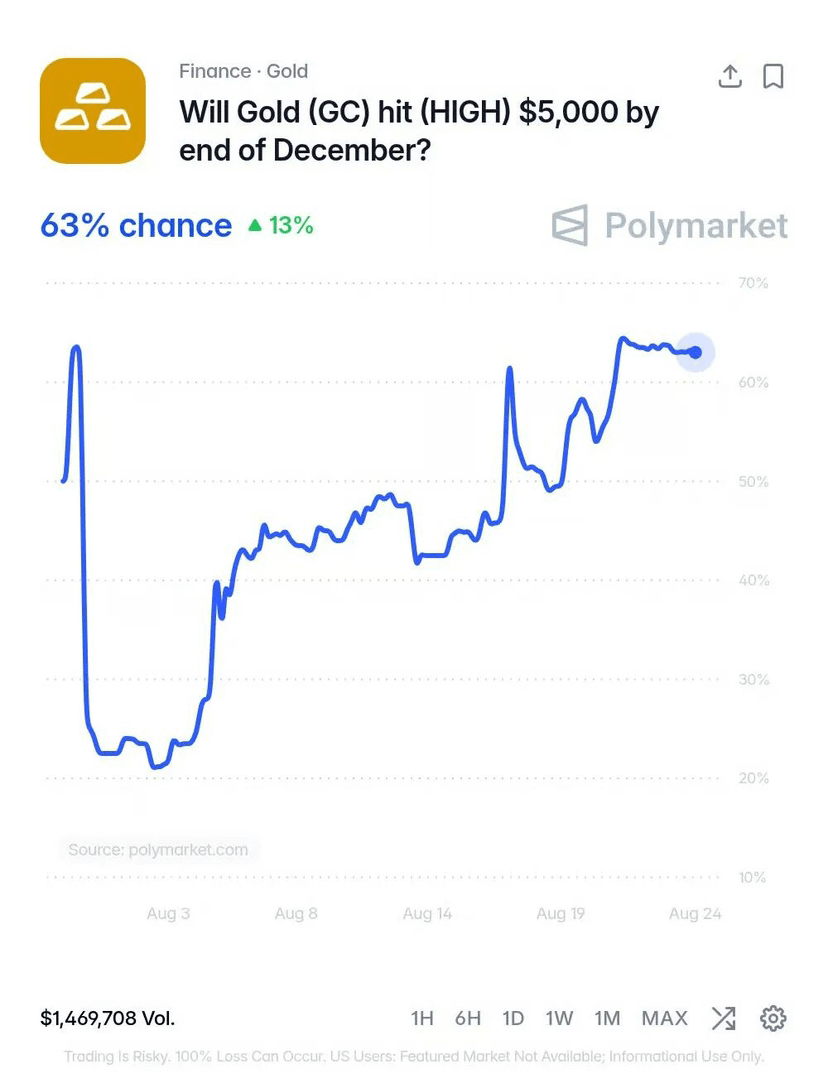
As the gold price continues to strengthen, the odds in the market are also moving rapidly. According to predicted market data, the market-implied probability of gold reaching $5,000 per ounce within the year has jumped from 40% a week ago to currently more than 60%.
The provided near-term technical reference levels are as follows: Resistance levels: 4670, 4770, 4890 Support levels: 4520, 4380, 4305 $XAU
As the gold price continues to strengthen, the odds in the market are also moving rapidly. According to predicted market data, the market-implied probability of gold reaching $5,000 per ounce within the year has jumped from 40% a week ago to currently more than 60%.
The provided near-term technical reference levels are as follows: Resistance levels: 4670, 4770, 4890 Support levels: 4520, 4380, 4305 $XAU


Verified
On August 26 at 20:30, the July PCE data will be released. If the reading comes in hotter than expected, expectations for the Federal Reserve’s September policy path are likely to be affected, and fluctuations in U.S. Treasury yields may move in tandem with global risk assets. In addition, the revised estimate of the U.S. real GDP for Q2 will be released on August 26 at 20:30. On a month-over-month basis, investors expect the Fed’s preferred inflation gauge—the core PCE price index—to rise by 0.2%. If the increase is larger, it could lead investors to reconsider expectations that the Fed will stay on hold in September, potentially opening the door for a pullback in gold. Conversely, if the monthly core PCE inflation data is weaker than expected, it may help gold move higher further.
Then on Thursday, August 27, traders will focus on the weekly initial jobless claims report. At 22:00 on Friday, the preliminary annual benchmark revision to nonfarm payrolls data will also be released, along with the final reading of the University of Michigan’s August consumer sentiment index.
The preliminary annual benchmark revision to nonfarm employment data will indicate whether previously reported U.S. employment figures were overestimated or underestimated. After recent signs of softer hiring, this revision may become even more important. If it suggests a significant weakening in the labor market, it could affect expectations for Fed policy.
Then on Thursday, August 27, traders will focus on the weekly initial jobless claims report. At 22:00 on Friday, the preliminary annual benchmark revision to nonfarm payrolls data will also be released, along with the final reading of the University of Michigan’s August consumer sentiment index.
The preliminary annual benchmark revision to nonfarm employment data will indicate whether previously reported U.S. employment figures were overestimated or underestimated. After recent signs of softer hiring, this revision may become even more important. If it suggests a significant weakening in the labor market, it could affect expectations for Fed policy.

Partly True
The momentum of U.S. economic growth is accelerating. S&P Global’s U.S. Composite PMI rose by 1.5 points in August to 56.0, the highest level since April 2022 and the third consecutive month of gains. At the same time, the Services PMI increased by 2.2 points to 56.8, the highest level since March 2022. The Manufacturing PMI fell by 0.7 points to 53.9, the lowest level in the past five months, but it remains in the expansion range.
Meanwhile, U.S. firms’ hiring activity is led by the services sector, with headcount increasing at the fastest pace since January 2025. These data suggest that the United States’ year-on-year GDP growth rate in Q3 2026 will reach +3.0%, compared with +1.5% in Q2. Artificial intelligence is driving a historic wave of growth.
Meanwhile, U.S. firms’ hiring activity is led by the services sector, with headcount increasing at the fastest pace since January 2025. These data suggest that the United States’ year-on-year GDP growth rate in Q3 2026 will reach +3.0%, compared with +1.5% in Q2. Artificial intelligence is driving a historic wave of growth.

Log in to explore more content