
Brothers!! I finally understand why MicroStrategy sold BTC at the bottom!
Damn it, you’re still the boss!
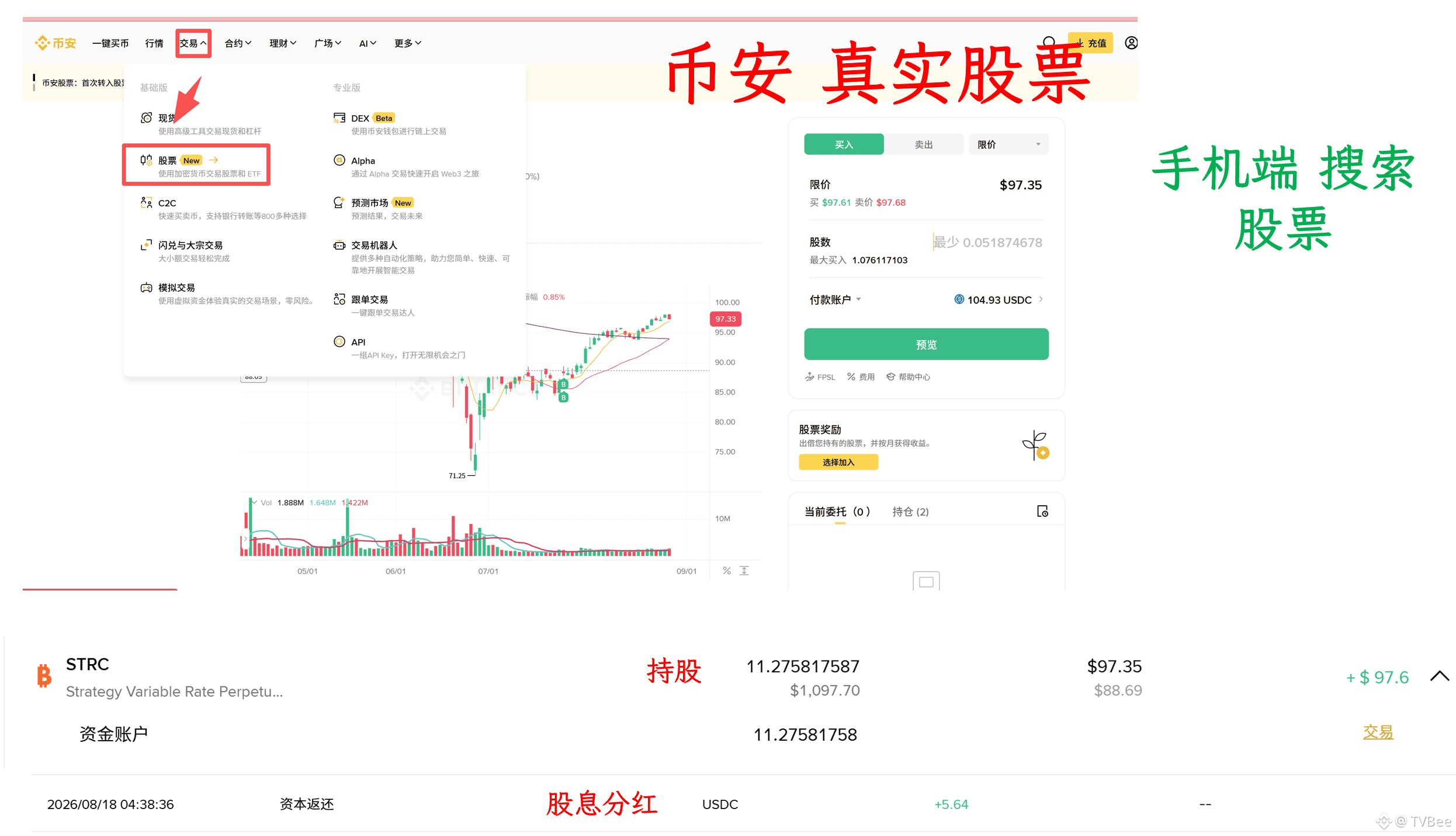
Here’s the deal: Fengge coin is over in the US stock market through Anzhen America—after buying $STRC , it received STRC dividends. Half a month is $5.64.
The holdings are 11.27581758 shares, and the par value per share is $100.
The annualized return is 5.64/(11.27581758*100)*24 = 12%.
This is the STRC dividend yield—somehow there’s no tax on receiving preferred stock dividends
(tax rate 30%). (They keep promoting Bstocks, but Binance’s real stocks are also pretty good. Fengge also benefits from STRC’s rise from $88 to $97, plus a 12% annualized dividend yield.)
Why no tax on preferred stock dividends? After some digging, Fengge found out that the US rule is: if a listed company has no distributable profits, then preferred stock dividends don’t have to be taxed!
When MicroStrategy sells BTC below its cost basis, it creates a realized loss. At that point, preferred stock shareholders don’t have to pay tax.
Now BTC is already above MicroStrategy’s cost, but even if MicroStrategy sells BTC at this time, any profits must first cover the previous losses. Only after that could there be distributable profits. So even if MicroStrategy is in a profitable state, as long as it doesn’t sell too much BTC, STRC shareholders can still avoid paying tax and directly take the 12% annualized return.
Salor was originally fighting for benefits for STRC shareholders—and the source of these benefits isn’t paid for by holders of $MSTR, nor is it borne by BTC holders. It’s simply that the US Treasury collects less tax.
At the same time, this also means that once MicroStrategy is in profit, the amount of BTC it’s willing to sell is very small.
Doesn’t it feel like double happiness at once? 😂
Damn it, you’re still the boss!
Here’s the deal: Fengge coin is over in the US stock market through Anzhen America—after buying $STRC , it received STRC dividends. Half a month is $5.64.
The holdings are 11.27581758 shares, and the par value per share is $100.
The annualized return is 5.64/(11.27581758*100)*24 = 12%.
This is the STRC dividend yield—somehow there’s no tax on receiving preferred stock dividends
(tax rate 30%). (They keep promoting Bstocks, but Binance’s real stocks are also pretty good. Fengge also benefits from STRC’s rise from $88 to $97, plus a 12% annualized dividend yield.)
Why no tax on preferred stock dividends? After some digging, Fengge found out that the US rule is: if a listed company has no distributable profits, then preferred stock dividends don’t have to be taxed!
When MicroStrategy sells BTC below its cost basis, it creates a realized loss. At that point, preferred stock shareholders don’t have to pay tax.
Now BTC is already above MicroStrategy’s cost, but even if MicroStrategy sells BTC at this time, any profits must first cover the previous losses. Only after that could there be distributable profits. So even if MicroStrategy is in a profitable state, as long as it doesn’t sell too much BTC, STRC shareholders can still avoid paying tax and directly take the 12% annualized return.
Salor was originally fighting for benefits for STRC shareholders—and the source of these benefits isn’t paid for by holders of $MSTR, nor is it borne by BTC holders. It’s simply that the US Treasury collects less tax.
At the same time, this also means that once MicroStrategy is in profit, the amount of BTC it’s willing to sell is very small.
Doesn’t it feel like double happiness at once? 😂