
阿简在路上
405 Posts

阿简在路上
Crypto Research|AI、Macro、On-chain|Daily Research|Market Frameworks | 长期主义|用数据拆解市场叙事|NFA|📩 DM Open
6 Following
213 Followers
913 Liked
Posts
Portfolio
All
Quotes
Trade well, live well

#BTC触及80000美元 , this hot trend has made the whole community start buzzing. A few days ago, people were still asking whether it was a fake breakout—today, someone is already asking when it will reach 100k. This is the market: it first lifts the price and wipes away the fear you have stored in your memory. Once you finally believe, it then reminds you not to forget about leverage 🤯
Today’s buy-side pressure really is strong. This isn’t an “air” market, but leverage is expanding along with it. More and more people feel like if they don’t get on board now, they’ll never have a chance. So 80,000 USD might not be the endpoint, but it is definitely where the market starts collecting tuition.
A-Jian’s advice:
If your position is spot holdings you can hold for four years or more, you don’t need to let short-term sentiment scare you out;
If your strategy position can survive big volatility without blowing up, you must set exit conditions in advance;
If your account is an experiment position that can go to zero anytime and a loss won’t affect your life—then only in that case is it okay to touch high-volatility moves.
Today’s buy-side pressure really is strong. This isn’t an “air” market, but leverage is expanding along with it. More and more people feel like if they don’t get on board now, they’ll never have a chance. So 80,000 USD might not be the endpoint, but it is definitely where the market starts collecting tuition.
A-Jian’s advice:
If your position is spot holdings you can hold for four years or more, you don’t need to let short-term sentiment scare you out;
If your strategy position can survive big volatility without blowing up, you must set exit conditions in advance;
If your account is an experiment position that can go to zero anytime and a loss won’t affect your life—then only in that case is it okay to touch high-volatility moves.
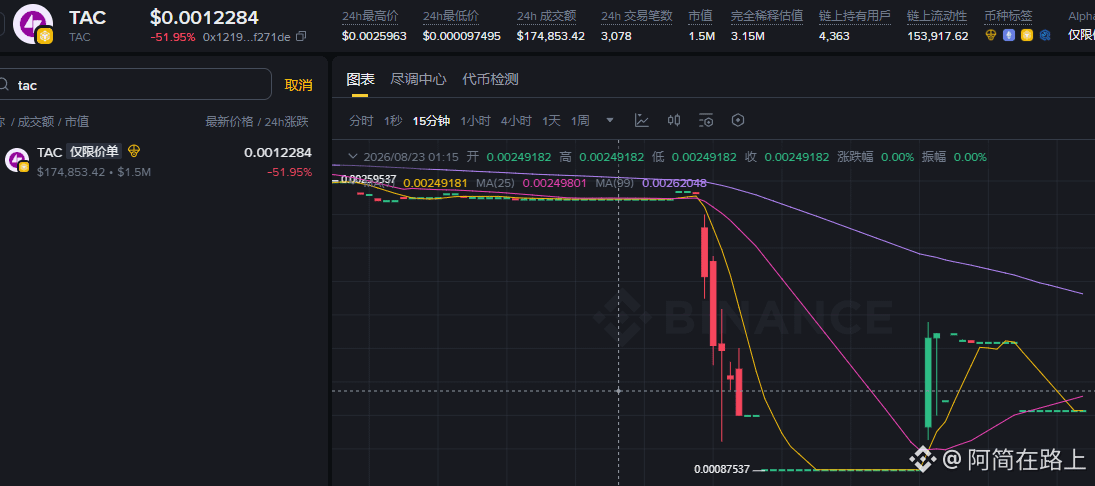
TAC Blockchain suffered an attack exploiting a vulnerability in the Cosmos EVM module, resulting in losses of about $7.5M, after which the network was subsequently paused. This is the how many security incident involving Cosmos Labs since it publicly released an EVM patch on August 19? $MANTRA 、$TAC 、$KII —one worse than the next 😂
While we still need to wait for a complete technical review from all parties and we can’t draw a final conclusion based on a single report, Aji thinks that this series of incidents can’t be explained as a problem caused by just one smart contract. It’s entirely a systemic risk brought by the reuse of underlying modules. The more standardized the technology stack is and the faster development progresses, the more likely vulnerabilities can be replicated in bulk.
If you hold assets in the Cosmos EVM ecosystem, Aji recommends that you do the following:
First, pause interactions with the affected Cosmos EVM projects;
Second, check whether the official team has paused the network, contracts, or deposits/withdrawals;
Third, do not download so-called migration tools from private messages.
After a security incident, don’t let scammers take advantage of panic to launch a second attack.
While we still need to wait for a complete technical review from all parties and we can’t draw a final conclusion based on a single report, Aji thinks that this series of incidents can’t be explained as a problem caused by just one smart contract. It’s entirely a systemic risk brought by the reuse of underlying modules. The more standardized the technology stack is and the faster development progresses, the more likely vulnerabilities can be replicated in bulk.
If you hold assets in the Cosmos EVM ecosystem, Aji recommends that you do the following:
First, pause interactions with the affected Cosmos EVM projects;
Second, check whether the official team has paused the network, contracts, or deposits/withdrawals;
Third, do not download so-called migration tools from private messages.
After a security incident, don’t let scammers take advantage of panic to launch a second attack.
Since Trade.xyz went live in October last year, the total trading volume on HL for oil, indices, and pre-IPO asset perpetual contracts has reached about $500B. That number is huge, but it’s still the same old question: how does trading volume translate into token value capture? If you can’t figure out what fees the platform charges, who the revenue goes to, whether users are trading repeatedly, how high the market-making costs are, and whether regulation might change the product structure, then even the biggest trading volume is only the platform’s prosperity—it has nothing to do with the users.
Just a friend asked me, “$BTC has already reached 80,000. Should we directly enter the main uptrend?” I think this question can’t be answered by price alone. If the market keeps rising, but OI only increases moderately, the funding rate isn’t extreme, spot trading continues to expand, then I’d say the market quality is still pretty good. If it just goes sideways, but OI suddenly spikes, the funding rate quickly gets expensive, and social media starts filling up with people showing off their gains, then be careful. You can distinguish it like this:
First, check whether ETFs are seeing continuous inflows;
Second, see whether spot trading is keeping up;
Third, check whether OI is increasing moderately or rising vertically;
Fourth, see whether the funding rate has moved into a crowded zone;
Fifth, after the price rises, check whether a large number of addresses transfer the coins into exchanges.
The moment when the market most easily leads people to misjudge isn’t during a drop.
It’s at the very beginning of a rally, when everyone thinks they’ve finally learned how to trade.
First, check whether ETFs are seeing continuous inflows;
Second, see whether spot trading is keeping up;
Third, check whether OI is increasing moderately or rising vertically;
Fourth, see whether the funding rate has moved into a crowded zone;
Fifth, after the price rises, check whether a large number of addresses transfer the coins into exchanges.
The moment when the market most easily leads people to misjudge isn’t during a drop.
It’s at the very beginning of a rally, when everyone thinks they’ve finally learned how to trade.
In the last five settled trading days, the ETH ETF saw a total inflow of $777.3M, and the capital intensity has clearly returned. Still, as before: this uptrend of $ETH isn’t entirely driven by BTC beta—institutional capital is also actively allocating. However, with the current price around $2,500, it’s not far from the previous round’s key resistance. The closer the short term gets to that critical level, the more likely profit-taking will occur even if there is positive ETF-driven momentum. ETF buy orders and large whales’ sell orders do not necessarily contradict each other.
For example, the address related to Wang Chun, co-founder of F2Pool that A Jian mentioned earlier: since this round of the rally began, it has cumulatively sold about 23,378 ETH, worth approximately $55.06M, with an average selling price of about $2,355. This kind of continuous de-risking is inevitably going to affect the short-term supply structure.
For example, the address related to Wang Chun, co-founder of F2Pool that A Jian mentioned earlier: since this round of the rally began, it has cumulatively sold about 23,378 ETH, worth approximately $55.06M, with an average selling price of about $2,355. This kind of continuous de-risking is inevitably going to affect the short-term supply structure.
This time #BTC触及80000美元 , ETFs are also synchronously flowing in. In the last 5 settled trading days, total net inflow is about $1.96B. This is enough to show that the buy-side quality of this rebound is clearly better than what you’d get from simply propping up with futures. However, given the current pace of the rise, it’s not advisable to translate ETF inflows directly into the expectation of no near-term pullback. The stronger the ETF inflows, the more likely they are to attract short-term leverage follow-through, and volatility later on may also be higher.
Keep a close eye on the daily flows of IBIT and FBTC, and also watch the $BTC spot trading. If ETF inflows continue but spot trading activity shrinks, then you need to guard against funds being front-run by the contracts. The key is whether the price can keep rising under ongoing selling pressure.
Keep a close eye on the daily flows of IBIT and FBTC, and also watch the $BTC spot trading. If ETF inflows continue but spot trading activity shrinks, then you need to guard against funds being front-run by the contracts. The key is whether the price can keep rising under ongoing selling pressure.
Verified
Continue to track the recently hot $ZEC . Grayscale has submitted a fifth revised Zcash trust registration filing to the SEC. If approved, it could become the first U.S. spot Zcash ETF-type product. While approval is still some way off, it also further supports the point A Jian made earlier—that privacy assets are moving from fringe narratives into traditional securities accounts.
At present, privacy coins still face multiple pressures, including exchange scrutiny, AML (anti-money laundering), and policy reviews. Entering the ETF space may concentrate regulatory attention, but it can also improve the entry point for allocation. I’m really looking forward to seeing what the next move will be for $ZEC , a “妖币” that has been performing prominently lately.
At present, privacy coins still face multiple pressures, including exchange scrutiny, AML (anti-money laundering), and policy reviews. Entering the ETF space may concentrate regulatory attention, but it can also improve the entry point for allocation. I’m really looking forward to seeing what the next move will be for $ZEC , a “妖币” that has been performing prominently lately.
Verified
Arbitrum today added 10 1:1 backed tokenized stocks via Uniswap, supporting on-chain issuance, redemption, and USDC settlement. This is also an important step for Anchored in bringing the product to the mainstream L2+DEX—good news for a wave of $ARB ?
On: Term Finance after a hacker attack that caused losses of about $8.5M, has shut down all Term Meta Vaults and revoked DAO governance rights. Users can still withdraw. I noticed this announcement partly because it shares a similar name with TermMax, which is set to be listed tomorrow. In Chinese feeds, words like “Term,” “protocol,” “vault,” and “list on-chain” get mixed together, which makes it easy to misread.
With that said, many users only look at three things when they see a vault: what coins you deposit, how high the APY is, and when you can withdraw. They completely ignore the strategy contracts and governance permissions that may exist behind the scenes, the price sources, rebalancing modules, admins, and emergency pause powers. They also don’t consider that one of the most important functions of a yield product is being able to exit even if something goes wrong.
Term Finance still keeps withdrawals at least, which suggests that risk management hasn’t completely blocked users’ exit routes. But shutting down the vault and revoking governance rights also means the team has judged that the original permission model can no longer be trusted.
If any of you friends are using other vaults, I suggest you do a check today: Can you withdraw directly? Is there a timelock? What can the admin change? Where are the strategy funds kept? Is the yield driven by real borrowing demand, or is it looped leverage? Don’t wait for a security notice from the project to remember to review these.
With that said, many users only look at three things when they see a vault: what coins you deposit, how high the APY is, and when you can withdraw. They completely ignore the strategy contracts and governance permissions that may exist behind the scenes, the price sources, rebalancing modules, admins, and emergency pause powers. They also don’t consider that one of the most important functions of a yield product is being able to exit even if something goes wrong.
Term Finance still keeps withdrawals at least, which suggests that risk management hasn’t completely blocked users’ exit routes. But shutting down the vault and revoking governance rights also means the team has judged that the original permission model can no longer be trusted.
If any of you friends are using other vaults, I suggest you do a check today: Can you withdraw directly? Is there a timelock? What can the admin change? Where are the strategy funds kept? Is the yield driven by real borrowing demand, or is it looped leverage? Don’t wait for a security notice from the project to remember to review these.
Verified
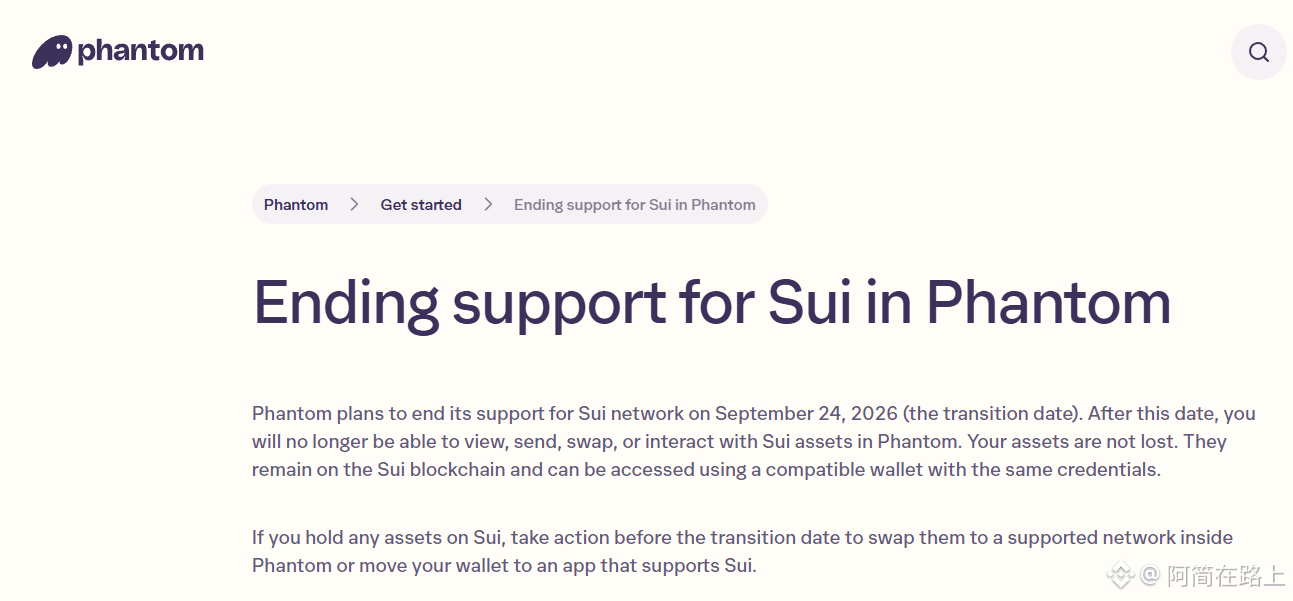
Just now: Phantom announced that it will stop supporting $SUI on September 24. This is more likely to be a problem with Sui’s allocation of product resources. If a wallet wants to support a chain, it needs to maintain many aspects, such as RPC, signing, token metadata, swaps, NFTs, customer support, and security audits. If there aren’t enough users and transaction volume, it’s hard for that chain to keep occupying the product team’s resources in the long term.
However, ordinary traders don’t need to worry about this. If you’re using Phantom with Sui, start migrating today—don’t wait until September 24:
1. First, back up your recovery phrase.
2. Then, from Sui’s official ecosystem page, choose a compatible wallet.
3. Import a small amount first and verify the address.
4. Check your assets first, and only then migrate your main wallet.
5. Never download the “Phantom Sui migration” plugin from search ads.
However, ordinary traders don’t need to worry about this. If you’re using Phantom with Sui, start migrating today—don’t wait until September 24:
1. First, back up your recovery phrase.
2. Then, from Sui’s official ecosystem page, choose a compatible wallet.
3. Import a small amount first and verify the address.
4. Check your assets first, and only then migrate your main wallet.
5. Never download the “Phantom Sui migration” plugin from search ads.
Partly True
#Solana启动治理投票拟通缩率翻倍 , this is a fairly clear signal. The true maturity of a public chain depends not only on how fast it can run, but also on whether it can clearly document the process of changing the rules when conflicts of interest arise. And don’t rush to shout “good news” $SOL —on the other side of declining inflation is the possibility that staking rewards and the validator economy may be rewritten. Validators, delegators, application developers, users, and whales could all be affected.
Also, according to Solana Compass’s instructions, a proposal must have at least one-third of active stake participation to reach quorum. After meeting that threshold, it still needs more than two-thirds support in the voting to pass. And “active stakers” are those who hold at least 100,000 $SOL . This doesn’t mean small holders have no voice, but it’s another reminder: governance power and token-holder power are not the same thing. What do you think the outcome of this vote will be?
Also, according to Solana Compass’s instructions, a proposal must have at least one-third of active stake participation to reach quorum. After meeting that threshold, it still needs more than two-thirds support in the voting to pass. And “active stakers” are those who hold at least 100,000 $SOL . This doesn’t mean small holders have no voice, but it’s another reminder: governance power and token-holder power are not the same thing. What do you think the outcome of this vote will be?
通过
被否
15 hr(s) left
Verified
Today’s $SAMSUNG stock price fell as much as 8% in the morning. Clearly, even though the company’s 2026 shareholder return has already reached $65–80 billion, the market still wants clearer buyback and cancellation arrangements. In A Jian’s view, the cash generated for these giants by AI has already started a new round of competition—first, who can make the most; second, who can allocate it in a way that convinces the market. After all, cash returns and market expectations are always two different ledgers #三星股价跌6.4%回报计划不及预期
Verified
$POL Today’s performance is quite solid among large-cap assets. One possible reason is that Polygon is planning to advance staking and token-economics reforms—aiming to direct priority fees toward $POL stakers so that staking rewards could nearly double. That sounds definitely bullish, but does the yield come from genuine network fees or from新增发行 (new issuance)? If fees increase, will it raise user costs? After sPOL enters DeFi, will it create new leverage? The yield numbers look very impressive, but the source matters more than the numbers. Only yield increases based on fees are closer to real value capture.
TAC's Cosmos-based EVM side was hit by a vulnerability attack, affecting the supply of $TAC tokens, and that token on Binance Alpha was temporarily halted. Meanwhile, the payment public chain Keeta has been hit by hacker attacks one after another, and the mainnet is currently kept in read-only mode. In addition, there is also the abnormal minting incident of $SAND mentioned by A Jian yesterday. Perhaps the biggest tail risk these days isn’t the price, but infrastructure security
When the overall market is rising, security incidents on smaller chains are often easier to overlook. Many friends probably didn’t notice that the higher the liquidity, the easier it is for attackers to cash out. If your token encounters a supply vulnerability, a chain halt, or a read-only mode, first revoke approvals, pause cross-chain transfers, and verify the official addresses. In security incidents, response speed matters more than “catching the bottom.”
When the overall market is rising, security incidents on smaller chains are often easier to overlook. Many friends probably didn’t notice that the higher the liquidity, the easier it is for attackers to cash out. If your token encounters a supply vulnerability, a chain halt, or a read-only mode, first revoke approvals, pause cross-chain transfers, and verify the official addresses. In security incidents, response speed matters more than “catching the bottom.”
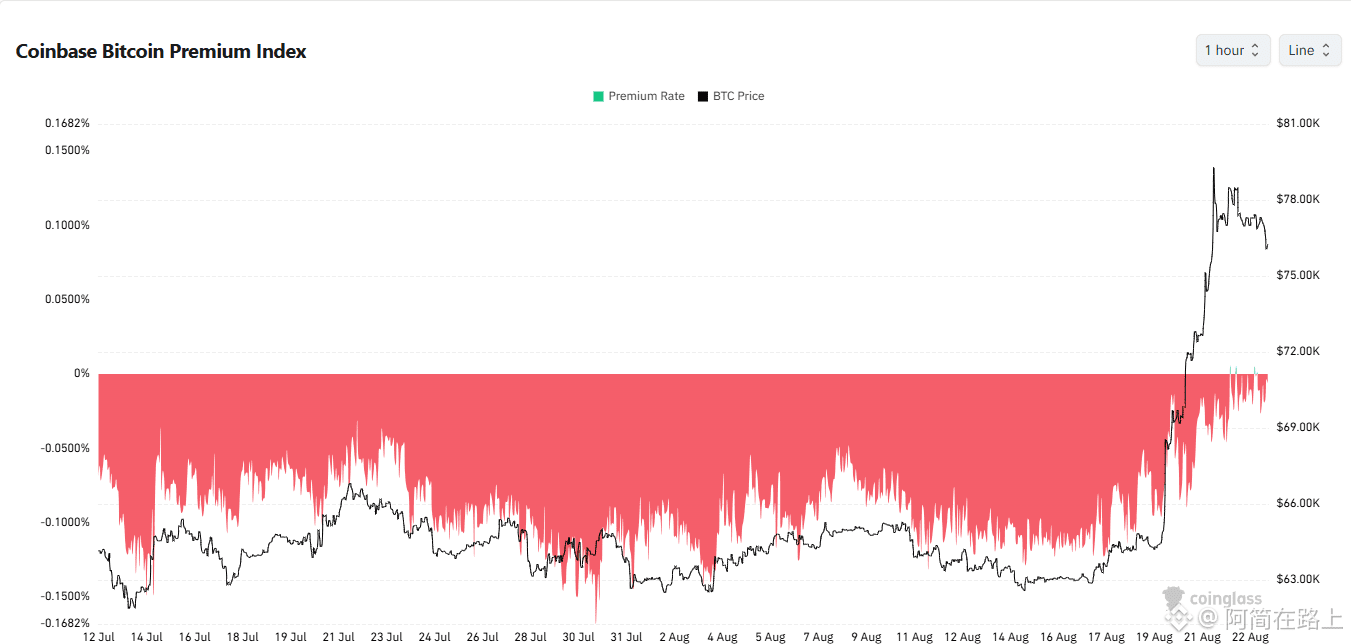
Coinbase BTC premium (hereinafter referred to as CBP) has been negative for 97 consecutive days, continuing to set the record for the longest negative streak in history. It has now been diverging from the rising market for several days. AJian believes this does not mean there is no U.S. buy-side demand; rather, more of it is currently entering through ETFs and institutional channels. These represent different investor needs. If ETF inflows continue and CBP turns positive, the quality of the market will improve significantly. If CBP remains negative while leverage stays high, you need to guard against the rally becoming overly dependent on derivatives.
Hyperliquid’s current whale total position is about $7.024B, with longs at about $3.427B and shorts at about $3.597B. The long-to-short ratio is about 0.95. Longs have unrealized profit of about $437M, while shorts have unrealized losses of about $442M. First of all, friends, you should know that having slightly more shorts doesn’t necessarily mean bearish—they may also be spot-hedging positions. We shouldn’t only look at the long-to-short ratio; we also need to consider entry costs, unrealized P&L, and liquidation prices. In the current market, although the number of shorts is slightly higher, they are bearing greater psychological pressure and margin pressure; the longs may be in profit, but they could take profit at any time
In this kind of market, there are two extremes that are most likely to show up: one says, “It’s over—yesterday was the top.” The other says, “A normal pullback—buy more with your eyes closed.” I think both reactions are too rushed. After a quick surge, a retracement is already a normal market structure. The question isn’t whether it drops, but what happens when it drops. A-Jian breaks it down into four layers for everyone:
First layer: who sells first
This point was just mentioned. Today’s situation is that capital pulls out of high-beta positions first; there hasn’t been an immediate, full exit from BTC. If BTC were the first to fall, that would be more like systemic risk.
Second layer: who is selling
A few representative on-chain data points: Wintermute transferred about $56.9M worth of BTC and SOL; a whale deposited 2,555 BTC to Binance; addresses related to F2Pool’s cofounder transferred out 12,765 ETH and repaid a $87.68M USDC loan. You see, here there are potential profit-taking flows, as well as market-making routing, and even intentional deleveraging—selling isn’t just one kind. It’s often more controllable than panic-driven selling.
Third layer: is there any bid support
ETFs are still seeing inflows. USDC has net increased by $800M over the past week. Protocol data from Aave, Uniswap, Hyperliquid, and others hasn’t collapsed immediately because of the price pullback. This shows there is still money in the market—it’s just that buyers are unwilling to step in at any price yet.
Fourth layer: has leverage truly come down
Today, long liquidations are clearly rising. But funding still remains positive, such as $BTC , $ETH , and $SOL . Open interest is still quite high. This suggests that some of the “bubble” has been wiped out, but not all of it.
In summary, I won’t label today as an outright trend reversal, and I won’t treat all downside as a “golden pit.”
A healthy pullback is: price drops, leverage decreases, spot bids step in;
A trend turning bad is: price drops, spot withdraws, leverage is still being held hard.
They may all look like red candles, but underneath, it’s completely different.
First layer: who sells first
This point was just mentioned. Today’s situation is that capital pulls out of high-beta positions first; there hasn’t been an immediate, full exit from BTC. If BTC were the first to fall, that would be more like systemic risk.
Second layer: who is selling
A few representative on-chain data points: Wintermute transferred about $56.9M worth of BTC and SOL; a whale deposited 2,555 BTC to Binance; addresses related to F2Pool’s cofounder transferred out 12,765 ETH and repaid a $87.68M USDC loan. You see, here there are potential profit-taking flows, as well as market-making routing, and even intentional deleveraging—selling isn’t just one kind. It’s often more controllable than panic-driven selling.
Third layer: is there any bid support
ETFs are still seeing inflows. USDC has net increased by $800M over the past week. Protocol data from Aave, Uniswap, Hyperliquid, and others hasn’t collapsed immediately because of the price pullback. This shows there is still money in the market—it’s just that buyers are unwilling to step in at any price yet.
Fourth layer: has leverage truly come down
Today, long liquidations are clearly rising. But funding still remains positive, such as $BTC , $ETH , and $SOL . Open interest is still quite high. This suggests that some of the “bubble” has been wiped out, but not all of it.
In summary, I won’t label today as an outright trend reversal, and I won’t treat all downside as a “golden pit.”
A healthy pullback is: price drops, leverage decreases, spot bids step in;
A trend turning bad is: price drops, spot withdraws, leverage is still being held hard.
They may all look like red candles, but underneath, it’s completely different.
Verified
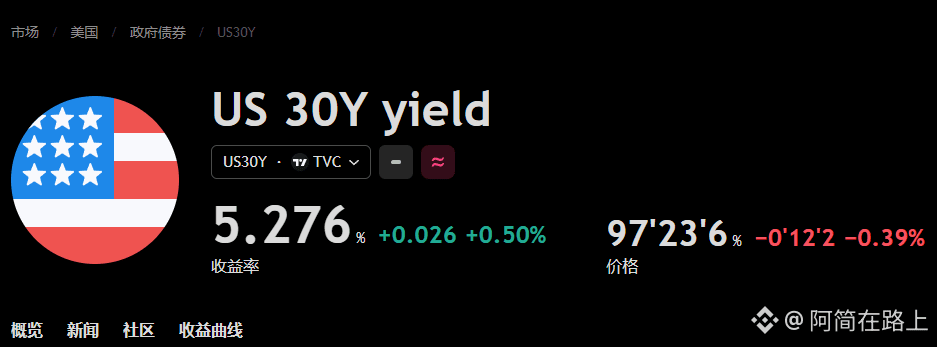
The excitement brought by the Ministry of Finance’s buyback only lasted two days. As U.S. debt surpassed $40T, Treasury yields resumed rising, and the 30-year tenor once again approached 5.3%. The bond market once again reminds everyone: buybacks do not mean the debt problem has gone away. The Ministry of Finance can buy back some bonds to ease local liquidity; but if long-term yields continue to rise, high-valued risk assets like Crypto will still face discounting pressure—“liquidity tailwinds” will be discounted.
Log in to explore more content