
Block Zain
5.8k Posts

Block Zain
551 Following
24.5K+ Followers
10.3K+ Liked
Posts
All
Quotes
Live
DUSK IS ONE OF THOSE PROJECTS I KEEP COMING BACK TO...
Honestly, this caught my attention.
Privacy for financial applications just feels more practical to me than a lot of the crypto narratives floating around right now. That’s the part I like.
But then I started digging.
And I started wondering if the actual market demand is as strong as the story makes it sound.
A privacy-focused blockchain with confidential smart contracts sounds useful. Sure. But usefulness on paper and real adoption are two very different things...
Still, I’m not completely sold.
Maybe that’s the wrong way to look at it. Maybe financial applications genuinely need this kind of privacy more than the market currently realizes.
But crypto makes me suspicious of anything that sounds too perfect.
The interesting part isn’t whether Dusk can tell a good privacy story. Plenty of projects can do that.
It’s whether people building serious financial applications actually choose to use it.
That’s the question I keep coming back to.
If adoption shows up, the narrative starts looking a lot more convincing.
Until then... I’m watching, not chasing.
@Dusk #dusk $DUSK
$QUID
$PROM
Honestly, this caught my attention.
Privacy for financial applications just feels more practical to me than a lot of the crypto narratives floating around right now. That’s the part I like.
But then I started digging.
And I started wondering if the actual market demand is as strong as the story makes it sound.
A privacy-focused blockchain with confidential smart contracts sounds useful. Sure. But usefulness on paper and real adoption are two very different things...
Still, I’m not completely sold.
Maybe that’s the wrong way to look at it. Maybe financial applications genuinely need this kind of privacy more than the market currently realizes.
But crypto makes me suspicious of anything that sounds too perfect.
The interesting part isn’t whether Dusk can tell a good privacy story. Plenty of projects can do that.
It’s whether people building serious financial applications actually choose to use it.
That’s the question I keep coming back to.
If adoption shows up, the narrative starts looking a lot more convincing.
Until then... I’m watching, not chasing.
@Dusk #dusk $DUSK
$QUID
$PROM
Bullish💙
Bearish 💙
21 hr(s) left
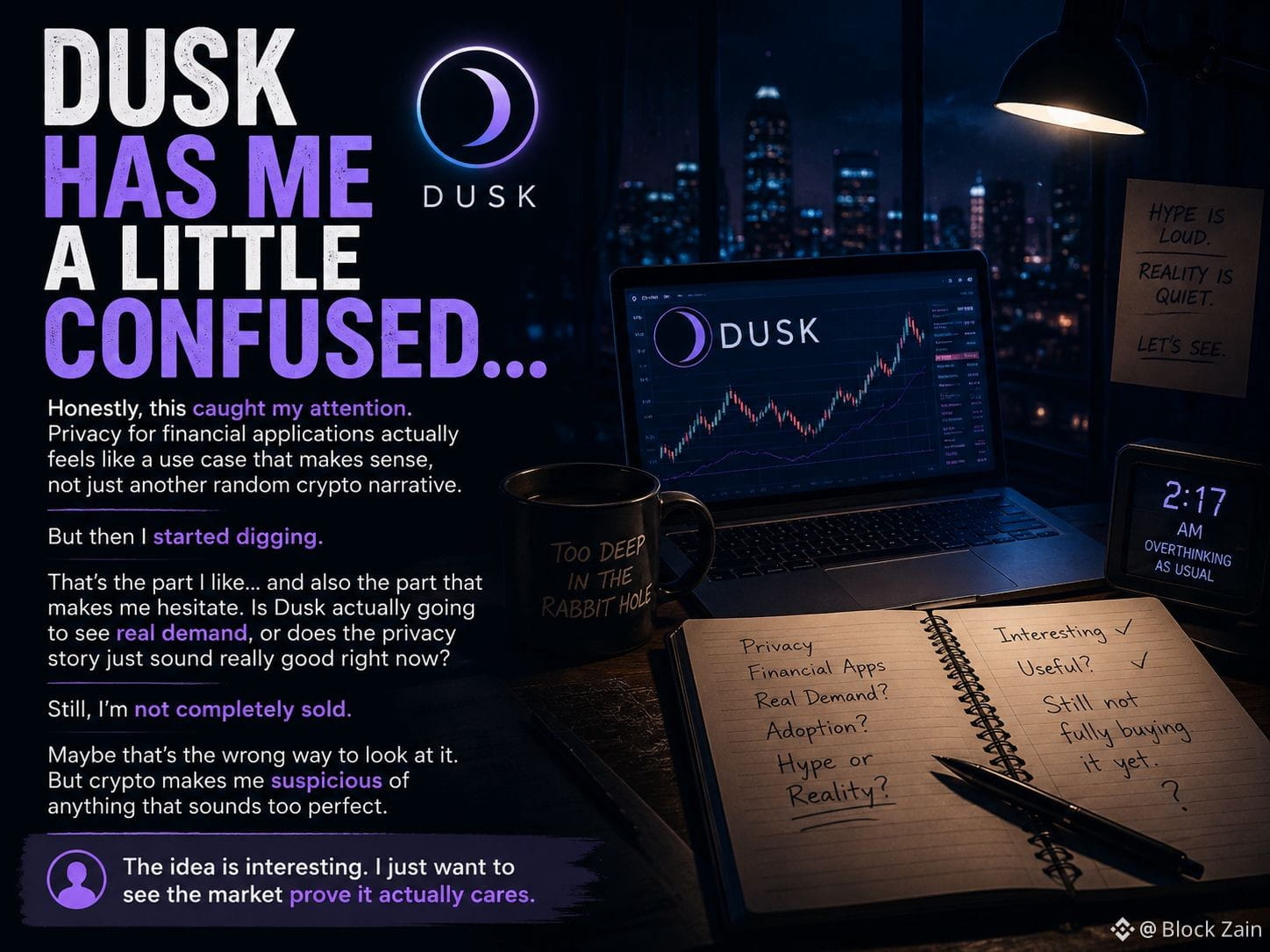
DUSK HAS ME A LITTLE CONFUSED...
Honestly, this caught my attention. Privacy for financial applications actually feels like a use case that makes sense, not just another random crypto narrative.
But then I started digging.
That’s the part I like... and also the part that makes me hesitate. Is Dusk actually going to see real demand, or does the privacy story just sound really good right now?
Still, I’m not completely sold.
Maybe that’s the wrong way to look at it. But crypto makes me suspicious of anything that sounds too perfect.
The idea is interesting. I just want to see the market prove it actually cares.
@Dusk #dusk $TUT
$PORTAL
$DUSK
Honestly, this caught my attention. Privacy for financial applications actually feels like a use case that makes sense, not just another random crypto narrative.
But then I started digging.
That’s the part I like... and also the part that makes me hesitate. Is Dusk actually going to see real demand, or does the privacy story just sound really good right now?
Still, I’m not completely sold.
Maybe that’s the wrong way to look at it. But crypto makes me suspicious of anything that sounds too perfect.
The idea is interesting. I just want to see the market prove it actually cares.
@Dusk #dusk $TUT
$PORTAL
$DUSK
I’ve been digging into Dusk again and honestly... I keep changing my mind about it.
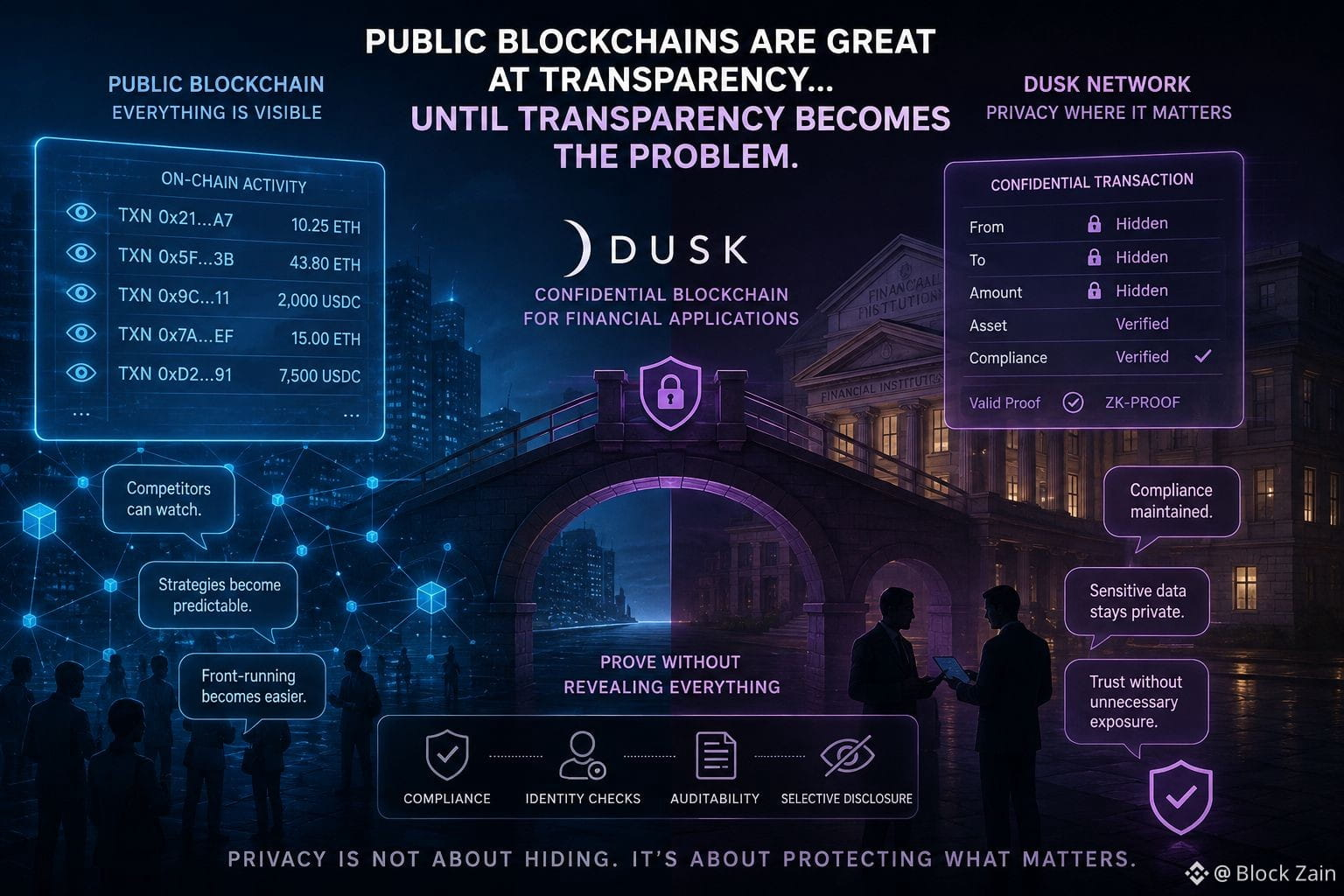
At first glance, it feels like one of those crypto projects that has a really clean narrative. Privacy blockchain. Financial applications. Confidential smart contracts. Regulated markets. It all sounds almost too perfectly packaged for the current direction crypto keeps talking about.
But the more I read about Dusk, the more I think the interesting part isn’t really “privacy” in the usual crypto sense.
Because privacy gets thrown around so much that it’s starting to lose meaning.
A lot of crypto people hear privacy and immediately think anonymous transactions, hiding wallets, escaping surveillance, whatever. But financial markets have a completely different privacy problem. A company might actually want compliance. A bank might need identity checks. An institution might need to prove something happened without revealing every single detail of its strategy to the entire market.
That distinction is what makes Dusk interesting to me.
Public blockchains are great at transparency... until transparency becomes the problem.
@Dusk #dusk $DOS
$LUNC
$DUSK
At first glance, it feels like one of those crypto projects that has a really clean narrative. Privacy blockchain. Financial applications. Confidential smart contracts. Regulated markets. It all sounds almost too perfectly packaged for the current direction crypto keeps talking about.
But the more I read about Dusk, the more I think the interesting part isn’t really “privacy” in the usual crypto sense.
Because privacy gets thrown around so much that it’s starting to lose meaning.
A lot of crypto people hear privacy and immediately think anonymous transactions, hiding wallets, escaping surveillance, whatever. But financial markets have a completely different privacy problem. A company might actually want compliance. A bank might need identity checks. An institution might need to prove something happened without revealing every single detail of its strategy to the entire market.
That distinction is what makes Dusk interesting to me.
Public blockchains are great at transparency... until transparency becomes the problem.
@Dusk #dusk $DOS
$LUNC
$DUSK
I’ve been digging into Dusk again tonight and honestly... I keep going back and forth on it.
There’s something here I like. I just don’t know yet if I like the actual opportunity as much as I like the idea.
The privacy angle makes sense to me, especially when you stop thinking about crypto as just people swapping tokens and start thinking about actual financial markets. Because yeah, transparency sounds great until you’re an institution and suddenly every competitor can watch what you’re doing.
That gets uncomfortable pretty fast.
I mean, imagine running a trading desk where everyone can basically see your moves. You wouldn’t do that in traditional finance, so why would anyone suddenly want it just because the system is running on a blockchain?
That’s probably the part of Dusk I find most interesting.
But then I remember how crypto works...
A project can solve a real problem and still go absolutely nowhere.
That happens all the time.
The technology can be good. The idea can be good. The people building it can be serious. And then you look around and realize there just aren’t enough users doing anything meaningful.
@Dusk #dusk $DUSK
$ONG
$NEIRO
There’s something here I like. I just don’t know yet if I like the actual opportunity as much as I like the idea.
The privacy angle makes sense to me, especially when you stop thinking about crypto as just people swapping tokens and start thinking about actual financial markets. Because yeah, transparency sounds great until you’re an institution and suddenly every competitor can watch what you’re doing.
That gets uncomfortable pretty fast.
I mean, imagine running a trading desk where everyone can basically see your moves. You wouldn’t do that in traditional finance, so why would anyone suddenly want it just because the system is running on a blockchain?
That’s probably the part of Dusk I find most interesting.
But then I remember how crypto works...
A project can solve a real problem and still go absolutely nowhere.
That happens all the time.
The technology can be good. The idea can be good. The people building it can be serious. And then you look around and realize there just aren’t enough users doing anything meaningful.
@Dusk #dusk $DUSK
$ONG
$NEIRO
Bullish 💜💜
50%
Barish 💜
50%
2 votes • Voting closed
I’ve been going back and forth on Dusk for a while now and honestly I still can’t decide if I’m looking at something genuinely interesting or just another crypto project that sounds better the deeper you read into it.
That’s probably the annoying part.
I like the idea.
Then I start thinking about the market.
Then I like it again.
Then I remember how many projects have had great technology and basically went nowhere.
Dusk is built around privacy, but what caught my attention isn’t really the “privacy blockchain” label. That part is easy to say. Crypto has had privacy projects forever.
What I keep thinking about is financial privacy.
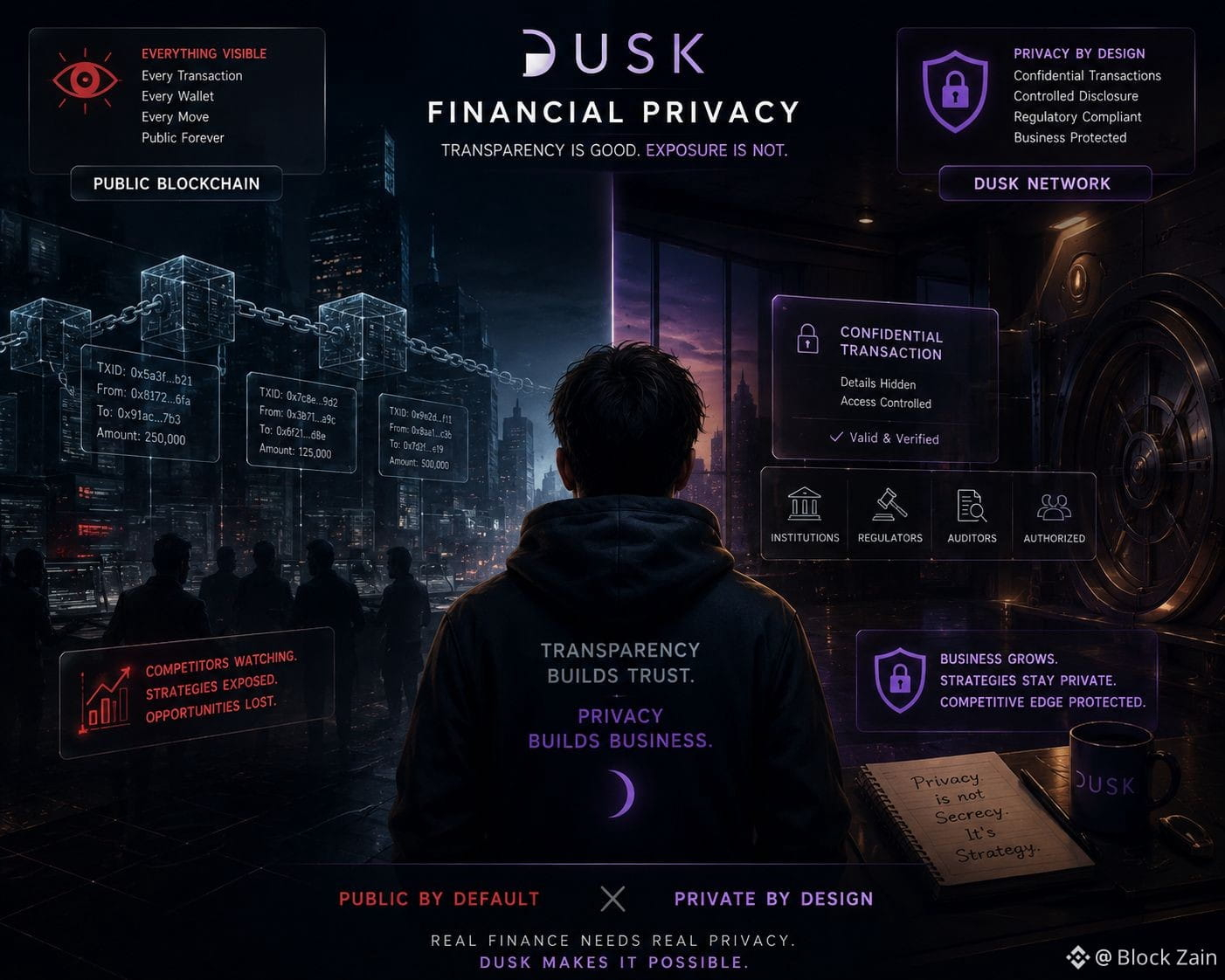
Because yeah, blockchain transparency sounds great until you imagine actually running a serious financial business on it. Every transaction sitting there. Every wallet movement visible. Competitors watching positions. People tracking where money is moving.
That would drive me insane.
@Dusk #dusk $KII
$BOME
$DUSK
That’s probably the annoying part.
I like the idea.
Then I start thinking about the market.
Then I like it again.
Then I remember how many projects have had great technology and basically went nowhere.
Dusk is built around privacy, but what caught my attention isn’t really the “privacy blockchain” label. That part is easy to say. Crypto has had privacy projects forever.
What I keep thinking about is financial privacy.
Because yeah, blockchain transparency sounds great until you imagine actually running a serious financial business on it. Every transaction sitting there. Every wallet movement visible. Competitors watching positions. People tracking where money is moving.
That would drive me insane.
@Dusk #dusk $KII
$BOME
$DUSK
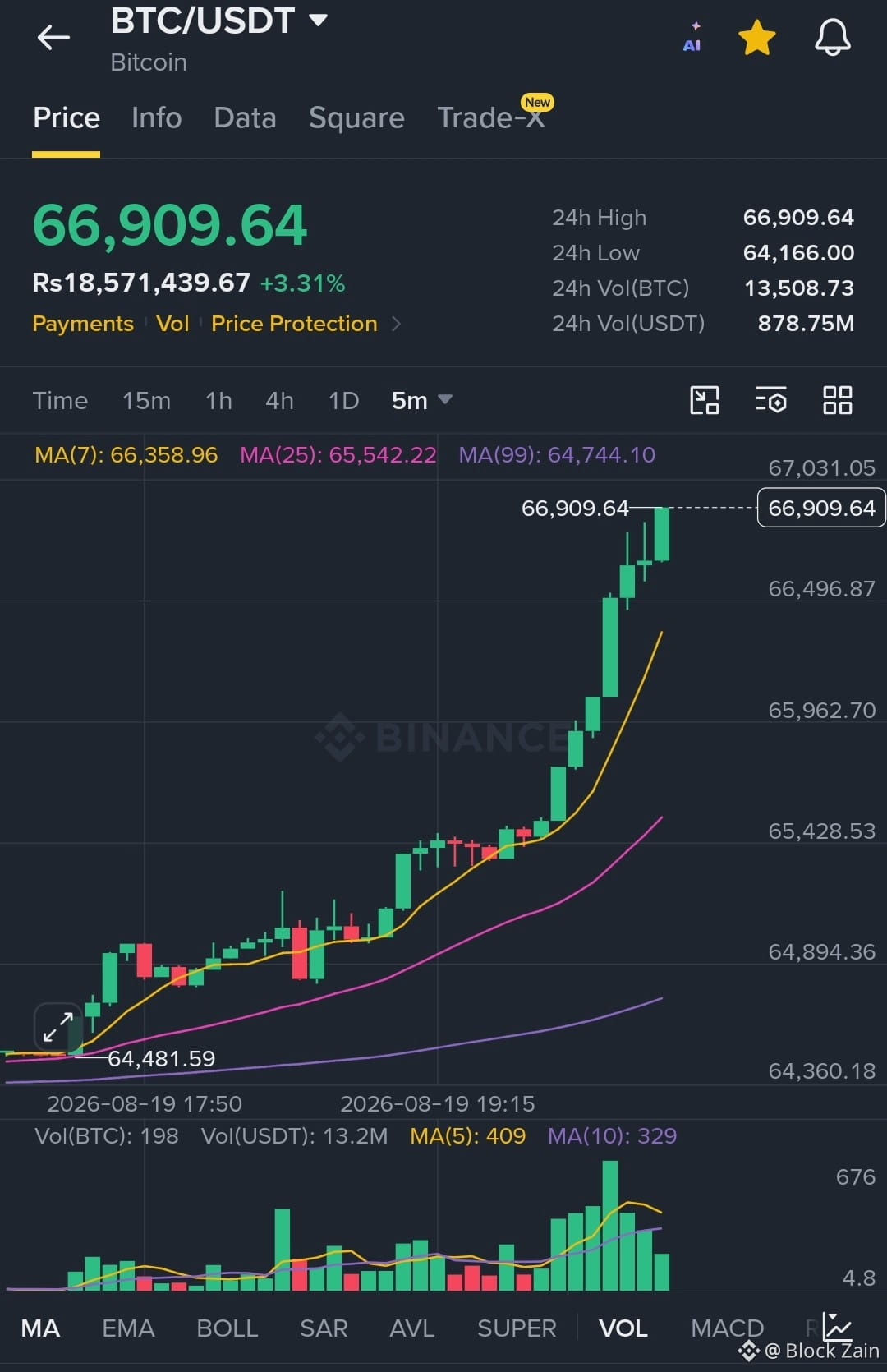
$BTC /USDT LONG SETUP
Entry Zone: $66,550 – $66,800
TP1: $67,050
TP2: $67,500
TP3: $68,000
Stop Loss: $66,200
Strong 5M bullish momentum with price above MA(7), MA(25) and MA(99). Manage risk and avoid chasing the move.
#FOMCWatch #ColdcardTheftInvestigationAdvances #WyomingMovesFRNTToChainlinkCCIP #ToyotaFinanceLaunchesTokenizedBondForRetail #UAESaysItDetectedTwoIranianBallisticMissiles
Entry Zone: $66,550 – $66,800
TP1: $67,050
TP2: $67,500
TP3: $68,000
Stop Loss: $66,200
Strong 5M bullish momentum with price above MA(7), MA(25) and MA(99). Manage risk and avoid chasing the move.
#FOMCWatch #ColdcardTheftInvestigationAdvances #WyomingMovesFRNTToChainlinkCCIP #ToyotaFinanceLaunchesTokenizedBondForRetail #UAESaysItDetectedTwoIranianBallisticMissiles
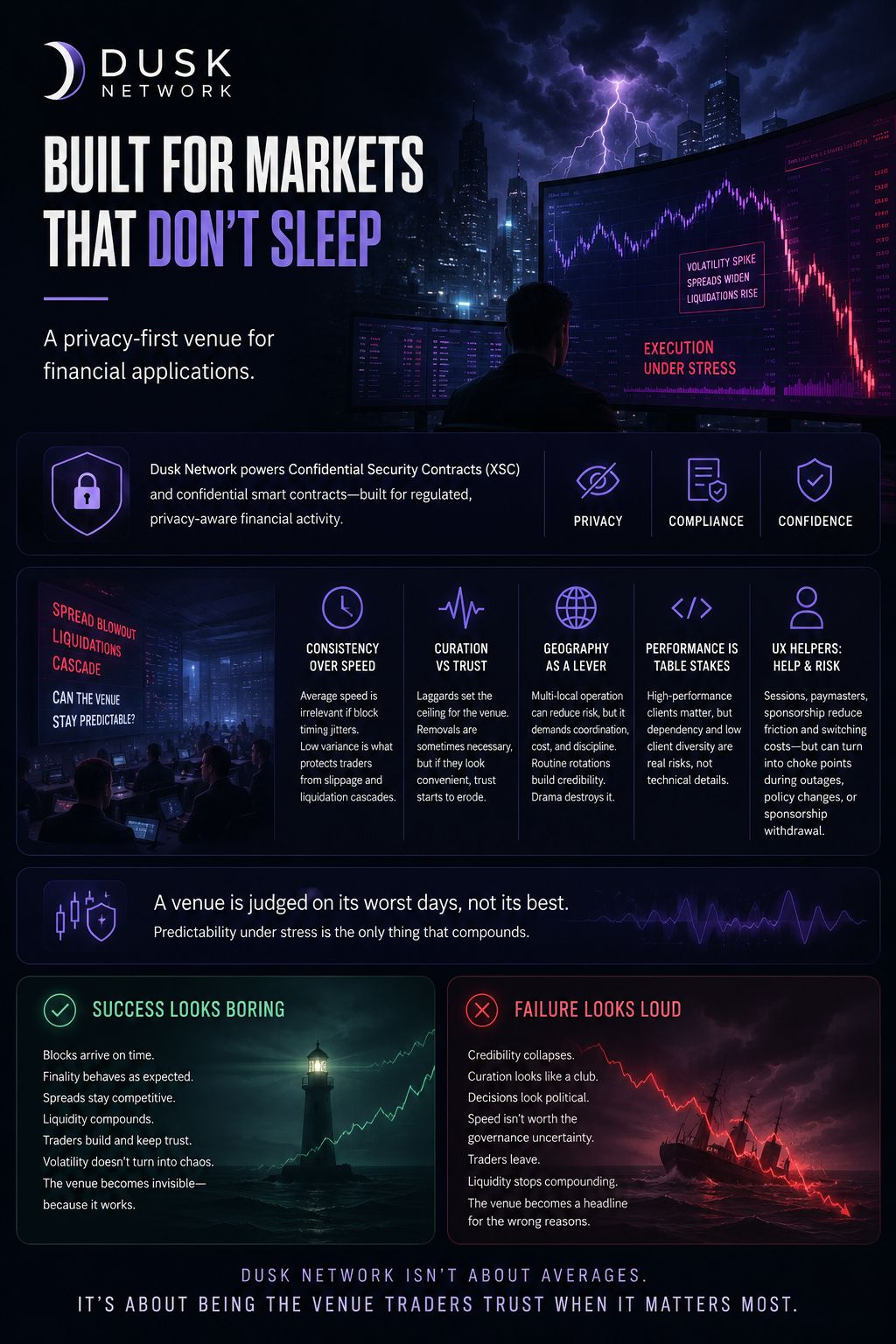
#dusk I’m waiting for the ugly day. I’m watching how execution behaves when spreads blow out, liquidations cascade, and every millisecond of jitter starts carrying a price. I’m looking for consistency, not impressive averages. I’ve seen fast systems become unreliable when pressure arrives. I focus on whether traders can predict what happens next.
That is how I look at Dusk: as financial venue infrastructure, not simply another chain. Its value comes down to whether block timing, settlement, and execution remain stable when markets become disorderly. Low variance matters because unstable timing becomes slippage, wider spreads, weaker liquidity, and eventually forced selling feeding more forced selling.
Privacy and controlled financial workflows can make the venue more useful, but every layer of control adds a trust question. What looks like quality control today can look like politics later if decisions become opaque. The same applies to validator performance: laggards can set the ceiling for everyone, but removing them too conveniently can damage credibility.
Performance is table stakes. The real moat is disciplined behavior under stress. Success is boring consistency, trust compounding, and volatility staying manageable. Failure is credibility collapse, curation looking like a club, decisions looking political, speed no longer worth governance uncertainty, and liquidity stopping its compounding.
@Dusk
$DUSK
#dusk
That is how I look at Dusk: as financial venue infrastructure, not simply another chain. Its value comes down to whether block timing, settlement, and execution remain stable when markets become disorderly. Low variance matters because unstable timing becomes slippage, wider spreads, weaker liquidity, and eventually forced selling feeding more forced selling.
Privacy and controlled financial workflows can make the venue more useful, but every layer of control adds a trust question. What looks like quality control today can look like politics later if decisions become opaque. The same applies to validator performance: laggards can set the ceiling for everyone, but removing them too conveniently can damage credibility.
Performance is table stakes. The real moat is disciplined behavior under stress. Success is boring consistency, trust compounding, and volatility staying manageable. Failure is credibility collapse, curation looking like a club, decisions looking political, speed no longer worth governance uncertainty, and liquidity stopping its compounding.
@Dusk
$DUSK
#dusk
#dusk Dusk Network: The Test Is Stress
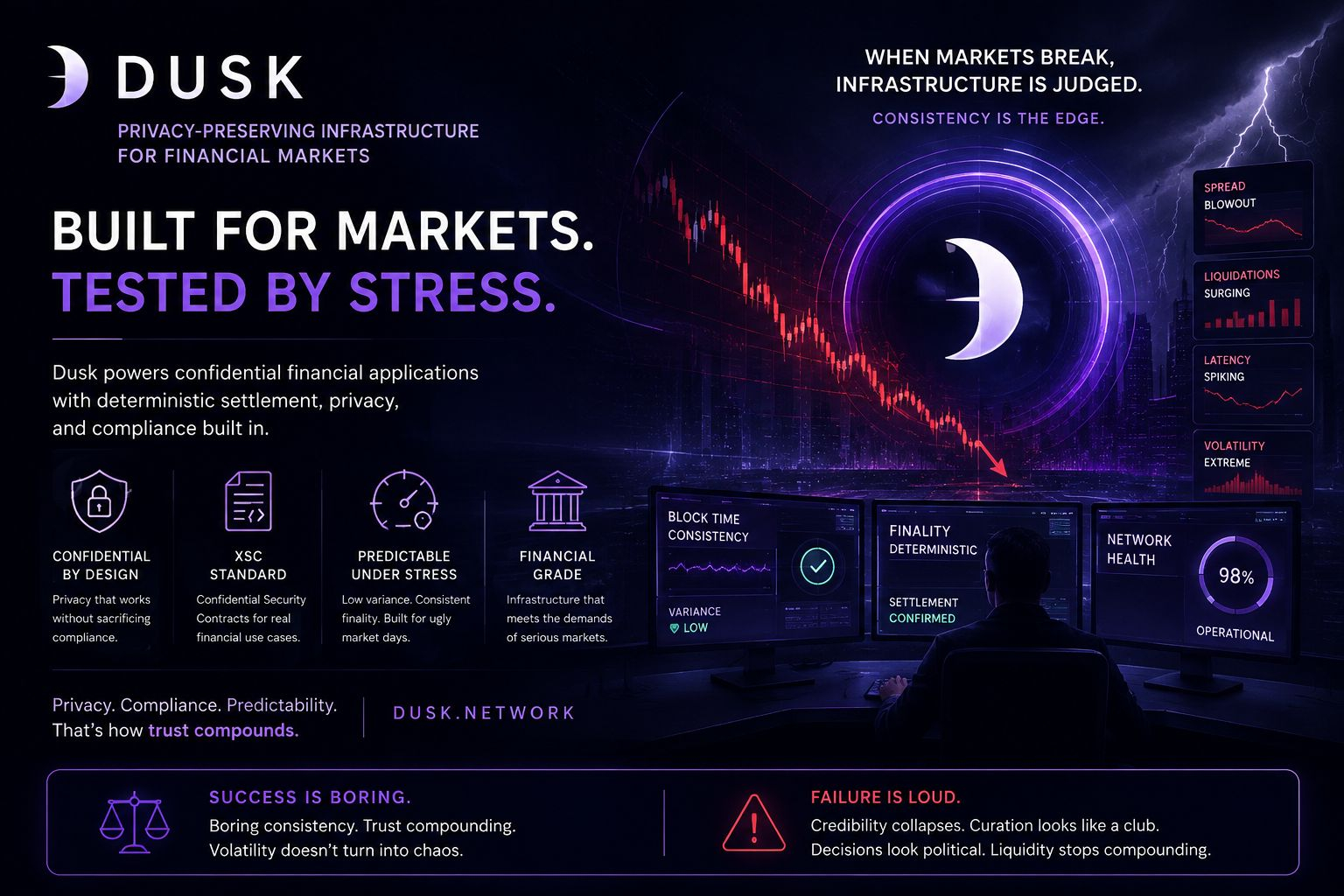
I’m waiting for Dusk to be judged on the days when markets stop behaving. I’m watching block timing, jitter, and whether execution stays predictable when liquidity gets thin. I’m looking for the moments where slippage turns into a liquidation cascade and spreads blow out. I’ve seen venues look fast in normal conditions and become unreliable when pressure arrives. I focus on variance because that is what traders actually experience.
Dusk makes more sense to me as financial market infrastructure than as another chain. Its privacy and confidential-contract design are useful, but the harder question is whether the venue stays boring when markets get ugly. Consistent settlement matters more than a strong average speed. If timing becomes uncertain, market makers widen quotes, liquidators hesitate, and liquidity can disappear exactly when it is needed most.
There is also a real tradeoff between performance and openness. Operator discipline can protect a venue from laggards, because the slowest participant can set the ceiling. But quality control can become a trust problem if removals start feeling convenient. What looks like operational hygiene today can look like politics later.
For Dusk, success is boring consistency: trust compounds and volatility does not become chaos. Failure is credibility collapse, curation looking like a club, decisions looking political, speed not worth governance uncertainty, and liquidity stopping its compounding.
@Dusk $DUSK #dusk
I’m waiting for Dusk to be judged on the days when markets stop behaving. I’m watching block timing, jitter, and whether execution stays predictable when liquidity gets thin. I’m looking for the moments where slippage turns into a liquidation cascade and spreads blow out. I’ve seen venues look fast in normal conditions and become unreliable when pressure arrives. I focus on variance because that is what traders actually experience.
Dusk makes more sense to me as financial market infrastructure than as another chain. Its privacy and confidential-contract design are useful, but the harder question is whether the venue stays boring when markets get ugly. Consistent settlement matters more than a strong average speed. If timing becomes uncertain, market makers widen quotes, liquidators hesitate, and liquidity can disappear exactly when it is needed most.
There is also a real tradeoff between performance and openness. Operator discipline can protect a venue from laggards, because the slowest participant can set the ceiling. But quality control can become a trust problem if removals start feeling convenient. What looks like operational hygiene today can look like politics later.
For Dusk, success is boring consistency: trust compounds and volatility does not become chaos. Failure is credibility collapse, curation looking like a club, decisions looking political, speed not worth governance uncertainty, and liquidity stopping its compounding.
@Dusk $DUSK #dusk
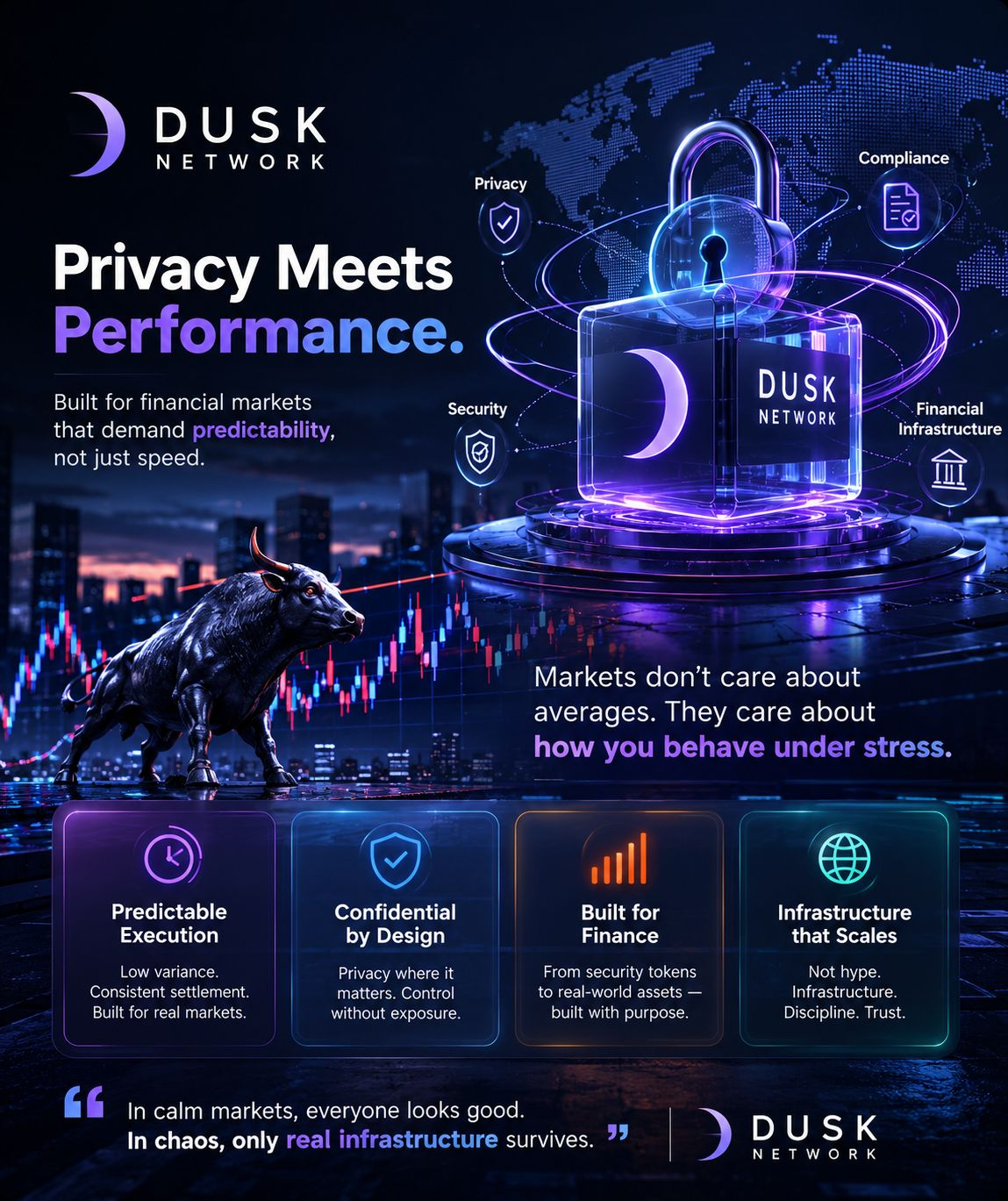
Dusk Network is one of those projects that makes me pause for a second.
It’s a Layer-1 built around a pretty specific problem: how do you bring financial applications on-chain without making every transaction and piece of data completely public?
That’s where Dusk’s privacy angle comes in. The network supports confidential smart contracts and its Confidential Security Contract (XSC) standard, with the idea of giving financial applications more privacy while still keeping them on a public blockchain.
I find that approach more interesting than the usual “blockchain + privacy” pitch, mainly because finance has a pretty obvious reason to care about confidentiality. Not every trade, balance, or business detail should be visible to everyone.
Of course, the hard part isn’t the concept. It’s whether developers actually build on it, whether institutions trust it, and whether the technology works at scale without making things painfully complicated.
That’s what I’d be watching with Dusk.
The privacy story sounds sensible. The real test is whether it can turn that idea into something people actually use.
@Dusk
$DUSK
#dusk
It’s a Layer-1 built around a pretty specific problem: how do you bring financial applications on-chain without making every transaction and piece of data completely public?
That’s where Dusk’s privacy angle comes in. The network supports confidential smart contracts and its Confidential Security Contract (XSC) standard, with the idea of giving financial applications more privacy while still keeping them on a public blockchain.
I find that approach more interesting than the usual “blockchain + privacy” pitch, mainly because finance has a pretty obvious reason to care about confidentiality. Not every trade, balance, or business detail should be visible to everyone.
Of course, the hard part isn’t the concept. It’s whether developers actually build on it, whether institutions trust it, and whether the technology works at scale without making things painfully complicated.
That’s what I’d be watching with Dusk.
The privacy story sounds sensible. The real test is whether it can turn that idea into something people actually use.
@Dusk
$DUSK
#dusk
I’ve been thinking about Dusk Network a bit differently lately.
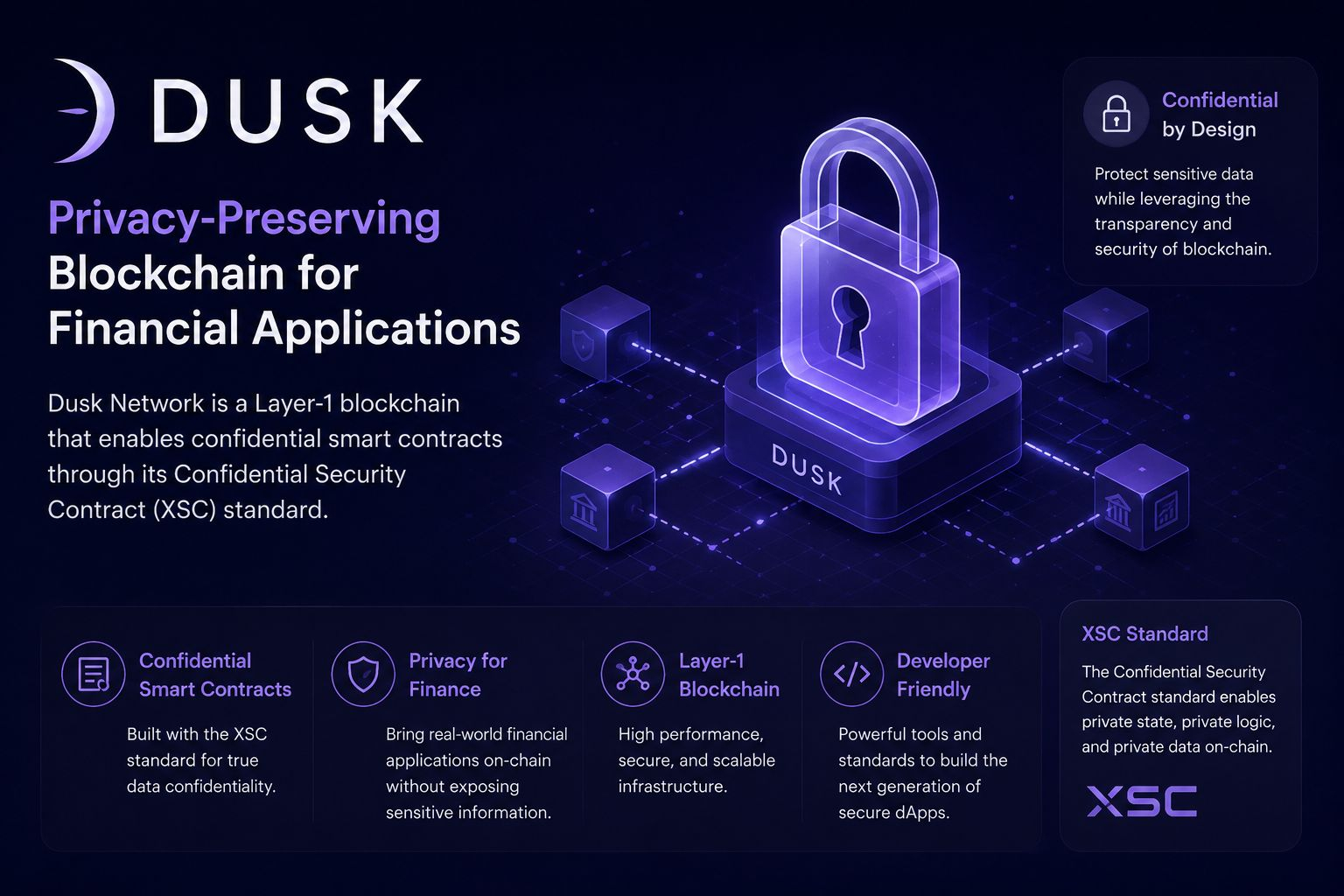
Privacy in crypto usually gets treated like a slogan, but for financial applications, it’s not really that simple. You need enough transparency to verify what’s happening, while still keeping sensitive information from becoming public.
That’s what makes Dusk interesting to me. It’s a layer-1 focused on financial use cases, with the Confidential Security Contract (XSC) standard and support for confidential smart contracts.
I’m still curious about the bigger picture, though. Privacy tech can sound impressive on paper, but the real question is whether it can work in practical financial environments where compliance, security, and confidentiality all have to coexist.
That’s the part I’m watching.
Not the hype. The actual usefulness.
Because in the end, privacy is only valuable when people can trust the system enough to use it for things that matter.
@Dusk $DUSK
#dusk
Privacy in crypto usually gets treated like a slogan, but for financial applications, it’s not really that simple. You need enough transparency to verify what’s happening, while still keeping sensitive information from becoming public.
That’s what makes Dusk interesting to me. It’s a layer-1 focused on financial use cases, with the Confidential Security Contract (XSC) standard and support for confidential smart contracts.
I’m still curious about the bigger picture, though. Privacy tech can sound impressive on paper, but the real question is whether it can work in practical financial environments where compliance, security, and confidentiality all have to coexist.
That’s the part I’m watching.
Not the hype. The actual usefulness.
Because in the end, privacy is only valuable when people can trust the system enough to use it for things that matter.
@Dusk $DUSK
#dusk
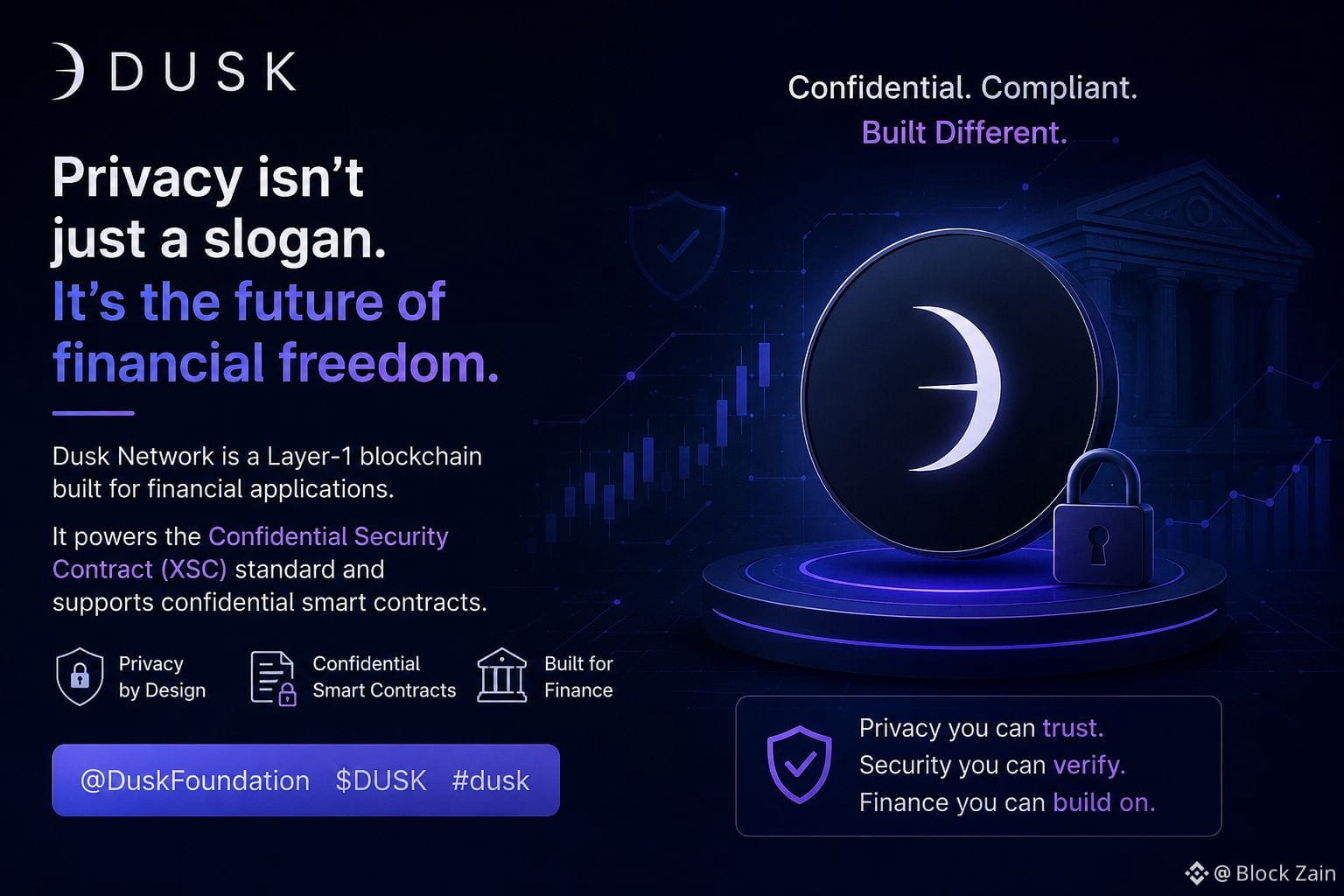
Crypto has one point where the excitement starts to fade.
DeFi, NFTs, AI, RWAs… every cycle brings a new narrative. For a while, it feels like everything is about to change. Then the market shifts, the hype dies down, and the basic questions stay the same:
Who are the real users?
Where is the trust?
How real is adoption?
That’s why Dusk Network feels interesting.
Dusk is a privacy-focused Layer-1 built for financial applications. Its focus isn’t just to make transactions private, but to combine privacy with compliance and regulated finance.
And honestly, this is where I pause.
In financial markets, transparency matters—but complete transparency isn’t practical in every situation. Institutions won’t want to expose their positions, counterparties, and sensitive information on a public blockchain.
Dusk’s Confidential Security Contract (XSC) approach tries to address this tension—making it possible to maintain privacy while enabling rules, permissions, and selective disclosure for regulated assets.
The idea is strong.
But in crypto, the gap between the idea and actual adoption can be huge.
Institutions won’t adopt blockchain just because the technology is interesting. The infrastructure needs to be reliable, scalable, compliant, and better than the existing systems.
Then there’s the question of the DUSK token.
The token plays a role in network fees and staking, but real value will only be meaningful when there’s genuine economic activity on the network. Token utility alone doesn’t guarantee sustainable demand.
In Dusk, I see more curiosity than certainty.
Will regulated finance actually demand privacy-preserving blockchain infrastructure?
Will institutions move away from existing systems and adopt new rails?
And will Dusk manage to reach real usage?
The answers aren’t clear yet.
Maybe Dusk’s real story is hidden in that uncertainty.
@Dusk #dusk $DUSK
DeFi, NFTs, AI, RWAs… every cycle brings a new narrative. For a while, it feels like everything is about to change. Then the market shifts, the hype dies down, and the basic questions stay the same:
Who are the real users?
Where is the trust?
How real is adoption?
That’s why Dusk Network feels interesting.
Dusk is a privacy-focused Layer-1 built for financial applications. Its focus isn’t just to make transactions private, but to combine privacy with compliance and regulated finance.
And honestly, this is where I pause.
In financial markets, transparency matters—but complete transparency isn’t practical in every situation. Institutions won’t want to expose their positions, counterparties, and sensitive information on a public blockchain.
Dusk’s Confidential Security Contract (XSC) approach tries to address this tension—making it possible to maintain privacy while enabling rules, permissions, and selective disclosure for regulated assets.
The idea is strong.
But in crypto, the gap between the idea and actual adoption can be huge.
Institutions won’t adopt blockchain just because the technology is interesting. The infrastructure needs to be reliable, scalable, compliant, and better than the existing systems.
Then there’s the question of the DUSK token.
The token plays a role in network fees and staking, but real value will only be meaningful when there’s genuine economic activity on the network. Token utility alone doesn’t guarantee sustainable demand.
In Dusk, I see more curiosity than certainty.
Will regulated finance actually demand privacy-preserving blockchain infrastructure?
Will institutions move away from existing systems and adopt new rails?
And will Dusk manage to reach real usage?
The answers aren’t clear yet.
Maybe Dusk’s real story is hidden in that uncertainty.
@Dusk #dusk $DUSK
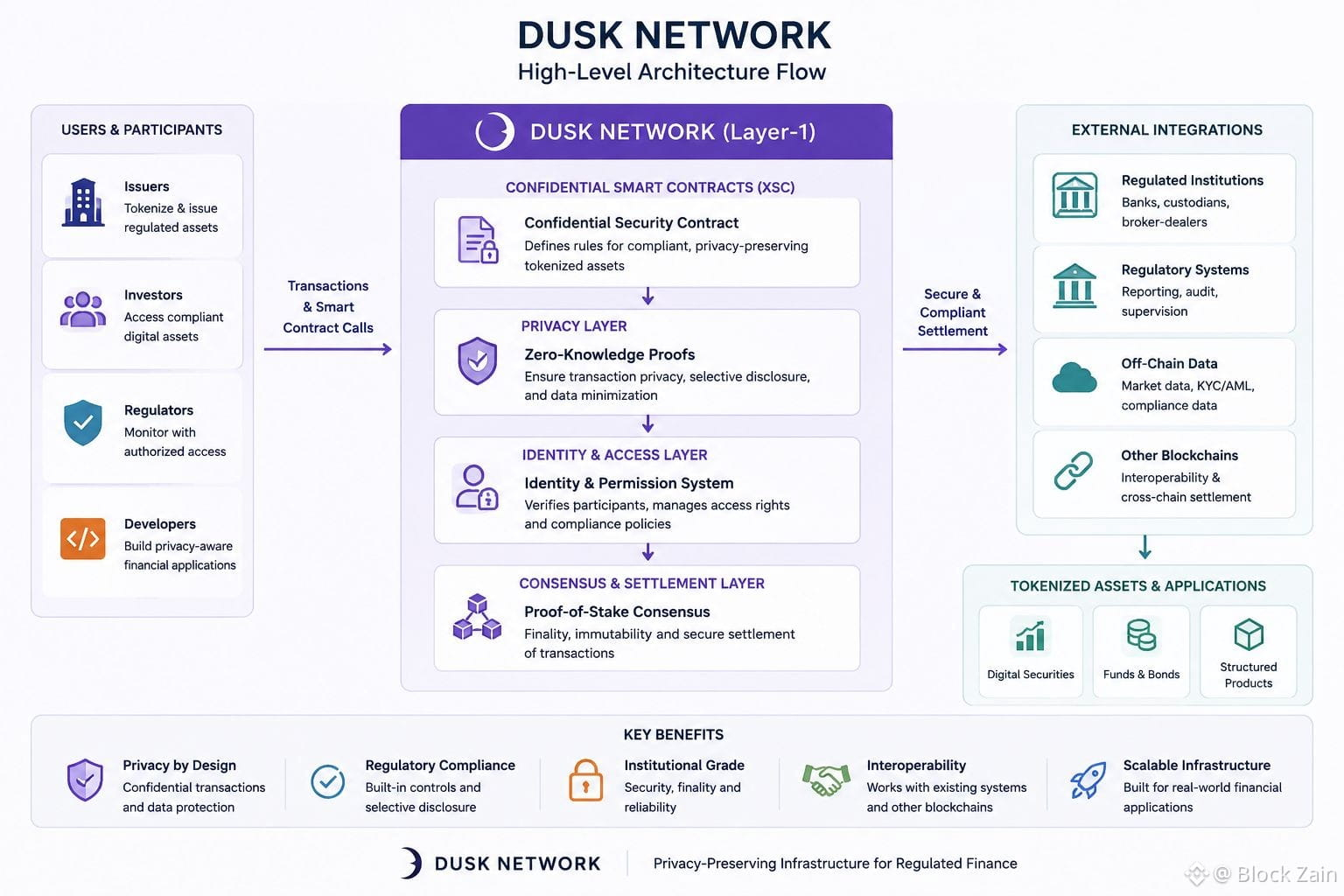
I’ve been in crypto long enough to become a little tired of the excitement.
DeFi was supposed to change finance. Then NFTs, AI, RWAs, and a dozen other narratives took their turn. The vocabulary changes, but the hard problems usually remain.
That’s why Dusk makes me pause.
Dusk isn’t simply trying to build another blockchain. Its focus is on something financial markets genuinely struggle with: how do you get the transparency and programmability of blockchain without exposing every sensitive transaction to the world?
Its approach combines privacy technology, confidential smart contracts, compliance controls, and on-chain settlement for regulated financial assets.
The idea makes sense.
But this is where I become cautious.
A good technical solution doesn’t automatically create adoption. Financial institutions move slowly. They have legal teams, regulators, legacy infrastructure, custody requirements and years of established processes.
Dusk has to prove that using its network is meaningfully better than continuing with the systems institutions already understand.
Then there’s DUSK.
The token has real protocol utility through fees and staking, but the bigger question is whether token demand eventually comes from genuine network activity rather than speculation around the narrative.
That distinction matters.
I’m not convinced Dusk succeeds, and I don’t think it needs to be.
For me, the interesting question is simpler: can privacy become practical financial infrastructure rather than another crypto story?
That answer probably won’t come from a whitepaper.
It will come from actual markets, actual assets, and actual users.
@Dusk #dusk $DUSK
DeFi was supposed to change finance. Then NFTs, AI, RWAs, and a dozen other narratives took their turn. The vocabulary changes, but the hard problems usually remain.
That’s why Dusk makes me pause.
Dusk isn’t simply trying to build another blockchain. Its focus is on something financial markets genuinely struggle with: how do you get the transparency and programmability of blockchain without exposing every sensitive transaction to the world?
Its approach combines privacy technology, confidential smart contracts, compliance controls, and on-chain settlement for regulated financial assets.
The idea makes sense.
But this is where I become cautious.
A good technical solution doesn’t automatically create adoption. Financial institutions move slowly. They have legal teams, regulators, legacy infrastructure, custody requirements and years of established processes.
Dusk has to prove that using its network is meaningfully better than continuing with the systems institutions already understand.
Then there’s DUSK.
The token has real protocol utility through fees and staking, but the bigger question is whether token demand eventually comes from genuine network activity rather than speculation around the narrative.
That distinction matters.
I’m not convinced Dusk succeeds, and I don’t think it needs to be.
For me, the interesting question is simpler: can privacy become practical financial infrastructure rather than another crypto story?
That answer probably won’t come from a whitepaper.
It will come from actual markets, actual assets, and actual users.
@Dusk #dusk $DUSK
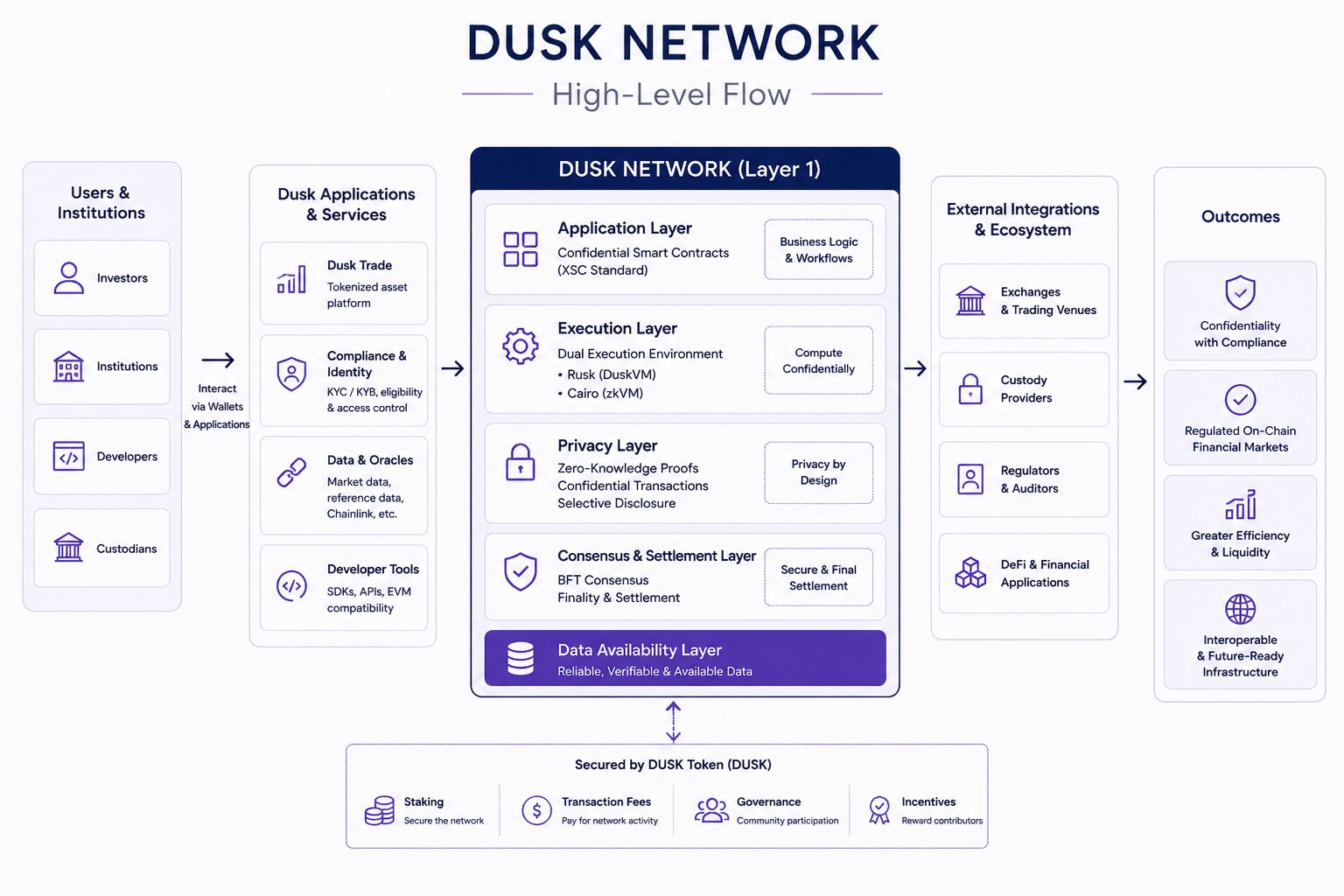
I've been through enough crypto cycles to know that a new narrative doesn't automatically mean a new opportunity.
DeFi, NFTs, AI, RWAs... the labels change, but the hard questions stay the same: who needs it, who will use it, and does it actually work when real money is involved?
That's what makes Dusk interesting to me.
It isn't trying to sell privacy as some abstract crypto ideal. The more practical argument is that financial markets need confidentiality. Institutions can't realistically put every position, transaction, identity, and business relationship on a completely transparent public ledger.
Dusk is building around that tension: blockchain settlement with privacy, while still allowing regulated access, compliance and selective disclosure.
That sounds sensible.
But sensible doesn't mean inevitable.
The real challenge isn't proving that privacy matters. It's convincing institutions that a blockchain-based system is safer, cheaper, scalable and easier to integrate than what they already have.
And then there's DUSK.
The token has genuine network utility through gas and staking, but I'm still cautious about whether token speculation eventually becomes louder than the infrastructure itself.
We've seen that happen before.
For me, Dusk is less about predicting whether privacy becomes the next big narrative and more about watching whether real financial activity actually moves onto the network.
Because eventually, the market stops rewarding the story.
It starts measuring usage.
@Dusk $DUSK #dusk
DeFi, NFTs, AI, RWAs... the labels change, but the hard questions stay the same: who needs it, who will use it, and does it actually work when real money is involved?
That's what makes Dusk interesting to me.
It isn't trying to sell privacy as some abstract crypto ideal. The more practical argument is that financial markets need confidentiality. Institutions can't realistically put every position, transaction, identity, and business relationship on a completely transparent public ledger.
Dusk is building around that tension: blockchain settlement with privacy, while still allowing regulated access, compliance and selective disclosure.
That sounds sensible.
But sensible doesn't mean inevitable.
The real challenge isn't proving that privacy matters. It's convincing institutions that a blockchain-based system is safer, cheaper, scalable and easier to integrate than what they already have.
And then there's DUSK.
The token has genuine network utility through gas and staking, but I'm still cautious about whether token speculation eventually becomes louder than the infrastructure itself.
We've seen that happen before.
For me, Dusk is less about predicting whether privacy becomes the next big narrative and more about watching whether real financial activity actually moves onto the network.
Because eventually, the market stops rewarding the story.
It starts measuring usage.
@Dusk $DUSK #dusk
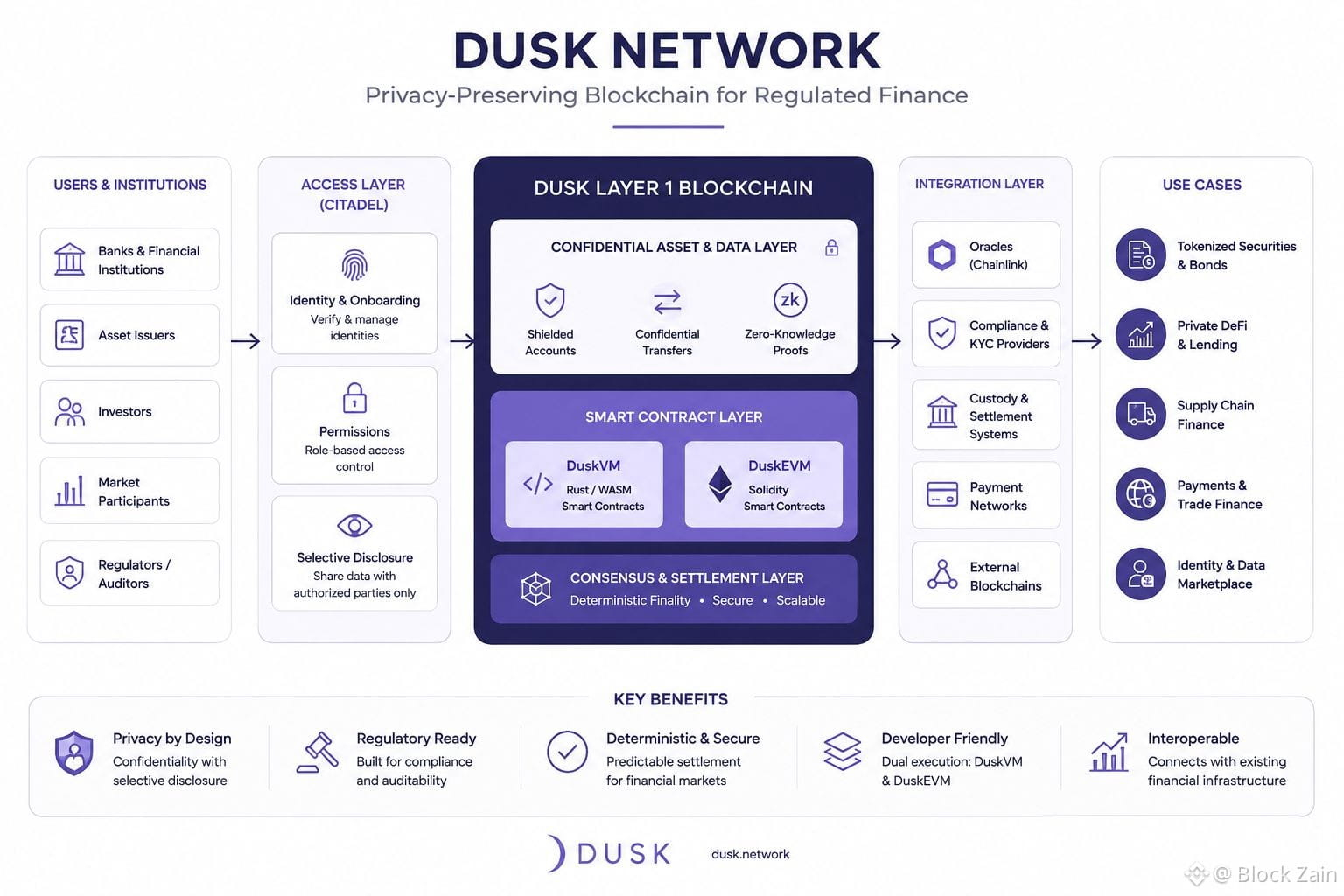
Babylon keeps making me think.
I understand why the idea gets attention. Letting Bitcoin help secure PoS chains without giving up custody is genuinely interesting. But I've learned that strong technology and strong token performance are rarely the same thing.
What I keep watching isn't the headline—it's whether Babylon can turn security into something people are willing to pay for over the long run. If the network depends more on excitement than sustainable demand, today's optimism can disappear faster than it arrived.
A lighthouse only matters when the storm comes. Babylon's real test won't be the next announcement—it'll be whether the project keeps attracting real users, real value, and real demand after the hype fades.
@BabylonLabs_io $BABY
#baby
I understand why the idea gets attention. Letting Bitcoin help secure PoS chains without giving up custody is genuinely interesting. But I've learned that strong technology and strong token performance are rarely the same thing.
What I keep watching isn't the headline—it's whether Babylon can turn security into something people are willing to pay for over the long run. If the network depends more on excitement than sustainable demand, today's optimism can disappear faster than it arrived.
A lighthouse only matters when the storm comes. Babylon's real test won't be the next announcement—it'll be whether the project keeps attracting real users, real value, and real demand after the hype fades.
@BabylonLabs_io $BABY
#baby
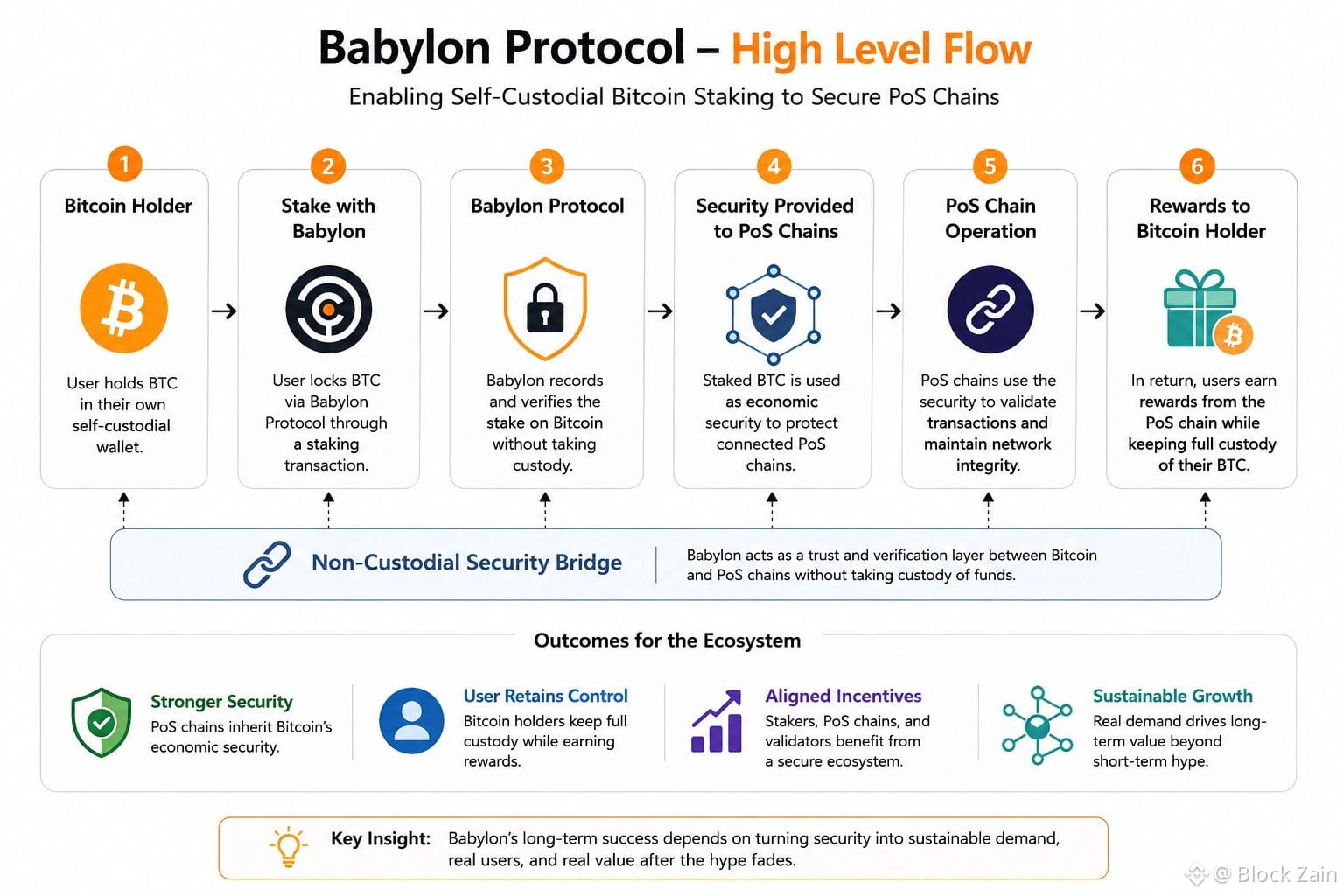
I've been thinking about Babylon, and what stands out isn't the idea of BTC staking itself—it's what the project is trying to make Bitcoin become.
For years, Bitcoin's biggest strength has been its simplicity. It doesn't try to be everything. Babylon challenges that by positioning Bitcoin as a security layer for Proof-of-Stake networks, all while letting users keep custody of their BTC.
It's an interesting shift, but it also raises bigger questions. Does giving Bitcoin more utility actually make the ecosystem stronger, or does it pull Bitcoin into risks it was never meant to carry?
We've seen plenty of crypto projects look brilliant when markets are calm. The real answers usually appear when volatility returns and incentives are put under pressure.
That's why I'm less interested in the narrative and more interested in how Babylon performs when conditions get difficult. If the model still works then, it will have earned its place. If not, it will be another reminder that good ideas and durable systems aren't always the same thing.
What do you think—should Bitcoin remain focused on being digital gold, or is becoming a security layer the right direction?
@BabylonLabs_io $BABY #baby
For years, Bitcoin's biggest strength has been its simplicity. It doesn't try to be everything. Babylon challenges that by positioning Bitcoin as a security layer for Proof-of-Stake networks, all while letting users keep custody of their BTC.
It's an interesting shift, but it also raises bigger questions. Does giving Bitcoin more utility actually make the ecosystem stronger, or does it pull Bitcoin into risks it was never meant to carry?
We've seen plenty of crypto projects look brilliant when markets are calm. The real answers usually appear when volatility returns and incentives are put under pressure.
That's why I'm less interested in the narrative and more interested in how Babylon performs when conditions get difficult. If the model still works then, it will have earned its place. If not, it will be another reminder that good ideas and durable systems aren't always the same thing.
What do you think—should Bitcoin remain focused on being digital gold, or is becoming a security layer the right direction?
@BabylonLabs_io $BABY #baby
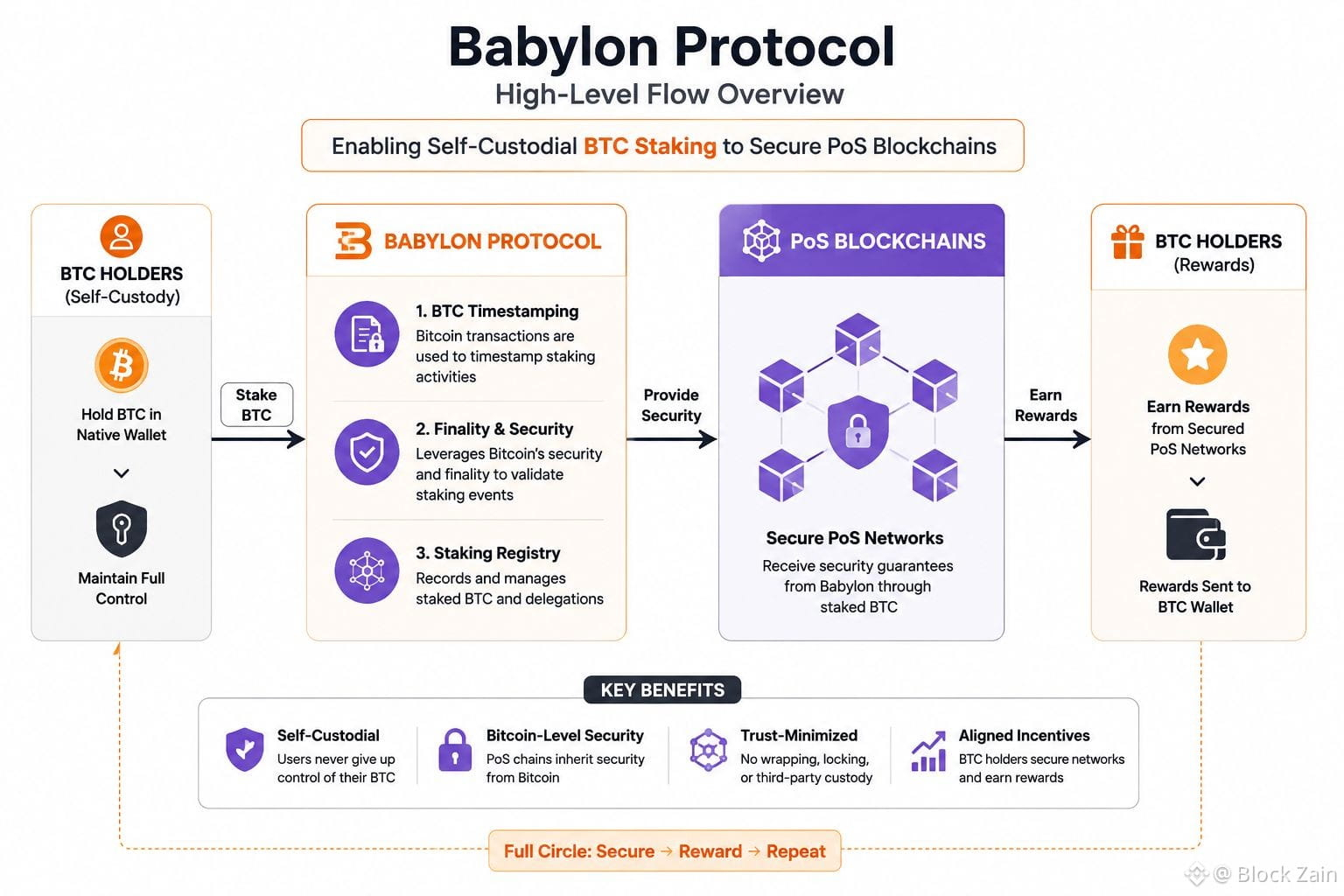
STOP CALLING THIS A BITCOIN STORY
Babylon is being sold as the next chapter in Bitcoin's evolution. It is not. It is a story about Proof-of-Stake blockchains searching for credibility they have struggled to build on their own.
That distinction matters.
For years, Bitcoin has been criticized for refusing to become everything to everyone. It did not chase complex financial engineering. It did not reinvent itself every market cycle. It survived by being predictable while the rest of the industry constantly searched for a new narrative.
Now the industry has found another one.
The promise is simple. Bitcoin holders can keep custody of their coins while using them to strengthen Proof-of-Stake security. Everyone wins. Bitcoin becomes productive. PoS networks become more secure. The market gets another infrastructure success story.
The pitch is neat.
The economics are not.
I have watched enough cycles to know that whenever crypto presents a solution that appears to benefit every participant equally, someone is quietly subsidizing everyone else. That is usually where the real story begins.
@BabylonLabs_io #baby $BABY
Babylon is being sold as the next chapter in Bitcoin's evolution. It is not. It is a story about Proof-of-Stake blockchains searching for credibility they have struggled to build on their own.
That distinction matters.
For years, Bitcoin has been criticized for refusing to become everything to everyone. It did not chase complex financial engineering. It did not reinvent itself every market cycle. It survived by being predictable while the rest of the industry constantly searched for a new narrative.
Now the industry has found another one.
The promise is simple. Bitcoin holders can keep custody of their coins while using them to strengthen Proof-of-Stake security. Everyone wins. Bitcoin becomes productive. PoS networks become more secure. The market gets another infrastructure success story.
The pitch is neat.
The economics are not.
I have watched enough cycles to know that whenever crypto presents a solution that appears to benefit every participant equally, someone is quietly subsidizing everyone else. That is usually where the real story begins.
@BabylonLabs_io #baby $BABY
·
--
🎙️ No matter how difficult your approach and analysis Market situation is
End
04 h 27 m 54 s
1.7k
9
The more I read about Newton Protocol, the less I think it's simply another "AI crypto" project. The AI narrative is what grabs attention, but I don't think that's where the real value lies.
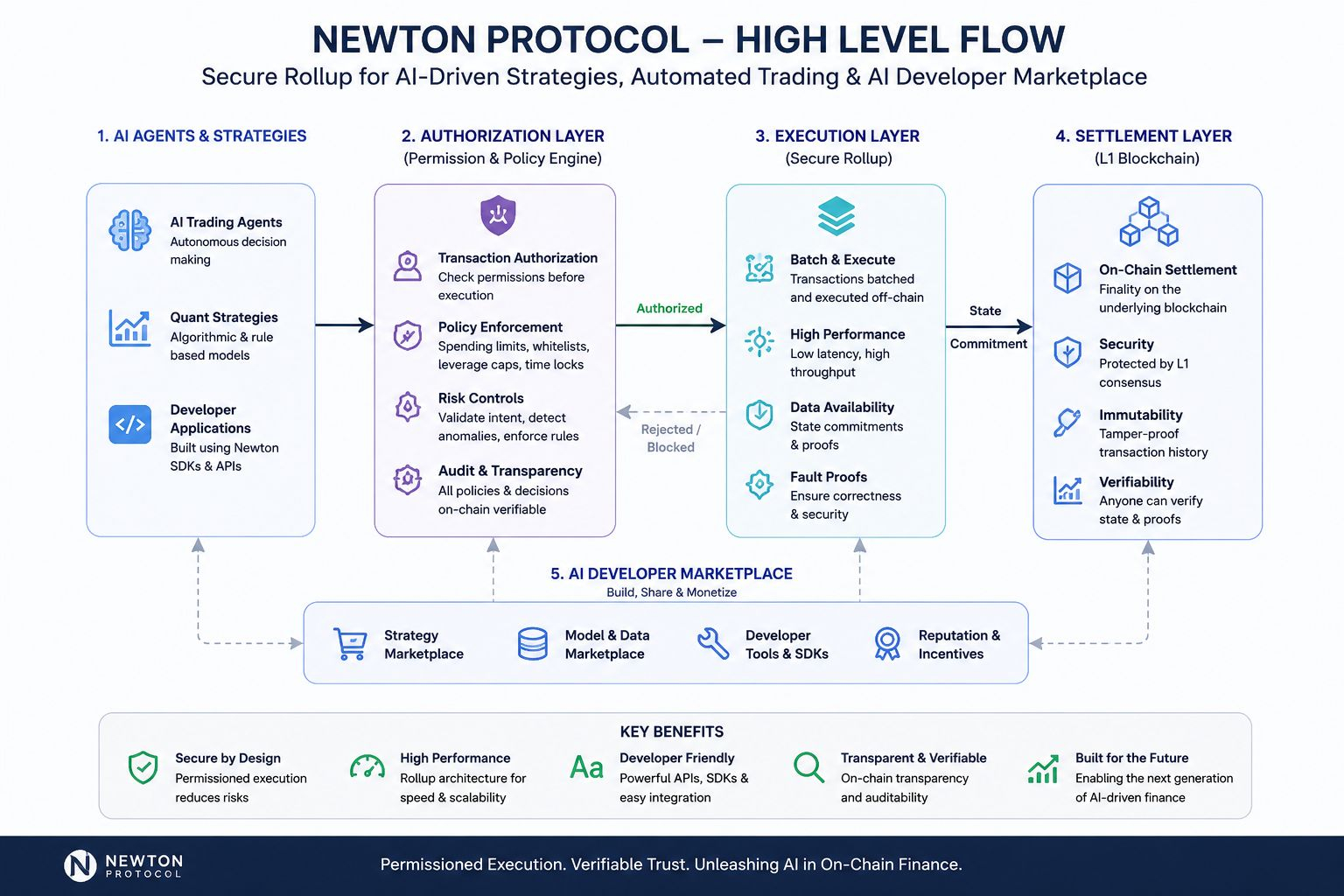
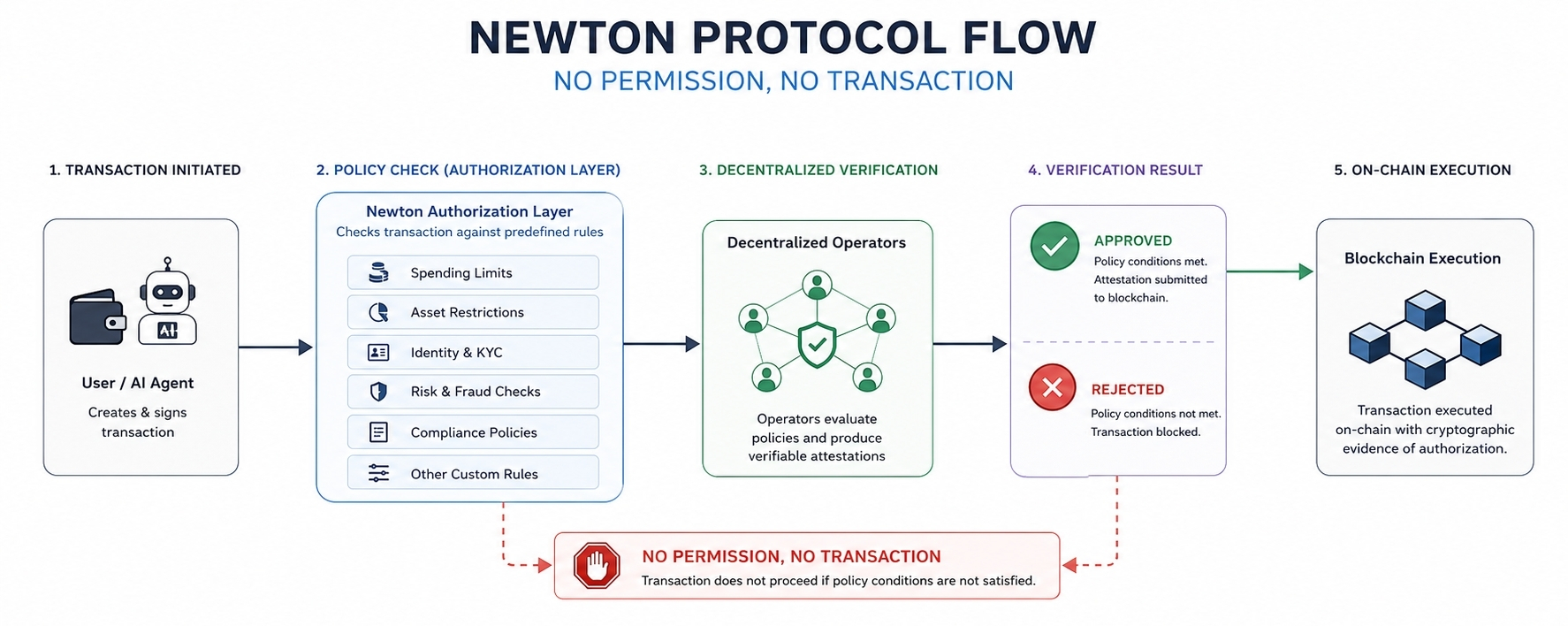
What caught my interest is the idea of adding an authorization layer before automated actions reach the blockchain. Crypto has spent years chasing faster transactions and lower fees, yet we rarely ask a more important question: should every transaction be executed just because it's signed?
As AI agents become more capable, they'll be managing assets, executing trades, and interacting with DeFi without constant human oversight. That creates a new challenge. Speed alone isn't enough. Automated systems also need clear rules, spending limits, and verifiable permissions to reduce unnecessary risk.
That's why Newton stands out to me. It isn't just about making AI smarter—it seems to be focused on making AI-driven execution more accountable. In traditional finance, every institution operates with risk controls and approval policies. Crypto often celebrates unlimited freedom, but real markets are built on discipline as much as innovation.
Of course, there are still plenty of questions. Building infrastructure is much harder than creating a compelling narrative. A secure rollup and an AI developer marketplace sound promising, but long-term success will depend on adoption, liquidity, governance, and whether developers actually build useful applications on top of it.
I'm optimistic, but cautiously so. The crypto industry has seen countless projects wrapped in the latest trend, and not all of them delivered. Newton will ultimately be judged by how well it performs under real market conditions, not by how impressive its vision sounds.
If the future of crypto includes autonomous agents handling more financial activity, then permission, accountability, and reliable execution could become just as important as speed. That, to me, is the most interesting part of Newton Protocol.
@NewtonProtocol $NEWT #Newt
What caught my interest is the idea of adding an authorization layer before automated actions reach the blockchain. Crypto has spent years chasing faster transactions and lower fees, yet we rarely ask a more important question: should every transaction be executed just because it's signed?
As AI agents become more capable, they'll be managing assets, executing trades, and interacting with DeFi without constant human oversight. That creates a new challenge. Speed alone isn't enough. Automated systems also need clear rules, spending limits, and verifiable permissions to reduce unnecessary risk.
That's why Newton stands out to me. It isn't just about making AI smarter—it seems to be focused on making AI-driven execution more accountable. In traditional finance, every institution operates with risk controls and approval policies. Crypto often celebrates unlimited freedom, but real markets are built on discipline as much as innovation.
Of course, there are still plenty of questions. Building infrastructure is much harder than creating a compelling narrative. A secure rollup and an AI developer marketplace sound promising, but long-term success will depend on adoption, liquidity, governance, and whether developers actually build useful applications on top of it.
I'm optimistic, but cautiously so. The crypto industry has seen countless projects wrapped in the latest trend, and not all of them delivered. Newton will ultimately be judged by how well it performs under real market conditions, not by how impressive its vision sounds.
If the future of crypto includes autonomous agents handling more financial activity, then permission, accountability, and reliable execution could become just as important as speed. That, to me, is the most interesting part of Newton Protocol.
@NewtonProtocol $NEWT #Newt
Log in to explore more content