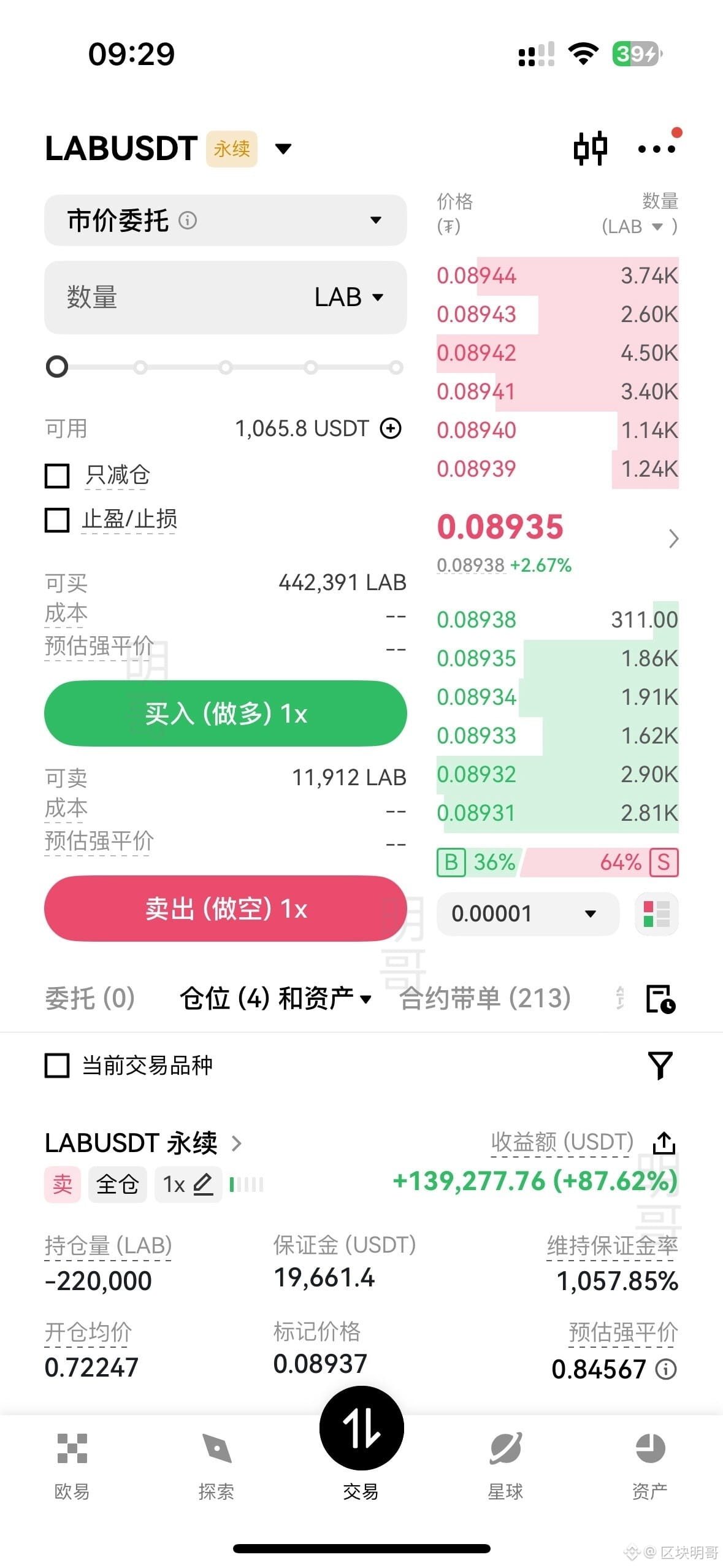
Many traders suffer severe losses. It’s not that the initial direction was wrong—it's that once they get trapped in a floating-loss rhythm, everything goes off the rails. After putting positions on, they start thinking about averaging down to lower the cost basis, believing it makes it easier to break even. The first add might be just a test, but if they keep averaging down, small losses can quickly turn into a deep hole $BTC
I once had a friend who was long BTC. When the price pulled back a bit, he added. When it fell again, he added again, and after a few rounds his position kept getting heavier. Then the market just moved slightly and his mindset completely collapsed. Later he asked me whether averaging down was wrong.
Averaging down itself isn’t wrong—what’s wrong is averaging down unconditionally. Price dropping doesn’t mean it’s getting cheaper in a favorable way, and it doesn’t imply an immediate rebound. As long as the downtrend hasn’t finished, the more you average down, the higher the risk. #BitcoinTops$80KThreeMonthHigh $LAB
The truly reasonable way to average down is to wait for stable signals to appear: key levels showing support, the price no longer printing consecutive lower lows, and sell pressure starting to weaken. Once the pullback is confirmed—if the prior low is not broken—then you can consider adding in batches.
The most dangerous thing in trading isn’t the floating loss itself, but the positions you keep adding to in order to return to breakeven, turning losing trades into bigger losses. Controlling position sizing and leaving enough room to adjust matters far more than blindly averaging down. Averaging down isn’t to “rescue” the previous trade; it’s to, after the trend is confirmed, participate in the next leg of the move from a better position. A correct trading rhythm is stronger than anything else $BTR
I once had a friend who was long BTC. When the price pulled back a bit, he added. When it fell again, he added again, and after a few rounds his position kept getting heavier. Then the market just moved slightly and his mindset completely collapsed. Later he asked me whether averaging down was wrong.
Averaging down itself isn’t wrong—what’s wrong is averaging down unconditionally. Price dropping doesn’t mean it’s getting cheaper in a favorable way, and it doesn’t imply an immediate rebound. As long as the downtrend hasn’t finished, the more you average down, the higher the risk. #BitcoinTops$80KThreeMonthHigh $LAB
The truly reasonable way to average down is to wait for stable signals to appear: key levels showing support, the price no longer printing consecutive lower lows, and sell pressure starting to weaken. Once the pullback is confirmed—if the prior low is not broken—then you can consider adding in batches.
The most dangerous thing in trading isn’t the floating loss itself, but the positions you keep adding to in order to return to breakeven, turning losing trades into bigger losses. Controlling position sizing and leaving enough room to adjust matters far more than blindly averaging down. Averaging down isn’t to “rescue” the previous trade; it’s to, after the trend is confirmed, participate in the next leg of the move from a better position. A correct trading rhythm is stronger than anything else $BTR