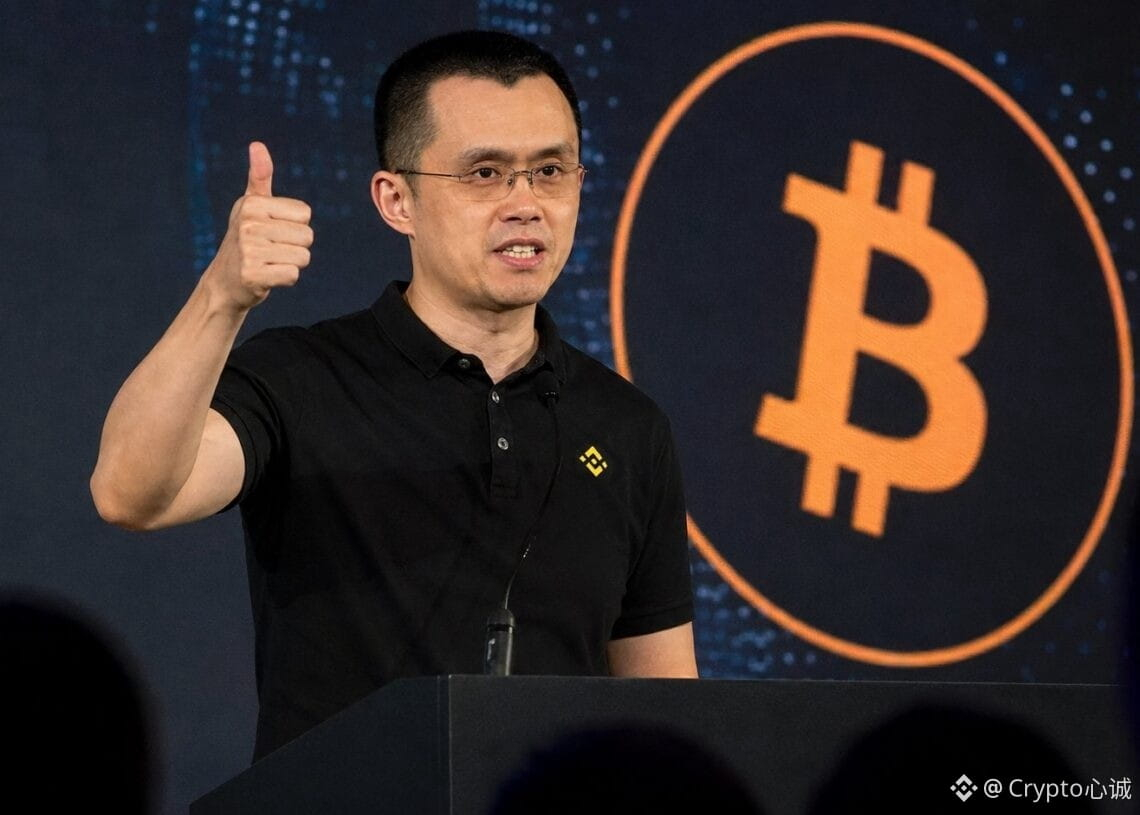
Today, Zhaо Changpeng delivers 《The Bitcoin Century》 on the main stage at Bitcoin Asia in Hong Kong. His logic is clear: price is the result—use cases are the prerequisite.
He believes Bitcoin won’t take 25 years to reach a million dollars, but what’s more scarce right now is real-world implementation: large-scale payments and entering pension reserves and similar allocations. People overestimate what can be done in one year, and underestimate the foundations that can be built over a decade.
So where do the use cases come from? Other sectors will bring people in. Stock tokenization and RWA will mostly happen on other chains, but that’s not about stealing Bitcoin’s food. It’s harder for Asians to open US stock accounts; once assets are tokenized and moved on-chain, they first land on crypto platforms, and only then is it easier to get exposed to Bitcoin. Multi-chain works the same way: if it becomes mostly Bitcoin anyway, the industry will move more slowly. Ethereum and BNB Chain will conduct experiments first, and innovations will eventually be absorbed by Bitcoin. The industry is not a zero-sum game.
As for reserves, he thinks Bitcoin will be more important than gold in the future. Its market cap will likely be only about one order of magnitude behind; the next bull cycle could bring it up to speed. Great powers move slowly because the gold-based system is already in place. But without Bitcoin, they are effectively choosing something riskier—similar to how countries avoid AI today. His recommended allocation for governments is: besides the US dollar, allocate according to the top five by crypto market cap (excluding stablecoins). Bitcoin typically makes up more than half. At the same time, issue the domestic stablecoin and tokenize assets.
Further down the stack are machines: massive AI agent-to-agent trading—money first moves through stablecoins, and then gets routed into Bitcoin. Bitcoin will continue to serve as savings, while payments will gradually spend the native coin directly.
One sentence: Bitcoin handles reserves; other chains and stablecoins handle experiments and payments; and AI expands counterparties from humans to machines.
$BTC
He believes Bitcoin won’t take 25 years to reach a million dollars, but what’s more scarce right now is real-world implementation: large-scale payments and entering pension reserves and similar allocations. People overestimate what can be done in one year, and underestimate the foundations that can be built over a decade.
So where do the use cases come from? Other sectors will bring people in. Stock tokenization and RWA will mostly happen on other chains, but that’s not about stealing Bitcoin’s food. It’s harder for Asians to open US stock accounts; once assets are tokenized and moved on-chain, they first land on crypto platforms, and only then is it easier to get exposed to Bitcoin. Multi-chain works the same way: if it becomes mostly Bitcoin anyway, the industry will move more slowly. Ethereum and BNB Chain will conduct experiments first, and innovations will eventually be absorbed by Bitcoin. The industry is not a zero-sum game.
As for reserves, he thinks Bitcoin will be more important than gold in the future. Its market cap will likely be only about one order of magnitude behind; the next bull cycle could bring it up to speed. Great powers move slowly because the gold-based system is already in place. But without Bitcoin, they are effectively choosing something riskier—similar to how countries avoid AI today. His recommended allocation for governments is: besides the US dollar, allocate according to the top five by crypto market cap (excluding stablecoins). Bitcoin typically makes up more than half. At the same time, issue the domestic stablecoin and tokenize assets.
Further down the stack are machines: massive AI agent-to-agent trading—money first moves through stablecoins, and then gets routed into Bitcoin. Bitcoin will continue to serve as savings, while payments will gradually spend the native coin directly.
One sentence: Bitcoin handles reserves; other chains and stablecoins handle experiments and payments; and AI expands counterparties from humans to machines.
$BTC