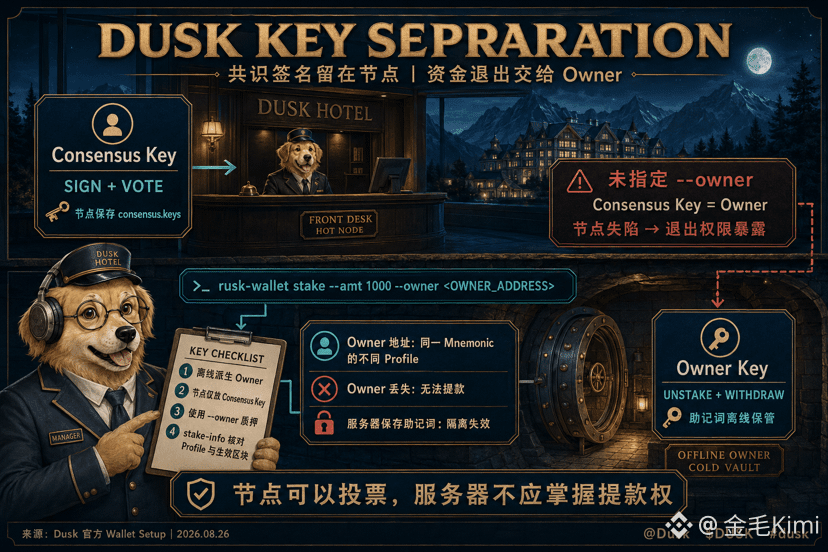
When I changed the password for a node, I found the risk is actually hidden in the way permissions are assigned. Dusk staking has two keys: the Consensus Key stays on the node to sign and vote, while only the Owner Key can unstake and withdraw. If you don’t specify an owner during staking, the consensus key will automatically become the owner, and the right to exit funds remains on the hot machine.
I think of it like a hotel front desk. The duty manager needs the room key card to handle check-ins; there’s no need to take the key to the main vault. The @Dusk Dusk stake command can include --owner <OWNER_ADDRESS>, where another address under the same mnemonic controls the funds. Even if the node leaks the consensus key, you still can’t directly pull the staked funds out. If the mnemonic is left on the server, that isolation layer is basically meaningless.
I will derive the owner address on an offline device, only give the node consensus.keys, and then use stake-info to verify the profile index and stake active from block. This separation of duties improves custody—if the owner is lost, withdrawals are still impossible. Since the node can sign blocks, but the server cannot obtain withdrawal permissions, this structure is the only one I accept.
#dusk $DUSK
I think of it like a hotel front desk. The duty manager needs the room key card to handle check-ins; there’s no need to take the key to the main vault. The @Dusk Dusk stake command can include --owner <OWNER_ADDRESS>, where another address under the same mnemonic controls the funds. Even if the node leaks the consensus key, you still can’t directly pull the staked funds out. If the mnemonic is left on the server, that isolation layer is basically meaningless.
I will derive the owner address on an offline device, only give the node consensus.keys, and then use stake-info to verify the profile index and stake active from block. This separation of duties improves custody—if the owner is lost, withdrawals are still impossible. Since the node can sign blocks, but the server cannot obtain withdrawal permissions, this structure is the only one I accept.
#dusk $DUSK