
楠楠nannan势不可挡
2.5k Posts

楠楠nannan势不可挡
Predict 亚太地区推广大使 | BNB持有者 | 币安广场建设者 | 预测市场PREDICT
1.6K+ Following
25.1K+ Followers
17.3K+ Liked
Posts
All
Quotes
Live
PINNED
Uninstalled three apps and the phone suddenly freed up 5G. Turns out, making life simpler by subtraction feels more reassuring than hoarding. $BTC

PINNED
I spent the whole afternoon having tea with a friend, chatting from gossip to life. Turns out the best way to relieve stress is having someone who’s willing to keep you company as you waste time $BNB

@楠楠nannan势不可挡 $ETH
楠楠nannan势不可挡
·
--
Uninstalled three apps and the phone suddenly freed up 5G. Turns out, making life simpler by subtraction feels more reassuring than hoarding. $BTC




@帮帮Bonnie
is speaking[LIVE] 🎙️ The big pancake has broken 80,000 again—are you still talking about girlfriends?
1.1k listens
🧧


Baoluo币商资本
·
--
#比特币升破8万美元创三月新高
The accumulation of these past few months is also a kind of postgraduate entrance exam preparation. $BTC has finally made a new breakthrough—there’s more climbing ahead. Believe it or not. Don’t look around—look at how many chips you have, and you’ll know who wins and who loses!
#中国反对美国拟加征7.5%关税
The trade war really does have fighting power!
The accumulation of these past few months is also a kind of postgraduate entrance exam preparation. $BTC has finally made a new breakthrough—there’s more climbing ahead. Believe it or not. Don’t look around—look at how many chips you have, and you’ll know who wins and who loses!
#中国反对美国拟加征7.5%关税
The trade war really does have fighting power!

@听澜321
is speaking[LIVE] 🎙️ Build the Binance Square, invest in BNB regularly|Friday—Is the bull market back again? Let's chat~
2k listens
Live

CC 程程 BNB
·
--
BullishThe gossip never ends; I just want to make $1,000,000 $AKE

🧧

生蚝哥Oyster
·
--
BullishMorning light arrives as promised, steady the rhythm, and wait for the flowers to bloom. A new day brings peace and smooth sailing; may all things be worth expecting ☀️
🧧🧧🧧Follow and reply below👇👇👇
🧧🧧🧧Follow and reply below👇👇👇


橙子Joyce
·
--
Has Nvidia fully transformed into the “central bank for AI”?
By the end of July, the chipmaker Nvidia’s equity value in both listed and unlisted companies had reached $95.6 billion, while the figure at the start of 2020 was less than $100 million. Nvidia said its total equity investments are currently about $99 billion.① Nvidia made its fortune riding the AI boom, and now it is also “stepping in the middle” to help the next phase of that wave develop… ② Compared with the impressive profit statement figures unveiled on Wednesday, some industry insiders believe Nvidia’s bigger change may be showing up on its balance sheet. Faced with such astonishing capital expansion, Nvidia CEO Jensen Huang showed no sign of concern on Wednesday—instead, he seemed calm: “If I have any regrets, it’s that at the time we didn’t invest more, and earlier, in these AI labs.” And perhaps these massive equity investments are only the tip of the iceberg in Nvidia’s broader capital chess game… $Nvidia (NVDA.US)$ Chief Financial Officer Colette Kress said that frontier AI labs’ demand for computing power is growing “explosively,” but its “expansion speed has far outstripped the limits that their own balance sheets and creditworthiness can support.” Put simply, the fastest-growing Nvidia’s core customers urgently need large-scale AI infrastructure, but their own financial conditions are simply unable to foot such expensive bills. And Nvidia is filling that gap. This capital-support strategy is gradually becoming an increasingly important part of Nvidia’s core business. Kress revealed that by next year, those AI labs supported by Nvidia’s balance sheet backing are expected to contribute about one-quarter of the company’s business share. In recent months, as the “Balance-Sheet-as-a-Service” model has taken off, Wall Street investors have begun to frequently jokingly call Nvidia the “central bank for AI.” The “Balance-Sheet-as-a-Service” model led by Nvidia—using Nvidia’s strong financial backing to continuously “pump blood” into customers so they can maintain their high procurement spending—has even given rise to a rare practice in the industry: allowing some large customers to delay payment for data center procurement for up to a year. According to the results released on Wednesday, $Nvidia (NVDA.US)$ accounts receivable (customer unpaid amounts) jumped to $63.1 billion, and the average days sales outstanding also extended from the prior 45 days to 60 days. Not only that, Nvidia is also “guarding the road” for customers in a more direct way. For some AI cloud service providers, Nvidia sets a minimum revenue guarantee to help them obtain financing smoothly; once a customer’s actual revenue exceeds that threshold, Nvidia can take a share of the upside. “Under this model, we are not just making loans,” we candidly acknowledge. “Under this model we can earn a double return: not only profit from front-end hardware sales, but also share in the returns from leasing income.” Nvidia’s $Nvidia (NVDA.US)$ results on Wednesday also disclosed guarantee facilities as high as $108.5 billion. The vast majority—$105 billion—is closely tied to the construction projects of the SB Energy data centers built for OpenAI. A clarification is needed: this massive amount of money is not cash that Nvidia needs to directly pay out right now. As nine data centers are scheduled to come online around fiscal year 2029, the guarantee obligation will take effect in stages and decline correspondingly as OpenAI gradually settles its outstanding payments. At the same time, $Nvidia (NVDA.US)$ is actively guiding more external capital to be injected into this construction boom. The company said it has already reached preliminary agreements with multiple large investment institutions, with the intention of raising more than $500 billion of social capital to flow into AI infrastructure construction. Its logic is simple: Nvidia does not want to shoulder all the costs of the boom by itself; instead, it wants to help these projects obtain financing more easily. This aligns with Nvidia’s view of AI infrastructure as an “investable asset class.” The strategy also follows a trend the company showed signs of in the previous quarter: at that time, Nvidia’s massive “cash-generating engine” was already injecting capital into both sides of AI trading—supply and demand. Now, major tech giants are also increasingly relying on debt financing to keep their AI mega-construction plans afloat. In any case, Nvidia’s current portfolio size is already large enough to affect its profits, and its balance sheet itself is also evolving into an indispensable underlying pillar for AI infrastructure. Investing regularly in $Nvidia (NVDA.US)$ stock is a very good strategy. Come on!$NVDAB

静心1688
·
--
💥 The towering tree begins from the tiniest sprout; the nine-tiered platform rises from piled earth; a journey of a thousand miles starts beneath your feet.
Great matters grow from small accumulations—take it slow, and keep doing it.
#美元创近四周最大涨幅 #中国反对美国拟加征7.5%关税
Great matters grow from small accumulations—take it slow, and keep doing it.
#美元创近四周最大涨幅 #中国反对美国拟加征7.5%关税





阿波罗1111
·
--
Follow the trend of the times, walk with like‑minded people toward long‑term value.
Follow the trend of the times, walk with like‑minded people toward long‑term value.
#BNB
Follow the trend of the times, walk with like‑minded people toward long‑term value.
#BNB


晚风Vesper_1688
·
--
☀️Good Friday morning. Greet the dawn and begin the last trading day of this week 🌤️.
Market rises and falls are never certain—there’s no need to obsess over the short-term ups and downs 📊.
Stick to a spot DCA plan for BTC, ETH, BNB, and SOL 🪙,
Don’t bet on a one-day breakout, and don’t gamble on luck. Accumulate your base-position steadily with discipline over time ⏳.
Don’t let intraday emotions steer you—let go of the obsession with frequent trading 🕯️.
Real confidence comes from choosing high-quality assets and the gradual, layered accumulation of time 🌱.
Hold on to your own position and your own mindset, look past intraday fluctuations, and wait for the cycle to bloom ✨.
Wishing everyone a calm and steady mindset on Friday, and a smooth finish to this week 🕊️.
#交易心态
#比特币升破8万美元创三月新高
#1688家族family
Market rises and falls are never certain—there’s no need to obsess over the short-term ups and downs 📊.
Stick to a spot DCA plan for BTC, ETH, BNB, and SOL 🪙,
Don’t bet on a one-day breakout, and don’t gamble on luck. Accumulate your base-position steadily with discipline over time ⏳.
Don’t let intraday emotions steer you—let go of the obsession with frequent trading 🕯️.
Real confidence comes from choosing high-quality assets and the gradual, layered accumulation of time 🌱.
Hold on to your own position and your own mindset, look past intraday fluctuations, and wait for the cycle to bloom ✨.
Wishing everyone a calm and steady mindset on Friday, and a smooth finish to this week 🕊️.
#交易心态
#比特币升破8万美元创三月新高
#1688家族family


🧧

远方1688 BNB
·
--
₿ $BTC Price Prediction — 2026 → 2035 🚀
Where might BTC go over the next ten years?👀
2026 → $125K
2027 → $100K
2028 → $140K
2029 → $200K
2030 → $300K
2031 → $250K
2032 → $350K
2033 → $450K
2034 → $550K
2035 → $700K+ 🔥🔥🔥
📌 If adoption and demand continue to grow, Bitcoin could reach more than $500K to $700K by 2035.
This journey won’t be smooth sailing—major pullbacks, bear markets, and explosive rebounds are expected along the way.
Will you keep holding BTC until 2035?👁️👁️
#BTC #Bitcoin #Crypto #CryptoPrediction #Bitcoin2035
Where might BTC go over the next ten years?👀
2026 → $125K
2027 → $100K
2028 → $140K
2029 → $200K
2030 → $300K
2031 → $250K
2032 → $350K
2033 → $450K
2034 → $550K
2035 → $700K+ 🔥🔥🔥
📌 If adoption and demand continue to grow, Bitcoin could reach more than $500K to $700K by 2035.
This journey won’t be smooth sailing—major pullbacks, bear markets, and explosive rebounds are expected along the way.
Will you keep holding BTC until 2035?👁️👁️
#BTC #Bitcoin #Crypto #CryptoPrediction #Bitcoin2035


XY 心月势不可挡
·
--
BTC’s first quantum-safe transaction; a quantum-resistant experiment that doesn’t require a hard fork. It’s not meant to replace Bitcoin’s existing transfer methods, but to provide a route: a secure channel that can safely move coins out at critical moments.




陈小善
·
--
Smiles, sunshine, and kindness. This is what I understand as a good mood. May you have the same—every day filled with love and happiness.

路人1688-luren
·
--
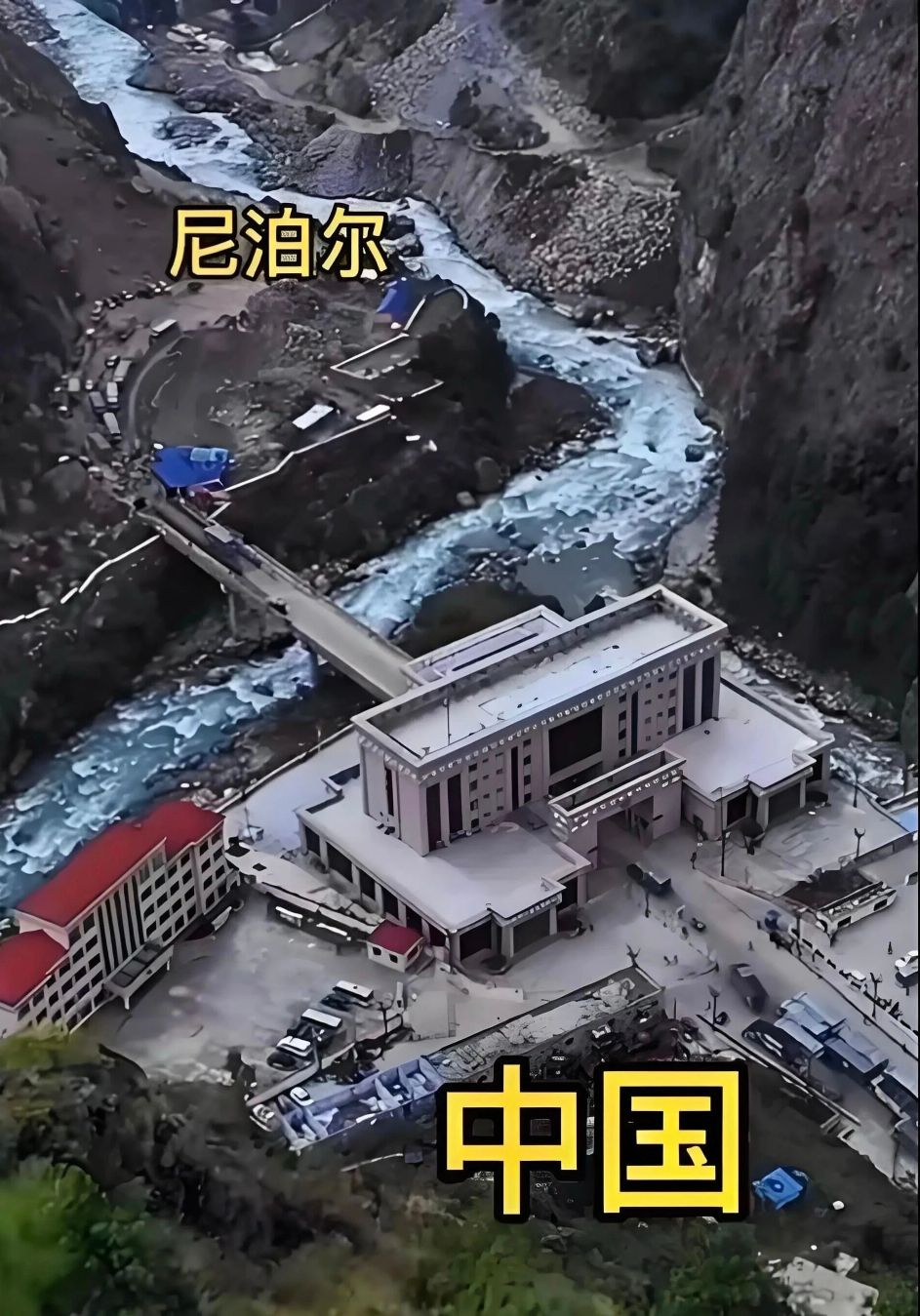
How small humans are in the face of nature
#中尼边境全部位于中国西藏自治区 , from the west at the Qiangla Pass to the east at Mount Jiangshan, the total length is 1,415 kilometers. The entire boundary runs along the ridgeline of the Himalayas.
Mount Qomolangma is located on this international border: the summit lies on the dividing line between the two countries; the north slope belongs to Dingri County in Tibet, China, while the south slope belongs to Nepal. Its elevation is 8,848.86 meters.
#中尼边境全部位于中国西藏自治区 , from the west at the Qiangla Pass to the east at Mount Jiangshan, the total length is 1,415 kilometers. The entire boundary runs along the ridgeline of the Himalayas.
Mount Qomolangma is located on this international border: the summit lies on the dividing line between the two countries; the north slope belongs to Dingri County in Tibet, China, while the south slope belongs to Nepal. Its elevation is 8,848.86 meters.

@火警猫1688
is speaking[LIVE] 🎙️ The chance to exchange for 2 million—can you catch it?
45.8k listens
Log in to explore more content