
小恐龙说趋势
234 Posts

小恐龙说趋势
6 年市场经验,公众号.比特芒果,记录市场的真实逻辑,研究下一步会去哪
12 Following
1.9K+ Followers
1.4K+ Liked
Posts
All
Live
Japan wants to move stock settlement from two days down to seconds
Japan’s Financial Services Agency (FSA), the Ministry of Finance, and the Bank of Japan—along with financial institutions—are preparing a blockchain-based settlement system
The goal is ambitious: stock and government bond trades, 24/7, with instant crediting
Right now, Japan’s stock market uses T+2 settlement, while government bonds use T+1. That means after buying stocks, the money and the securities still have to wait two days before everything is truly cleared
The new plan aims to turn deposits held in the central bank’s accounts into digital tokens that can circulate on-chain, enabling direct settlement between banks
A research group is expected to be set up this summer. By early next year, they will produce a development plan. If all goes smoothly, the system could go live in the early 2030s
It sounds far away, but the direction has already been set in stone
So what does this mean? The core of traditional capital markets—clearing and settlement—is starting to be infiltrated by blockchain
And this isn’t a grassroots experiment. It’s a national-level project jointly driven by the central bank, regulators, and the finance ministry
Japan’s steps toward tokenization have been ongoing: bond tokenization, stock tokenization—now it’s the settlement layer’s turn
Once this system is up and running, capital utilization efficiency could be so high that traditional systems won’t be able to understand it
The shorter the time capital sits idle on account balances, the stronger the market’s vitality—this is a principle everyone around the world understands
It’s just that some people are still having meetings, while others have already started writing the plan
I bet the mature markets next door that are still stuck with T+1 and T+2 are already itching
When do you think traditional stock markets will be able to achieve second-level settlement too?
Click the profile picture to watch the livestream
Every day, I’ll take you to track tokenization hotspots—not just what’s happening in the news, but also the logic and the opportunities behind it 👉🦖
#代币化 #Japan
Japan’s Financial Services Agency (FSA), the Ministry of Finance, and the Bank of Japan—along with financial institutions—are preparing a blockchain-based settlement system
The goal is ambitious: stock and government bond trades, 24/7, with instant crediting
Right now, Japan’s stock market uses T+2 settlement, while government bonds use T+1. That means after buying stocks, the money and the securities still have to wait two days before everything is truly cleared
The new plan aims to turn deposits held in the central bank’s accounts into digital tokens that can circulate on-chain, enabling direct settlement between banks
A research group is expected to be set up this summer. By early next year, they will produce a development plan. If all goes smoothly, the system could go live in the early 2030s
It sounds far away, but the direction has already been set in stone
So what does this mean? The core of traditional capital markets—clearing and settlement—is starting to be infiltrated by blockchain
And this isn’t a grassroots experiment. It’s a national-level project jointly driven by the central bank, regulators, and the finance ministry
Japan’s steps toward tokenization have been ongoing: bond tokenization, stock tokenization—now it’s the settlement layer’s turn
Once this system is up and running, capital utilization efficiency could be so high that traditional systems won’t be able to understand it
The shorter the time capital sits idle on account balances, the stronger the market’s vitality—this is a principle everyone around the world understands
It’s just that some people are still having meetings, while others have already started writing the plan
I bet the mature markets next door that are still stuck with T+1 and T+2 are already itching
When do you think traditional stock markets will be able to achieve second-level settlement too?
Click the profile picture to watch the livestream
Every day, I’ll take you to track tokenization hotspots—not just what’s happening in the news, but also the logic and the opportunities behind it 👉🦖
#代币化 #Japan
Buying a home doesn’t require selling crypto—use Bitcoin directly as the down payment and collateral
The US mortgage platform Better has teamed up with Coinbase to officially bring Bitcoin-collateralized mortgages to the market
The deal is simple: you want to buy a home, but don’t want to sell your Bitcoin—then you pledge your coins to the platform as collateral
The system provides two loans: one is a mortgage backed by Freddie Mac, and the other is a down-payment loan secured by Bitcoin
Down-payment loan requirements: the value of the pledged Bitcoin must be at least 250% of the loan amount
Both loans share the same interest rate and term. Pay off one installment each month—once the mortgage is cleared, the Bitcoin is returned in its original form
The most thoughtful part: if the coin price drops, it won’t trigger a margin top-up and won’t change the loan terms
There’s only one exception: if you’re late by 60 days and don’t repay, the platform has the right to liquidate the pledged coins
For HODLers, this is like adding a third use case for assets—previously you could only hold and borrow, but now you can also trade it for a house
Freddie Mac and Fannie Mae have been studying since last year how to include exchange-held crypto assets in mortgage evaluation
Now the product is truly live, which means this route has already been proven workable
A 250% collateral ratio also reveals banks’ real mindset: they want to earn money in the crypto market, but they’re also afraid of crypto price volatility
Wanting to profit while fearing getting hit—this kind of hesitation actually shows that crypto assets are being taken seriously by mainstream finance
Bitcoin is shifting from a speculative asset to a real asset on the balance sheet. This move has happened faster than anyone imagined
Now the question is: would you use Bitcoin as collateral to buy a home?
Click the avatar to watch the live stream
Every day, I’ll guide you through Bitcoin-collateralized hot topics—not just what’s in the news, but also what’s behind it and where the opportunities are 👉🦖
#比特币 #RWA
The US mortgage platform Better has teamed up with Coinbase to officially bring Bitcoin-collateralized mortgages to the market
The deal is simple: you want to buy a home, but don’t want to sell your Bitcoin—then you pledge your coins to the platform as collateral
The system provides two loans: one is a mortgage backed by Freddie Mac, and the other is a down-payment loan secured by Bitcoin
Down-payment loan requirements: the value of the pledged Bitcoin must be at least 250% of the loan amount
Both loans share the same interest rate and term. Pay off one installment each month—once the mortgage is cleared, the Bitcoin is returned in its original form
The most thoughtful part: if the coin price drops, it won’t trigger a margin top-up and won’t change the loan terms
There’s only one exception: if you’re late by 60 days and don’t repay, the platform has the right to liquidate the pledged coins
For HODLers, this is like adding a third use case for assets—previously you could only hold and borrow, but now you can also trade it for a house
Freddie Mac and Fannie Mae have been studying since last year how to include exchange-held crypto assets in mortgage evaluation
Now the product is truly live, which means this route has already been proven workable
A 250% collateral ratio also reveals banks’ real mindset: they want to earn money in the crypto market, but they’re also afraid of crypto price volatility
Wanting to profit while fearing getting hit—this kind of hesitation actually shows that crypto assets are being taken seriously by mainstream finance
Bitcoin is shifting from a speculative asset to a real asset on the balance sheet. This move has happened faster than anyone imagined
Now the question is: would you use Bitcoin as collateral to buy a home?
Click the avatar to watch the live stream
Every day, I’ll guide you through Bitcoin-collateralized hot topics—not just what’s in the news, but also what’s behind it and where the opportunities are 👉🦖
#比特币 #RWA
A week that rocketed from 30 to 80 points—this bull market score is even more excited than retail traders
CryptoQuant’s Bitcoin bull market score jumped from 30 to 80 within a week
This is the highest score since last October, and also the fastest reversal of the year so far
The backdrop: Bitcoin rose by nearly 25% in about ten days, surging from below 64,000 all the way to above 80,000
Of the ten underlying indicators, eight are showing bright green lights
Even more noteworthy is that for the first time, spot and derivatives demand are rising in sync—this combination signal is much more reliable than one-sided data
That said, institutions haven’t let the price surge make them lose their minds: they’ve drawn a hard line—only a weekly close above 83,000 counts as truly entering a new bull market
Why 83,000? Because that’s exactly where the 365-day moving average sits—the bull-bear dividing line
In other words, for Bitcoin to regain 83,000, external capital will only then dare to enter on a large scale
Looking back to earlier this year, this score once fell to 20, and the market was filled with cries of despair
Now it has moved from 20 to 80 in less than half a year—the emotional turnaround has been so fast that even veteran “old weeds” can’t help but say they can’t figure it out
The ETF side is adding fuel too: last week, spot Bitcoin ETF net inflows were about $1.9 billion, the strongest week since last October
For once, capital and on-chain indicators are standing on the same side—this rebound isn’t short on quality
Indicators can tell you the water temperature, but what matters is knowing how not to get burned—this is all about risk control
No matter how high the score is, it’s still only a reference; what truly determines the direction is the real exam over the next few days
How long do you think it will take to clear the 83,000 hurdle?
Click the avatar to watch the livestream
Every day, I’ll guide you through on-chain data hotspots—not just to see what happened in the news, but to help you understand the logic and opportunities behind it 👉🦖
#比特币 #On-chain analysis
CryptoQuant’s Bitcoin bull market score jumped from 30 to 80 within a week
This is the highest score since last October, and also the fastest reversal of the year so far
The backdrop: Bitcoin rose by nearly 25% in about ten days, surging from below 64,000 all the way to above 80,000
Of the ten underlying indicators, eight are showing bright green lights
Even more noteworthy is that for the first time, spot and derivatives demand are rising in sync—this combination signal is much more reliable than one-sided data
That said, institutions haven’t let the price surge make them lose their minds: they’ve drawn a hard line—only a weekly close above 83,000 counts as truly entering a new bull market
Why 83,000? Because that’s exactly where the 365-day moving average sits—the bull-bear dividing line
In other words, for Bitcoin to regain 83,000, external capital will only then dare to enter on a large scale
Looking back to earlier this year, this score once fell to 20, and the market was filled with cries of despair
Now it has moved from 20 to 80 in less than half a year—the emotional turnaround has been so fast that even veteran “old weeds” can’t help but say they can’t figure it out
The ETF side is adding fuel too: last week, spot Bitcoin ETF net inflows were about $1.9 billion, the strongest week since last October
For once, capital and on-chain indicators are standing on the same side—this rebound isn’t short on quality
Indicators can tell you the water temperature, but what matters is knowing how not to get burned—this is all about risk control
No matter how high the score is, it’s still only a reference; what truly determines the direction is the real exam over the next few days
How long do you think it will take to clear the 83,000 hurdle?
Click the avatar to watch the livestream
Every day, I’ll guide you through on-chain data hotspots—not just to see what happened in the news, but to help you understand the logic and opportunities behind it 👉🦖
#比特币 #On-chain analysis
Inflation won’t go away, growth is sputtering out. The Fed is forced to take flak from both ends.
The U.S. July PCE price index has been released: the month-over-month figure rose by 0.2%, while the year-over-year figure climbed to 3.7%.
Core PCE also increased by 0.2%. It’s still far from the Fed’s 2% target.
What’s even more worrying is that the household savings rate has dropped to 3%. Americans may be earning more, but they aren’t saving it.
One side is that prices can’t be brought down, and the other is that growth is slowing.
DeVere Group CEO said it plainly: this is the shadow of stagflation knocking at the door.
To rein in inflation, the Fed needs rate hikes. To support growth, it needs rate cuts. But right now it wants both—and can’t deliver on either.
His assessment is that the Fed can only hold steady. But the market reads “holding steady” as caution. What he sees is that the Fed has no good cards left.
Gold and silver have ticked slightly lower, while Bitcoin has been swinging between 77,000 and 79,000.
Next, the script depends entirely on Friday’s Jackson Hole—its first appearance for the newly appointed Fed chair—as well as the September FOMC meeting.
My take: with inflation this sticky, the room for “watering down” (loosening policy) has been squeezed to the limit.
Compared with scarce assets like Bitcoin, the short term is suppression—but in the long run, it’s the story.
Historically, every time sovereign currencies are battered by inflation, scarce assets get re-priced.
Will this time the script repeat? It depends on whether the Fed dares to admit it has run out of options.
If stagflation truly takes hold, do you think Bitcoin will be taken down along with everything else—or become the lifeline?
Click the avatar to watch the livestream.
Every day, I’ll take you to follow the Fed’s hot topics—not just what’s happening in the news, but also how to understand the underlying logic and opportunities 👉🦖
#比特币 #美联储
The U.S. July PCE price index has been released: the month-over-month figure rose by 0.2%, while the year-over-year figure climbed to 3.7%.
Core PCE also increased by 0.2%. It’s still far from the Fed’s 2% target.
What’s even more worrying is that the household savings rate has dropped to 3%. Americans may be earning more, but they aren’t saving it.
One side is that prices can’t be brought down, and the other is that growth is slowing.
DeVere Group CEO said it plainly: this is the shadow of stagflation knocking at the door.
To rein in inflation, the Fed needs rate hikes. To support growth, it needs rate cuts. But right now it wants both—and can’t deliver on either.
His assessment is that the Fed can only hold steady. But the market reads “holding steady” as caution. What he sees is that the Fed has no good cards left.
Gold and silver have ticked slightly lower, while Bitcoin has been swinging between 77,000 and 79,000.
Next, the script depends entirely on Friday’s Jackson Hole—its first appearance for the newly appointed Fed chair—as well as the September FOMC meeting.
My take: with inflation this sticky, the room for “watering down” (loosening policy) has been squeezed to the limit.
Compared with scarce assets like Bitcoin, the short term is suppression—but in the long run, it’s the story.
Historically, every time sovereign currencies are battered by inflation, scarce assets get re-priced.
Will this time the script repeat? It depends on whether the Fed dares to admit it has run out of options.
If stagflation truly takes hold, do you think Bitcoin will be taken down along with everything else—or become the lifeline?
Click the avatar to watch the livestream.
Every day, I’ll take you to follow the Fed’s hot topics—not just what’s happening in the news, but also how to understand the underlying logic and opportunities 👉🦖
#比特币 #美联储
Europeans no longer have to detour through the USD stablecoins first
Revolut, the fintech giant with 80 million users, is officially rolling out its own euro stablecoin, EURR, to the market
At launch, it will be available in three countries: Denmark, Poland, and Portugal—after that, it plans to expand across the entire European Economic Area
Previously, when Europeans wanted to use stablecoins on-chain, they had to convert euros into USDC or USDT first—one extra step, and one more layer of FX friction
Now, euros can go on-chain directly in one move
The numbers tell the story: the combined euro stablecoin market is only about €450 million
Meanwhile, the USD stablecoin side has already grown to around $300 billion in circulation
That’s more than a 600-fold difference—this is the “pie” Revolut is aiming to take a bite of
The issuance structure is also quite smart: EURR is not issued by Revolut itself, but entrusted to Bridge, which is under Stripe and regulated in Luxembourg
In other words, the compliance framework is essentially fully in place, and EURR can also leverage Revolut’s distribution channels to scale quickly
Some commentators have reminded that there’s already a coin on the market called EURR, and name collisions could cause confusion
But in the big picture, no one can stop the trend: the USD stablecoin’s dominance—until now unchallenged—has its first legitimate challenger
For ordinary users, the most direct change is that in the future, topping up, transferring, and spending with euros will have one less “middleman” stage involving USD
For the industry, this is the real signal that stablecoin competition is officially kicking off
Don’t underestimate this step. Years ago, USD stablecoins also started from a card and a wallet, and gradually seeped into everyday payments
Euro stablecoin is walking the same path—just with a higher starting point this time
Do you think euro stablecoins can shake the position of USD stablecoins?
Click the avatar to watch the live stream
Every day, we’ll bring you the latest stablecoin trends—not just what’s happening in the news, but also the logic and opportunities behind it 👉🦖
#稳定币 #Euro
Revolut, the fintech giant with 80 million users, is officially rolling out its own euro stablecoin, EURR, to the market
At launch, it will be available in three countries: Denmark, Poland, and Portugal—after that, it plans to expand across the entire European Economic Area
Previously, when Europeans wanted to use stablecoins on-chain, they had to convert euros into USDC or USDT first—one extra step, and one more layer of FX friction
Now, euros can go on-chain directly in one move
The numbers tell the story: the combined euro stablecoin market is only about €450 million
Meanwhile, the USD stablecoin side has already grown to around $300 billion in circulation
That’s more than a 600-fold difference—this is the “pie” Revolut is aiming to take a bite of
The issuance structure is also quite smart: EURR is not issued by Revolut itself, but entrusted to Bridge, which is under Stripe and regulated in Luxembourg
In other words, the compliance framework is essentially fully in place, and EURR can also leverage Revolut’s distribution channels to scale quickly
Some commentators have reminded that there’s already a coin on the market called EURR, and name collisions could cause confusion
But in the big picture, no one can stop the trend: the USD stablecoin’s dominance—until now unchallenged—has its first legitimate challenger
For ordinary users, the most direct change is that in the future, topping up, transferring, and spending with euros will have one less “middleman” stage involving USD
For the industry, this is the real signal that stablecoin competition is officially kicking off
Don’t underestimate this step. Years ago, USD stablecoins also started from a card and a wallet, and gradually seeped into everyday payments
Euro stablecoin is walking the same path—just with a higher starting point this time
Do you think euro stablecoins can shake the position of USD stablecoins?
Click the avatar to watch the live stream
Every day, we’ll bring you the latest stablecoin trends—not just what’s happening in the news, but also the logic and opportunities behind it 👉🦖
#稳定币 #Euro
Ten Days, Two-Tenths Up: Bitcoin Hits a Wall Near $79,000
How fierce was this run? Starting from August 17, the gain exceeded 20%.
But on Wednesday, it was immediately capped, stuck and churning between $77,000 and $79,000.
The high tapped $78,880—yet it still couldn’t break through the $79,000 threshold.
Data shows that every dip’s low point is shifting lower, and the bulls’ momentum is visibly weakening.
In the past day alone, Bitcoin liquidations totaled $88 million, of which long positions accounted for $77 million.
The whole market is even more dramatic—total liquidations across all assets have surpassed $300 million.
One analyst came out to emphasize this: Bitcoin must reclaim the range of $82,500 to $83,000.
That zone is a cost line for many ETF investors—only if price pushes through will fresh, out-of-market money be willing to enter.
But the risk is also obvious: the Fed Chair will speak at Jackson Hole on Friday.
If the tone is hawkish, this rally could directly unwind the gains.
My take: the market has switched from sprinting to uphill climbing—normal breathing.
The key is which way Friday’s Fed rhetoric leans.
The bulls are now in a tough spot: they need to guard against a profit-taking selloff, yet also wait for incremental capital to take the baton.
At the $83,000 level, it’s no longer just a technical point—it’s the psychological watershed between bulls and bears.
Looking back, the move from $64,000 to $80,000 was driven by the liquidity story sparked by Treasury bill repo.
The story is still unfolding, but the pace of the telling has slowed. This is exactly when unusual curveballs are most likely to happen.
Do you think this is a rest stop—or the end of the road?
Click the avatar to watch the livestream.
Every day, I’ll help you track Bitcoin market hot spots—not just what’s happening in the news, but also the logic and opportunities behind it 👉🦖
#比特币 #BTC
How fierce was this run? Starting from August 17, the gain exceeded 20%.
But on Wednesday, it was immediately capped, stuck and churning between $77,000 and $79,000.
The high tapped $78,880—yet it still couldn’t break through the $79,000 threshold.
Data shows that every dip’s low point is shifting lower, and the bulls’ momentum is visibly weakening.
In the past day alone, Bitcoin liquidations totaled $88 million, of which long positions accounted for $77 million.
The whole market is even more dramatic—total liquidations across all assets have surpassed $300 million.
One analyst came out to emphasize this: Bitcoin must reclaim the range of $82,500 to $83,000.
That zone is a cost line for many ETF investors—only if price pushes through will fresh, out-of-market money be willing to enter.
But the risk is also obvious: the Fed Chair will speak at Jackson Hole on Friday.
If the tone is hawkish, this rally could directly unwind the gains.
My take: the market has switched from sprinting to uphill climbing—normal breathing.
The key is which way Friday’s Fed rhetoric leans.
The bulls are now in a tough spot: they need to guard against a profit-taking selloff, yet also wait for incremental capital to take the baton.
At the $83,000 level, it’s no longer just a technical point—it’s the psychological watershed between bulls and bears.
Looking back, the move from $64,000 to $80,000 was driven by the liquidity story sparked by Treasury bill repo.
The story is still unfolding, but the pace of the telling has slowed. This is exactly when unusual curveballs are most likely to happen.
Do you think this is a rest stop—or the end of the road?
Click the avatar to watch the livestream.
Every day, I’ll help you track Bitcoin market hot spots—not just what’s happening in the news, but also the logic and opportunities behind it 👉🦖
#比特币 #BTC
SEC custody new rules have been submitted for White House review
On August 25, the U.S. SEC submitted a major proposed change to its crypto custody rules to the White House Office of Management and Budget for review
This time it amends the Investment Advisers Act and the Investment Company Act, governing how institutions hold customers’ crypto assets
The proposal has not been made public yet. The White House can provide comments first; then the SEC will vote on whether to publish it for public comment
The backdrop is that the CLARITY Act is still stalled in the Senate, and a vote will only happen after the September resumption
After the SEC leadership change, the direction is clearly different: it has shifted from suing everywhere to finally setting straightforward rules
It has also withdrawn several enforcement lawsuits targeting big companies
My take: translated—when institutions hold coins for customers, explicit rules are finally coming
Don’t underestimate the word “custody.” The first step for traditional finance to enter is to solve this: who holds the coins, and how compliance is calculated
Once the rules are in place, investment advisers, funds, and even pension plans will finally have the confidence to put crypto assets into their portfolios
It’s also good news for retail users: the product’s underlying holdings will be more transparent, and when things go wrong, there are clear rules to rely on
Policy moves slowly, but direction matters more than speed
While the SEC’s bill was stuck, it acted on its own—showing regulators can’t wait either
There’s also a hidden impact for ordinary users: once custody rules are clear, compliance costs may flow through to fees. But you gain in return: fund safety. It’s worth thinking about how to balance that equation
After this new rule takes effect, how much institutional capital do you think it could unlock? Discuss in the comments
Click the profile picture to watch the live stream
Every day I’ll take you to follow policy hot spots—not just what’s happening in the news, but also help you understand the underlying logic and opportunities 👉🦖
#SEC #Crypto regulation
On August 25, the U.S. SEC submitted a major proposed change to its crypto custody rules to the White House Office of Management and Budget for review
This time it amends the Investment Advisers Act and the Investment Company Act, governing how institutions hold customers’ crypto assets
The proposal has not been made public yet. The White House can provide comments first; then the SEC will vote on whether to publish it for public comment
The backdrop is that the CLARITY Act is still stalled in the Senate, and a vote will only happen after the September resumption
After the SEC leadership change, the direction is clearly different: it has shifted from suing everywhere to finally setting straightforward rules
It has also withdrawn several enforcement lawsuits targeting big companies
My take: translated—when institutions hold coins for customers, explicit rules are finally coming
Don’t underestimate the word “custody.” The first step for traditional finance to enter is to solve this: who holds the coins, and how compliance is calculated
Once the rules are in place, investment advisers, funds, and even pension plans will finally have the confidence to put crypto assets into their portfolios
It’s also good news for retail users: the product’s underlying holdings will be more transparent, and when things go wrong, there are clear rules to rely on
Policy moves slowly, but direction matters more than speed
While the SEC’s bill was stuck, it acted on its own—showing regulators can’t wait either
There’s also a hidden impact for ordinary users: once custody rules are clear, compliance costs may flow through to fees. But you gain in return: fund safety. It’s worth thinking about how to balance that equation
After this new rule takes effect, how much institutional capital do you think it could unlock? Discuss in the comments
Click the profile picture to watch the live stream
Every day I’ll take you to follow policy hot spots—not just what’s happening in the news, but also help you understand the underlying logic and opportunities 👉🦖
#SEC #Crypto regulation

$457 billion in on-chain transactions may need to be taxed
Chainalysis’ new report for 2025 says at least $457 billion in globally on-chain taxable activity
The U.S. alone accounts for $112.6 billion, North America totals $134.6 billion, and the EU $125.1 billion.
These figures include realized gains, mining, staking, lending income, and on-chain payments.
But here’s the key point: the international crypto tax reporting framework, CARF, can only cover 14% of it.
The remaining 86% happens across places like decentralized exchanges, peer-to-peer transfers, and other on-chain income streams.
Traditional frameworks simply can’t capture this.
These CARF rules only began collecting data in 48 jurisdictions as of January 1 this year.
My take: this news may seem far removed from ordinary people, but it’s actually directly related to your wallet.
Tax authorities can see everything about centralized exchange statements.
On-chain activity is the regulatory blind spot.
But don’t get too excited—just because the framework can’t capture it doesn’t mean you don’t have to pay taxes.
Regulators around the world are watching DeFi platforms closely and figuring out how to bring them into the tax reporting system.
The direction is clear: tax reporting is shifting from exchanges to on-chain.
Rather than scrambling later, it’s better to think now about where your coins come from—and how you’ll explain it in the future.
The more precisely the boundaries of compliance are drawn, the more solid the industry’s foundation becomes.
Don’t forget: the report also notes that U.S.-only on-chain taxable activity accounts for one quarter of the global total.
Regulatory headquarters are right there.
Do you think on-chain transactions should be automatically reported for tax? Let’s discuss in the comments.
Click the profile picture to watch the live stream
Every day, I’ll take you through regulatory hot topics—not just what’s happening in the news, but also the logic and opportunities behind it 👉🦖
#加密货币 #tax
Chainalysis’ new report for 2025 says at least $457 billion in globally on-chain taxable activity
The U.S. alone accounts for $112.6 billion, North America totals $134.6 billion, and the EU $125.1 billion.
These figures include realized gains, mining, staking, lending income, and on-chain payments.
But here’s the key point: the international crypto tax reporting framework, CARF, can only cover 14% of it.
The remaining 86% happens across places like decentralized exchanges, peer-to-peer transfers, and other on-chain income streams.
Traditional frameworks simply can’t capture this.
These CARF rules only began collecting data in 48 jurisdictions as of January 1 this year.
My take: this news may seem far removed from ordinary people, but it’s actually directly related to your wallet.
Tax authorities can see everything about centralized exchange statements.
On-chain activity is the regulatory blind spot.
But don’t get too excited—just because the framework can’t capture it doesn’t mean you don’t have to pay taxes.
Regulators around the world are watching DeFi platforms closely and figuring out how to bring them into the tax reporting system.
The direction is clear: tax reporting is shifting from exchanges to on-chain.
Rather than scrambling later, it’s better to think now about where your coins come from—and how you’ll explain it in the future.
The more precisely the boundaries of compliance are drawn, the more solid the industry’s foundation becomes.
Don’t forget: the report also notes that U.S.-only on-chain taxable activity accounts for one quarter of the global total.
Regulatory headquarters are right there.
Do you think on-chain transactions should be automatically reported for tax? Let’s discuss in the comments.
Click the profile picture to watch the live stream
Every day, I’ll take you through regulatory hot topics—not just what’s happening in the news, but also the logic and opportunities behind it 👉🦖
#加密货币 #tax

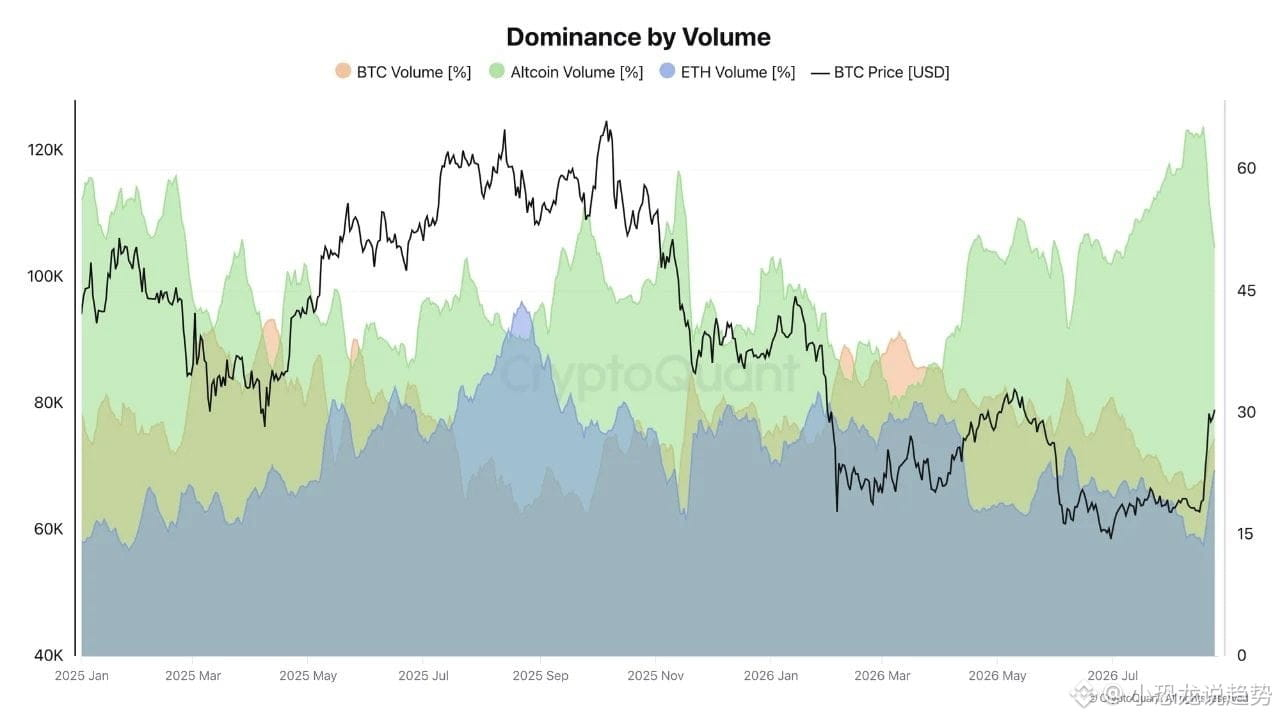
Binance’s 65% trading volume has been snatched away by copycat coins
According to CryptoQuant data, during this rally the share of altcoin trades surged to 65%, hitting a two-year high.
Bitcoin is left with only 21%, and Ethereum 13.6%.
In the same period, the total market value of altcoins rose by about $135 billion.
The whole crypto market bounced back from the lows, up a combined roughly $500 billion, with total market cap returning to $2.74 trillion.
Ethereum is up 31% over seven days—some coins have nearly doubled in just a few days.
But don’t rush to call it an “altseason.” The Altseason Index is only 37, still far from the 75 confirmation line.
On a 90-day basis, only a handful of coins have truly outperformed Bitcoin.
Analysts also remind us: high trading volume doesn’t necessarily mean fresh money is coming in— it may just be existing capital rotating around.
My take: this is an altcoin frenzy—either altcoins are running wild, or it’s a catch-up after Bitcoin has already risen too much. We need data to speak.
65% of trading volume sounds exciting, but the Altseason Index is still throwing cold water on it, suggesting the rotation may just be getting started.
My logic is simple: as long as Bitcoin holds steady, altcoins can sustain their money flow; once Bitcoin wobbles, altcoins are the first to run.
Historically, altcoin rallies have a pattern: they come fast, and the tide goes out even faster.
For those chasing the highs, weigh your position size yourself—don’t confuse the excitement with a long-term trend.
One more detail: when altcoins are rising the most aggressively, it’s often while Bitcoin is moving sideways—clear “seesaw” capital effects are visible.
My view: instead of chasing or panicking, focus on the leading indicator of trade share—once it changes, the wind changes too.
Do you think this altcoin rally is real or just an illusion? Let’s talk in the comments.
Click the avatar to watch the live stream.
Every day, I’ll guide you to the hottest altcoin topics— not just what’s happening in the news, but also the logic and opportunities behind it 👉🦖
#山寨币 #Market Analysis
According to CryptoQuant data, during this rally the share of altcoin trades surged to 65%, hitting a two-year high.
Bitcoin is left with only 21%, and Ethereum 13.6%.
In the same period, the total market value of altcoins rose by about $135 billion.
The whole crypto market bounced back from the lows, up a combined roughly $500 billion, with total market cap returning to $2.74 trillion.
Ethereum is up 31% over seven days—some coins have nearly doubled in just a few days.
But don’t rush to call it an “altseason.” The Altseason Index is only 37, still far from the 75 confirmation line.
On a 90-day basis, only a handful of coins have truly outperformed Bitcoin.
Analysts also remind us: high trading volume doesn’t necessarily mean fresh money is coming in— it may just be existing capital rotating around.
My take: this is an altcoin frenzy—either altcoins are running wild, or it’s a catch-up after Bitcoin has already risen too much. We need data to speak.
65% of trading volume sounds exciting, but the Altseason Index is still throwing cold water on it, suggesting the rotation may just be getting started.
My logic is simple: as long as Bitcoin holds steady, altcoins can sustain their money flow; once Bitcoin wobbles, altcoins are the first to run.
Historically, altcoin rallies have a pattern: they come fast, and the tide goes out even faster.
For those chasing the highs, weigh your position size yourself—don’t confuse the excitement with a long-term trend.
One more detail: when altcoins are rising the most aggressively, it’s often while Bitcoin is moving sideways—clear “seesaw” capital effects are visible.
My view: instead of chasing or panicking, focus on the leading indicator of trade share—once it changes, the wind changes too.
Do you think this altcoin rally is real or just an illusion? Let’s talk in the comments.
Click the avatar to watch the live stream.
Every day, I’ll guide you to the hottest altcoin topics— not just what’s happening in the news, but also the logic and opportunities behind it 👉🦖
#山寨币 #Market Analysis
Verified
Inflation again comes in hotter than expected: Bitcoin drops below 78,000
The U.S. July PCE inflation data is out. Year over year, it’s 3.7%, a bit higher than the market’s 3.6% forecast.
This is the inflation gauge the Federal Reserve cares about most.
As soon as the data hit, U.S. stocks opened lower, gold fell below $4,600, and Bitcoin slid about 1% on the day, losing the 78,000 level.
Keep in mind: June’s PCE had just shown the first month-over-month decline in six years, and everyone thought inflation was starting to cool down.
But July slapped that assumption in the face. One analyst even joked that inflation is now almost twice as high as the Fed’s 2% target.
On Friday, the Jackson Hole conference kicks off, and the Fed chair will deliver an important speech.
Tonight’s Nvidia earnings report is another big variable. The market expects quarterly revenue of $92.3 billion.
Two “triggers”—one data release and one tech giant—are both hitting within these two days.
My take: don’t rush to write off this pullback.
Bitcoin has gained nearly 30% over the past 10 days—taking a breather is completely normal.
When macro data disappoints, it actually gives the bulls a cold-water test of their mettle.
The 78,000 level was resistance last week; now it’s support. The test is just beginning.
Some analysts are watching the monthly close. They say that if it can’t hold above the key moving averages on a closing basis, then this move can only be counted as a rebound—not a reversal.
In the short term, whether inflation is a “paper tiger” or a “real tiger” will be decided after Friday’s speech.
For us, instead of guessing the direction, it’s better to focus on two signals: whether 78,000 holds, and how the market moves after Nvidia’s earnings.
Do you think tonight’s Nvidia earnings report can lift Bitcoin as well? Let’s chat in the comments.
Click the profile picture to watch the livestream.
Every day, I’ll help you stay on top of Bitcoin’s headlines—not just what’s happening, but also how to understand the logic and opportunities behind it 👉🦖
#比特币 #宏观经济
The U.S. July PCE inflation data is out. Year over year, it’s 3.7%, a bit higher than the market’s 3.6% forecast.
This is the inflation gauge the Federal Reserve cares about most.
As soon as the data hit, U.S. stocks opened lower, gold fell below $4,600, and Bitcoin slid about 1% on the day, losing the 78,000 level.
Keep in mind: June’s PCE had just shown the first month-over-month decline in six years, and everyone thought inflation was starting to cool down.
But July slapped that assumption in the face. One analyst even joked that inflation is now almost twice as high as the Fed’s 2% target.
On Friday, the Jackson Hole conference kicks off, and the Fed chair will deliver an important speech.
Tonight’s Nvidia earnings report is another big variable. The market expects quarterly revenue of $92.3 billion.
Two “triggers”—one data release and one tech giant—are both hitting within these two days.
My take: don’t rush to write off this pullback.
Bitcoin has gained nearly 30% over the past 10 days—taking a breather is completely normal.
When macro data disappoints, it actually gives the bulls a cold-water test of their mettle.
The 78,000 level was resistance last week; now it’s support. The test is just beginning.
Some analysts are watching the monthly close. They say that if it can’t hold above the key moving averages on a closing basis, then this move can only be counted as a rebound—not a reversal.
In the short term, whether inflation is a “paper tiger” or a “real tiger” will be decided after Friday’s speech.
For us, instead of guessing the direction, it’s better to focus on two signals: whether 78,000 holds, and how the market moves after Nvidia’s earnings.
Do you think tonight’s Nvidia earnings report can lift Bitcoin as well? Let’s chat in the comments.
Click the profile picture to watch the livestream.
Every day, I’ll help you stay on top of Bitcoin’s headlines—not just what’s happening, but also how to understand the logic and opportunities behind it 👉🦖
#比特币 #宏观经济

In less than two years, its market cap has surged 8x—this stablecoin has emerged
Ripple’s RLUSD officially breaks through the $2 billion mark
Launched less than two years ago—the pace is more than aggressive
In the past 30 days, it’s up 31.45% with zero slowdown
What’s interesting: the issuance is split almost evenly—about 960 million on the XRP Ledger and about 1.05 billion on Ethereum
Two chains share it nearly 50/50, with a difference of only about 90 million
In 30 days, transfer volume hit $11.8 billion across 1.39 million transactions—real liquidity, not hype
Looking back to April 2025, the market cap was only $250 million
In one and a half years, it multiplied 8x—from a fringe player to mainstream attention
Where does the confidence come from? The reserves are all short-term U.S. Treasuries, money market funds, reverse repos, and bank deposits
Every month, one of the “Big Four” firms—Deloitte—also conducts audits
For institutions looking to get in, there’s a dedicated issuance and redemption platform for one-click operations
In the stablecoin arena, the duel between two leaders is turning into a Three Kingdoms battle
Ripple’s strategy is crystal clear: stablecoins feed public chains, and public chains grow stablecoins
My take: RLUSD’s rise isn’t driven by tricks—it’s built on solid compliance
Transparent reserves, audits kept up—only then do institutions dare to put money in
This 8x growth, at its core, is institutional capital voting with its feet
But don’t miss one detail: Ripple, its original home, still has the XRP card in hand
Stablecoins and public chains feed each other—the more it rolls, the smoother the engine runs
For retail users, having another stablecoin option is a good thing: fiercer competition means lower fees
Just a reminder: when it comes to stablecoins, look at reserves and audits—don’t only watch which one is pumping
Issuance amounts can be faked; reserves can’t
Would you swap USDT for RLUSD? Let’s chat in the comments
Click the profile picture to watch the livestream
Every day, I’ll help you track stablecoin hotspots—not just what’s happening in the news, but also the logic and opportunities behind it 👉🦖
#RLUSD #stablecoin
Ripple’s RLUSD officially breaks through the $2 billion mark
Launched less than two years ago—the pace is more than aggressive
In the past 30 days, it’s up 31.45% with zero slowdown
What’s interesting: the issuance is split almost evenly—about 960 million on the XRP Ledger and about 1.05 billion on Ethereum
Two chains share it nearly 50/50, with a difference of only about 90 million
In 30 days, transfer volume hit $11.8 billion across 1.39 million transactions—real liquidity, not hype
Looking back to April 2025, the market cap was only $250 million
In one and a half years, it multiplied 8x—from a fringe player to mainstream attention
Where does the confidence come from? The reserves are all short-term U.S. Treasuries, money market funds, reverse repos, and bank deposits
Every month, one of the “Big Four” firms—Deloitte—also conducts audits
For institutions looking to get in, there’s a dedicated issuance and redemption platform for one-click operations
In the stablecoin arena, the duel between two leaders is turning into a Three Kingdoms battle
Ripple’s strategy is crystal clear: stablecoins feed public chains, and public chains grow stablecoins
My take: RLUSD’s rise isn’t driven by tricks—it’s built on solid compliance
Transparent reserves, audits kept up—only then do institutions dare to put money in
This 8x growth, at its core, is institutional capital voting with its feet
But don’t miss one detail: Ripple, its original home, still has the XRP card in hand
Stablecoins and public chains feed each other—the more it rolls, the smoother the engine runs
For retail users, having another stablecoin option is a good thing: fiercer competition means lower fees
Just a reminder: when it comes to stablecoins, look at reserves and audits—don’t only watch which one is pumping
Issuance amounts can be faked; reserves can’t
Would you swap USDT for RLUSD? Let’s chat in the comments
Click the profile picture to watch the livestream
Every day, I’ll help you track stablecoin hotspots—not just what’s happening in the news, but also the logic and opportunities behind it 👉🦖
#RLUSD #stablecoin
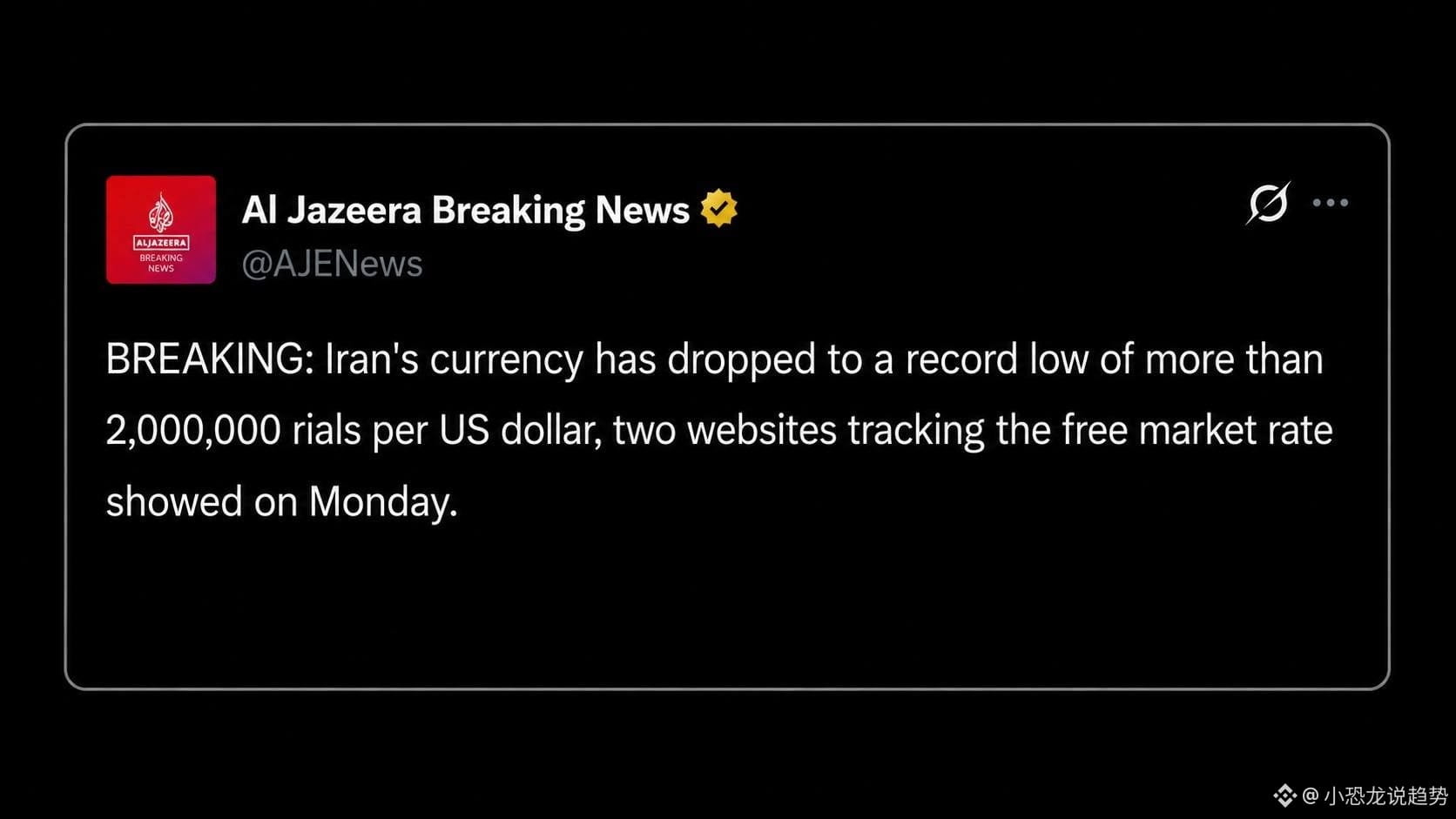
The home currency collapses, yet Bitcoin mining farms are still疯狂挖
This week, the Iranian rial plunged to 2.02 million per US$—a record low
At the start of the year it was still 1.53 million; in just half a year, it shrank again by a large margin
The US’s new round of sanctions is the first time that digital assets have been singled out as a target for crackdown
In one go, it blacklisted 60+ entities, without sparing even mining-industry supporting businesses
But Iran’s Bitcoin machines haven’t stopped—if anything, they’re getting more excited the more they mine
Mining operations linked to the Islamic Revolutionary Guard Corps control about 65% of the nation’s mining capacity
For years, Iranian miners have accounted for 3% to 7% of the world’s total hash rate
Behind this is an economic ledger: Iran legalized mining as early as 2019
Industrial electricity is ridiculously cheap—at one point, just 0.004 US dollars per kWh
The mined coins are then sold to the central bank, and daily life is funded by converting back into rials
The IMF projects Iran’s inflation this year will reach 68.9%, while the economy will shrink by 5.4%
The central bank also holds at least $500 million worth of USDT, trying to stabilize the exchange rate
Unfortunately, the money-printing press is almost smoking—stablecoins alone can’t do much
The more the rial falls, the less the mining machines dare to stop, because coins are the only truly reliable hard currency
My take: the most surreal part of this is that the harder the sanctions hit, the more appealing mining becomes
When the local currency collapses, Bitcoin becomes the only escape route
Miners trade electricity for coins—turning subsidized power prices into hard currency for the state
But it’s also a double-edged sword: the more concentrated the mining farms are, the higher the risk of being wiped out in one sweep
For global hash rate, once Iran’s share of several percentage points is cut, the difficulty and electricity costs will both start to shake
Even more intriguing is that while the authorities are imposing sanctions, their own affiliated forces are still mining
In the crypto world, rules and reality are always fighting
Geopolitical games never look at candlestick charts, but candlesticks will definitely cash in on geopolitics
Do you think sanctions can keep Iran’s mining rigs in place, or will it just make hash power move elsewhere? Drop your thoughts in the comments
Click the avatar to watch the livestream
Every day, I’ll help you track Bitcoin highlights—not only what news happens, but also the logic and opportunities behind it 👉🦖
#比特币 #mining
This week, the Iranian rial plunged to 2.02 million per US$—a record low
At the start of the year it was still 1.53 million; in just half a year, it shrank again by a large margin
The US’s new round of sanctions is the first time that digital assets have been singled out as a target for crackdown
In one go, it blacklisted 60+ entities, without sparing even mining-industry supporting businesses
But Iran’s Bitcoin machines haven’t stopped—if anything, they’re getting more excited the more they mine
Mining operations linked to the Islamic Revolutionary Guard Corps control about 65% of the nation’s mining capacity
For years, Iranian miners have accounted for 3% to 7% of the world’s total hash rate
Behind this is an economic ledger: Iran legalized mining as early as 2019
Industrial electricity is ridiculously cheap—at one point, just 0.004 US dollars per kWh
The mined coins are then sold to the central bank, and daily life is funded by converting back into rials
The IMF projects Iran’s inflation this year will reach 68.9%, while the economy will shrink by 5.4%
The central bank also holds at least $500 million worth of USDT, trying to stabilize the exchange rate
Unfortunately, the money-printing press is almost smoking—stablecoins alone can’t do much
The more the rial falls, the less the mining machines dare to stop, because coins are the only truly reliable hard currency
My take: the most surreal part of this is that the harder the sanctions hit, the more appealing mining becomes
When the local currency collapses, Bitcoin becomes the only escape route
Miners trade electricity for coins—turning subsidized power prices into hard currency for the state
But it’s also a double-edged sword: the more concentrated the mining farms are, the higher the risk of being wiped out in one sweep
For global hash rate, once Iran’s share of several percentage points is cut, the difficulty and electricity costs will both start to shake
Even more intriguing is that while the authorities are imposing sanctions, their own affiliated forces are still mining
In the crypto world, rules and reality are always fighting
Geopolitical games never look at candlestick charts, but candlesticks will definitely cash in on geopolitics
Do you think sanctions can keep Iran’s mining rigs in place, or will it just make hash power move elsewhere? Drop your thoughts in the comments
Click the avatar to watch the livestream
Every day, I’ll help you track Bitcoin highlights—not only what news happens, but also the logic and opportunities behind it 👉🦖
#比特币 #mining
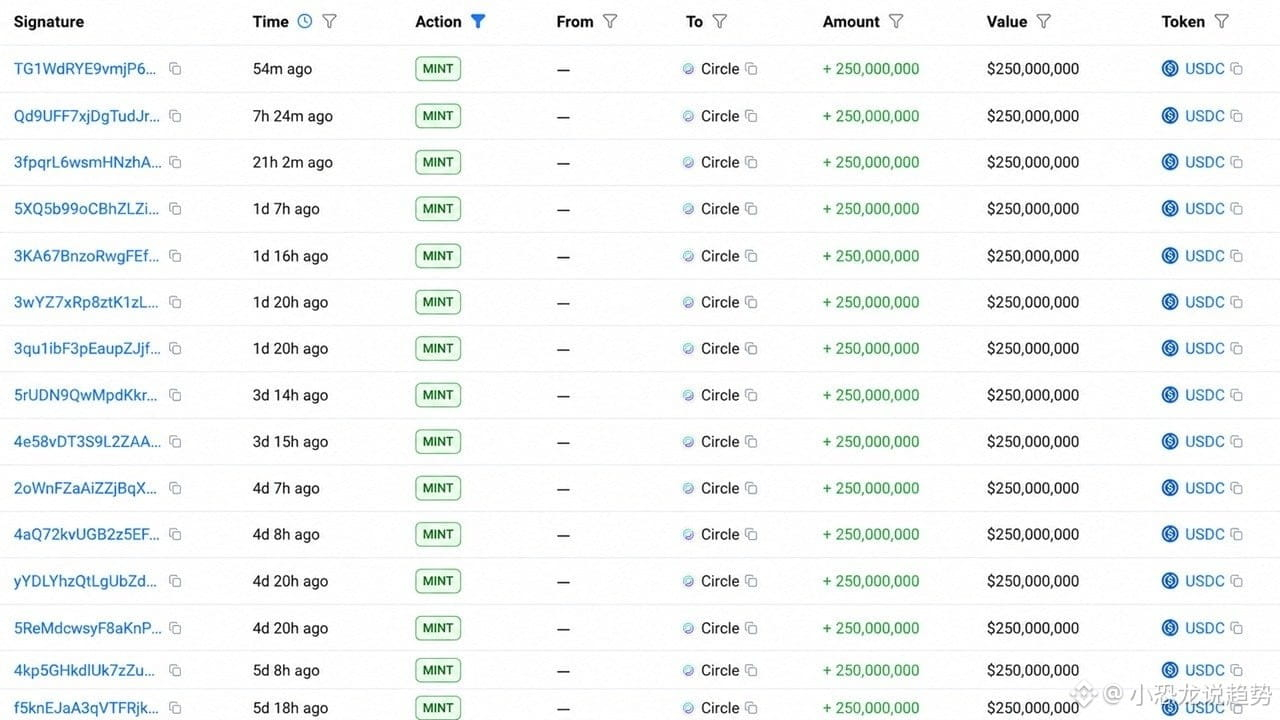
A $5 Billion-a-Week Stablecoin Arms Race Has Kicked Off
On-chain tracking data shows Circle minted roughly $5 billion worth of USDC this week
One of the biggest issuances within the year—directly setting a new record
Current USDC circulating supply is about $74 billion, while longtime rival Tether sits at $183.1 billion
Together, these two giants consume 83% of the entire stablecoin market’s $304 billion
What’s interesting is that by transfer volume, USDC is actually the big boss
In 2025, USDC completed $1.83 trillion in transfers; Tether did $1.33 trillion
Half the size, yet it moves more volume—this is the reputation earned from efficiency and compliance
This week, Circle also secured a new identity: the technical deployment partner for Hyperliquid, with a $5 billion USDC reserve
The message is clear: where the big money goes, I send the coins
USDC’s share on Solana has also quietly surpassed 10% this year
The stablecoin battlefield has evolved—from competing on issuance volume to competing on channels and scenarios
Back in April, Circle minted 3.25 billion USDC on Solana in a single week, which was already a record
This time it jumped straight to 5 billion—showing demand is hotter than expected
My take: this stablecoin war isn’t about who prints more; it’s about who can actually get used
USDC takes the compliant route, ties itself to Wall Street and payment use cases, and its transfer volume has already overtaken
Tether leans on its first-mover advantage and emerging-market stronghold—its circulating supply still crushes the competition
Both sides have their own moats; neither can swallow the other
For regular players, this round of competition is a good thing: cheaper transfers, more scenarios
Keep an eye on one signal: who gets the main-stream payments “boarding pass” first will become the next decade’s printing machine
In the end, the stablecoin war is fought on trust—whoever has the most transparent reserves gets to laugh last
Do you usually use USDC or USDT? Sound off in the comments and pick a side
Click the avatar to watch the live stream
Every day, I’ll help you track stablecoin hotspots—not just what’s happening in the news, but the logic and opportunities behind it 👉🦖
#稳定币 #USDC
On-chain tracking data shows Circle minted roughly $5 billion worth of USDC this week
One of the biggest issuances within the year—directly setting a new record
Current USDC circulating supply is about $74 billion, while longtime rival Tether sits at $183.1 billion
Together, these two giants consume 83% of the entire stablecoin market’s $304 billion
What’s interesting is that by transfer volume, USDC is actually the big boss
In 2025, USDC completed $1.83 trillion in transfers; Tether did $1.33 trillion
Half the size, yet it moves more volume—this is the reputation earned from efficiency and compliance
This week, Circle also secured a new identity: the technical deployment partner for Hyperliquid, with a $5 billion USDC reserve
The message is clear: where the big money goes, I send the coins
USDC’s share on Solana has also quietly surpassed 10% this year
The stablecoin battlefield has evolved—from competing on issuance volume to competing on channels and scenarios
Back in April, Circle minted 3.25 billion USDC on Solana in a single week, which was already a record
This time it jumped straight to 5 billion—showing demand is hotter than expected
My take: this stablecoin war isn’t about who prints more; it’s about who can actually get used
USDC takes the compliant route, ties itself to Wall Street and payment use cases, and its transfer volume has already overtaken
Tether leans on its first-mover advantage and emerging-market stronghold—its circulating supply still crushes the competition
Both sides have their own moats; neither can swallow the other
For regular players, this round of competition is a good thing: cheaper transfers, more scenarios
Keep an eye on one signal: who gets the main-stream payments “boarding pass” first will become the next decade’s printing machine
In the end, the stablecoin war is fought on trust—whoever has the most transparent reserves gets to laugh last
Do you usually use USDC or USDT? Sound off in the comments and pick a side
Click the avatar to watch the live stream
Every day, I’ll help you track stablecoin hotspots—not just what’s happening in the news, but the logic and opportunities behind it 👉🦖
#稳定币 #USDC
Global money has set yet another record—Bitcoin is still trailing behind and chasing.
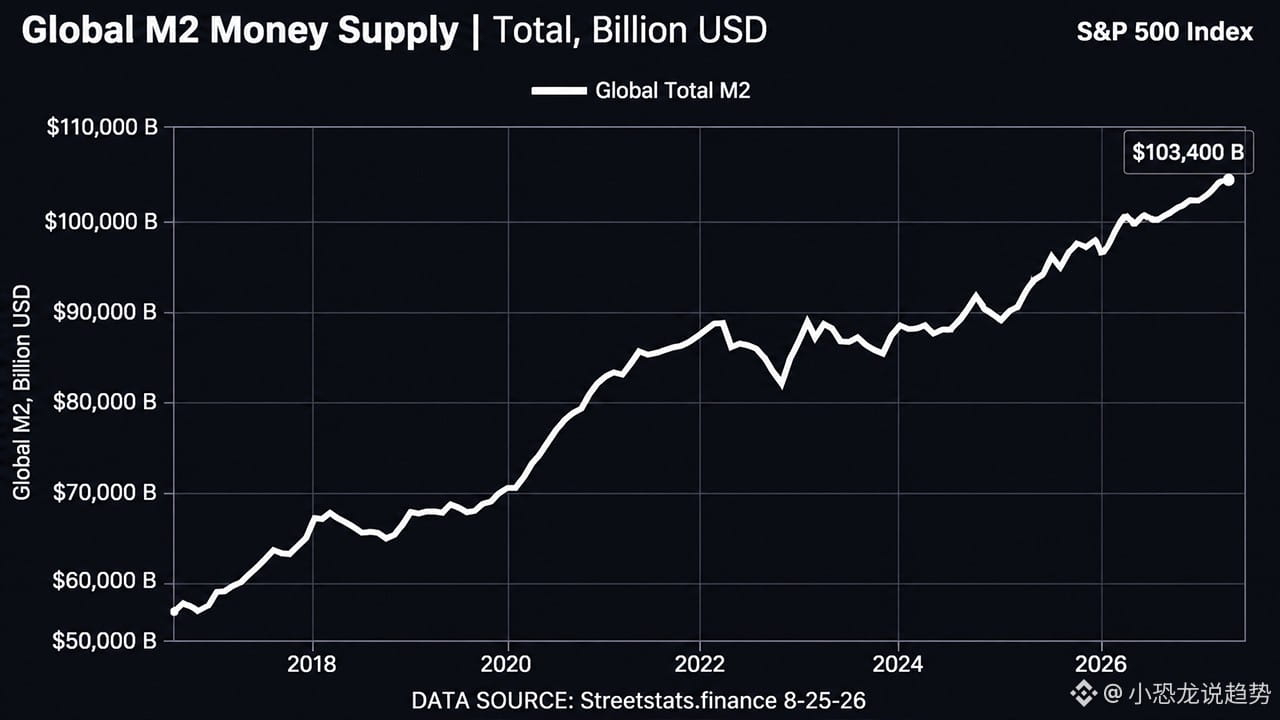
U.S. M2 money supply hit $23.16 trillion, a new all-time high.
Add up the major economies together and global M2 has already surpassed $103 trillion.
Some institutions are even more bullish, calling it $195 trillion outright.
At the same time, Bitcoin surged 21% in a week, touching $81,000. It’s now hovering between $78,000 and $79,000.
But if you do the math, it’s still 37% short of last October’s historical peak of $126,000 (Oct. 12).
This month the U.S. Dollar Index has been sliding steadily; gold and Bitcoin are rising together.
The market has started talking about one phrase: the “catch-up rally” trade.
The logic is simple—every country’s money-printing presses keep running. The more money is printed, the more abundant it becomes.
Bitcoin’s total supply is capped at 21 million coins. Not a single extra one will be minted.
Historically, the two major bull runs in 2017 and 2020 both coincided with major M2 expansion.
Will this script repeat itself? It depends on whether capital is willing to move out of bank deposits and money-market funds.
Now U.S. Treasury yields are also trending lower. Capital is looking for an exit, and crypto is perfectly positioned to ride the momentum.
My view: “More money” doesn’t necessarily mean prices will rise. But wherever the money goes, scarce assets will eventually get noticed.
This round of dollar weakness is essentially a ladder being laid for Bitcoin.
One reminder, though: liquidity stories are never a straight line—there are always turnarounds in the middle.
The real fuel for this rally is the genuine ETF inflows—those are the most solid basis.
Don’t just get excited by the M2 numbers. When money truly moves, that’s when you’re actually on the train.
In plain terms, the backdrop of this rally is the global money-printing machine starting up. Bitcoin is just the late passenger.
Do you think the catch-up rally is just beginning, or has it already gone halfway? Tell me in the comments.
Click the avatar to watch the live stream.
Every day I’ll help you track Bitcoin hotspots—not just what happened in the news, but also the logic and the opportunities behind it 👉🦖
#比特币 #宏观经济
U.S. M2 money supply hit $23.16 trillion, a new all-time high.
Add up the major economies together and global M2 has already surpassed $103 trillion.
Some institutions are even more bullish, calling it $195 trillion outright.
At the same time, Bitcoin surged 21% in a week, touching $81,000. It’s now hovering between $78,000 and $79,000.
But if you do the math, it’s still 37% short of last October’s historical peak of $126,000 (Oct. 12).
This month the U.S. Dollar Index has been sliding steadily; gold and Bitcoin are rising together.
The market has started talking about one phrase: the “catch-up rally” trade.
The logic is simple—every country’s money-printing presses keep running. The more money is printed, the more abundant it becomes.
Bitcoin’s total supply is capped at 21 million coins. Not a single extra one will be minted.
Historically, the two major bull runs in 2017 and 2020 both coincided with major M2 expansion.
Will this script repeat itself? It depends on whether capital is willing to move out of bank deposits and money-market funds.
Now U.S. Treasury yields are also trending lower. Capital is looking for an exit, and crypto is perfectly positioned to ride the momentum.
My view: “More money” doesn’t necessarily mean prices will rise. But wherever the money goes, scarce assets will eventually get noticed.
This round of dollar weakness is essentially a ladder being laid for Bitcoin.
One reminder, though: liquidity stories are never a straight line—there are always turnarounds in the middle.
The real fuel for this rally is the genuine ETF inflows—those are the most solid basis.
Don’t just get excited by the M2 numbers. When money truly moves, that’s when you’re actually on the train.
In plain terms, the backdrop of this rally is the global money-printing machine starting up. Bitcoin is just the late passenger.
Do you think the catch-up rally is just beginning, or has it already gone halfway? Tell me in the comments.
Click the avatar to watch the live stream.
Every day I’ll help you track Bitcoin hotspots—not just what happened in the news, but also the logic and the opportunities behind it 👉🦖
#比特币 #宏观经济
You don’t have to sell coins to get into an ETF—$5 billion has already been doing exactly this
The spot Bitcoin ETF physical conversion channel under BlackRock is getting wider and wider
The threshold has been slashed from $25 million down to $1 million—use the coins directly to exchange for shares without first selling to cash
Officials disclose that this channel has already processed more than $5 billion worth of conversion volume
The big players’ calculations are spot-on: by moving in, they can save some taxes; selling coins for cash would incur taxes; exchanging for shares may not be a taxable event
Grayscale hasn’t been idle either—its share of in-kind creations jumped from 28% in March to 62% in June
Bitwise is even more aggressive: it cut the threshold from $100 million to $50 million, then down to $3 million, supporting Bitcoin, Ethereum, and Solana
Put simply, Wall Street is slowly turning the act of “they hold the private keys themselves” into history
What used to be a service only top ultra-wealthy individuals could afford is now accessible to the middle-class and big players too
What does this mean for the market? Giant whales don’t need to dump coins to sell— they can simply move their coins into ETFs, and selling pressure disappears directly
Conversely, the more coins that pile into ETFs, the smoother it becomes for traditional capital to route into the market
This wave from institutions is moving Bitcoin from wallets onto the balance sheet
In the past three months, 21Shares’ average in-kind conversion per transaction was also around $5 million
In Morgan Stanley’s own Bitcoin ETFs, this kind of operation already accounts for 5% to 7% of holdings
My view: the in-kind conversion channel is an elegant exit route customized for big holders
It doesn’t require them to smash a big hole in the market in order to transfer assets—this move is smart
And the threshold is still being cut, which shows issuers are competing hard for big players, grabbing them one after another—so retail investors can benefit too
In the future, ETF coins will look more and more like locked-up assets; the amount of liquid chips in the market will keep shrinking
This structure is more solid than simply shouting “bullish” or “bearish”
But don’t get too carried away: with larger conversion volumes, a fee-rate war between issuers will follow
To put it bluntly, this is a win-win for big holders—and also a win-win for the market
Coins sitting dead on-chain are dead; once inside the ETF, they can be repeatedly repriced by institutional capital
The bread you’re holding in your hand—are you willing to keep leaving it in your own wallet, or move it into an ETF? Discuss in the comments section
Click the profile picture to watch the live stream
Every day, I’ll guide you to follow Bitcoin headlines—not only what happens, but also help you understand the underlying logic and opportunities 👉🦖
#比特币 #ETF
The spot Bitcoin ETF physical conversion channel under BlackRock is getting wider and wider
The threshold has been slashed from $25 million down to $1 million—use the coins directly to exchange for shares without first selling to cash
Officials disclose that this channel has already processed more than $5 billion worth of conversion volume
The big players’ calculations are spot-on: by moving in, they can save some taxes; selling coins for cash would incur taxes; exchanging for shares may not be a taxable event
Grayscale hasn’t been idle either—its share of in-kind creations jumped from 28% in March to 62% in June
Bitwise is even more aggressive: it cut the threshold from $100 million to $50 million, then down to $3 million, supporting Bitcoin, Ethereum, and Solana
Put simply, Wall Street is slowly turning the act of “they hold the private keys themselves” into history
What used to be a service only top ultra-wealthy individuals could afford is now accessible to the middle-class and big players too
What does this mean for the market? Giant whales don’t need to dump coins to sell— they can simply move their coins into ETFs, and selling pressure disappears directly
Conversely, the more coins that pile into ETFs, the smoother it becomes for traditional capital to route into the market
This wave from institutions is moving Bitcoin from wallets onto the balance sheet
In the past three months, 21Shares’ average in-kind conversion per transaction was also around $5 million
In Morgan Stanley’s own Bitcoin ETFs, this kind of operation already accounts for 5% to 7% of holdings
My view: the in-kind conversion channel is an elegant exit route customized for big holders
It doesn’t require them to smash a big hole in the market in order to transfer assets—this move is smart
And the threshold is still being cut, which shows issuers are competing hard for big players, grabbing them one after another—so retail investors can benefit too
In the future, ETF coins will look more and more like locked-up assets; the amount of liquid chips in the market will keep shrinking
This structure is more solid than simply shouting “bullish” or “bearish”
But don’t get too carried away: with larger conversion volumes, a fee-rate war between issuers will follow
To put it bluntly, this is a win-win for big holders—and also a win-win for the market
Coins sitting dead on-chain are dead; once inside the ETF, they can be repeatedly repriced by institutional capital
The bread you’re holding in your hand—are you willing to keep leaving it in your own wallet, or move it into an ETF? Discuss in the comments section
Click the profile picture to watch the live stream
Every day, I’ll guide you to follow Bitcoin headlines—not only what happens, but also help you understand the underlying logic and opportunities 👉🦖
#比特币 #ETF
Strategy quietly cuts net leverage to nearly zero—cash is almost catching up to its convertible bond size.
On one hand, it repurchases its own preferred shares; on the other, it hoards cash. With four years’ worth of preferred dividend coverage already in place, this Bitcoin “vault” company has shifted from aggressively buying coins to becoming unexpectedly steady.
A couple of years ago, it funded Bitcoin by issuing debt and drew a lot of criticism for being too aggressive. Now, it’s actually dismantling the risks piece by piece.
What does net leverage going to zero mean? It means that even if the coin price swings sharply, debt pressure won’t be able to crush it. The books look solid—so it has even more confidence to keep adding to Bitcoin during pullbacks.
Some people interpret this as bearish. But I think it’s a textbook move for long-term thinking.
Leverage is a double-edged sword: when things rise, it magnifies returns; when things fall, it magnifies panic. Bringing leverage down to zero is like taking full control back into your own hands.
Look at the whole sector—Bitcoin “vault” companies are all busy strengthening their balance sheets. Some issue debt to repurchase shares, some move coins into custody, and others pile cash reserves to new historic highs. After experiencing the previous rounds of liquidation waves, the smart money has learned the lesson: first survive, then talk about returns.
And don’t forget—the Bitcoin it holds already has a very low cost basis. Now it can still steadily profit from the market without relying on leverage. The mindset is completely different.
Once a company like this faces a major drawdown, it’s actually the most willing group to step in.
Bitcoin companies are starting to practice internal strength. That means this track is shifting from “telling stories” to “proving strength via balance sheets.” Whose foundation is thicker, who can last through the next big reshuffle.
When “stability” is the priority, it’s actually the most formidable kind of offense.
Every day, I’ll keep you updated on Bitcoin hotspots—not just what happens in the news, but also how to understand the underlying logic and opportunities 👀🚀
Click the link below to follow me👇🏻加入小恐龙粉丝群
#Bitcoin #Strategy #InstitutionalMoves
On one hand, it repurchases its own preferred shares; on the other, it hoards cash. With four years’ worth of preferred dividend coverage already in place, this Bitcoin “vault” company has shifted from aggressively buying coins to becoming unexpectedly steady.
A couple of years ago, it funded Bitcoin by issuing debt and drew a lot of criticism for being too aggressive. Now, it’s actually dismantling the risks piece by piece.
What does net leverage going to zero mean? It means that even if the coin price swings sharply, debt pressure won’t be able to crush it. The books look solid—so it has even more confidence to keep adding to Bitcoin during pullbacks.
Some people interpret this as bearish. But I think it’s a textbook move for long-term thinking.
Leverage is a double-edged sword: when things rise, it magnifies returns; when things fall, it magnifies panic. Bringing leverage down to zero is like taking full control back into your own hands.
Look at the whole sector—Bitcoin “vault” companies are all busy strengthening their balance sheets. Some issue debt to repurchase shares, some move coins into custody, and others pile cash reserves to new historic highs. After experiencing the previous rounds of liquidation waves, the smart money has learned the lesson: first survive, then talk about returns.
And don’t forget—the Bitcoin it holds already has a very low cost basis. Now it can still steadily profit from the market without relying on leverage. The mindset is completely different.
Once a company like this faces a major drawdown, it’s actually the most willing group to step in.
Bitcoin companies are starting to practice internal strength. That means this track is shifting from “telling stories” to “proving strength via balance sheets.” Whose foundation is thicker, who can last through the next big reshuffle.
When “stability” is the priority, it’s actually the most formidable kind of offense.
Every day, I’ll keep you updated on Bitcoin hotspots—not just what happens in the news, but also how to understand the underlying logic and opportunities 👀🚀
Click the link below to follow me👇🏻加入小恐龙粉丝群
#Bitcoin #Strategy #InstitutionalMoves

Dallas Fed Issues Rare Warning: Tokenized Deposits Could Withdraw $700 Billion in Lending Capacity from Banks
This number sounds terrifying, but the logic is actually simple.
Once deposits can be programmed—and combined with AI agents—users can spot which bank offers the highest interest in seconds and move their money to a better place.
Think about it: before, if you thought bank interest was too low, you’d have to wait in line to close accounts and handle transfers that took half a day.
Now, AI agents can monitor rates around the clock and automatically move deposits to wherever the yield is higher.
Banks’ cost of funds rises directly, and the old business model that “feeds on the spread” becomes increasingly difficult to maintain.
Some say this is the end of banks. I think, instead, the financial system is being forced to upgrade.
Either you keep up with the game of programmatic deposits, or you watch large customers’ money walk out the door.
Tokenization isn’t a PPT concept anymore—it’s a factor the U.S. Federal Reserve ecosystem is even taking seriously.
And this isn’t far-fetched. Japan is already preparing blockchain settlement networks for stocks and government bonds.
Korean conglomerates are also putting receivables on-chain.
The on-chain transformation of traditional finance is starting around the world at the same time.
Banks may say “risk,” but their actions are quite honest—they’re quietly playing catch-up.
Go one level deeper: this isn’t a question of whether banks or crypto will win.
It’s about a more efficient financial infrastructure that is destined to replace the slow and expensive old system.
Whoever can cut costs and eliminate friction first will be the one to capture the next round of dividends.
Whoever reacts fastest this time will secure a position in the next wave of financial infrastructure.
Banks can’t sit still—that’s actually proof that the technology has hit a real pain point.
Don’t think tokenization is far away. It’s already changing the way banks manage their “money bags.”
Every day, I’ll bring you the hottest developments in tokenization—not just what’s happening in the news, but also the logic and opportunities behind it 👀🚀
Click the link below to follow me👇🏻加入小恐龙粉丝群
#tokenization #bank #stablecoin
This number sounds terrifying, but the logic is actually simple.
Once deposits can be programmed—and combined with AI agents—users can spot which bank offers the highest interest in seconds and move their money to a better place.
Think about it: before, if you thought bank interest was too low, you’d have to wait in line to close accounts and handle transfers that took half a day.
Now, AI agents can monitor rates around the clock and automatically move deposits to wherever the yield is higher.
Banks’ cost of funds rises directly, and the old business model that “feeds on the spread” becomes increasingly difficult to maintain.
Some say this is the end of banks. I think, instead, the financial system is being forced to upgrade.
Either you keep up with the game of programmatic deposits, or you watch large customers’ money walk out the door.
Tokenization isn’t a PPT concept anymore—it’s a factor the U.S. Federal Reserve ecosystem is even taking seriously.
And this isn’t far-fetched. Japan is already preparing blockchain settlement networks for stocks and government bonds.
Korean conglomerates are also putting receivables on-chain.
The on-chain transformation of traditional finance is starting around the world at the same time.
Banks may say “risk,” but their actions are quite honest—they’re quietly playing catch-up.
Go one level deeper: this isn’t a question of whether banks or crypto will win.
It’s about a more efficient financial infrastructure that is destined to replace the slow and expensive old system.
Whoever can cut costs and eliminate friction first will be the one to capture the next round of dividends.
Whoever reacts fastest this time will secure a position in the next wave of financial infrastructure.
Banks can’t sit still—that’s actually proof that the technology has hit a real pain point.
Don’t think tokenization is far away. It’s already changing the way banks manage their “money bags.”
Every day, I’ll bring you the hottest developments in tokenization—not just what’s happening in the news, but also the logic and opportunities behind it 👀🚀
Click the link below to follow me👇🏻加入小恐龙粉丝群
#tokenization #bank #stablecoin

Bitcoin surges for seven days straight—up 23% in one go. Today it finally takes a breather.
The price has pulled back to around 79,000, but don’t panic—this is normal “catching one’s breath” after a rapid run-up.
What really matters: as of August, net inflows into ETFs have already exceeded $3 billion, and demand hasn’t cooled off at all.
In plain terms, this rally is being built by capital.
Spot ETFs are accumulating every day; buy-side demand keeps coming in, so the price naturally gets lifted.
When it rises too fast, some people start to feel fear of missing out, so a pullback actually becomes a ladder for those who haven’t boarded yet.
The key is two things: first, whether the 79,000 level can hold.
Second, whether ETF inflows keep going—if they don’t stop, the market structure remains bullish.
Short-term fluctuations are just noise; the real main line is where the funds flow.
These days, the whole internet is shouting that the bull market is back—it's certainly lively.
But let me remind you: after a seven-day run, don’t rush to surge in.
Wait for the pullback to stabilize before acting.
Chasing spikes and selling during dips is the easiest way to lose money—this is something I say every day.
Next, look at on-chain data: the big players haven’t exited; instead, they’ve been adding at lower levels.
What does that mean? The smart money is treating this pullback as an opportunity, not a risk.
Follow the money—it’s always more reliable than following emotions.
Actually, this round of the market is different from before.
Previously, it was retail FOMO.
Now institutions are entering with real money through ETFs.
The nature of the funds has changed, and so will the sustainability of the rally—that’s the key point.
Steady your mindset—don’t let a day’s up-and-down moves control you.
Look at the data. Look at the funds.
Don’t get carried away—that’s the way to stay in the market for the long haul.
Every day I’ll take you to track crypto hotspots—not just what happened in the news, but also to help you understand the logic and opportunities behind it 👀🚀
Click the link below to follow me👇🏻加入小恐龙粉丝群
#Bitcoin #BTC #ETF
The price has pulled back to around 79,000, but don’t panic—this is normal “catching one’s breath” after a rapid run-up.
What really matters: as of August, net inflows into ETFs have already exceeded $3 billion, and demand hasn’t cooled off at all.
In plain terms, this rally is being built by capital.
Spot ETFs are accumulating every day; buy-side demand keeps coming in, so the price naturally gets lifted.
When it rises too fast, some people start to feel fear of missing out, so a pullback actually becomes a ladder for those who haven’t boarded yet.
The key is two things: first, whether the 79,000 level can hold.
Second, whether ETF inflows keep going—if they don’t stop, the market structure remains bullish.
Short-term fluctuations are just noise; the real main line is where the funds flow.
These days, the whole internet is shouting that the bull market is back—it's certainly lively.
But let me remind you: after a seven-day run, don’t rush to surge in.
Wait for the pullback to stabilize before acting.
Chasing spikes and selling during dips is the easiest way to lose money—this is something I say every day.
Next, look at on-chain data: the big players haven’t exited; instead, they’ve been adding at lower levels.
What does that mean? The smart money is treating this pullback as an opportunity, not a risk.
Follow the money—it’s always more reliable than following emotions.
Actually, this round of the market is different from before.
Previously, it was retail FOMO.
Now institutions are entering with real money through ETFs.
The nature of the funds has changed, and so will the sustainability of the rally—that’s the key point.
Steady your mindset—don’t let a day’s up-and-down moves control you.
Look at the data. Look at the funds.
Don’t get carried away—that’s the way to stay in the market for the long haul.
Every day I’ll take you to track crypto hotspots—not just what happened in the news, but also to help you understand the logic and opportunities behind it 👀🚀
Click the link below to follow me👇🏻加入小恐龙粉丝群
#Bitcoin #BTC #ETF
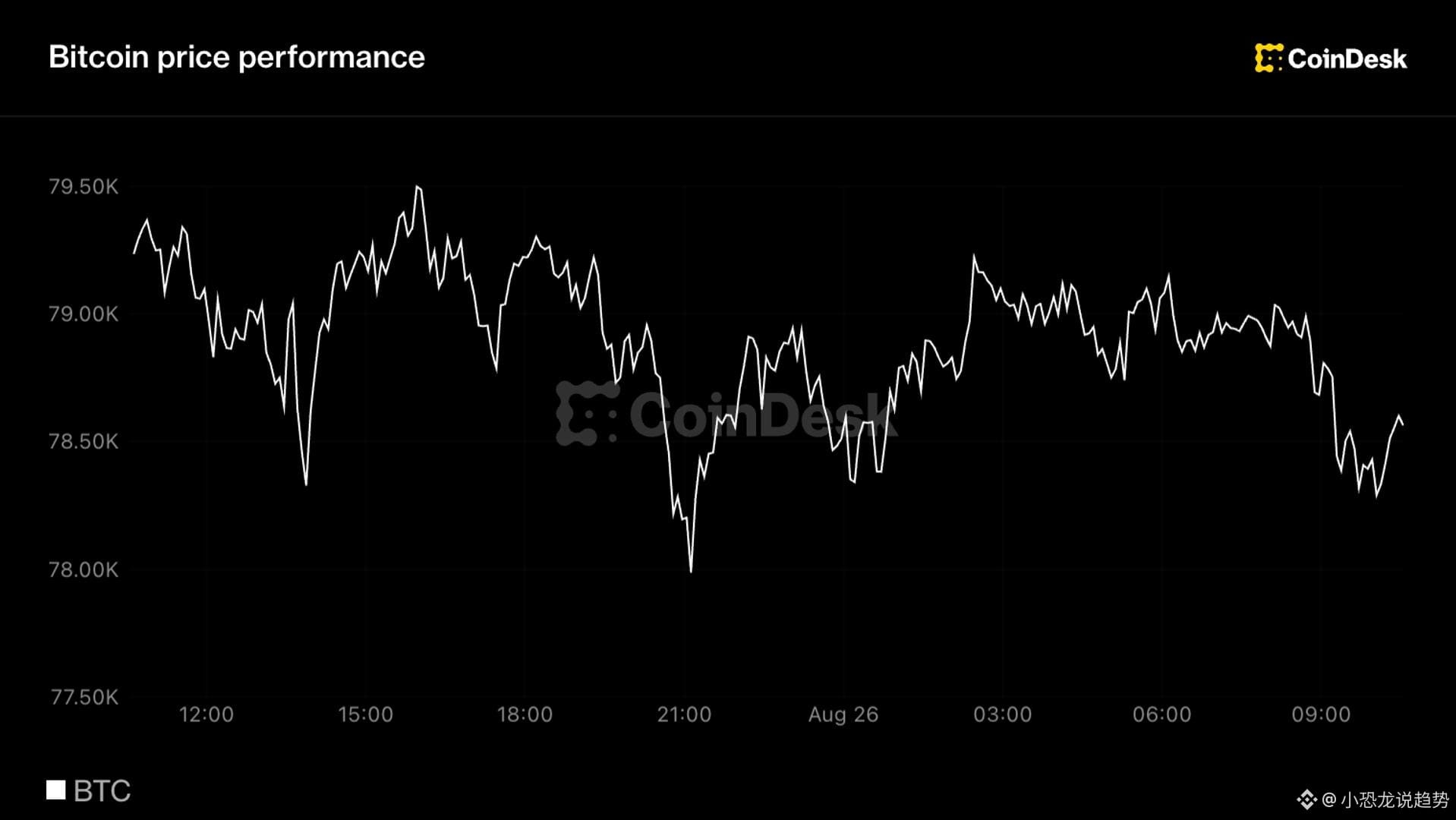
Korean steel giant POSCO has moved its accounts receivable onto Avalanche 🔗 This is a trade powerhouse with a $2.2 billion scale.
In plain terms: unpaid invoices become on-chain assets, which can be used for financing—money hits first, then the deal.
Working alongside it are Olea and Intain. Last month, LG CNS also ran a similar pilot on Injective.
In trade finance, the traditional process is painfully slow: invoice verification, credit approval, stamp after stamp at each step.
After accounts receivable are put on-chain, authenticity can be verified on-chain. The money people are willing to lend increases, and the speed of getting capital becomes faster.
A trillion-dollar market is being chewed up—one bite at a time—by blockchain.
Korean big conglomerates are being very proactive this time—jumping in one after another for trial runs.
This isn’t a “pump” coin narrative. It’s a real, industrial need: slow, but each step is solid.
Once large enterprises get the process running smoothly, small and mid-sized suppliers will follow—just a matter of time.
Go one level deeper: putting accounts receivable on-chain effectively turns a company’s credit into data you can see.
Banks are more willing to lend. Suppliers get paid faster. The entire supply chain’s capital efficiency improves.
This change may not be flashy, but it will gradually reshape the underlying logic of the business world.
I’ve been keeping a close eye on the RWA track. The more solid on-chain assets we build, the stronger the foundation of a bull market becomes.
People who don’t get it think it’s just an idea. Those who understand are waiting for it to move from pilots to the norm.
And when one day the companies around you start using on-chain financing, don’t be surprised—that’s when the tipping point arrives.
Every day, I’ll bring you RWA hot spots—not just what’s happening in the news, but also the logic and opportunities behind it 👀🚀
Click the link below to follow me👇🏻加入小恐龙粉丝群
#RWA #Avalanche #tokenization #crypto market
In plain terms: unpaid invoices become on-chain assets, which can be used for financing—money hits first, then the deal.
Working alongside it are Olea and Intain. Last month, LG CNS also ran a similar pilot on Injective.
In trade finance, the traditional process is painfully slow: invoice verification, credit approval, stamp after stamp at each step.
After accounts receivable are put on-chain, authenticity can be verified on-chain. The money people are willing to lend increases, and the speed of getting capital becomes faster.
A trillion-dollar market is being chewed up—one bite at a time—by blockchain.
Korean big conglomerates are being very proactive this time—jumping in one after another for trial runs.
This isn’t a “pump” coin narrative. It’s a real, industrial need: slow, but each step is solid.
Once large enterprises get the process running smoothly, small and mid-sized suppliers will follow—just a matter of time.
Go one level deeper: putting accounts receivable on-chain effectively turns a company’s credit into data you can see.
Banks are more willing to lend. Suppliers get paid faster. The entire supply chain’s capital efficiency improves.
This change may not be flashy, but it will gradually reshape the underlying logic of the business world.
I’ve been keeping a close eye on the RWA track. The more solid on-chain assets we build, the stronger the foundation of a bull market becomes.
People who don’t get it think it’s just an idea. Those who understand are waiting for it to move from pilots to the norm.
And when one day the companies around you start using on-chain financing, don’t be surprised—that’s when the tipping point arrives.
Every day, I’ll bring you RWA hot spots—not just what’s happening in the news, but also the logic and opportunities behind it 👀🚀
Click the link below to follow me👇🏻加入小恐龙粉丝群
#RWA #Avalanche #tokenization #crypto market

Big drama on Friday 📊 $6.4B in Bitcoin options are set to expire
The nominal amount alone is already enough to get your heart racing
This run-up has pushed the market from 62k all the way to 80k. The positions accumulated in the options market will all be settled on Friday.
Market makers are sitting on a stack of exposures—especially around the key strike prices. Volatility can be cranked up at any moment.
Don’t underestimate option expiry. It doesn’t directly smash the market, but it’s basically the cure-all for every kind of extreme move.
When price keeps hovering around the strike, market makers can only疯狂 hedge—direction all depends on what they drive.
In history, several major bursts of volatility were triggered days before or after expiry.
Now Bitcoin is stuck at 79k. It’s just one breath away from 80k.
If Friday’s breakout comes with volume, the shorts are about to get hit again. If it can’t push through, even a pullback will be plenty to give you a headache.
For anyone holding positions, old friend—work out your risk ahead of time. Don’t wait until expiry and then panic.
Two or three days before options expire, the market often starts pricing things in early; volatility will arrive first.
Big money is waiting for the dust to settle—nobody wants to carry uncertainty over the weekend.
After expiry, the market will reprice once more—that’s when the real story starts.
If you’re not in a position and just want to watch, that’s fine too. This kind of market move is never short on excitement.
Options expiry isn’t the end of the world, but it’s definitely the most worth watching moment this week—no contest.
Watch the order book if you want, but position management is the key to staying alive. This line is for me, and it’s for you.
One more thing while we’re at it: big expiries were never the finish line—they’re the starting point for the next repositioning by both bulls and bears.
Every day I’ll take you through the BTC hotspots—not only what happens in the news, but also the logic and opportunities behind it 👀🚀
Click the link below to follow me 👇🏻加入小恐龙粉丝群
#Bitcoin #BTC #Options #Volatility
The nominal amount alone is already enough to get your heart racing
This run-up has pushed the market from 62k all the way to 80k. The positions accumulated in the options market will all be settled on Friday.
Market makers are sitting on a stack of exposures—especially around the key strike prices. Volatility can be cranked up at any moment.
Don’t underestimate option expiry. It doesn’t directly smash the market, but it’s basically the cure-all for every kind of extreme move.
When price keeps hovering around the strike, market makers can only疯狂 hedge—direction all depends on what they drive.
In history, several major bursts of volatility were triggered days before or after expiry.
Now Bitcoin is stuck at 79k. It’s just one breath away from 80k.
If Friday’s breakout comes with volume, the shorts are about to get hit again. If it can’t push through, even a pullback will be plenty to give you a headache.
For anyone holding positions, old friend—work out your risk ahead of time. Don’t wait until expiry and then panic.
Two or three days before options expire, the market often starts pricing things in early; volatility will arrive first.
Big money is waiting for the dust to settle—nobody wants to carry uncertainty over the weekend.
After expiry, the market will reprice once more—that’s when the real story starts.
If you’re not in a position and just want to watch, that’s fine too. This kind of market move is never short on excitement.
Options expiry isn’t the end of the world, but it’s definitely the most worth watching moment this week—no contest.
Watch the order book if you want, but position management is the key to staying alive. This line is for me, and it’s for you.
One more thing while we’re at it: big expiries were never the finish line—they’re the starting point for the next repositioning by both bulls and bears.
Every day I’ll take you through the BTC hotspots—not only what happens in the news, but also the logic and opportunities behind it 👀🚀
Click the link below to follow me 👇🏻加入小恐龙粉丝群
#Bitcoin #BTC #Options #Volatility
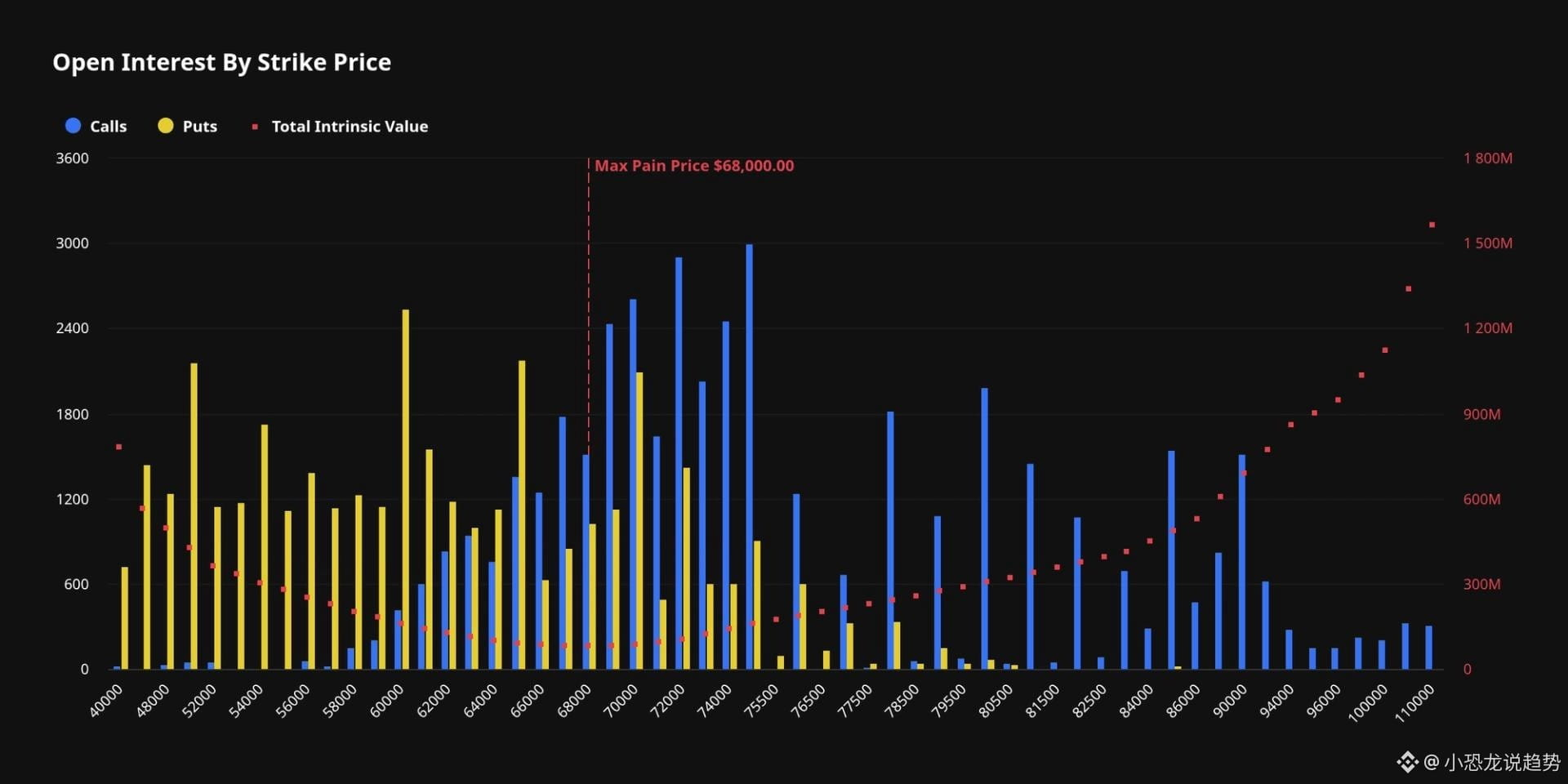
Log in to explore more content