


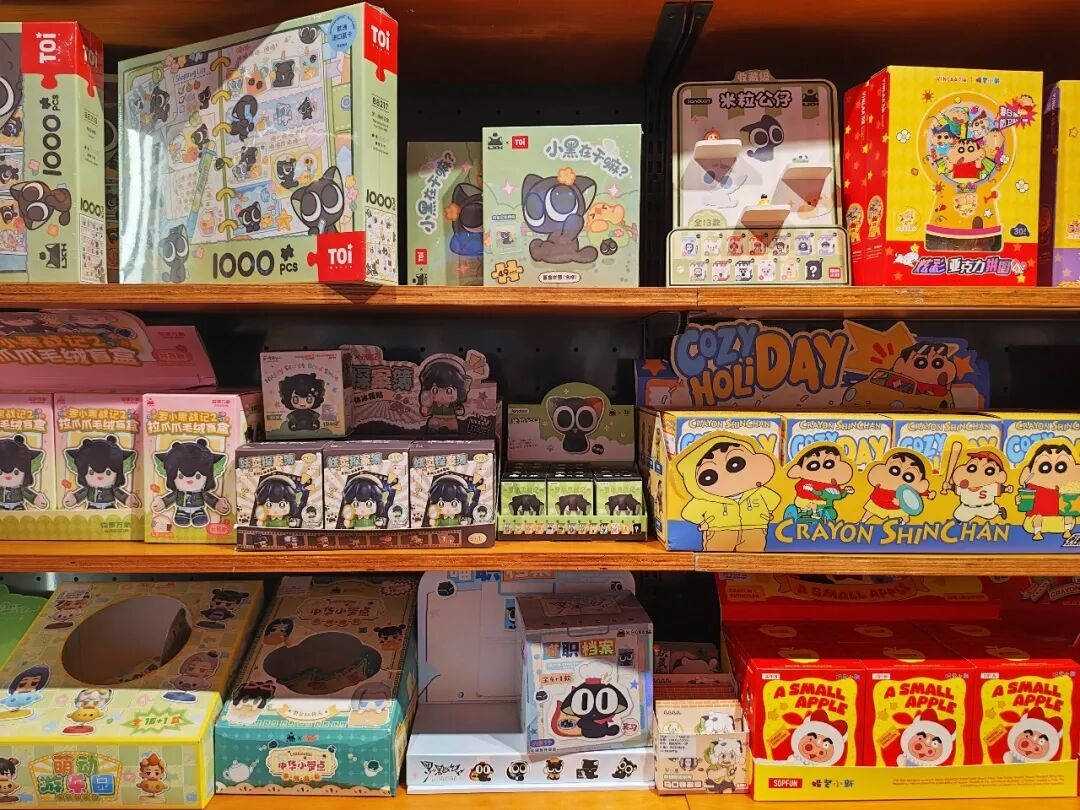
Without realizing it, a large number of潮玩文创 (toy-and-trinket creative) stores have filled the most crowded floor in the core business districts of major cities. Pop Mart, TOP TOY、X11, Coolle Toy, ?The Green Party, Jiumujiazhi She, Tong Shifu, Zhu Bingren·Tong, and many other brands compete on the same stage.
With these increasingly numerous and larger潮玩文创 stores, do they really make money? Apart from absolute industry leader Pop Mart and TOP TOY backed by Miniso, most other brands are not doing well in terms of profitability. Among them, Jiumujiazhi She under Morning Light recorded a loss of over 80 million yuan last year; Tong Shifu saw its performance drop by more than 95% in the first half of this year.
The fundamental reason is that the lack of IP support has trapped most trendy toy and cultural creative stores in a swamp of homogenized competition. For trendy toy and cultural creative brands without IP, the more stores and the larger they are, the more dangerous they become.

The rise of trendy toy stores
There was originally no such thing as trendy toys, until Pop Mart became a huge hit.
This wave of cultural trends, originating from Japan, South Korea, Europe and the United States and transmitted via Hong Kong, began around 2010 and gave China’s toy industry an opportunity for industrial upgrading.
Before that, China’s toy industry was concentrated in places like Chenghai, Guangdong. Although large in scale, it mainly relied on contract manufacturing for export and was entirely within the scope of manufacturing foreign trade, with low industrial value.
With the added boost of the trendy toy concept, IP has elevated what were once ordinary toys into the cultural and creative industries, rapidly expanding their imagination space.
Thus, trendy toy brands such as Pop Mart, Card Game, 52TOYS, and Bloks rose one after another. Pop Mart had Molly and later LABUBU. The public’s enthusiasm for trendy toys spread from the consumer market to the capital market, creating Pop Mart’s market-capitalization myth of up to HK$450 billion.
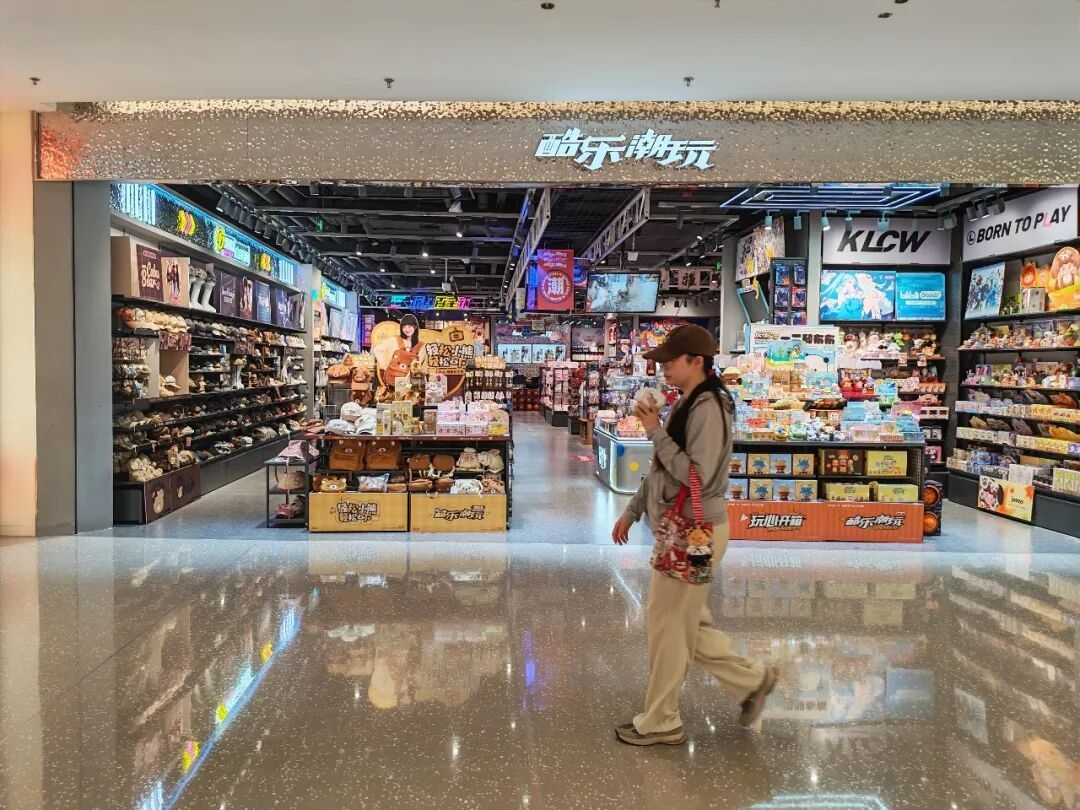
After that, a large number of offline stores centered on trendy toys sprang up like mushrooms after rain. Brands such as Kule Chao Wan and ?The Green Party rose rapidly, taking over the most valuable floors with the highest foot traffic in major core cities and key commercial districts.
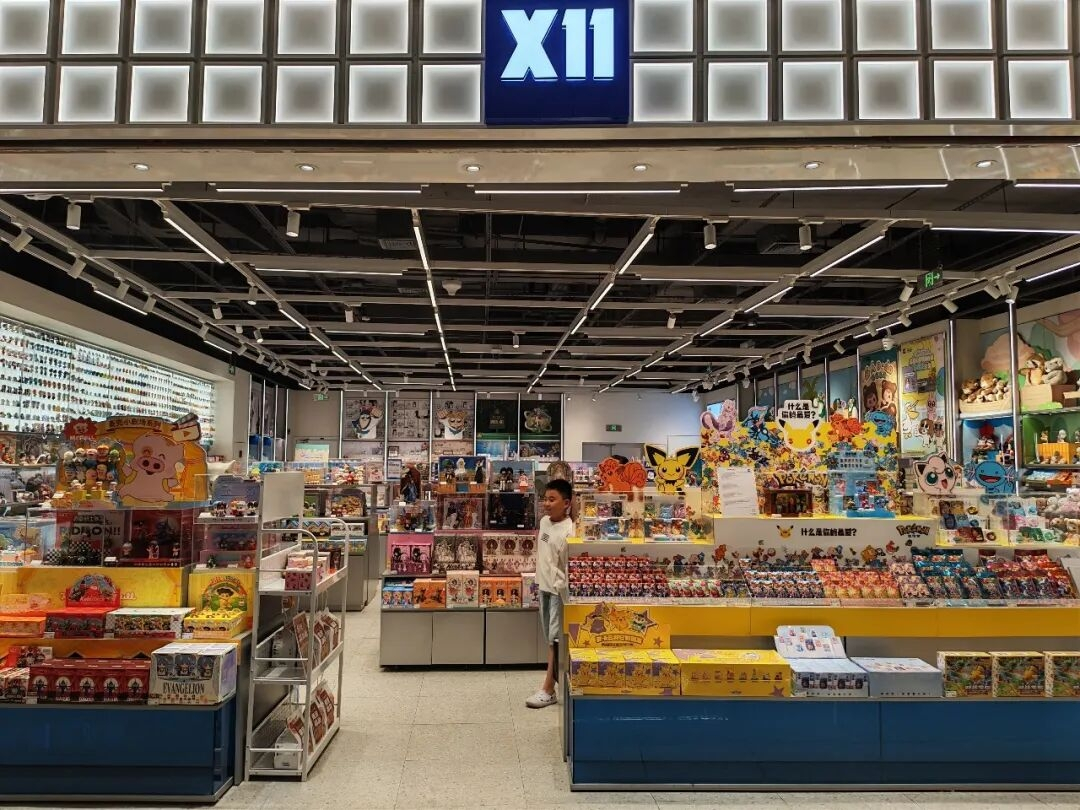
In addition, a large number of related industries, seeing the market potential of trendy toy and cultural creative concept stores, have successively entered the field. Miniso’s TOP TOY, KKV’s X11, M&G Paper’s Jiumu Zashishe, and Yuanlong Yato’s Yuanlong Yuanqi (rights protection) all belong to this type.
Last year, Wang Kaili, the daughter of Xincheng Holdings’ founder, launched the trendy toy concept store brand MITAKI. With the support of Xincheng’s capital and industrial resources, it quickly completed the three-step process of brand creation, store opening, and listing.
As for the smaller trendy toy and cultural creative businesses backed by internet companies and consumer brands, there are even more. A casual count includes giants such as Alibaba and Bilibili getting involved.
When you walk into major shopping malls, you can find a trendy toy and cultural creative store every few steps. So here’s the question: can such large stores actually make money? The answer may be beyond everyone’s expectations.

Industry ice and fire
As the undisputed leader in the trendy toy industry, Pop Mart has maintained strong business growth and profitability in recent years.
In the first half of 2026, Pop Mart (09992.HK) reported revenue of 17.173 billion yuan, up 23.8% year on year, net profit of 5.10 billion yuan, up 8.9% year on year, and a net margin close to 30%.
Although Pop Mart’s revenue growth fell short of market expectations, triggering a sharp drop in its stock price a few days ago, its level of profitability still stands alone in the entire trendy toy market. At least for now, there is only this one Pop Mart.
Backed by Miniso’s massive supply chain system and relying on mature store operations experience and IP management capabilities, TOP TOY’s revenue surged to 3.587 billion yuan last year. But its profitability is not strong: in 2025, net profit was 101 million yuan, with a net margin of less than 3%.
Under Pop Mart and TOP TOY, the entire trendy toy and cultural creative store track has become a bloodbath.
The most typical example is Jiumu Zashishe, which has more than 800 stores and lost 84.5104 million yuan in 2025, with losses rising sharply compared with 2024.
Limited by the low growth potential of its stationery and office supplies business, M&G Paper hoped to use Jiumu Zashishe’s trendy toy and cultural creative business to open up new imagination through upgrades in location, target customer base, shopping format, and SKU categories. Unexpectedly, this business has instead dragged down the listed company’s overall performance.
In 2025, M&G Paper’s revenue was 25.064 billion yuan, up 3.45% year on year, and net profit attributable to shareholders was 1.31 billion yuan, down 6.12% year on year.
Tong Master belongs to a niche category in the trendy toy and cultural creative market, and originally had the advantage of differentiation, allowing it to go public first in March this year. Unexpectedly, a profit warning disclosed a few days ago showed that the company’s net profit for the first half of the year would be 1 million to 1.5 million yuan, a sharp decline of more than 95% from 30.2 million yuan in the same period last year.
Yuanlong Yato’s consecutive years of losses have little to do with its trendy toy and cultural creative store Yuanlong Yuanqi; the main reason is the decline of its traditional cultural and creative business.
Chuangyuan Co. planned to acquire Kule Chao Wan, but did not acquire it as a whole. Instead, it included only the 31 profitable stores out of Kule Chao Wan’s 300 stores in the planned acquisition scope. This special acquisition method reveals Kule Chao Wan’s overall operating condition.
In the trendy toy and cultural creative concept store industry, if even the leading players are like this, the survival situation for small and medium-sized brands is naturally no better.

The bigger the store, the harder it is to make money
Summing up Pop Mart’s rise, the robot store model — a low-cost channel with broad coverage — made a significant contribution. It was only in recent years, out of considerations for brand development and user service, that Pop Mart began laying out several offline flagship stores in addition to robot stores and e-commerce.
Among trendy toy brands, the one most like Pop Mart is 52TOYS, which has also generally adopted this channel strategy. Last year, after receiving investment from Ruyi Films, 52TOYS gained Wanda Cinemas as a high-quality lightweight channel.
However, trendy toy and cultural creative concept stores are particularly fond of opening large stores in core cities and prime commercial districts. Large store areas, good locations, low sales efficiency per square meter, and high rents have become the biggest obstacles on these brands’ path to profitability.
In the early days, trendy toy and cultural creative concept stores still had their own characteristics. Kule Chao Wan focused on trendy toys, The Green Party focused on accessories, and Jiumu Zashishe focused on stationery and cultural products.
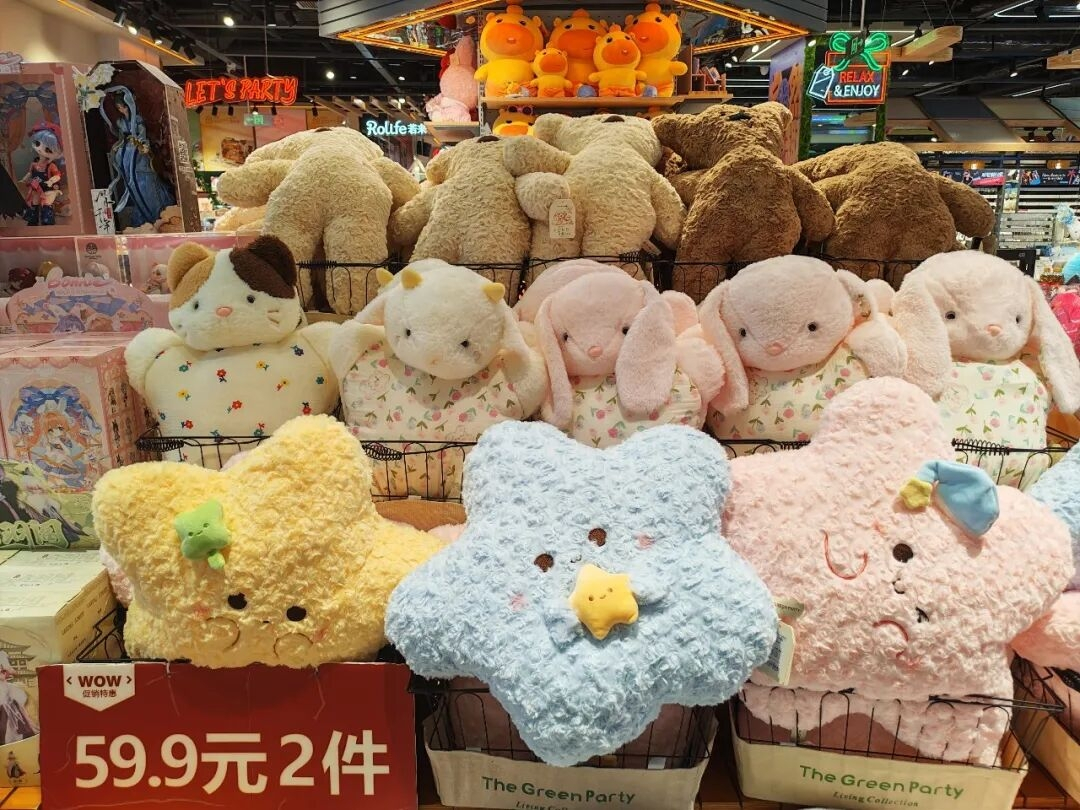
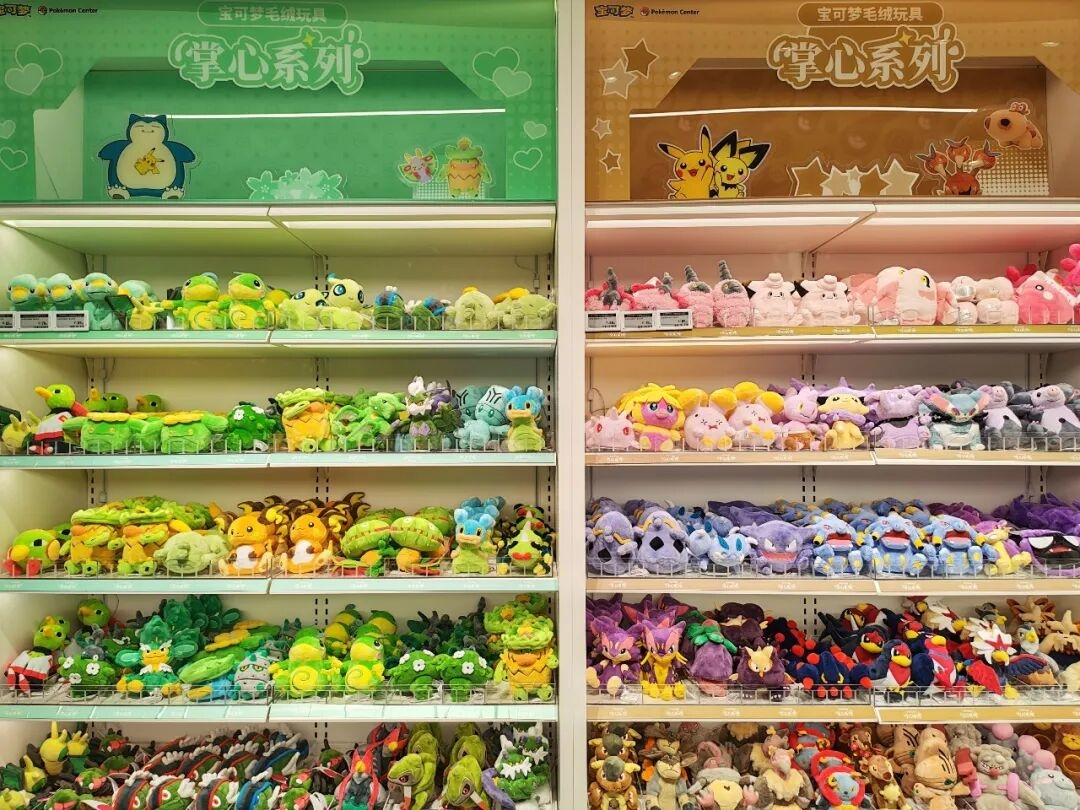
But even now, if you walk into any trendy toy and cultural creative concept store, there is almost no discernible differentiation. The store layouts are similar, with rows of shelves at the entrance packed with figurines and plush dolls; many of the products may even come from the same brand or the same production line.
The rise of the trendy toy and cultural creative market mainly comes from meeting young users’ emotional needs. But emotional value is powerless in the face of aesthetic fatigue. Extreme homogenization fails to spark any desire to buy.
So when you enter these spacious trendy toy and cultural creative concept stores, you may occasionally see people taking photos for social media check-ins, but the bag-toting conversion rate is not high, and the cash register is often empty.
Some also say that offline stores are mainly used to seize brand position, while sales mainly rely on online channels. This may indeed be the case for Pop Mart and Miniso + TOP TOY. But the products of ordinary trendy toy and cultural creative stores are even more likely to be drowned out on the internet.
Once store inventory clearance is not timely, it not only affects operating efficiency and lowers inventory value, but also impacts profitability. Trendy toy and cultural creative products may not be short-shelf-life products, but the popularity of IP can fade in a flash. Yuanlong Yato stated in its financial report that some cultural creative products lost value because event-related IP became outdated, affecting the listed company’s performance.

IP Is the Core
In just over a decade, with the support of IP and capital, the trendy toy and cultural creative market rapidly completed the process from birth, rise, frenzy to decline.
After the bubble subsides, the issue the market should face squarely is: in this big trendy toy market, what is the real core of competition? It is not products, not channels, and not brands. There is only one core — IP.
For people who don’t know LABUBU, it is just an ordinary plush toy. With today’s supply chain capabilities, many contract manufacturers can easily replicate a product like this.
As long as you have a top-tier IP, products can naturally be sold with ease. Whether you have channels or not seems less important in the trendy toy market. This is also the fundamental reason why many leading trendy toy brands can build their own channels on their own.
For Pop Mart, the market cares more about how long Molly and LABUBU can stay popular, and who the next breakout IP will be. As for the company itself, it can indeed leverage industrial accumulation and its IP reservoir to improve the success rate of creating hits, but this is not always effective and there are still many variables.
The reason trendy toys differ from ordinary toys lies in IP. Therefore, the entire trendy toy market should put its focus on IP, the core.
Even if most companies cannot incubate IP the way Pop Mart does, as long as they can rely on licensed IP such as Ultraman, My Little Pony, and Disney series like Card Game, Bloks, and 52TOYS, they can still establish a foothold, build up strength, and invest in their own IP over the long term.
Miniso and TOP TOY stores are filled with products featuring various licensed IPs, but they have never lacked mature IP management experience, nor have they given up nurturing their own IP.
The biggest strategic misjudgment in this market is shifting the business focus to opening stores. For trendy toy and cultural creative stores without IP capabilities, the more stores and the larger they are, the faster they die.