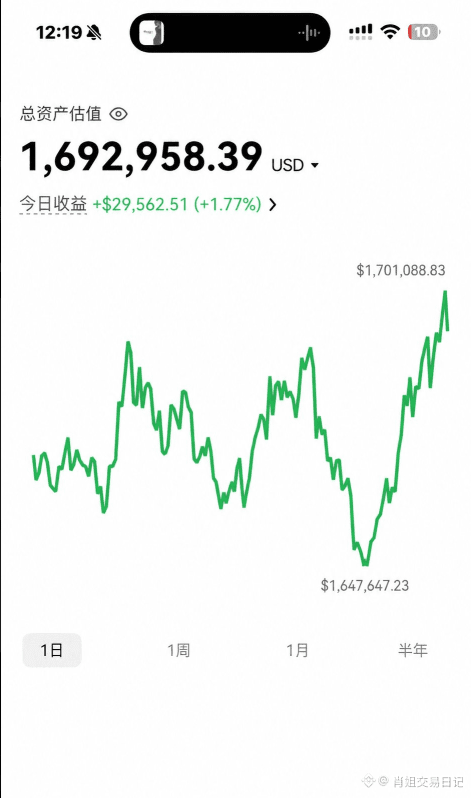
Why do you always chase and panic-sell in trading?
In the end, it’s not that you can’t read the market—it's that your eyes are only on the price, not the trend.
When you see a big bullish candle pushing up, you’re afraid of missing out, so you rush in;
when a big bearish candle crashes down, you start panicking and cut.
In the end, it often becomes:
buying at the top when the market is rising, and cutting at the bottom when it’s falling.
What the market is most likely to “cash in on” is exactly this kind of emotion.
A single big bullish candle doesn’t necessarily mean the market will keep rising—it could just be short-term overexcitement;
a single big bearish candle doesn’t necessarily mean the trend is completely over—it might just be a normal pullback.
If every day you only stare at a few candlesticks, letting price lead you by the nose, losing money isn’t really surprising.
Someone once asked me:
“Why does it look so steady when others place trades, but I get trapped the moment I buy?”
The difference is simple:
others look at the trend; you focus on volatility.
Real traders don’t chase when it’s up or run when it’s down. They first judge the direction, then wait for the right entry.
If the trend is upward, wait for a pullback and confirmation;
if the trend weakens, control your position size—don’t stubbornly fight the market.
Don’t change your trading plan just because of a few minutes of up or down.
Trading is never about who reacts fastest, but who can see farther, hold steady, and execute reliably.
If you’re figuring it out alone, it’s easy to get dragged around by emotions;
if someone shows you the direction, at least you’ll avoid many unnecessary detours.
If you don’t want to be led around by the market anymore, follow me and let’s make your trading logic clear.#比特币受阻于81000美元50周均线
In the end, it’s not that you can’t read the market—it's that your eyes are only on the price, not the trend.
When you see a big bullish candle pushing up, you’re afraid of missing out, so you rush in;
when a big bearish candle crashes down, you start panicking and cut.
In the end, it often becomes:
buying at the top when the market is rising, and cutting at the bottom when it’s falling.
What the market is most likely to “cash in on” is exactly this kind of emotion.
A single big bullish candle doesn’t necessarily mean the market will keep rising—it could just be short-term overexcitement;
a single big bearish candle doesn’t necessarily mean the trend is completely over—it might just be a normal pullback.
If every day you only stare at a few candlesticks, letting price lead you by the nose, losing money isn’t really surprising.
Someone once asked me:
“Why does it look so steady when others place trades, but I get trapped the moment I buy?”
The difference is simple:
others look at the trend; you focus on volatility.
Real traders don’t chase when it’s up or run when it’s down. They first judge the direction, then wait for the right entry.
If the trend is upward, wait for a pullback and confirmation;
if the trend weakens, control your position size—don’t stubbornly fight the market.
Don’t change your trading plan just because of a few minutes of up or down.
Trading is never about who reacts fastest, but who can see farther, hold steady, and execute reliably.
If you’re figuring it out alone, it’s easy to get dragged around by emotions;
if someone shows you the direction, at least you’ll avoid many unnecessary detours.
If you don’t want to be led around by the market anymore, follow me and let’s make your trading logic clear.#比特币受阻于81000美元50周均线