The U.S. Launches an “Economic D-Day” Against Iran: Crypto Assets First Included in Key Sanctions
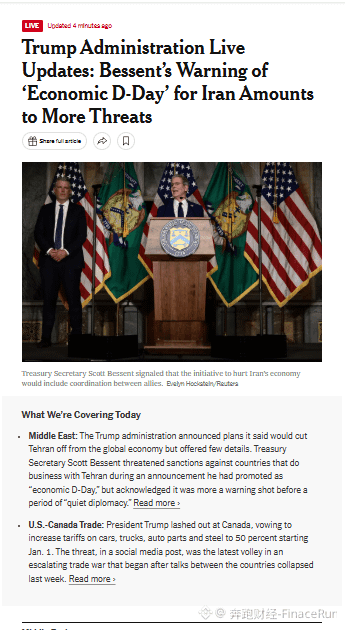
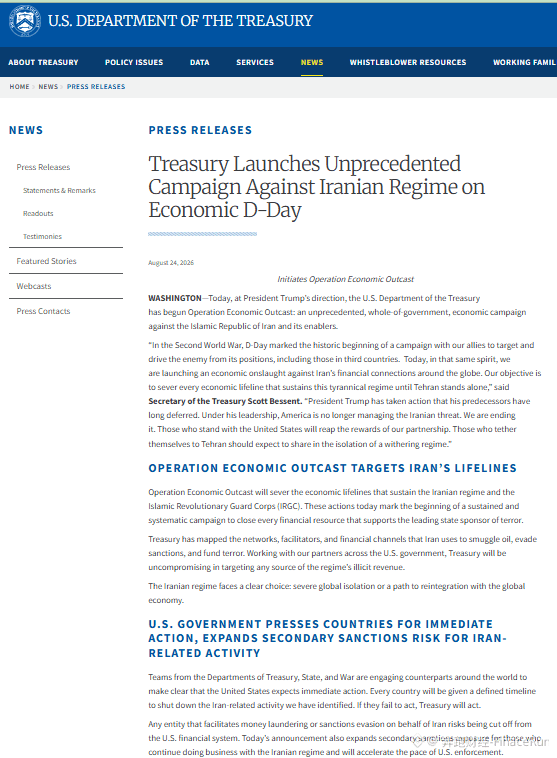
August 25 — U.S. Treasury Secretary Scott Bessent announced on Monday a new round of large-scale sanctions targeting Iran, focusing on revenue sources in areas including digital assets, technology, aviation, gold, and shipping.
Bessent called the action “Economic D-Day” and warned that any individuals or entities that continue to do business with the Iranian regime will face the risk of U.S. sanctions.
Notably, crypto assets are the central focus of this round of sanctions. As early as June, the Treasury Department imposed sanctions on Iran’s leading crypto exchange, Nobitex, identifying it as a key node involved in evading sanctions, terror financing, and transactions linked to Iran’s Islamic Revolutionary Guard Corps.
According to reports, as of May, the U.S. had seized nearly $1 billion worth of crypto currency assets from Iran. The sanctions list released on Monday also includes a batch of digital asset addresses, including a personal wallet address that held more than $30,000 worth of Bitcoin in 2023.
Previously, the U.S. has imposed multiple rounds of sanctions on Iran’s oil revenues and shipping networks. This escalation is not an isolated event, but the latest economic offensive in the context of the ongoing conflict between the U.S. and Iran (which began with last year’s strike on Iran’s top leader).
Bessent said the U.S. Treasury Department, the State Department, and the military will also engage with relevant global stakeholders, urging each country to shut down Iran-related businesses identified by the U.S. within specified time limits in order to promote coordinated action among allies and partners.
#美国对伊朗制裁升级
August 25 — U.S. Treasury Secretary Scott Bessent announced on Monday a new round of large-scale sanctions targeting Iran, focusing on revenue sources in areas including digital assets, technology, aviation, gold, and shipping.
Bessent called the action “Economic D-Day” and warned that any individuals or entities that continue to do business with the Iranian regime will face the risk of U.S. sanctions.
Notably, crypto assets are the central focus of this round of sanctions. As early as June, the Treasury Department imposed sanctions on Iran’s leading crypto exchange, Nobitex, identifying it as a key node involved in evading sanctions, terror financing, and transactions linked to Iran’s Islamic Revolutionary Guard Corps.
According to reports, as of May, the U.S. had seized nearly $1 billion worth of crypto currency assets from Iran. The sanctions list released on Monday also includes a batch of digital asset addresses, including a personal wallet address that held more than $30,000 worth of Bitcoin in 2023.
Previously, the U.S. has imposed multiple rounds of sanctions on Iran’s oil revenues and shipping networks. This escalation is not an isolated event, but the latest economic offensive in the context of the ongoing conflict between the U.S. and Iran (which began with last year’s strike on Iran’s top leader).
Bessent said the U.S. Treasury Department, the State Department, and the military will also engage with relevant global stakeholders, urging each country to shut down Iran-related businesses identified by the U.S. within specified time limits in order to promote coordinated action among allies and partners.
#美国对伊朗制裁升级