

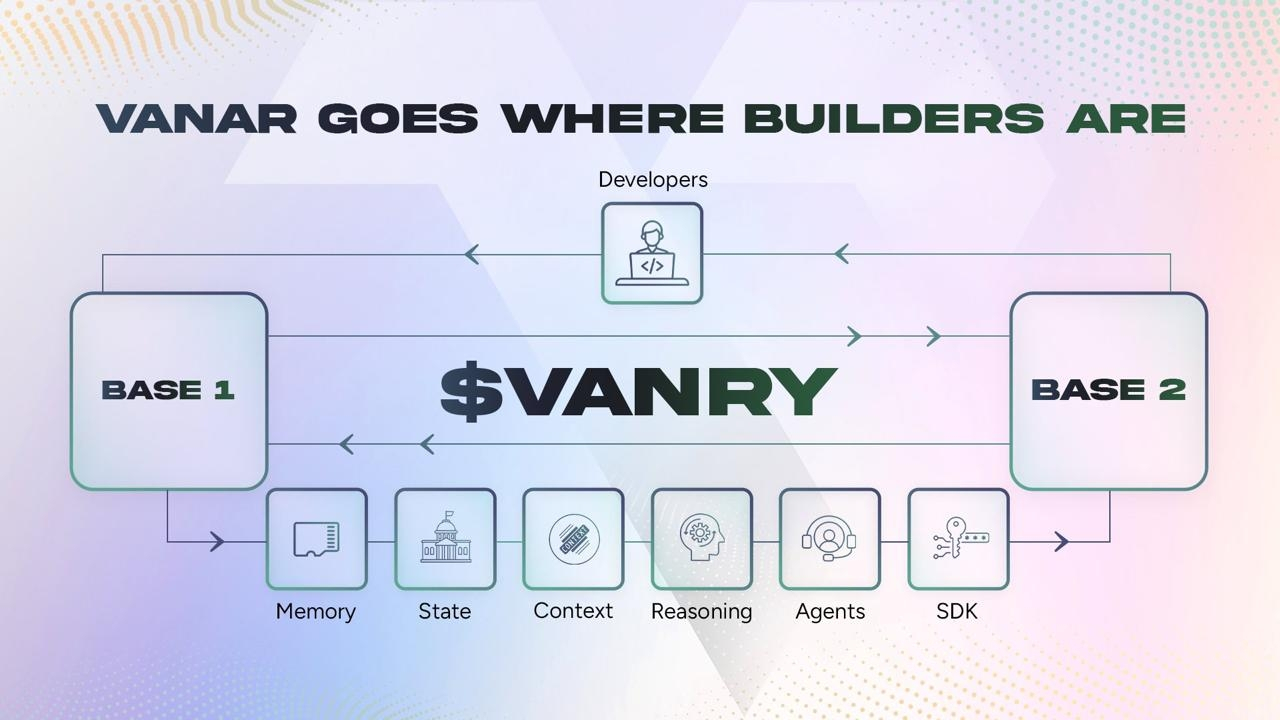
If you ask me what makes @Vanar worth watching in the coming years, the answer does not lie in a single feature or a specific partnership announcement.
It lies in how Vanar is positioning itself in an increasingly less forgiving market.
When crypto is no longer a playground for hot growth, the projects that survive are often those that can answer very basic questions: what problem am I solving, for whom, and in what context?
Vanar is not trying to become a chain that 'synthesizes everything'.
They are also not racing to build the most crowded ecosystem in a short time.
Instead, they focus on a very specific group of behaviors: high-frequency digital interactions, low value per transaction, but requiring a smooth experience and almost zero cost.
These are behavior groups that often appear in entertainment, digital content, PayFi, and payment flows linked to user experiences.
Not the flashiest market, but a market with recurring demand.
The first point worth watching is how Vanar approaches end users.
They do not expect users to learn about wallets, gas, or tokens to participate. In mainstream applications, if blockchain appears as a friction point, it will be quickly eliminated. Vanar assumes the opposite: blockchain must become an invisible layer.
This sounds familiar, but very few projects actually design the entire system around that assumption. This approach makes Vanar more suitable for the world outside of crypto, where most users do not care about the technology behind it.
The second thing that catches my attention is that Vanar does not separate content from infrastructure.
Many on-chain entertainment projects either only produce content and depend on others' infrastructure or only provide infrastructure and hope that someone will build on top of it. Vanar stands in the middle.
They start from the content, so they understand the needs of studios, publishers, and creators. But they do not stop there; they shift their focus to building a foundation for these parties to operate more easily.
If done right, Vanar $VANRY does not need to create the next 'hit' content. They just need to be the place where those hits run through.
Another point worth watching is how Vanar handles the AI narrative.
In a context where AI is abused as a buzzword, Vanar chooses a less glamorous direction: using AI to reduce operational costs. Automating content distribution, managing ownership rights, payments, reporting, and compliance are tasks that no one likes to do manually but are extremely resource-intensive.
If AI on Vanar truly helps partners 'take a load off', this will be a much more sustainable advantage than flashy demos.
I also pay attention to how Vanar talks about growth.
They do not place a heavy emphasis on having a significant TVL or explosive volume in a short time. This makes them appear less attractive in the eyes of speculative markets but aligns well with a long-term strategy.
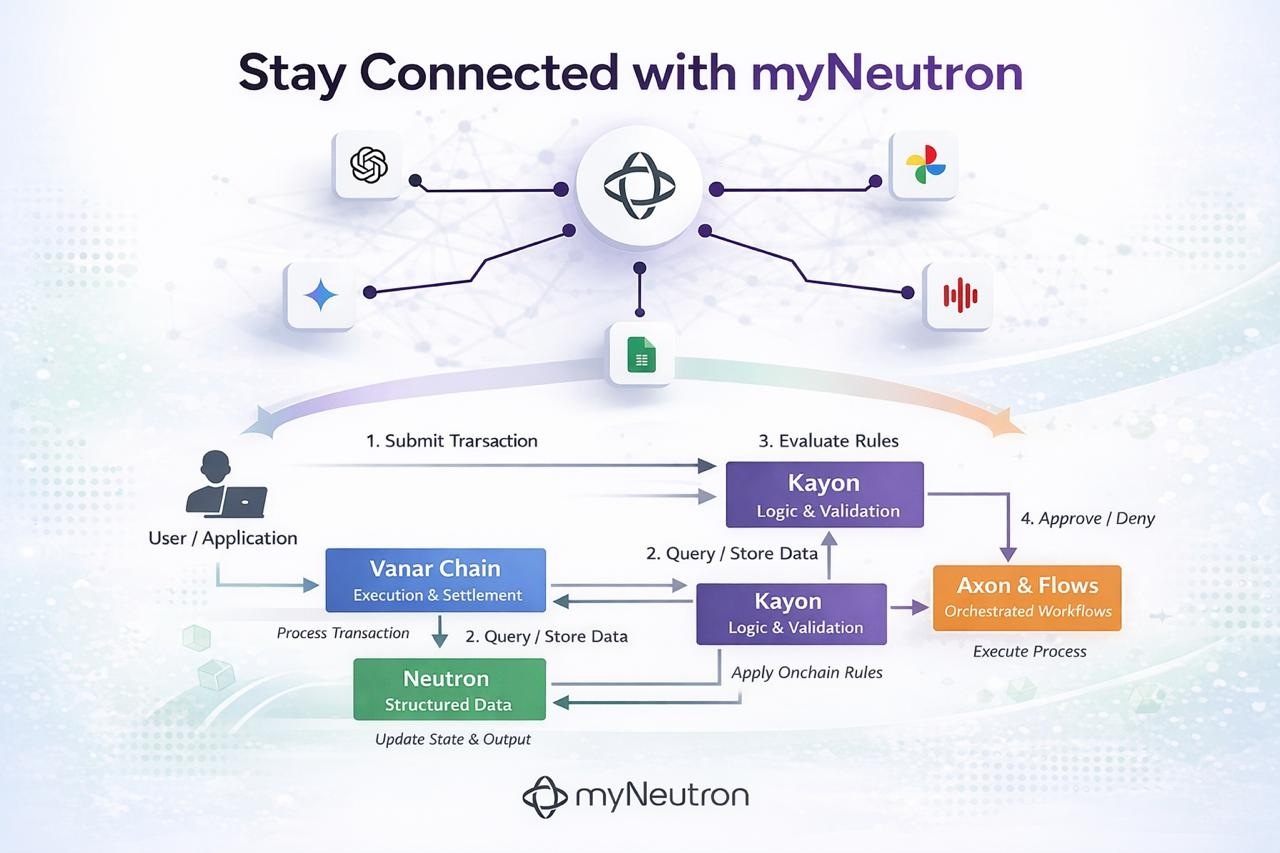
Systems serving repetitive behavior often grow slowly in the early stages because they require time to integrate, test, and adjust. But once they are embedded in the process, they are very difficult to replace.
Of course, being worth watching does not mean there are no risks.
Vanar is choosing a path that requires great patience, both from the team and the community. In crypto, where rewards often come quickly for projects that tell good stories, moving slowly can be misunderstood as weakness.
If Vanar cannot maintain discipline and gets pulled into the hype game, they will lose their biggest advantage.
Another risk is the focus on entertainment and digital content.
These are industries with low profit margins and are strongly affected by economic cycles. If partners tighten spending, the adoption rate may be slower than expected.
At that time, Vanar will have to prove that their infrastructure is flexible enough to expand into other use cases without losing its original identity.
However, in the bigger picture, what makes Vanar worth watching is that they are trying to build an ecosystem around behavior, not just around tokens.
Tokens can fluctuate cyclically, but usage behavior, once formed, will be much more enduring. If Vanar succeeds in becoming the foundational layer for recurring digital behaviors, they do not need the market to be continuously excited to survive.
The next few years will not be easy for crypto.
Patience will be tested, and many projects will disappear quietly. In this context, the projects worth watching are not necessarily the most promising ones, but those that know where they are heading and are willing to pay the price for that path.
Vanar, at least at this point, is showing that they clearly understand the role they want to pursue. And in an increasingly quieter market, that clarity is itself a signal worth observing.
