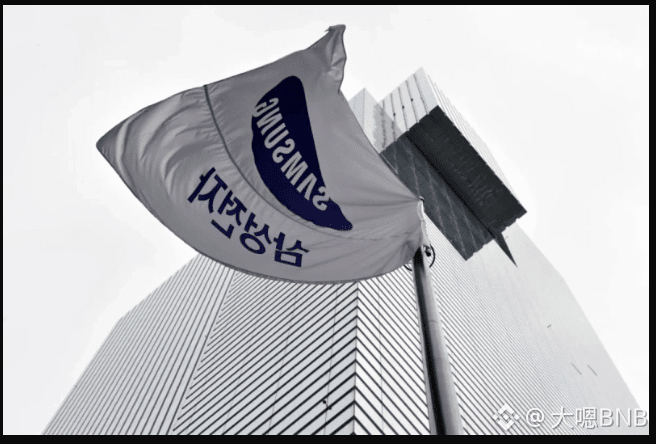

Samsung shares fell more than 6% in intraday trading in Seoul today—just two days after it announced what would be the largest shareholder return program in South Korea’s history.
This isn’t just a question of the numbers being large enough; it’s about market expectations. Samsung’s announced 90–110 trillion won is five times the 2020 record, but some investors had previously expected as much as 150 trillion won—based on calculations using Samsung’s forecast operating profit of 380 trillion won for this year, free cash flow of about 263 trillion won, and an estimate that about 130 trillion won should be returned under a 50% FCF rule.
Investors aren’t just looking at the total amount. They’re also looking at how much per-share value can be improved. Dividends that don’t reduce share capital don’t help per-share metrics; only buybacks and cancellations can. In Samsung’s announcement, besides the Q3 cash dividend of 30 trillion won, the distribution details for the remaining 60–80 trillion won—especially whether there will be any cancellation plan—will not become clear until January.
Compare this with SK hynix from the same week: it announced a 40 trillion won buyback and planned to cancel all of it, while flipping its shareholder return target from “within 50% of FCF” to “over 50%”—clear, measurable, and delivered immediately. Samsung’s plan provides the total figure, but not the method.
J.P. Morgan noted that the Q3 30 trillion won represents only 25% of operating cash flow in the first half—below the requirement of the 50% FCF principle.
The market today, down 6%, is saying one thing: it’s not enough to provide the total amount—you need to provide the approach and the timetable.
$SKHYNIX
$BTC
#三星股价跌6.4%回报计划不及预期
This isn’t just a question of the numbers being large enough; it’s about market expectations. Samsung’s announced 90–110 trillion won is five times the 2020 record, but some investors had previously expected as much as 150 trillion won—based on calculations using Samsung’s forecast operating profit of 380 trillion won for this year, free cash flow of about 263 trillion won, and an estimate that about 130 trillion won should be returned under a 50% FCF rule.
Investors aren’t just looking at the total amount. They’re also looking at how much per-share value can be improved. Dividends that don’t reduce share capital don’t help per-share metrics; only buybacks and cancellations can. In Samsung’s announcement, besides the Q3 cash dividend of 30 trillion won, the distribution details for the remaining 60–80 trillion won—especially whether there will be any cancellation plan—will not become clear until January.
Compare this with SK hynix from the same week: it announced a 40 trillion won buyback and planned to cancel all of it, while flipping its shareholder return target from “within 50% of FCF” to “over 50%”—clear, measurable, and delivered immediately. Samsung’s plan provides the total figure, but not the method.
J.P. Morgan noted that the Q3 30 trillion won represents only 25% of operating cash flow in the first half—below the requirement of the 50% FCF principle.
The market today, down 6%, is saying one thing: it’s not enough to provide the total amount—you need to provide the approach and the timetable.
$SKHYNIX
$BTC
#三星股价跌6.4%回报计划不及预期