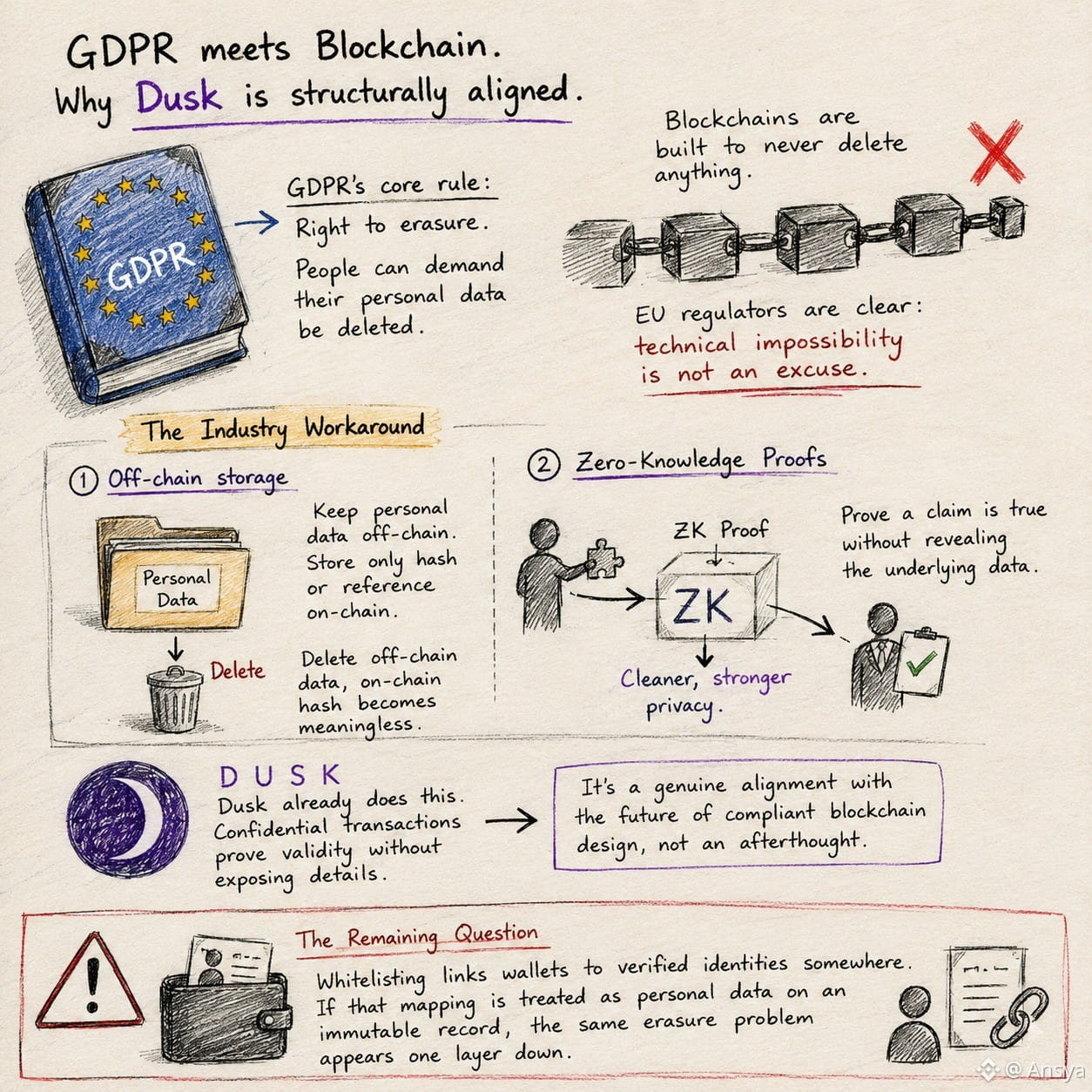
#dusk $DUSK @Dusk Most of crypto sells transparency as the whole point. Public ledgers, anyone can verify anything, trust the code instead of an institution. That's the pitch behind most of DeFi, and it's part of why on-chain analytics became its own industry. Dusk is quietly betting against that.
Its target user doesn't want radical transparency. A regulated institution already has trust, built through licensing, audits, and legal accountability, and what it actually needs from a blockchain is the opposite of what most crypto users want: enough privacy to operate normally, with compliance built in so regulators don't have to take anything on faith either. That's a genuinely different value proposition than "trustless," and it's arguably closer to what real financial infrastructure has always needed.
Here's where it gets uncomfortable, though. If the appeal of blockchain to Dusk's actual customers isn't transparency and isn't really trustlessness in the crypto sense, since a whitelisted, permissioned environment restores some of the trust model it's supposedly replacing, then it's worth asking what's left that a blockchain uniquely offers over a well-run private database with an audit trail.
I think the honest answer is verifiability without full disclosure, which no traditional system does cleanly. But that's a narrower claim than most of the industry makes about itself, and it's the one Dusk actually has to prove out.
$PROM
$SPK
Its target user doesn't want radical transparency. A regulated institution already has trust, built through licensing, audits, and legal accountability, and what it actually needs from a blockchain is the opposite of what most crypto users want: enough privacy to operate normally, with compliance built in so regulators don't have to take anything on faith either. That's a genuinely different value proposition than "trustless," and it's arguably closer to what real financial infrastructure has always needed.
Here's where it gets uncomfortable, though. If the appeal of blockchain to Dusk's actual customers isn't transparency and isn't really trustlessness in the crypto sense, since a whitelisted, permissioned environment restores some of the trust model it's supposedly replacing, then it's worth asking what's left that a blockchain uniquely offers over a well-run private database with an audit trail.
I think the honest answer is verifiability without full disclosure, which no traditional system does cleanly. But that's a narrower claim than most of the industry makes about itself, and it's the one Dusk actually has to prove out.
$PROM
$SPK