
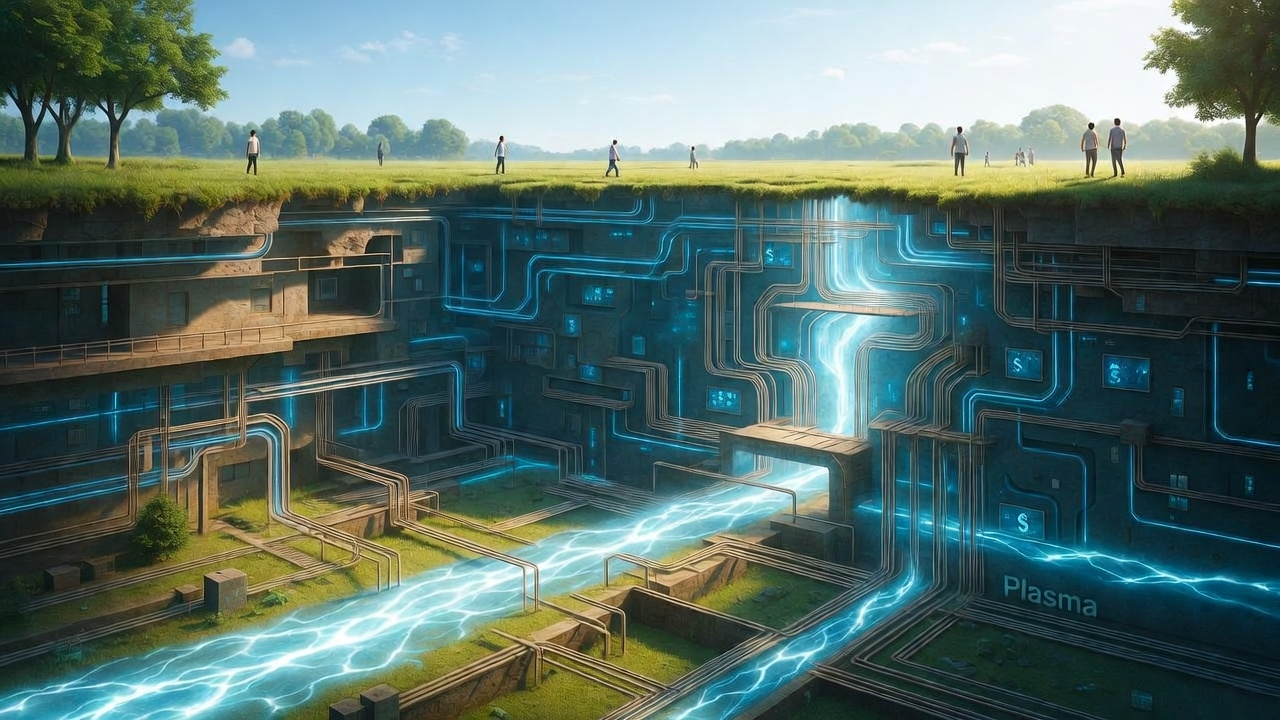
There are buildings that stand grandly and attract attention, and there are also structures hidden behind walls, supporting everything without ever being spotlighted. Plasma is in the second category. It is not the front face of the Plasma network, but the backbone that ensures stablecoin transactions move smoothly.
When someone sends a digital value, the process feels simple. A button is pressed, confirmation appears, and funds transfer. On the surface, everything seems light. However, behind that simplicity lies a system that continuously pulses, regulating transaction flows to remain efficient. In this picture, 'Plasma' is not just a name, but a symbol of the flow of energy that fills unseen spaces.
Plasma serves as part of the network's incentive and sustainability mechanism. It helps ensure that nodes remain active, the system is maintained, and transactions run smoothly even when activity increases. Without a foundation like this, the network can easily waver under the burden of real-world use.
Interestingly, the strength of plasma lies in its unremarkableness. It does not strive to be the center of market attention, nor does it offer spectacular promises. Instead, it builds relevance through consistency. Every day without disruption serves as proof that this system works.
As more people use stablecoins for practical needs, the pressure on the Plasma network increases. This is where plasma is put to the test. It helps maintain a balance between speed and stability, ensuring the flow of transactions continues even as the volume keeps rising.
In the long term, the crypto world will increasingly rely on quiet yet strong infrastructure like this. Plasma positions itself as part of that architecture, building the future not through sensation, but through continuous reliability.

