
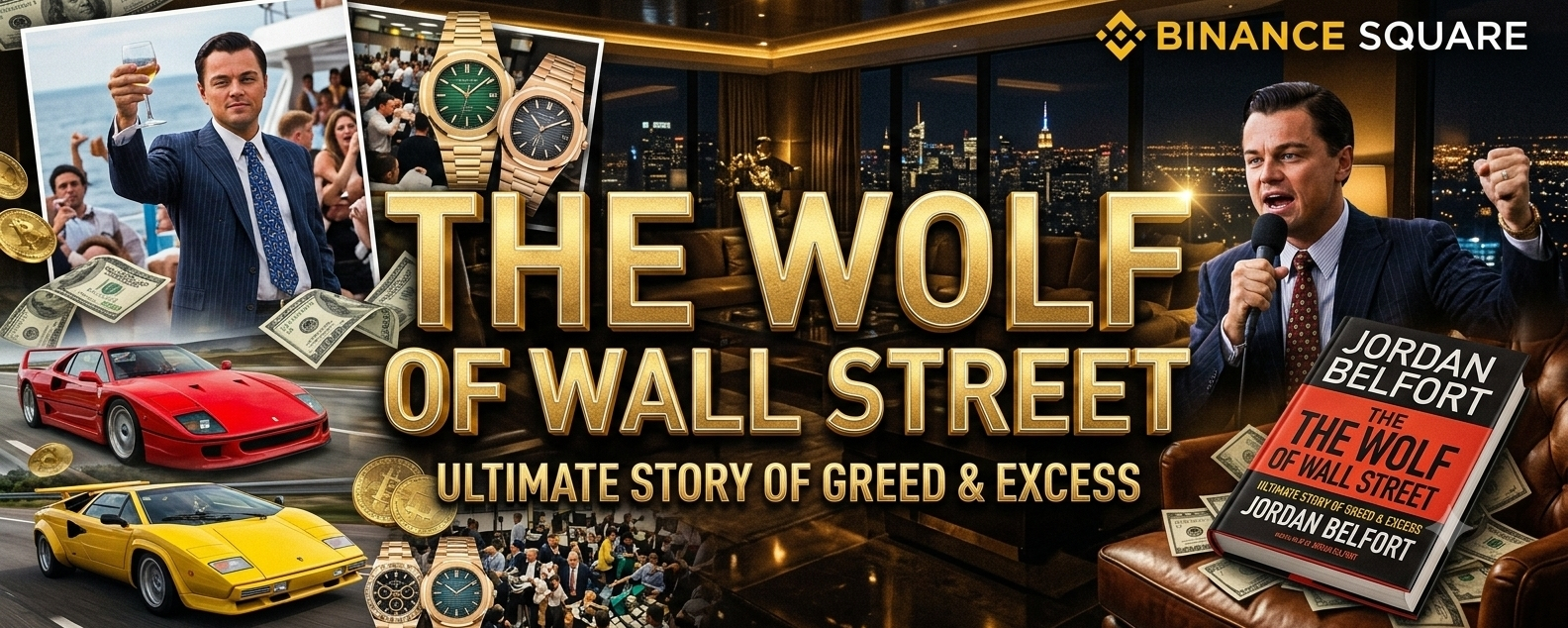

In the world of finance, there is no story that climbs to the top and then crashes down to the bottom in a dramatic way like Jordan Belfort's. The man who didn't just amass millions of dollars, but redefined the very idea of “greed” before the U.S. government brought him down and his life turned into a cinematic scenario that stunned the world.
The Beginning: Early Greed in Queens (1962)
Jordan Belfort was born in 1962 in the "Queens" neighborhood of New York to a middle-class Jewish family of accountants. From childhood, he showed a sharp, opportunistic business sense; at age sixteen, he exploited a hot summer day and sold ice cream to beachgoers to earn, together with his friend, more than $20,000 in a single summer.
He studied dentistry for a brief period, but withdrew on the first day when the college dean told him: "The golden age of dentistry is over; if you're here just to make money, you're in the wrong place." Money was his only driving force, so he chose Wall Street.
Building a con empire: Stratton Oakmont
Belfort began his career as a trainee stockbroker at "L.F. Rothschild," but his first real day on the job featured the "Black Monday" incident in 1987 and the market crash—bankrupting the firm and leaving him on the street.
He didn’t give up and uncovered a deadly loophole in the stock market: "penny stocks"—stocks of very small, very cheap companies whose trading isn’t subject to strict oversight.
He founded Stratton Oakmont and relied on a method called Pump and Dump (pumping and dumping):
Pumping: Belfort and his team buy huge quantities of shares in a very cheap company (at prices of mere pennies).
Deception: His men subject investors to intense phone pressure to convince them that the company is "the next big opportunity," artificially driving the stock price up.
Dumping: When the stock reaches its peak, Belfort sells his stake, reaping enormous profits, while the stock suddenly collapses, causing small investors to lose all their money.
At the height of his activities, Belfort was making millions of dollars every week, and his net worth surpassed $200 million while he was still in his thirties, leading an army of young brokers ready to do anything for his obscene wealth.
A life of extravagance and a dramatic downfall
Belfort’s life turned into an endless series of excess: a luxury yacht owned by Coco Chanel (which he later sank in Gibraltar due to decisions made while under the influence of drugs), Ferraris, private jets, and a severe addiction to drugs and alcohol.
But all that commotion drew the attention of the Federal Bureau of Investigation (FBI) and the U.S. Securities and Exchange Commission (SEC).
In 1998: He was arrested on charges of fraud and money laundering.
The deal: He faced up to 30 years in prison, but chose to cooperate with the Federal Bureau of Investigation and turn in his partners to reduce his sentence.
Sentence: He spent only 22 months in federal prison and was ordered to pay $110.4 million in restitution to more than 1,500 victims he defrauded.
A second life: from prisoner to speaker and investor
Inside prison, Belfort met the comedian Tommy Chong, who convinced him to write his memoirs. After getting out of prison, Belfort released the book "The Wolf of Wall Street," which achieved phenomenal sales, and in 2013 it was adapted into a major film directed by Martin Scorsese and starring Leonardo DiCaprio.
Where is he now?
Belfort reinvented himself as a motivational speaker and sales trainer (the creator of the Straight Line Selling theory). Even though he spent years attacking digital currencies and Bitcoin, describing them as "fraud," he later changed his mind and became an investor and consultant in the crypto space and Web3 technologies.
The lesson for crypto investors
Jordan Belfort’s story isn’t just a Hollywood drama—it’s a constant reminder to today’s crypto market investors:
The Pump and Dump tactics Belfort used in the 1990s are the same ones practiced today in some memecoins and crypto startups.
Greed, promises of quick riches, and getting carried away by fake promotion (FOMO)... all were tools the "Wolf of Wall Street" used long ago—and they’re still used to this day in the same way, but with new digital tools.#BTC #bitcoin #Binance #pumpanddump #scam