The U.S. Treasury “safe-haven” shield fails—renminbi assets become the new ticket onboard
On August 23, the U.S. Treasury Department suddenly announced an increase in the scale of long-term Treasury repos. The move aimed to use “borrow short to repay long” to push down long-term yields, but the market only gave it a day of face. The yield on 30-year U.S. Treasuries once again surged to 5.249%, approaching the previous peak. Remember, in March 2020, this figure was only 0.7%. U.S. Treasuries were once treated by sovereign wealth funds worldwide as the ultimate stabilizing “lifeboat.” Now yields are spiking, which is essentially a fire alarm ringing for fiscal conditions. What’s even more troublesome is that gold and U.S. Treasury yields are rising in sync—safe-haven assets and risk signals both climbing together indicates that the dollar is facing a trust crisis.
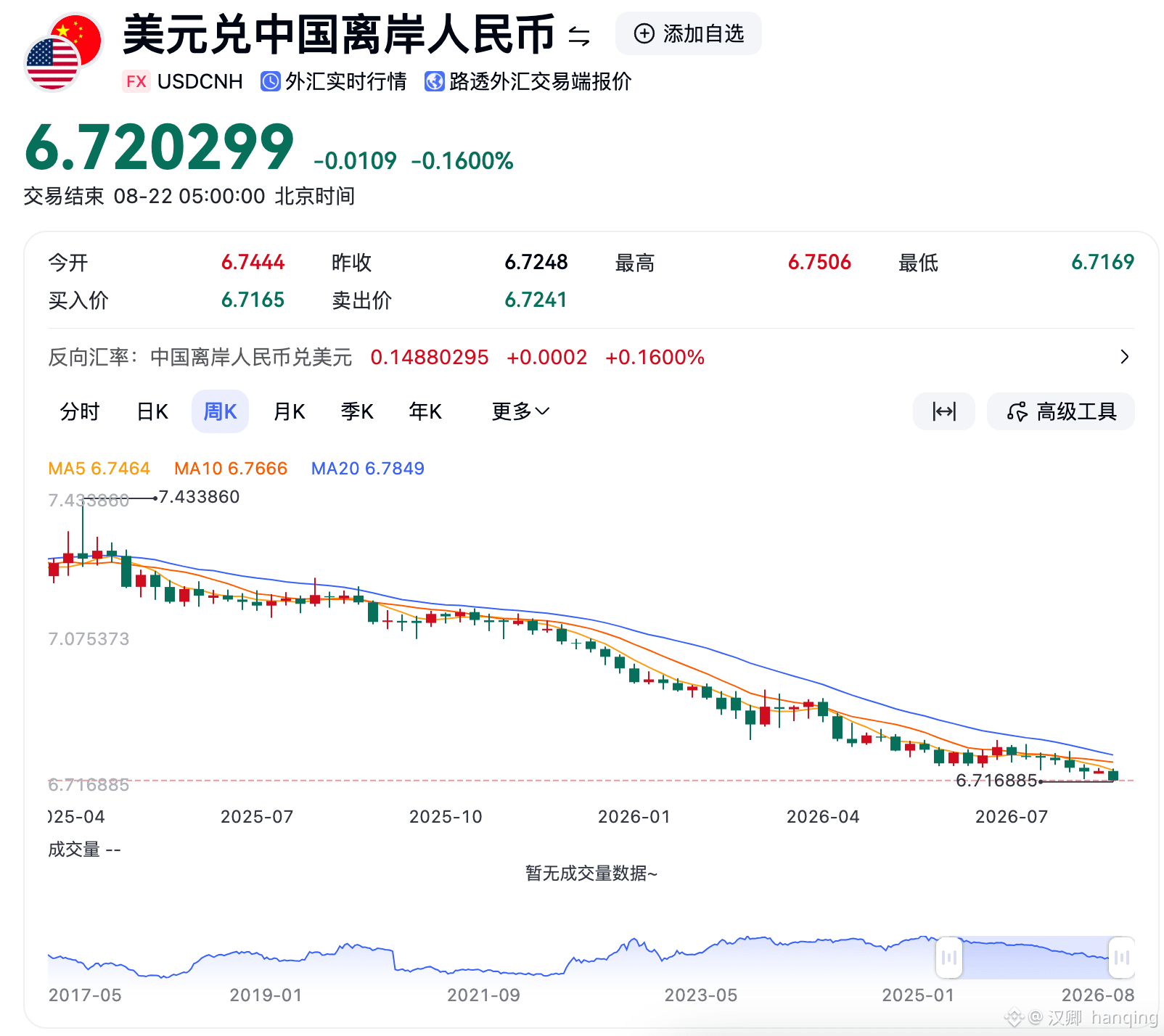
Looking globally, geopolitical conflicts, deglobalization, and higher—more expensive—capital costs have pushed the whole world into a high-cost production era. In such times, whoever has a large enough production scale and the toughest cost control will see their currency and assets appreciate. The midpoint rate of the renminbi against the U.S. dollar has risen to a new high in more than three and a half years—this is “early-acting” capital voting with its feet. At the same time, the renminbi’s share in global trade settlement and foreign exchange reserves continues to grow. China’s 10-year government bond yield is only 1.68%: low valuation, solid manufacturing fundamentals, and plenty of policy room to maneuver.
While dollar assets swirl in a bubble, renminbi assets are building momentum under undervaluation. The fiercer the storm in U.S. Treasuries, the more likely China’s A-shares are to carve out an independent行情.
#Follow for follow# #If you have followers, I will return#
On August 23, the U.S. Treasury Department suddenly announced an increase in the scale of long-term Treasury repos. The move aimed to use “borrow short to repay long” to push down long-term yields, but the market only gave it a day of face. The yield on 30-year U.S. Treasuries once again surged to 5.249%, approaching the previous peak. Remember, in March 2020, this figure was only 0.7%. U.S. Treasuries were once treated by sovereign wealth funds worldwide as the ultimate stabilizing “lifeboat.” Now yields are spiking, which is essentially a fire alarm ringing for fiscal conditions. What’s even more troublesome is that gold and U.S. Treasury yields are rising in sync—safe-haven assets and risk signals both climbing together indicates that the dollar is facing a trust crisis.
Looking globally, geopolitical conflicts, deglobalization, and higher—more expensive—capital costs have pushed the whole world into a high-cost production era. In such times, whoever has a large enough production scale and the toughest cost control will see their currency and assets appreciate. The midpoint rate of the renminbi against the U.S. dollar has risen to a new high in more than three and a half years—this is “early-acting” capital voting with its feet. At the same time, the renminbi’s share in global trade settlement and foreign exchange reserves continues to grow. China’s 10-year government bond yield is only 1.68%: low valuation, solid manufacturing fundamentals, and plenty of policy room to maneuver.
While dollar assets swirl in a bubble, renminbi assets are building momentum under undervaluation. The fiercer the storm in U.S. Treasuries, the more likely China’s A-shares are to carve out an independent行情.
#Follow for follow# #If you have followers, I will return#