
I have been struggling in the market for many years, and have seen countless so-called insider information, predictions, and expert opinions. But I am increasingly convinced of Soros's words.
“Economic history is an endless performance of falsehoods and lies, not of truth.”
Many retail investors lose money because they are always trying to find the 'truth' of the market—how much is this company really worth? Is this positive news really true?
There is no truth in the market, only 'reflexivity'.
Today, I want to borrow the wisdom of stock trader Livermore, combined with my own practical experience, to talk about how to establish a trading system that can survive and make big profits in a market filled with illusions.
One, the so-called 'insider', is mostly the scythe that harvests you.
In the era Livermore lived in, insider trading was rampant. But in today's mature market, the real insider information is the red line; 99% of those 'rumors' you come across are either malicious false news or worthless personal conjectures.
The core ability of a master is not to distinguish the truth of the news, but to distinguish the level of 'reflexivity'.
What is reflexivity? Just like Pavlov's dog salivates when it hears the bell, the market will be stimulated by certain related events, forming a collective cognition.
Scattered opinions: Not important.
Mainstream opinions (institutions/central banks): Very important.
Market consensus: The most important, even if it is wrong.
If the entire market believes in a false logic (like the internet bubble back then), this logic will drive stock prices to truly rise.
What we need to do is recognize the illusion, get involved, and then leave before the illusion shatters.
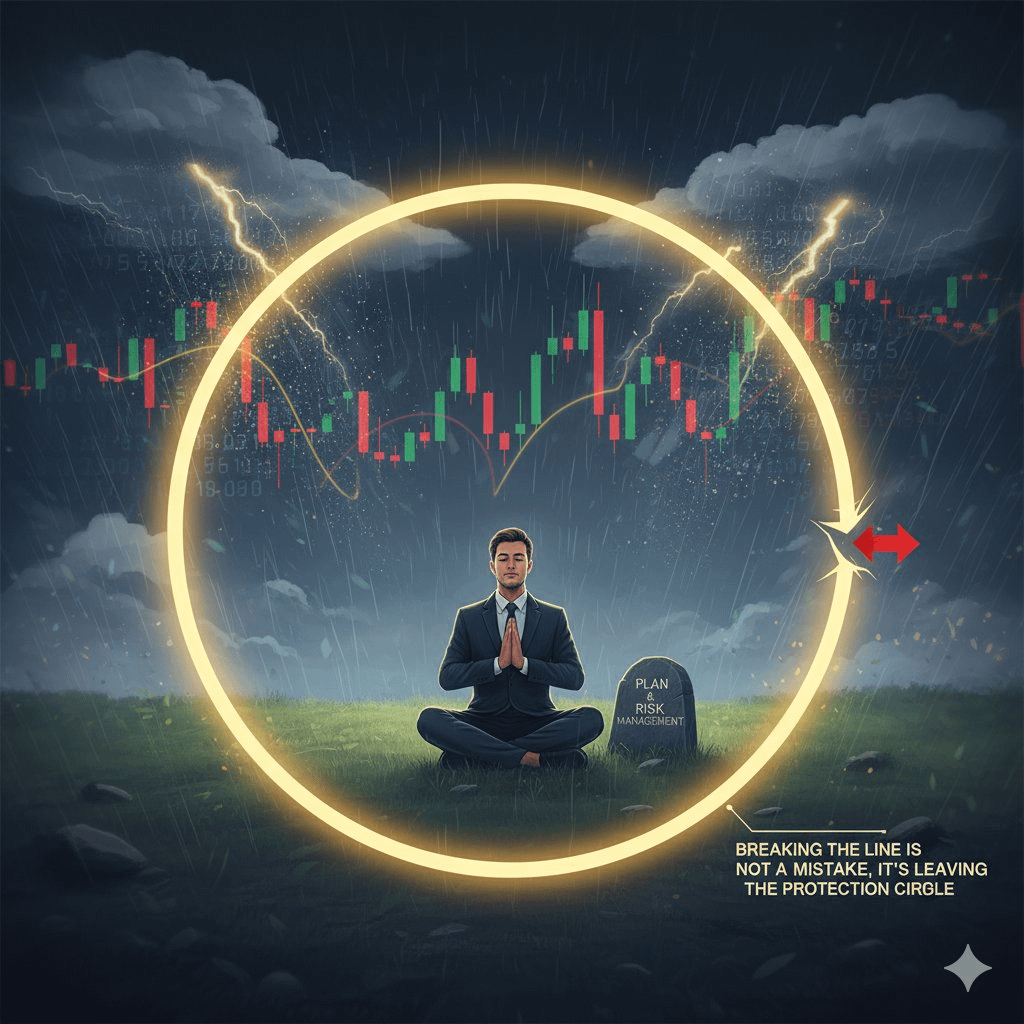
Two, trading is not predicting, it is 'drawing a circle'.
'When a person makes a mistake, the only thing to do is to not make another mistake.'
In my trading system, the plan is the circle that Sun Wukong drew for Tang Seng.
I do not predict whether tomorrow will rise or fall; I only do simulations. The core of simulation is not to calculate accurately, but to set two things:
Expectation (ceiling): Where do I start to take profits?
Bottom line (floor): Where must I stop loss?
Stopping loss when the bottom line is broken is not a mistake, but a correct defense.
Only when you have no plan, or have a plan but do not execute it, like a headless fly bumping around, that is called making a mistake. Because this kind of mistake is random, you cannot learn from it and cannot iterate your trading system.
Three, find the 'direction of least resistance'.
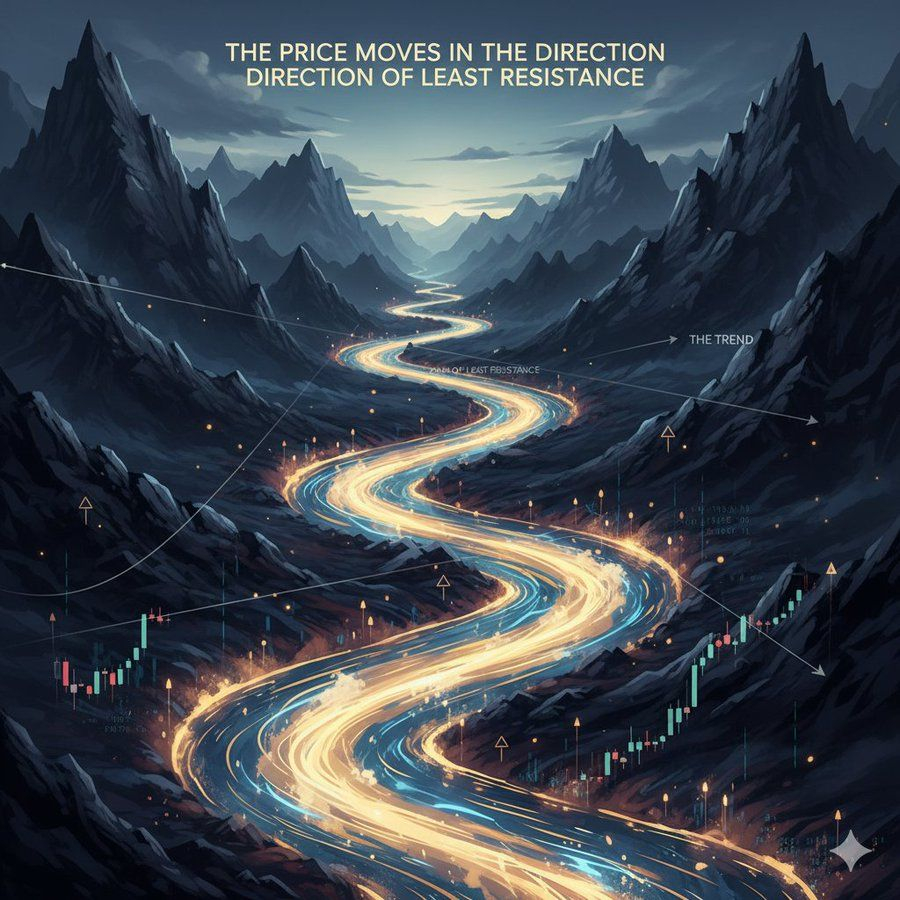
Livermore said: 'Prices move along the direction of least resistance.'
This sounds very mysterious, but translated into plain language, it means: look at the direction of the moving average cost (moving average).
If it is a bullish arrangement, an increase is the direction of least resistance; hold your position and do not exit easily.
If it is a bearish arrangement, a decrease is the direction of least resistance; do not catch falling knives.
In a bull market, bad news is ignored, while good news is overlooked in a bear market.
This is the power of trends. What we need to do is to follow this power, not to argue with the market that 'this is unreasonable'.
Four, Soros' 'backstab': Why can't you trust friends?
Let me tell you a classic story: Soros told a friend at a party that he was optimistic about real estate, and the friend believed it and bought in. As a result, real estate plummeted, and the friend held on. Months later, they met again, and the friend asked Soros what he thought, Soros said: 'Oh, that? I sold long ago and made a fortune shorting it.'
This story teaches you two lessons:
Never ask others what stocks to buy, and do not trust others' recommendations.
Top traders have extremely flexible and open-minded thinking.
When you find that the market trend exceeds your planned framework (especially when breaking the bottom line), regardless of how well you analyzed before, run! The graph is the last line of defense to protect your funds.
Five, the graph: the ECG of human nature.
People often ask me: when the news, fundamentals, and technicals conflict, whose should I listen to?
Listen to the graph.
Because there are always things in the market that you do not know, but the funds know, and the candlesticks know.
Unusual gaps and false breakouts are all signals from the funds.
The extreme of human nature: When prices soar to the 12 o'clock position, that is a selling point; when prices plummet to the 6 o'clock position, that is a buying point.
Graphs can help you cross the most difficult hurdle in human nature — to be fearful when greedy and greedy when fearful.

Six, even if only 1% of the time you pull the trigger.
There are only two purposes for analyzing the market:
Establish a position: Long or short? (I only go long in stocks, futures can be traded both ways).
Find the right timing: When is the safest time to enter the market?
Having established a trend (the direction of least resistance), found the driving force (reflexivity), the last step is to find the most vulnerable point of the trend to enter.
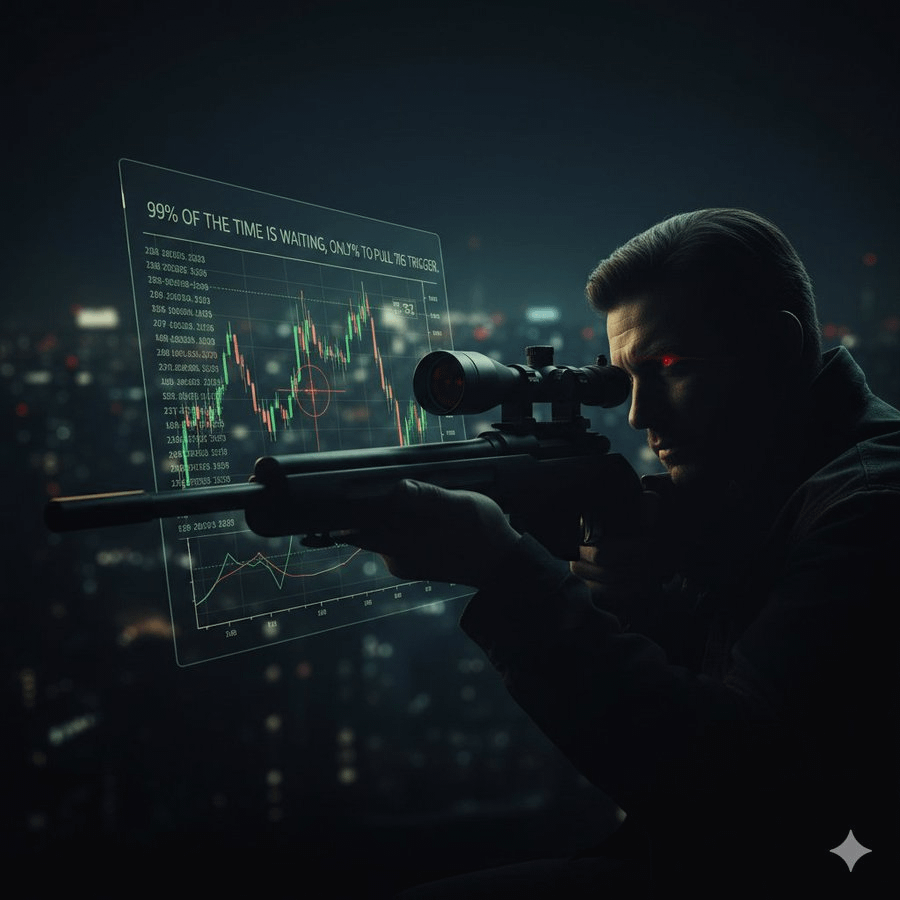
For the remaining 99% of the time, what you need to do is wait.
A mature hunter is idle most of the time.
Conclusion: In the end, it’s about character in trading.
All techniques, strategies, and plans ultimately have to be executed by 'people'.
If you can't control your emotions, if you don't have iron discipline, no good method will save you.
In this market, do you want to be a shooting star or a fixed star?
The answer is not in the candlestick chart, but in your character.