I spent more time examining DUSK’s privacy model at DUSK’s privacy model and the bridge response changed my view more than the cryptography did.
The obvious claim is “confidential transactions.” That is not the interesting part. What matters is what happens when something goes wrong.
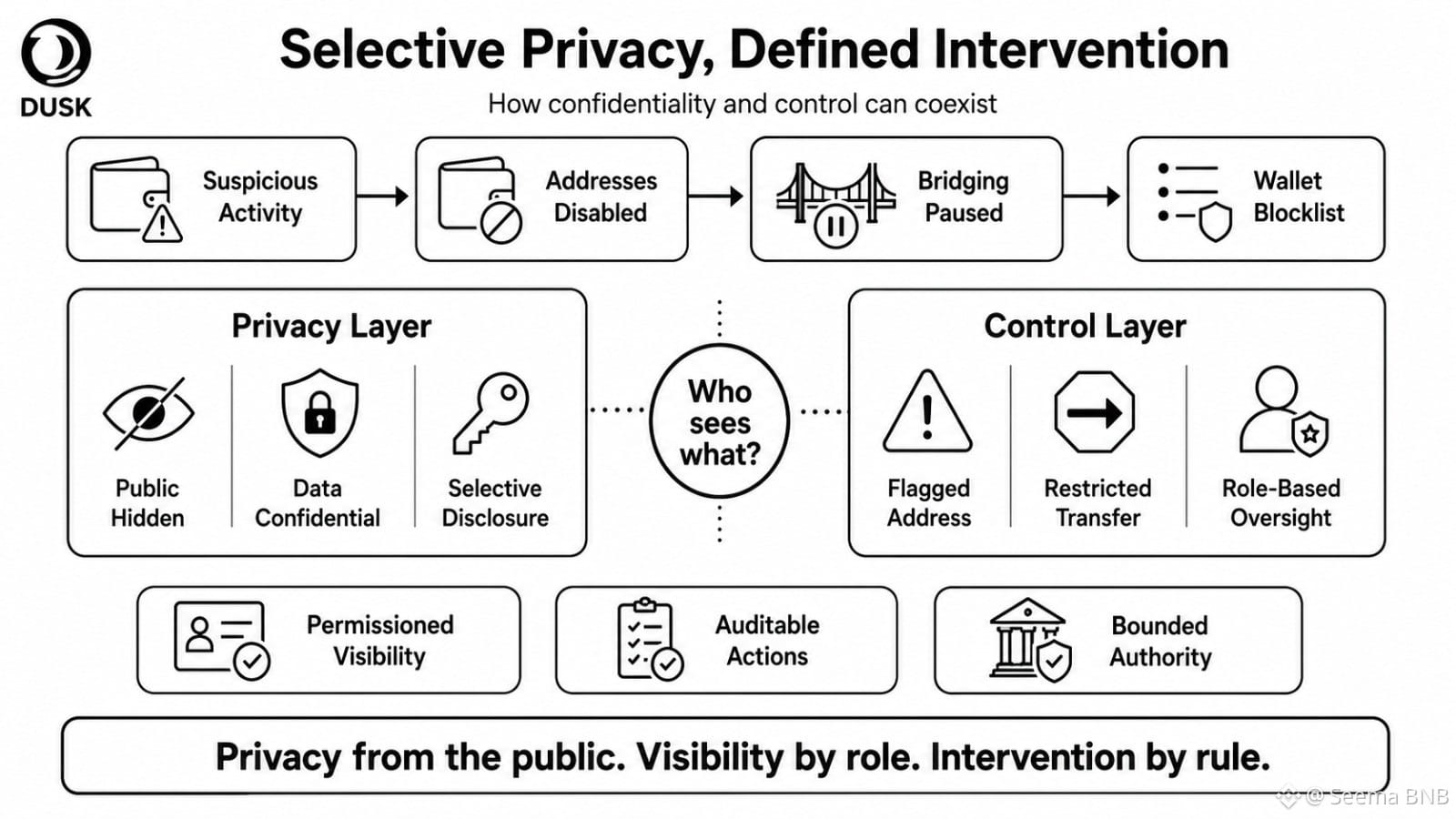
Suspicious wallet activity was detected, bridge addresses were disabled, bridging was paused, and a Web Wallet blocklist was introduced. That does not make DUSK less private by itself. But it does expose the real design question: privacy from whom, and control for whom?
For regulated finance, absolute anonymity may actually be the weaker model. Institutions need confidentiality from the public, while auditors, venues or supervisors may still need defined visibility. Privacy by default, visibility by permission sounds practical.
But permission is where governance pressure starts.
If one authorized party can see 80% of a private workflow, how private is it operationally? If a flagged address can be restricted, who decides the flag, how quickly, and what appeal exists?
DUSK may succeed if selective disclosure stays narrow, auditable and role-bound.
I am less interested in whether DUSK can hide data now. I want to know whether it can control visibility without quietly centralizing intervention power.
#dusk $DUSK @Dusk
The obvious claim is “confidential transactions.” That is not the interesting part. What matters is what happens when something goes wrong.
Suspicious wallet activity was detected, bridge addresses were disabled, bridging was paused, and a Web Wallet blocklist was introduced. That does not make DUSK less private by itself. But it does expose the real design question: privacy from whom, and control for whom?
For regulated finance, absolute anonymity may actually be the weaker model. Institutions need confidentiality from the public, while auditors, venues or supervisors may still need defined visibility. Privacy by default, visibility by permission sounds practical.
But permission is where governance pressure starts.
If one authorized party can see 80% of a private workflow, how private is it operationally? If a flagged address can be restricted, who decides the flag, how quickly, and what appeal exists?
DUSK may succeed if selective disclosure stays narrow, auditable and role-bound.
I am less interested in whether DUSK can hide data now. I want to know whether it can control visibility without quietly centralizing intervention power.
#dusk $DUSK @Dusk