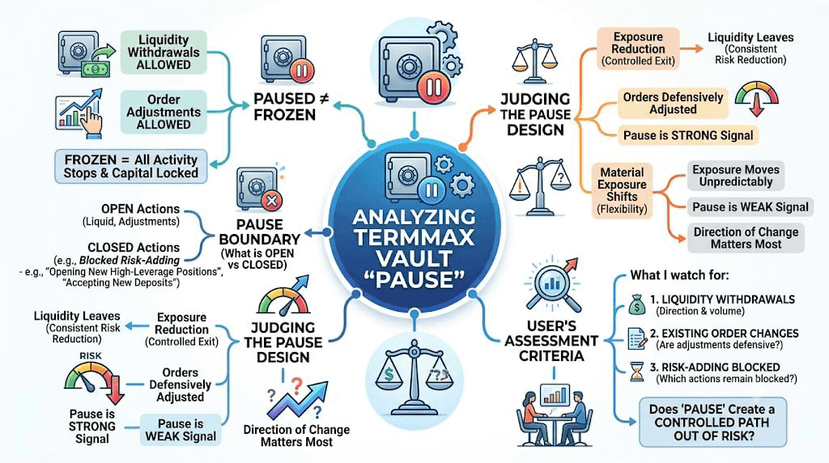
A paused TermMax vault is not the same thing as a frozen vault.
Even after a vault is paused, TermMax still allows liquidity to be withdrawn and existing orders in its fixed-rate lending markets to be adjusted. In other words, normal activity can stop without locking every part of the vault's balance sheet in place.
That makes the pause boundary more interesting than the label itself.
What I don't know yet is whether the actions TermMax leaves open during a pause consistently reduce exposure, or can also materially reshape it in ways that are not obviously defensive.
Keeping withdrawals open makes sense because capital may need a way out. Adjusting existing orders is more nuanced, since those changes can still affect where the vault's liquidity sits and how exposed it remains to the market.
The pause flag tells me the operating mode. The more useful evidence is what happens to exposure after that mode is activated.
If liquidity leaves and outstanding orders are adjusted in ways that consistently reduce risk, the pause is doing more than changing a label. If exposure can still shift materially in either direction, “paused” becomes a weaker signal than it first appears.
That is how I would judge TermMax's pause design: by the direction of the changes it still allows, not simply by whether the vault reports itself as paused.
The question is whether pause mode creates a controlled path out of risk, or still leaves enough flexibility for the vault's exposure to move in ways users may not expect.
I am watching liquidity withdrawals, changes to existing orders, and which risk-adding actions remain blocked during a pause.
@TermMax #TermMax
$PIEVERSE