
小恐龙说趋势
398 Posts
 LIVE
LIVE小恐龙说趋势
Report
Block User
6 年市场经验,公众号.比特柠檬,记录市场的真实逻辑,研究下一步会去哪
13 Following
2.0K+ Followers
1.8K+ Liked
Posts
All
Live
·
--
Banks plug a loophole—because in the future, you may only have a few minutes left
The Bank for International Settlements issued a new warning: AI is driving attack speeds to the limit.
Banks used to follow a monthly patching schedule, but it can no longer keep up.
Back then, when a vulnerability was found, you could take your time and wait for the fix.
Now, AI-driven attacks iterate by the minute.
Before the defenses are patched, new openings get exploited.
So the regulator’s advice is very direct: emergency fixes can be planned downtime.
It’s better to temporarily shut down than to leave the vulnerability exposed all day.
This also applies to crypto. When on-chain projects are hacked, it often happens in the few hours before the patch goes live.
Security is never something you can buy with money—it’s something you win by抢时间,抢先修复.
Do you think the future will be about who has better technology—or who can react faster? 🛡
Click the avatar to watch the live stream.
Every day, I’ll take you to follow security hot topics—not just what happened, but also the logic behind it and the opportunities 👉🦖
#安全 #AI
Banks plug a loophole—because in the future, you may only have a few minutes left
The Bank for International Settlements issued a new warning: AI is driving attack speeds to the limit.
Banks used to follow a monthly patching schedule, but it can no longer keep up.
Back then, when a vulnerability was found, you could take your time and wait for the fix.
Now, AI-driven attacks iterate by the minute.
Before the defenses are patched, new openings get exploited.
So the regulator’s advice is very direct: emergency fixes can be planned downtime.
It’s better to temporarily shut down than to leave the vulnerability exposed all day.
This also applies to crypto. When on-chain projects are hacked, it often happens in the few hours before the patch goes live.
Security is never something you can buy with money—it’s something you win by抢时间,抢先修复.
Do you think the future will be about who has better technology—or who can react faster? 🛡
Click the avatar to watch the live stream.
Every day, I’ll take you to follow security hot topics—not just what happened, but also the logic behind it and the opportunities 👉🦖
#安全 #AI
The Bank for International Settlements issued a new warning: AI is driving attack speeds to the limit.
Banks used to follow a monthly patching schedule, but it can no longer keep up.
Back then, when a vulnerability was found, you could take your time and wait for the fix.
Now, AI-driven attacks iterate by the minute.
Before the defenses are patched, new openings get exploited.
So the regulator’s advice is very direct: emergency fixes can be planned downtime.
It’s better to temporarily shut down than to leave the vulnerability exposed all day.
This also applies to crypto. When on-chain projects are hacked, it often happens in the few hours before the patch goes live.
Security is never something you can buy with money—it’s something you win by抢时间,抢先修复.
Do you think the future will be about who has better technology—or who can react faster? 🛡
Click the avatar to watch the live stream.
Every day, I’ll take you to follow security hot topics—not just what happened, but also the logic behind it and the opportunities 👉🦖
#安全 #AI
·
--
As soon as the inflation data came out, bulls got knocked down one after another
The newly released U.S. Producer Price Index was hotter than market expectations
Bitcoin promptly dropped below $77,000, once smashing to the lowest point of the past few days
In a single day across the whole market, about $562 million in liquidations occurred—leveraged long positions were cleared again
On the same day, U.S. long-term Treasury yields surged to the highest level in more than a decade
Money is running out—risk assets naturally get drained
Inflation hasn’t cooled, and bond yields are still high—this logic isn’t new at all
But every time it actually drops, there are still people who get stuck at the top
In times like this, you can especially see whose positions are borrowed
Leverage is a magnifier when prices rise—it’s also a magnifier when they fall
To put it simply, the market isn’t afraid of bad news—it’s afraid of unprepared bad news
Those who can truly hold up are often the ones who thought about this kind of drop in advance
For this pullback, do you think it’s just a shakeout or a trend reversal? 📉
Click the profile picture to watch the livestream
Every day, I’ll take you to follow Bitcoin hotspots—not just what news happens, but also help you understand the underlying logic and opportunities 👉🦖
#比特币 #宏观
As soon as the inflation data came out, bulls got knocked down one after another
The newly released U.S. Producer Price Index was hotter than market expectations
Bitcoin promptly dropped below $77,000, once smashing to the lowest point of the past few days
In a single day across the whole market, about $562 million in liquidations occurred—leveraged long positions were cleared again
On the same day, U.S. long-term Treasury yields surged to the highest level in more than a decade
Money is running out—risk assets naturally get drained
Inflation hasn’t cooled, and bond yields are still high—this logic isn’t new at all
But every time it actually drops, there are still people who get stuck at the top
In times like this, you can especially see whose positions are borrowed
Leverage is a magnifier when prices rise—it’s also a magnifier when they fall
To put it simply, the market isn’t afraid of bad news—it’s afraid of unprepared bad news
Those who can truly hold up are often the ones who thought about this kind of drop in advance
For this pullback, do you think it’s just a shakeout or a trend reversal? 📉
Click the profile picture to watch the livestream
Every day, I’ll take you to follow Bitcoin hotspots—not just what news happens, but also help you understand the underlying logic and opportunities 👉🦖
#比特币 #宏观
The newly released U.S. Producer Price Index was hotter than market expectations
Bitcoin promptly dropped below $77,000, once smashing to the lowest point of the past few days
In a single day across the whole market, about $562 million in liquidations occurred—leveraged long positions were cleared again
On the same day, U.S. long-term Treasury yields surged to the highest level in more than a decade
Money is running out—risk assets naturally get drained
Inflation hasn’t cooled, and bond yields are still high—this logic isn’t new at all
But every time it actually drops, there are still people who get stuck at the top
In times like this, you can especially see whose positions are borrowed
Leverage is a magnifier when prices rise—it’s also a magnifier when they fall
To put it simply, the market isn’t afraid of bad news—it’s afraid of unprepared bad news
Those who can truly hold up are often the ones who thought about this kind of drop in advance
For this pullback, do you think it’s just a shakeout or a trend reversal? 📉
Click the profile picture to watch the livestream
Every day, I’ll take you to follow Bitcoin hotspots—not just what news happens, but also help you understand the underlying logic and opportunities 👉🦖
#比特币 #宏观
31
·
--
UK House of Lords directly gave the Treasury a mandate
The UK House of Lords passed an amendment requiring the Treasury to come up with a digital asset strategy
covering everything including crypto assets, stablecoins, tokenized securities, and digital financial infrastructure—all of it must be included
What’s interesting is that this goes against the stance of the ruling party
It’s essentially forcing the government to turn this from a slogan into an assignment it must hand in
The voting result was also very decisive—yes votes immediately outnumbered the no votes
If this step goes through, other countries may very likely copy the playbook
European regulators have always been纠结 about whether to regulate or not; now the UK is moving for real
Once the rules are implemented, the industry can actually breathe a sigh of relief
The worst-case scenario has never been “there are rules”—it’s “rules that change every day”
For crypto, clear boundaries are, in themselves, a positive
At least everyone knows what can be done and what must not be touched
For long-term capital, this kind of certainty is more valuable than any slogan
Which do you think is more friendly to crypto: clear regulation or a complete laissez-faire approach? 🇬🇧
Click the profile picture to watch the livestream
Every day, take you to follow regulatory hotspots—more than just seeing what happens in the news, I’ll help you understand the logic and opportunities behind it 👉🦖
#监管 #stablecoin
UK House of Lords directly gave the Treasury a mandate
The UK House of Lords passed an amendment requiring the Treasury to come up with a digital asset strategy
covering everything including crypto assets, stablecoins, tokenized securities, and digital financial infrastructure—all of it must be included
What’s interesting is that this goes against the stance of the ruling party
It’s essentially forcing the government to turn this from a slogan into an assignment it must hand in
The voting result was also very decisive—yes votes immediately outnumbered the no votes
If this step goes through, other countries may very likely copy the playbook
European regulators have always been纠结 about whether to regulate or not; now the UK is moving for real
Once the rules are implemented, the industry can actually breathe a sigh of relief
The worst-case scenario has never been “there are rules”—it’s “rules that change every day”
For crypto, clear boundaries are, in themselves, a positive
At least everyone knows what can be done and what must not be touched
For long-term capital, this kind of certainty is more valuable than any slogan
Which do you think is more friendly to crypto: clear regulation or a complete laissez-faire approach? 🇬🇧
Click the profile picture to watch the livestream
Every day, take you to follow regulatory hotspots—more than just seeing what happens in the news, I’ll help you understand the logic and opportunities behind it 👉🦖
#监管 #stablecoin
The UK House of Lords passed an amendment requiring the Treasury to come up with a digital asset strategy
covering everything including crypto assets, stablecoins, tokenized securities, and digital financial infrastructure—all of it must be included
What’s interesting is that this goes against the stance of the ruling party
It’s essentially forcing the government to turn this from a slogan into an assignment it must hand in
The voting result was also very decisive—yes votes immediately outnumbered the no votes
If this step goes through, other countries may very likely copy the playbook
European regulators have always been纠结 about whether to regulate or not; now the UK is moving for real
Once the rules are implemented, the industry can actually breathe a sigh of relief
The worst-case scenario has never been “there are rules”—it’s “rules that change every day”
For crypto, clear boundaries are, in themselves, a positive
At least everyone knows what can be done and what must not be touched
For long-term capital, this kind of certainty is more valuable than any slogan
Which do you think is more friendly to crypto: clear regulation or a complete laissez-faire approach? 🇬🇧
Click the profile picture to watch the livestream
Every day, take you to follow regulatory hotspots—more than just seeing what happens in the news, I’ll help you understand the logic and opportunities behind it 👉🦖
#监管 #stablecoin
·
--
A Bitcoin fund, with 36% missing from its underwear
A Bitcoin fund’s on-paper endorsement disappeared into thin air—one third of it
For a full 74 days, not a single person noticed—until someone went to reconcile
Only then did they see the ledger had a gaping hole
This is the real everyday life in the on-chain world
The one that went wrong was Nomic, a protocol that specializes in cross-chain Bitcoin
For its external guarantees, behind each on-chain Bitcoin there is a real coin as backing
But that guarantee quietly crumbled by a corner
Bridges: one end tied to real coins, the other tied to on-chain credentials
Normally it looks calm and peaceful
But when something goes wrong, there isn’t even a sound
That’s what’s most frightening about it
The first to raise the alarm was another decentralized exchange, Osmosis
Old-timers always say cross-chain bridges are the most fragile piece of glass in the crypto world
Tens of billions in assets—held up by a line of code that hadn’t been tested cleanly
Do you still think cross-chain bridges are worth trusting? Or should you just stay put on the main chain 😅
Click the avatar to watch the live stream
Every day, I’ll take you to follow Bitcoin hotspots—understand not just what happened, but the logic and opportunities behind it 👉🦖
#比特币 #Cross-chain bridge
A Bitcoin fund, with 36% missing from its underwear
A Bitcoin fund’s on-paper endorsement disappeared into thin air—one third of it
For a full 74 days, not a single person noticed—until someone went to reconcile
Only then did they see the ledger had a gaping hole
This is the real everyday life in the on-chain world
The one that went wrong was Nomic, a protocol that specializes in cross-chain Bitcoin
For its external guarantees, behind each on-chain Bitcoin there is a real coin as backing
But that guarantee quietly crumbled by a corner
Bridges: one end tied to real coins, the other tied to on-chain credentials
Normally it looks calm and peaceful
But when something goes wrong, there isn’t even a sound
That’s what’s most frightening about it
The first to raise the alarm was another decentralized exchange, Osmosis
Old-timers always say cross-chain bridges are the most fragile piece of glass in the crypto world
Tens of billions in assets—held up by a line of code that hadn’t been tested cleanly
Do you still think cross-chain bridges are worth trusting? Or should you just stay put on the main chain 😅
Click the avatar to watch the live stream
Every day, I’ll take you to follow Bitcoin hotspots—understand not just what happened, but the logic and opportunities behind it 👉🦖
#比特币 #Cross-chain bridge
A Bitcoin fund’s on-paper endorsement disappeared into thin air—one third of it
For a full 74 days, not a single person noticed—until someone went to reconcile
Only then did they see the ledger had a gaping hole
This is the real everyday life in the on-chain world
The one that went wrong was Nomic, a protocol that specializes in cross-chain Bitcoin
For its external guarantees, behind each on-chain Bitcoin there is a real coin as backing
But that guarantee quietly crumbled by a corner
Bridges: one end tied to real coins, the other tied to on-chain credentials
Normally it looks calm and peaceful
But when something goes wrong, there isn’t even a sound
That’s what’s most frightening about it
The first to raise the alarm was another decentralized exchange, Osmosis
Old-timers always say cross-chain bridges are the most fragile piece of glass in the crypto world
Tens of billions in assets—held up by a line of code that hadn’t been tested cleanly
Do you still think cross-chain bridges are worth trusting? Or should you just stay put on the main chain 😅
Click the avatar to watch the live stream
Every day, I’ll take you to follow Bitcoin hotspots—understand not just what happened, but the logic and opportunities behind it 👉🦖
#比特币 #Cross-chain bridge
36
·
--
BIS fires shots at AI: the money being burned doesn’t seem right
BIS head Pablo Hernandez warns of an arms race in AI infrastructure
Powered by opaque debt, it could trigger systemic risk
He cites history: the railway bubble back then, and the internet bubble—both raised money by telling stories
When the bubble bursts, only then do you see who was swimming naked
It’s harsh, but worth listening to—AI concept stocks have gone absolutely wild this year
Power, data centers, chips—everything is expanding by taking on debt
For the crypto world, this has two sides: if an AI bubble truly bursts, risk assets could be bled together
But funds might also flow back into assets like Bitcoin
The real question isn’t whether AI is good or bad, but whether this money is propped up by profits or by debt
If an AI bubble bursts, where do you think the money will flow? 😅
Click the avatar to watch the live stream
Every day, I’ll guide you to track AI hotspots—not just what’s happening in the news, but also help you understand the underlying logic and opportunities 👉🦖
#AI #Bitcoin
BIS fires shots at AI: the money being burned doesn’t seem right
BIS head Pablo Hernandez warns of an arms race in AI infrastructure
Powered by opaque debt, it could trigger systemic risk
He cites history: the railway bubble back then, and the internet bubble—both raised money by telling stories
When the bubble bursts, only then do you see who was swimming naked
It’s harsh, but worth listening to—AI concept stocks have gone absolutely wild this year
Power, data centers, chips—everything is expanding by taking on debt
For the crypto world, this has two sides: if an AI bubble truly bursts, risk assets could be bled together
But funds might also flow back into assets like Bitcoin
The real question isn’t whether AI is good or bad, but whether this money is propped up by profits or by debt
If an AI bubble bursts, where do you think the money will flow? 😅
Click the avatar to watch the live stream
Every day, I’ll guide you to track AI hotspots—not just what’s happening in the news, but also help you understand the underlying logic and opportunities 👉🦖
#AI #Bitcoin
BIS head Pablo Hernandez warns of an arms race in AI infrastructure
Powered by opaque debt, it could trigger systemic risk
He cites history: the railway bubble back then, and the internet bubble—both raised money by telling stories
When the bubble bursts, only then do you see who was swimming naked
It’s harsh, but worth listening to—AI concept stocks have gone absolutely wild this year
Power, data centers, chips—everything is expanding by taking on debt
For the crypto world, this has two sides: if an AI bubble truly bursts, risk assets could be bled together
But funds might also flow back into assets like Bitcoin
The real question isn’t whether AI is good or bad, but whether this money is propped up by profits or by debt
If an AI bubble bursts, where do you think the money will flow? 😅
Click the avatar to watch the live stream
Every day, I’ll guide you to track AI hotspots—not just what’s happening in the news, but also help you understand the underlying logic and opportunities 👉🦖
#AI #Bitcoin
55
·
--
Former Bank of England veteran group joins to work on on-chain settlement
Jon Cunliffe, former Deputy Governor of the Bank of England, along with two former central bank officials
have joined the board of monitors of Fnality Europe
What does Fnality do? Simply put, it uses blockchain to settle in pounds sterling between banks
with the aim of moving central bank money onto the chain as well
This signal is interesting: people with a central-banking background
aren’t urging everyone to stay away from crypto—instead, they personally step in to build infrastructure
What does it mean? It means that within traditional finance,
on-chain settlement has already been treated as a legitimate engineering effort
—not some experimental project anymore
However, when central bank people join the board,
it also means it will be regulated more tightly
Openness and compliance have always been the two ends of the scale
If the central bank itself steps in, is that a positive signal or a tightening? 🤔
Click on the avatar to watch the live stream
Every day, I’ll take you to follow on-chain settlement hotspots—not just what happens in the news,
but also help you understand the logic and opportunities behind it 👉🦖
#链上结算 #central bank
Former Bank of England veteran group joins to work on on-chain settlement
Jon Cunliffe, former Deputy Governor of the Bank of England, along with two former central bank officials
have joined the board of monitors of Fnality Europe
What does Fnality do? Simply put, it uses blockchain to settle in pounds sterling between banks
with the aim of moving central bank money onto the chain as well
This signal is interesting: people with a central-banking background
aren’t urging everyone to stay away from crypto—instead, they personally step in to build infrastructure
What does it mean? It means that within traditional finance,
on-chain settlement has already been treated as a legitimate engineering effort
—not some experimental project anymore
However, when central bank people join the board,
it also means it will be regulated more tightly
Openness and compliance have always been the two ends of the scale
If the central bank itself steps in, is that a positive signal or a tightening? 🤔
Click on the avatar to watch the live stream
Every day, I’ll take you to follow on-chain settlement hotspots—not just what happens in the news,
but also help you understand the logic and opportunities behind it 👉🦖
#链上结算 #central bank
Jon Cunliffe, former Deputy Governor of the Bank of England, along with two former central bank officials
have joined the board of monitors of Fnality Europe
What does Fnality do? Simply put, it uses blockchain to settle in pounds sterling between banks
with the aim of moving central bank money onto the chain as well
This signal is interesting: people with a central-banking background
aren’t urging everyone to stay away from crypto—instead, they personally step in to build infrastructure
What does it mean? It means that within traditional finance,
on-chain settlement has already been treated as a legitimate engineering effort
—not some experimental project anymore
However, when central bank people join the board,
it also means it will be regulated more tightly
Openness and compliance have always been the two ends of the scale
If the central bank itself steps in, is that a positive signal or a tightening? 🤔
Click on the avatar to watch the live stream
Every day, I’ll take you to follow on-chain settlement hotspots—not just what happens in the news,
but also help you understand the logic and opportunities behind it 👉🦖
#链上结算 #central bank
5
·
--
Remittance Giant Moves In: Your USD Gets Used by Card
MoneyGram launches a Visa card backed by stablecoins
Users can hold USD and directly spend from their stablecoin balance
This company used to make a living on cross-border remittances—now it’s stuffing stablecoins into everyday payments
The logic is crystal clear: remittance fees are too expensive, while stablecoins are too cheap
The key shift is that stablecoins are starting to move from a speculative asset to money in your pocket
When you tap to pay, you don’t even know a blockchain is running in the background
That’s also the trend: the more invisible payments are, the faster they get adopted
Users only care whether they can swipe—it doesn’t matter which chain is behind it
But don’t ignore one thing: the card is Visa’s, and the coin is a stablecoin—if something goes wrong, who’s accountable?
Do you think a stablecoin card will replace traditional bank cards? 💳
Click the avatar to watch the livestream
Every day, I’ll take you to follow stablecoin hot topics—not just what happened in the news, but also to help you understand the underlying logic and opportunities 👉🦖
#稳定币 #支付
Remittance Giant Moves In: Your USD Gets Used by Card
MoneyGram launches a Visa card backed by stablecoins
Users can hold USD and directly spend from their stablecoin balance
This company used to make a living on cross-border remittances—now it’s stuffing stablecoins into everyday payments
The logic is crystal clear: remittance fees are too expensive, while stablecoins are too cheap
The key shift is that stablecoins are starting to move from a speculative asset to money in your pocket
When you tap to pay, you don’t even know a blockchain is running in the background
That’s also the trend: the more invisible payments are, the faster they get adopted
Users only care whether they can swipe—it doesn’t matter which chain is behind it
But don’t ignore one thing: the card is Visa’s, and the coin is a stablecoin—if something goes wrong, who’s accountable?
Do you think a stablecoin card will replace traditional bank cards? 💳
Click the avatar to watch the livestream
Every day, I’ll take you to follow stablecoin hot topics—not just what happened in the news, but also to help you understand the underlying logic and opportunities 👉🦖
#稳定币 #支付
MoneyGram launches a Visa card backed by stablecoins
Users can hold USD and directly spend from their stablecoin balance
This company used to make a living on cross-border remittances—now it’s stuffing stablecoins into everyday payments
The logic is crystal clear: remittance fees are too expensive, while stablecoins are too cheap
The key shift is that stablecoins are starting to move from a speculative asset to money in your pocket
When you tap to pay, you don’t even know a blockchain is running in the background
That’s also the trend: the more invisible payments are, the faster they get adopted
Users only care whether they can swipe—it doesn’t matter which chain is behind it
But don’t ignore one thing: the card is Visa’s, and the coin is a stablecoin—if something goes wrong, who’s accountable?
Do you think a stablecoin card will replace traditional bank cards? 💳
Click the avatar to watch the livestream
Every day, I’ll take you to follow stablecoin hot topics—not just what happened in the news, but also to help you understand the underlying logic and opportunities 👉🦖
#稳定币 #支付
6
·
--
Day issues 260,000 tokens—has this chain become a money-printing machine?
Solana sets a record for daily new token issuance, reaching 263,000.
Most of it comes from the meme platform Pump.fun.
What does 260k even mean? On average, three new coins are born every second—and the vast majority won’t last more than a day.
That’s the real truth of the meme ecosystem: supply is nearly infinite, but attention is limited. Everyone wants to grab the next breakout hit.
Some call this vitality; others say it’s a junkyard.
But the data doesn’t lie—demand is real. It’s just that most people end up catching the last baton.
The more lively the chain is, the more you need to figure out which link you’re in: are you the one setting the trap, or the one being trapped?
Will you go play the newly launched memecoin? 🔥
Click the avatar to watch the live stream.
Every day, I’ll guide you to follow meme trends—not just what’s happening, but to understand the underlying logic and opportunities 👉🦖
#Solana #meme
Day issues 260,000 tokens—has this chain become a money-printing machine?
Solana sets a record for daily new token issuance, reaching 263,000.
Most of it comes from the meme platform Pump.fun.
What does 260k even mean? On average, three new coins are born every second—and the vast majority won’t last more than a day.
That’s the real truth of the meme ecosystem: supply is nearly infinite, but attention is limited. Everyone wants to grab the next breakout hit.
Some call this vitality; others say it’s a junkyard.
But the data doesn’t lie—demand is real. It’s just that most people end up catching the last baton.
The more lively the chain is, the more you need to figure out which link you’re in: are you the one setting the trap, or the one being trapped?
Will you go play the newly launched memecoin? 🔥
Click the avatar to watch the live stream.
Every day, I’ll guide you to follow meme trends—not just what’s happening, but to understand the underlying logic and opportunities 👉🦖
#Solana #meme
Solana sets a record for daily new token issuance, reaching 263,000.
Most of it comes from the meme platform Pump.fun.
What does 260k even mean? On average, three new coins are born every second—and the vast majority won’t last more than a day.
That’s the real truth of the meme ecosystem: supply is nearly infinite, but attention is limited. Everyone wants to grab the next breakout hit.
Some call this vitality; others say it’s a junkyard.
But the data doesn’t lie—demand is real. It’s just that most people end up catching the last baton.
The more lively the chain is, the more you need to figure out which link you’re in: are you the one setting the trap, or the one being trapped?
Will you go play the newly launched memecoin? 🔥
Click the avatar to watch the live stream.
Every day, I’ll guide you to follow meme trends—not just what’s happening, but to understand the underlying logic and opportunities 👉🦖
#Solana #meme
57
·
--
The Nasdaq is bringing Europe along and going to the EU for limits
Nasdaq, Germany’s exchange, and a bunch of established institutions have jointly submitted a petition
demanding that the EU either remove the cap on the scale of tokenization pilots outright, or raise it significantly
The reason is very straightforward: the current limits are too low.
Some projects have already exceeded them long ago.
The rules are slower than reality by half a beat.
As for tokenization, Wall Street is now rushing to do it.
Even stock, bond, and fund businesses want to move onto the blockchain.
But the runway regulators have given them is simply too short.
What’s interesting is that this time it’s not the crypto crowd shouting—
it’s the traditional trading venues themselves stepping up.
It shows that the money really smells the opportunity.
But even if they expand the scope, between a pilot and full rollout there are still several doors to pass.
Institutions always get on the train first, while retail investors learn about it last.
Tokenized stocks—would you dare to buy them? 📈
Click the avatar to watch the live stream
Every day, I’ll take you to track tokenization hot topics—not just what’s happening in the news, but help you understand the logic and opportunities behind it 👉🦖
#代币化 #RWA
The Nasdaq is bringing Europe along and going to the EU for limits
Nasdaq, Germany’s exchange, and a bunch of established institutions have jointly submitted a petition
demanding that the EU either remove the cap on the scale of tokenization pilots outright, or raise it significantly
The reason is very straightforward: the current limits are too low.
Some projects have already exceeded them long ago.
The rules are slower than reality by half a beat.
As for tokenization, Wall Street is now rushing to do it.
Even stock, bond, and fund businesses want to move onto the blockchain.
But the runway regulators have given them is simply too short.
What’s interesting is that this time it’s not the crypto crowd shouting—
it’s the traditional trading venues themselves stepping up.
It shows that the money really smells the opportunity.
But even if they expand the scope, between a pilot and full rollout there are still several doors to pass.
Institutions always get on the train first, while retail investors learn about it last.
Tokenized stocks—would you dare to buy them? 📈
Click the avatar to watch the live stream
Every day, I’ll take you to track tokenization hot topics—not just what’s happening in the news, but help you understand the logic and opportunities behind it 👉🦖
#代币化 #RWA
Nasdaq, Germany’s exchange, and a bunch of established institutions have jointly submitted a petition
demanding that the EU either remove the cap on the scale of tokenization pilots outright, or raise it significantly
The reason is very straightforward: the current limits are too low.
Some projects have already exceeded them long ago.
The rules are slower than reality by half a beat.
As for tokenization, Wall Street is now rushing to do it.
Even stock, bond, and fund businesses want to move onto the blockchain.
But the runway regulators have given them is simply too short.
What’s interesting is that this time it’s not the crypto crowd shouting—
it’s the traditional trading venues themselves stepping up.
It shows that the money really smells the opportunity.
But even if they expand the scope, between a pilot and full rollout there are still several doors to pass.
Institutions always get on the train first, while retail investors learn about it last.
Tokenized stocks—would you dare to buy them? 📈
Click the avatar to watch the live stream
Every day, I’ll take you to track tokenization hot topics—not just what’s happening in the news, but help you understand the logic and opportunities behind it 👉🦖
#代币化 #RWA
6
·
--
Over a thousand small U.S. banks are moving in together to launch stablecoins
Coinbase has teamed up with the payments company Moov to provide stablecoin acquiring, settlement, and real-time funds capabilities for more than 1,000 community banks and credit unions
In plain terms: these small banks don’t need to build their own chain—once they connect via the interface, they can start accepting stablecoins, with funds arriving instantly
What’s interesting is that stablecoins are no longer just an exchange toy—they’re starting to work their way into traditional banks’ counters
That’s the real reason keeping old-school banks awake
Big banks are still in meetings, but small banks have already taken action
Because small banks fear being squeezed from both sides by big banks and fintech
But don’t get too excited yet—just because the infrastructure is in place doesn’t mean users will adopt it right away
Changing habits is the slowest part
Which kind of financial institution do you think will be the next to integrate stablecoins? 🏦
Click the avatar to watch the livestream
Every day, I’ll help you track stablecoin trends—not only what happened in the news, but also the logic and opportunities behind it 👉🦖
#稳定币 #金融科技
Over a thousand small U.S. banks are moving in together to launch stablecoins
Coinbase has teamed up with the payments company Moov to provide stablecoin acquiring, settlement, and real-time funds capabilities for more than 1,000 community banks and credit unions
In plain terms: these small banks don’t need to build their own chain—once they connect via the interface, they can start accepting stablecoins, with funds arriving instantly
What’s interesting is that stablecoins are no longer just an exchange toy—they’re starting to work their way into traditional banks’ counters
That’s the real reason keeping old-school banks awake
Big banks are still in meetings, but small banks have already taken action
Because small banks fear being squeezed from both sides by big banks and fintech
But don’t get too excited yet—just because the infrastructure is in place doesn’t mean users will adopt it right away
Changing habits is the slowest part
Which kind of financial institution do you think will be the next to integrate stablecoins? 🏦
Click the avatar to watch the livestream
Every day, I’ll help you track stablecoin trends—not only what happened in the news, but also the logic and opportunities behind it 👉🦖
#稳定币 #金融科技
Coinbase has teamed up with the payments company Moov to provide stablecoin acquiring, settlement, and real-time funds capabilities for more than 1,000 community banks and credit unions
In plain terms: these small banks don’t need to build their own chain—once they connect via the interface, they can start accepting stablecoins, with funds arriving instantly
What’s interesting is that stablecoins are no longer just an exchange toy—they’re starting to work their way into traditional banks’ counters
That’s the real reason keeping old-school banks awake
Big banks are still in meetings, but small banks have already taken action
Because small banks fear being squeezed from both sides by big banks and fintech
But don’t get too excited yet—just because the infrastructure is in place doesn’t mean users will adopt it right away
Changing habits is the slowest part
Which kind of financial institution do you think will be the next to integrate stablecoins? 🏦
Click the avatar to watch the livestream
Every day, I’ll help you track stablecoin trends—not only what happened in the news, but also the logic and opportunities behind it 👉🦖
#稳定币 #金融科技
5
·
--
The coin price is still falling—exchange bosses are calling the bottom first
Coinbase CEO Brian Armstrong appeared on Bloomberg today. Facing the camera, he said that the worst of this round has already passed.
The problem is, when he said that, Bitcoin was still struggling below 77,000.
In the past 24 hours, it’s down another 3.3%. The boss calls the bottom, and the price gets smashed down—this scene is all too familiar to veteran players.
Of course, he has his own stance. Exchanges rely on trading volume to make money. The more people believe the bottom is in, the easier the business is to run.
But in a bear market, CEOs who openly say things like this are actually rare. If they get it wrong, they’ll be slapped in the face.
What retail investors should really be watching isn’t who’s calling the bottom, but whether capital has actually returned. Talking costs nothing—real conviction shows up in real money.
Do you believe he’s right this time, or should we wait and see? 🤔
Click the avatar to watch the live stream.
Every day, I’ll take you through the Bitcoin headlines—more than just reporting what happened, I’ll help you understand the logic and opportunities behind it 👉🦖
#比特币 #BTC
The coin price is still falling—exchange bosses are calling the bottom first
Coinbase CEO Brian Armstrong appeared on Bloomberg today. Facing the camera, he said that the worst of this round has already passed.
The problem is, when he said that, Bitcoin was still struggling below 77,000.
In the past 24 hours, it’s down another 3.3%. The boss calls the bottom, and the price gets smashed down—this scene is all too familiar to veteran players.
Of course, he has his own stance. Exchanges rely on trading volume to make money. The more people believe the bottom is in, the easier the business is to run.
But in a bear market, CEOs who openly say things like this are actually rare. If they get it wrong, they’ll be slapped in the face.
What retail investors should really be watching isn’t who’s calling the bottom, but whether capital has actually returned. Talking costs nothing—real conviction shows up in real money.
Do you believe he’s right this time, or should we wait and see? 🤔
Click the avatar to watch the live stream.
Every day, I’ll take you through the Bitcoin headlines—more than just reporting what happened, I’ll help you understand the logic and opportunities behind it 👉🦖
#比特币 #BTC
Coinbase CEO Brian Armstrong appeared on Bloomberg today. Facing the camera, he said that the worst of this round has already passed.
The problem is, when he said that, Bitcoin was still struggling below 77,000.
In the past 24 hours, it’s down another 3.3%. The boss calls the bottom, and the price gets smashed down—this scene is all too familiar to veteran players.
Of course, he has his own stance. Exchanges rely on trading volume to make money. The more people believe the bottom is in, the easier the business is to run.
But in a bear market, CEOs who openly say things like this are actually rare. If they get it wrong, they’ll be slapped in the face.
What retail investors should really be watching isn’t who’s calling the bottom, but whether capital has actually returned. Talking costs nothing—real conviction shows up in real money.
Do you believe he’s right this time, or should we wait and see? 🤔
Click the avatar to watch the live stream.
Every day, I’ll take you through the Bitcoin headlines—more than just reporting what happened, I’ll help you understand the logic and opportunities behind it 👉🦖
#比特币 #BTC
28
·
--
Encrypted ATM coffin board Was picked up by someone for $620,000
An American small company snagged a $620,000 bargain in one go, swallowing up thousands of crypto ATMs
These machines originally belonged to the bankrupt platform Bitcoin Depot
At its peak, it had more than 9,200 ATMs across the US
Court documents show it sold a little over one-quarter this time
The total price was actually under $1 million
That works out to just a couple hundred dollars per machine—cheaper than a used iPhone
But the problem is: who would dare use them now?
Minnesota has just banned crypto ATMs
In one year, local residents lost millions of dollars to ATM-related fraud
After the regulator’s one-size-fits-all crackdown, no matter how new the machines are, they can only be stacked in a warehouse and gather dust
So this round isn’t really “buying the dip”—it’s scrap disposal
The game is who survives after the industry clears out
But cheap never equals worthwhile
If nobody wants it, that’s why it gets sold so cheaply
Do you think there’s still a chance for the crypto ATM industry to turn around? 🤔
Click the profile picture to watch the live stream
Every day, I’ll keep you updated on crypto hotspots—not just what happens in the news, but also help you understand the logic and opportunities behind it 👉🦖
#比特币 #Cryptocurrency
Encrypted ATM coffin board Was picked up by someone for $620,000
An American small company snagged a $620,000 bargain in one go, swallowing up thousands of crypto ATMs
These machines originally belonged to the bankrupt platform Bitcoin Depot
At its peak, it had more than 9,200 ATMs across the US
Court documents show it sold a little over one-quarter this time
The total price was actually under $1 million
That works out to just a couple hundred dollars per machine—cheaper than a used iPhone
But the problem is: who would dare use them now?
Minnesota has just banned crypto ATMs
In one year, local residents lost millions of dollars to ATM-related fraud
After the regulator’s one-size-fits-all crackdown, no matter how new the machines are, they can only be stacked in a warehouse and gather dust
So this round isn’t really “buying the dip”—it’s scrap disposal
The game is who survives after the industry clears out
But cheap never equals worthwhile
If nobody wants it, that’s why it gets sold so cheaply
Do you think there’s still a chance for the crypto ATM industry to turn around? 🤔
Click the profile picture to watch the live stream
Every day, I’ll keep you updated on crypto hotspots—not just what happens in the news, but also help you understand the logic and opportunities behind it 👉🦖
#比特币 #Cryptocurrency
An American small company snagged a $620,000 bargain in one go, swallowing up thousands of crypto ATMs
These machines originally belonged to the bankrupt platform Bitcoin Depot
At its peak, it had more than 9,200 ATMs across the US
Court documents show it sold a little over one-quarter this time
The total price was actually under $1 million
That works out to just a couple hundred dollars per machine—cheaper than a used iPhone
But the problem is: who would dare use them now?
Minnesota has just banned crypto ATMs
In one year, local residents lost millions of dollars to ATM-related fraud
After the regulator’s one-size-fits-all crackdown, no matter how new the machines are, they can only be stacked in a warehouse and gather dust
So this round isn’t really “buying the dip”—it’s scrap disposal
The game is who survives after the industry clears out
But cheap never equals worthwhile
If nobody wants it, that’s why it gets sold so cheaply
Do you think there’s still a chance for the crypto ATM industry to turn around? 🤔
Click the profile picture to watch the live stream
Every day, I’ll keep you updated on crypto hotspots—not just what happens in the news, but also help you understand the logic and opportunities behind it 👉🦖
#比特币 #Cryptocurrency
103
·
--
The EU wants to put a cap on tokenized securities, and Wall Street just flipped the table 🏛️
[👉 加入小恐龙粉丝群](https://app.binance.com/uni-qr/DXaccF5q)
Adan, the Crypto Innovation Council, the European Ethereum Research Institute, along with a group of institutions including the Stuttgart Exchange, jointly wrote to the EU Council and Parliament.
They’re being very direct: either scrap the cap entirely, or at least mention €1.5 trillion—converted to USD is $1.74 trillion.
So what cap does the European Commission propose right now? €100 billion.
Translated: on one hand they want €1.5 trillion, but on the other they’re only giving €100 billion—there’s a 15x gap in the middle.
More importantly, the EU’s current DLT pilot still has a “real” cap of only €6 billion.
Moving from €6 billion to €100 billion sounds big, but the industry says it’s nowhere near even a fraction of Europe’s existing projects.
The letter is very explicit: some European projects are already at scales of €350 billion—more than three times the proposed cap.
What does that mean? It’s like a highway with a speed limit of 40. Someone proposes raising it to 120—and everyone says, “Our cars already run at 400. You’re still arguing about the speed-limit sign.”
And here’s a key detail: the cap isn’t based on trading volume—it’s based on the market value of securities listed on the platform.
That means: the more valuable what a platform lists, the faster it burns through its quota, even if there are only a few trades in a month.
The industry opposes giving higher quota limits to traditional central securities depositories, yet is pushing new blockchain market operators down instead. Same “game,” different rules: incumbent institutions get quotas multiplied, while new players can only move in small steps. This isn’t a pilot—it’s protection.
My take: this joint letter isn’t really about getting money—it’s about grabbing standards.
Europe wants to get a foothold in this tokenization wave, but the quota cap is too tight. Projects will relocate to jurisdictions with looser regulation to issue.
For ordinary players, there may not be an immediate price impact in the short term. But once the rules loosen, the pace of new tokenized securities on-chain—and liquidity—will likely accelerate.
What really matters is whether the EU will accept the figure of €1.5 trillion.
Every day, I’ll bring you updates on crypto regulatory hot spots—not just what happens in the news, but also the logic and opportunities behind it 👀🚀
#Ethereum
The EU wants to put a cap on tokenized securities, and Wall Street just flipped the table 🏛️
👉 加入小恐龙粉丝群
Adan, the Crypto Innovation Council, the European Ethereum Research Institute, along with a group of institutions including the Stuttgart Exchange, jointly wrote to the EU Council and Parliament.
They’re being very direct: either scrap the cap entirely, or at least mention €1.5 trillion—converted to USD is $1.74 trillion.
So what cap does the European Commission propose right now? €100 billion.
Translated: on one hand they want €1.5 trillion, but on the other they’re only giving €100 billion—there’s a 15x gap in the middle.
More importantly, the EU’s current DLT pilot still has a “real” cap of only €6 billion.
Moving from €6 billion to €100 billion sounds big, but the industry says it’s nowhere near even a fraction of Europe’s existing projects.
The letter is very explicit: some European projects are already at scales of €350 billion—more than three times the proposed cap.
What does that mean? It’s like a highway with a speed limit of 40. Someone proposes raising it to 120—and everyone says, “Our cars already run at 400. You’re still arguing about the speed-limit sign.”
And here’s a key detail: the cap isn’t based on trading volume—it’s based on the market value of securities listed on the platform.
That means: the more valuable what a platform lists, the faster it burns through its quota, even if there are only a few trades in a month.
The industry opposes giving higher quota limits to traditional central securities depositories, yet is pushing new blockchain market operators down instead. Same “game,” different rules: incumbent institutions get quotas multiplied, while new players can only move in small steps. This isn’t a pilot—it’s protection.
My take: this joint letter isn’t really about getting money—it’s about grabbing standards.
Europe wants to get a foothold in this tokenization wave, but the quota cap is too tight. Projects will relocate to jurisdictions with looser regulation to issue.
For ordinary players, there may not be an immediate price impact in the short term. But once the rules loosen, the pace of new tokenized securities on-chain—and liquidity—will likely accelerate.
What really matters is whether the EU will accept the figure of €1.5 trillion.
Every day, I’ll bring you updates on crypto regulatory hot spots—not just what happens in the news, but also the logic and opportunities behind it 👀🚀
#Ethereum
👉 加入小恐龙粉丝群
Adan, the Crypto Innovation Council, the European Ethereum Research Institute, along with a group of institutions including the Stuttgart Exchange, jointly wrote to the EU Council and Parliament.
They’re being very direct: either scrap the cap entirely, or at least mention €1.5 trillion—converted to USD is $1.74 trillion.
So what cap does the European Commission propose right now? €100 billion.
Translated: on one hand they want €1.5 trillion, but on the other they’re only giving €100 billion—there’s a 15x gap in the middle.
More importantly, the EU’s current DLT pilot still has a “real” cap of only €6 billion.
Moving from €6 billion to €100 billion sounds big, but the industry says it’s nowhere near even a fraction of Europe’s existing projects.
The letter is very explicit: some European projects are already at scales of €350 billion—more than three times the proposed cap.
What does that mean? It’s like a highway with a speed limit of 40. Someone proposes raising it to 120—and everyone says, “Our cars already run at 400. You’re still arguing about the speed-limit sign.”
And here’s a key detail: the cap isn’t based on trading volume—it’s based on the market value of securities listed on the platform.
That means: the more valuable what a platform lists, the faster it burns through its quota, even if there are only a few trades in a month.
The industry opposes giving higher quota limits to traditional central securities depositories, yet is pushing new blockchain market operators down instead. Same “game,” different rules: incumbent institutions get quotas multiplied, while new players can only move in small steps. This isn’t a pilot—it’s protection.
My take: this joint letter isn’t really about getting money—it’s about grabbing standards.
Europe wants to get a foothold in this tokenization wave, but the quota cap is too tight. Projects will relocate to jurisdictions with looser regulation to issue.
For ordinary players, there may not be an immediate price impact in the short term. But once the rules loosen, the pace of new tokenized securities on-chain—and liquidity—will likely accelerate.
What really matters is whether the EU will accept the figure of €1.5 trillion.
Every day, I’ll bring you updates on crypto regulatory hot spots—not just what happens in the news, but also the logic and opportunities behind it 👀🚀
#Ethereum

82
·
--
The central bank of the central banks pours cold water on AI—this time it’s an icy splash 🧊
[👉 加入小恐龙粉丝群](https://app.binance.com/uni-qr/DXaccF5q)
BIS (Bank for International Settlements) General Manager Pablo Hernandez de Cos spoke up, saying that this round of AI capex arms race rests on opaque debt beneath the surface.
He even compares this wave to the historical railway bubble and the internet bubble around the early 2000s.
Plainly put: around the world, many of the AI data centers, servers, and chips are not built with money that was earned. They’re built on borrowed money.
Borrowing itself isn’t shameful—the trouble is how the borrowing is structured: it’s winding and indirect, not very transparent. Who is propping up whom? From the outside, you can’t see clearly.
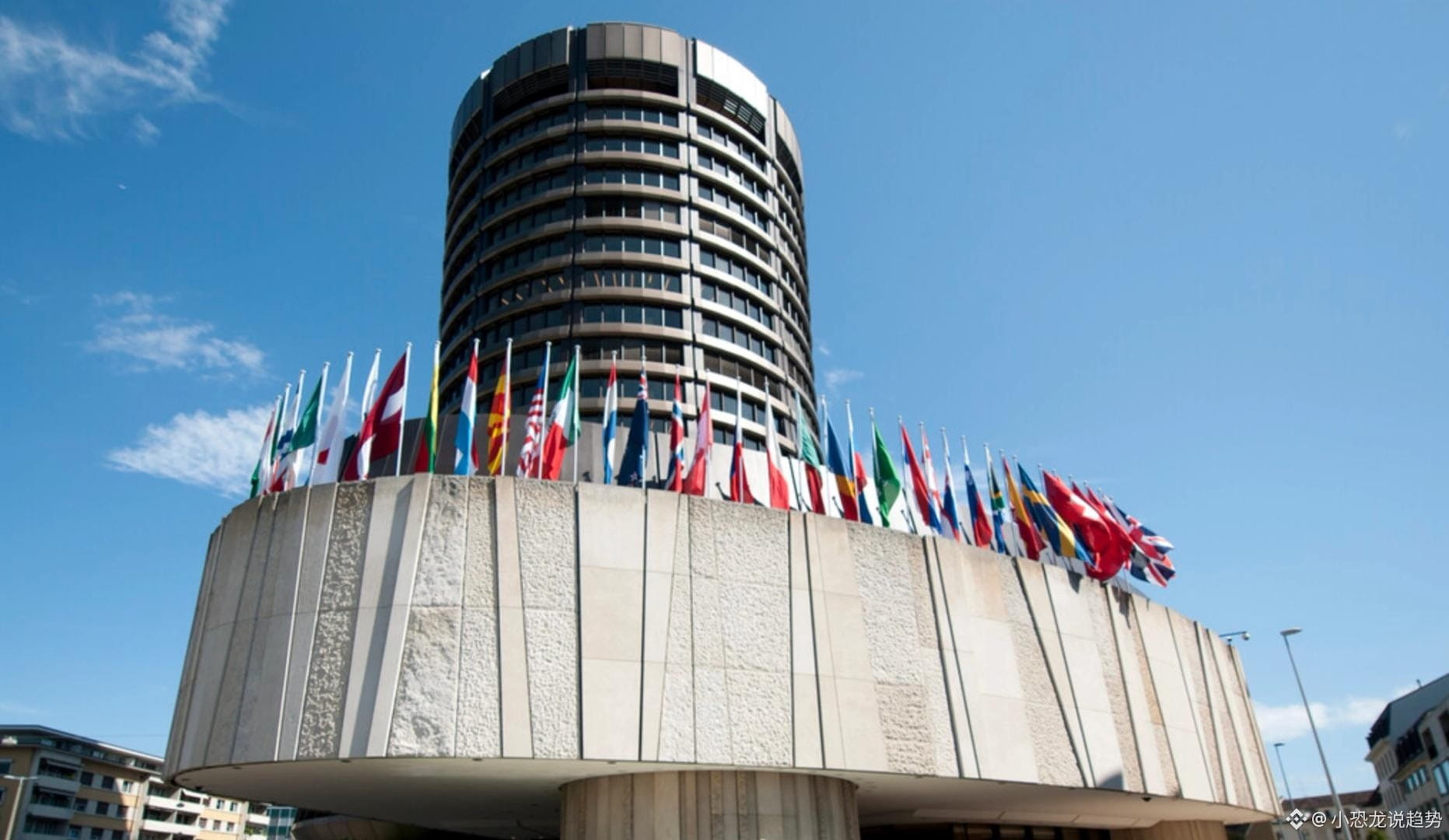
The BIS is essentially the “central bank of central banks.” Its headquarters are in Basel. When it speaks, it usually isn’t about discussing retail investors’ sentiment.
Back then, the logic of building railways was very similar. Demand was real, and the story was real. But too much borrowing was used to build the railways—laid out faster than passenger traffic.
In the end, trains ran no less. What accumulated instead was a stack of IOUs. The same happened in the internet cycle: the technology remained, but a whole lot of companies died.
The difference this time is that leverage is hidden in off-balance-sheet structures and private credit, not as plainly displayed as in those days.
For crypto players, this isn’t far off.
The AI narrative and crypto prices have long been tied together. Compute, concept coins, even the shift from mining farms to AI data centers—these all hang from the same rope.
Once credit conditions start tightening, the first to get hit will always be the assets with the most elasticity. Crypto is usually among the front of the line.
My view: you don’t even need to look at the K-line—start with the bond market. If long-end yields keep rising, that’s basically the thermometer for the pressure building under this round of AI leverage.
If you hold AI-concept positions, what you should watch now isn’t emotion, but financing costs. The moment the cost of borrowing changes, the story has to be told again.
Every day, I’ll bring you to follow AI-bubble hotspot developments—not just what’s happening in the news, but more importantly, help you understand the logic and the opportunities behind it 👀🚀
#清算 #ai
The central bank of the central banks pours cold water on AI—this time it’s an icy splash 🧊
👉 加入小恐龙粉丝群
BIS (Bank for International Settlements) General Manager Pablo Hernandez de Cos spoke up, saying that this round of AI capex arms race rests on opaque debt beneath the surface.
He even compares this wave to the historical railway bubble and the internet bubble around the early 2000s.
Plainly put: around the world, many of the AI data centers, servers, and chips are not built with money that was earned. They’re built on borrowed money.
Borrowing itself isn’t shameful—the trouble is how the borrowing is structured: it’s winding and indirect, not very transparent. Who is propping up whom? From the outside, you can’t see clearly.
The BIS is essentially the “central bank of central banks.” Its headquarters are in Basel. When it speaks, it usually isn’t about discussing retail investors’ sentiment.
Back then, the logic of building railways was very similar. Demand was real, and the story was real. But too much borrowing was used to build the railways—laid out faster than passenger traffic.
In the end, trains ran no less. What accumulated instead was a stack of IOUs. The same happened in the internet cycle: the technology remained, but a whole lot of companies died.
The difference this time is that leverage is hidden in off-balance-sheet structures and private credit, not as plainly displayed as in those days.
For crypto players, this isn’t far off.
The AI narrative and crypto prices have long been tied together. Compute, concept coins, even the shift from mining farms to AI data centers—these all hang from the same rope.
Once credit conditions start tightening, the first to get hit will always be the assets with the most elasticity. Crypto is usually among the front of the line.
My view: you don’t even need to look at the K-line—start with the bond market. If long-end yields keep rising, that’s basically the thermometer for the pressure building under this round of AI leverage.
If you hold AI-concept positions, what you should watch now isn’t emotion, but financing costs. The moment the cost of borrowing changes, the story has to be told again.
Every day, I’ll bring you to follow AI-bubble hotspot developments—not just what’s happening in the news, but more importantly, help you understand the logic and the opportunities behind it 👀🚀
#清算 #ai
👉 加入小恐龙粉丝群
BIS (Bank for International Settlements) General Manager Pablo Hernandez de Cos spoke up, saying that this round of AI capex arms race rests on opaque debt beneath the surface.
He even compares this wave to the historical railway bubble and the internet bubble around the early 2000s.
Plainly put: around the world, many of the AI data centers, servers, and chips are not built with money that was earned. They’re built on borrowed money.
Borrowing itself isn’t shameful—the trouble is how the borrowing is structured: it’s winding and indirect, not very transparent. Who is propping up whom? From the outside, you can’t see clearly.
The BIS is essentially the “central bank of central banks.” Its headquarters are in Basel. When it speaks, it usually isn’t about discussing retail investors’ sentiment.
Back then, the logic of building railways was very similar. Demand was real, and the story was real. But too much borrowing was used to build the railways—laid out faster than passenger traffic.
In the end, trains ran no less. What accumulated instead was a stack of IOUs. The same happened in the internet cycle: the technology remained, but a whole lot of companies died.
The difference this time is that leverage is hidden in off-balance-sheet structures and private credit, not as plainly displayed as in those days.
For crypto players, this isn’t far off.
The AI narrative and crypto prices have long been tied together. Compute, concept coins, even the shift from mining farms to AI data centers—these all hang from the same rope.
Once credit conditions start tightening, the first to get hit will always be the assets with the most elasticity. Crypto is usually among the front of the line.
My view: you don’t even need to look at the K-line—start with the bond market. If long-end yields keep rising, that’s basically the thermometer for the pressure building under this round of AI leverage.
If you hold AI-concept positions, what you should watch now isn’t emotion, but financing costs. The moment the cost of borrowing changes, the story has to be told again.
Every day, I’ll bring you to follow AI-bubble hotspot developments—not just what’s happening in the news, but more importantly, help you understand the logic and the opportunities behind it 👀🚀
#清算 #ai
4
·
--
The progress bar of quantum computers is being pushed up again by its own people ⚛️
[👉 加入小恐龙粉丝群](https://app.binance.com/uni-qr/DXaccF5q)
A paper meant to be seen by CoinDesk shows that humans and AI agents are teaming up to push forward the result from Google last March by another step.
And they didn’t just push some side detail—they pushed the most core part of computation in Shor’s algorithm. The new estimate cuts in half the quantum resources needed to break Bitcoin and Ethereum.
So what is Shor’s algorithm? You can think of it as a universal key custom-made for a specific kind of lock—the elliptic-curve signatures.
Bitcoin and Ethereum transfers require signatures using exactly this mathematics. Once a signature is forged, your coins on-chain belong to someone else.
This change isn’t in the lock—it’s in the cost of building the key. Half is gone.
A life example: a locksmith originally quotes that he needs to haul 3,000 jin (about 1,500 kg) of equipment to pry open your door.
Now he changes the quote to 1,500 jin. The door isn’t damaged, the lock isn’t damaged—but the toolbox is a full half lighter.
For the people doing the work, the barrier being lowered is often more worth watching than the outcome itself.
Look at it rationally: tomorrow won’t collapse. Bitcoin’s cap of 21 million coins hasn’t changed, and the chain won’t stop.
What changes is the timeline. On one side, quantum hardware keeps moving forward year by year; on the other, the progress bar for migrating to post-quantum signatures moves more slowly.
The ones truly benefiting from the upside are actually the teams that prepared early—hiding their address public keys ahead of time and rolling out post-quantum signature schemes early.
My take: every time this kind of news comes out, people will call “wolf is coming” again.
But this time the signal is different—the attack cost is being re-evaluated.
Ordinary players don’t need to change wallets right now, but you should know: if your coins are on old addresses whose public keys have been exposed, your risk level is inherently one tier higher than with cold-storage addresses.
Every day I’ll keep you updated on crypto tech hotspots—not just what happened in the news, but also the logic and opportunities behind it 👀🚀
#比特币 #Ethereum
The progress bar of quantum computers is being pushed up again by its own people ⚛️
👉 加入小恐龙粉丝群
A paper meant to be seen by CoinDesk shows that humans and AI agents are teaming up to push forward the result from Google last March by another step.
And they didn’t just push some side detail—they pushed the most core part of computation in Shor’s algorithm. The new estimate cuts in half the quantum resources needed to break Bitcoin and Ethereum.
So what is Shor’s algorithm? You can think of it as a universal key custom-made for a specific kind of lock—the elliptic-curve signatures.
Bitcoin and Ethereum transfers require signatures using exactly this mathematics. Once a signature is forged, your coins on-chain belong to someone else.
This change isn’t in the lock—it’s in the cost of building the key. Half is gone.
A life example: a locksmith originally quotes that he needs to haul 3,000 jin (about 1,500 kg) of equipment to pry open your door.
Now he changes the quote to 1,500 jin. The door isn’t damaged, the lock isn’t damaged—but the toolbox is a full half lighter.
For the people doing the work, the barrier being lowered is often more worth watching than the outcome itself.
Look at it rationally: tomorrow won’t collapse. Bitcoin’s cap of 21 million coins hasn’t changed, and the chain won’t stop.
What changes is the timeline. On one side, quantum hardware keeps moving forward year by year; on the other, the progress bar for migrating to post-quantum signatures moves more slowly.
The ones truly benefiting from the upside are actually the teams that prepared early—hiding their address public keys ahead of time and rolling out post-quantum signature schemes early.
My take: every time this kind of news comes out, people will call “wolf is coming” again.
But this time the signal is different—the attack cost is being re-evaluated.
Ordinary players don’t need to change wallets right now, but you should know: if your coins are on old addresses whose public keys have been exposed, your risk level is inherently one tier higher than with cold-storage addresses.
Every day I’ll keep you updated on crypto tech hotspots—not just what happened in the news, but also the logic and opportunities behind it 👀🚀
#比特币 #Ethereum
👉 加入小恐龙粉丝群
A paper meant to be seen by CoinDesk shows that humans and AI agents are teaming up to push forward the result from Google last March by another step.
And they didn’t just push some side detail—they pushed the most core part of computation in Shor’s algorithm. The new estimate cuts in half the quantum resources needed to break Bitcoin and Ethereum.
So what is Shor’s algorithm? You can think of it as a universal key custom-made for a specific kind of lock—the elliptic-curve signatures.
Bitcoin and Ethereum transfers require signatures using exactly this mathematics. Once a signature is forged, your coins on-chain belong to someone else.
This change isn’t in the lock—it’s in the cost of building the key. Half is gone.
A life example: a locksmith originally quotes that he needs to haul 3,000 jin (about 1,500 kg) of equipment to pry open your door.
Now he changes the quote to 1,500 jin. The door isn’t damaged, the lock isn’t damaged—but the toolbox is a full half lighter.
For the people doing the work, the barrier being lowered is often more worth watching than the outcome itself.
Look at it rationally: tomorrow won’t collapse. Bitcoin’s cap of 21 million coins hasn’t changed, and the chain won’t stop.
What changes is the timeline. On one side, quantum hardware keeps moving forward year by year; on the other, the progress bar for migrating to post-quantum signatures moves more slowly.
The ones truly benefiting from the upside are actually the teams that prepared early—hiding their address public keys ahead of time and rolling out post-quantum signature schemes early.
My take: every time this kind of news comes out, people will call “wolf is coming” again.
But this time the signal is different—the attack cost is being re-evaluated.
Ordinary players don’t need to change wallets right now, but you should know: if your coins are on old addresses whose public keys have been exposed, your risk level is inherently one tier higher than with cold-storage addresses.
Every day I’ll keep you updated on crypto tech hotspots—not just what happened in the news, but also the logic and opportunities behind it 👀🚀
#比特币 #Ethereum
244
·
--
Solana minted 260,000 new coins in a single day, setting a record 🧨
[👉 加入小恐龙粉丝群](https://app.binance.com/uni-qr/DXaccF5q)
Yesterday, Solana pulled off something pretty wild: it minted over 263,000 tokens in one day
It directly smashed a historical high
During the previous meme craze peak, a single day saw only around 40–50 thousand
This time it’s up more than fivefold
Of these 260,000, 40,000 came out of token-launch platforms
Pump.fun alone contributed 34,000
So-called “token-launch platforms” mean fully automating the whole process of creating a token
Click a few times, name it, upload an image—then a coin goes live, and it even comes with liquidity and exposure
In plain terms, launching a coin now is faster than creating an account
The platforms make the money even faster
Over the past 24 hours, Pump.fun collected $1.8 million in fees, ranking #1 across the Solana network for protocol revenue
In Q1 this year alone, it captured $124 million of Solana’s total $342 million in network revenue
That’s more than one-third
Last Friday, its daily income was so close it nearly got overtaken by a trading app called Fomo
That app blends coin-trading with social information feeds—young people are especially into it
But more tokens minted doesn’t automatically mean better outcomes
Back at the end of last year’s meme wave, there were 40–50 thousand coins in a day—most didn’t survive
Now 260,000 a day makes the density even more brutal
So don’t let the words “new all-time high” blow your mind
The people who truly collect stable rent were never the token creators
It’s the platforms that charge the “factory-opening” fee and then take a cut from every trade
The coin-makers come and go in waves, but the rent-collecting seat never changes
Every day, we’ll bring you the Solana hot topics—more than just seeing what happened in the news, we’ll help you understand the logic and opportunities behind it 👀🚀
#solana #meme
Solana minted 260,000 new coins in a single day, setting a record 🧨
👉 加入小恐龙粉丝群
Yesterday, Solana pulled off something pretty wild: it minted over 263,000 tokens in one day
It directly smashed a historical high
During the previous meme craze peak, a single day saw only around 40–50 thousand
This time it’s up more than fivefold
Of these 260,000, 40,000 came out of token-launch platforms
Pump.fun alone contributed 34,000
So-called “token-launch platforms” mean fully automating the whole process of creating a token
Click a few times, name it, upload an image—then a coin goes live, and it even comes with liquidity and exposure
In plain terms, launching a coin now is faster than creating an account
The platforms make the money even faster
Over the past 24 hours, Pump.fun collected $1.8 million in fees, ranking #1 across the Solana network for protocol revenue
In Q1 this year alone, it captured $124 million of Solana’s total $342 million in network revenue
That’s more than one-third
Last Friday, its daily income was so close it nearly got overtaken by a trading app called Fomo
That app blends coin-trading with social information feeds—young people are especially into it
But more tokens minted doesn’t automatically mean better outcomes
Back at the end of last year’s meme wave, there were 40–50 thousand coins in a day—most didn’t survive
Now 260,000 a day makes the density even more brutal
So don’t let the words “new all-time high” blow your mind
The people who truly collect stable rent were never the token creators
It’s the platforms that charge the “factory-opening” fee and then take a cut from every trade
The coin-makers come and go in waves, but the rent-collecting seat never changes
Every day, we’ll bring you the Solana hot topics—more than just seeing what happened in the news, we’ll help you understand the logic and opportunities behind it 👀🚀
#solana #meme
👉 加入小恐龙粉丝群
Yesterday, Solana pulled off something pretty wild: it minted over 263,000 tokens in one day
It directly smashed a historical high
During the previous meme craze peak, a single day saw only around 40–50 thousand
This time it’s up more than fivefold
Of these 260,000, 40,000 came out of token-launch platforms
Pump.fun alone contributed 34,000
So-called “token-launch platforms” mean fully automating the whole process of creating a token
Click a few times, name it, upload an image—then a coin goes live, and it even comes with liquidity and exposure
In plain terms, launching a coin now is faster than creating an account
The platforms make the money even faster
Over the past 24 hours, Pump.fun collected $1.8 million in fees, ranking #1 across the Solana network for protocol revenue
In Q1 this year alone, it captured $124 million of Solana’s total $342 million in network revenue
That’s more than one-third
Last Friday, its daily income was so close it nearly got overtaken by a trading app called Fomo
That app blends coin-trading with social information feeds—young people are especially into it
But more tokens minted doesn’t automatically mean better outcomes
Back at the end of last year’s meme wave, there were 40–50 thousand coins in a day—most didn’t survive
Now 260,000 a day makes the density even more brutal
So don’t let the words “new all-time high” blow your mind
The people who truly collect stable rent were never the token creators
It’s the platforms that charge the “factory-opening” fee and then take a cut from every trade
The coin-makers come and go in waves, but the rent-collecting seat never changes
Every day, we’ll bring you the Solana hot topics—more than just seeing what happened in the news, we’ll help you understand the logic and opportunities behind it 👀🚀
#solana #meme

82
·
--
The big whales suddenly stopped selling—Bitcoin’s sell pressure dropped to a rare low 📊
On-chain data has just been updated: Bitcoin’s seller risk ratio
has fallen from 16 in September all the way down to 7—nearly the lowest level in history.
[👉 加入小恐龙粉丝群](https://app.binance.com/uni-qr/DXaccF5q)
What is this indicator for?
It adds up all realized profits and losses on-chain, then divides by the real market value.
The lower the number, the more stable the coins are—farther away from panic selling.
The key is the context.
Bitcoin rose by 25% in August and is still holding around $78,000.
According to the old script, after a move like that, people would have cashed out and fled by now.
But this time, there’s been almost no on-chain upheaval—sell orders are scarce.
The share of profits that long-term holders receive has also dropped from 88% to 47%.
Put simply, the old players aren’t in a rush to sell, and the floating supply has mostly rotated and changed hands.
My take:
Sell pressure exhaustion is a prerequisite for a breakout—but it’s not the starting gun.
If you want to judge the direction, you still need to watch the inflows and outflows of spot ETFs, and whether new money is actually entering the market.
Withholding is a good sign, but relying on it alone can’t sustain an entire market cycle.
Don’t treat on-chain signals as scripture—it’s just one piece of the puzzle.
Understand the logic first, then talk about action.
Every day I’ll bring you the latest Bitcoin hotspots—more than just reporting what happened in the news, I’ll help you see the logic and opportunities behind it 👀🚀
#Bitcoin #OnChainData #Glassnode
The big whales suddenly stopped selling—Bitcoin’s sell pressure dropped to a rare low 📊
On-chain data has just been updated: Bitcoin’s seller risk ratio
has fallen from 16 in September all the way down to 7—nearly the lowest level in history.
👉 加入小恐龙粉丝群
What is this indicator for?
It adds up all realized profits and losses on-chain, then divides by the real market value.
The lower the number, the more stable the coins are—farther away from panic selling.
The key is the context.
Bitcoin rose by 25% in August and is still holding around $78,000.
According to the old script, after a move like that, people would have cashed out and fled by now.
But this time, there’s been almost no on-chain upheaval—sell orders are scarce.
The share of profits that long-term holders receive has also dropped from 88% to 47%.
Put simply, the old players aren’t in a rush to sell, and the floating supply has mostly rotated and changed hands.
My take:
Sell pressure exhaustion is a prerequisite for a breakout—but it’s not the starting gun.
If you want to judge the direction, you still need to watch the inflows and outflows of spot ETFs, and whether new money is actually entering the market.
Withholding is a good sign, but relying on it alone can’t sustain an entire market cycle.
Don’t treat on-chain signals as scripture—it’s just one piece of the puzzle.
Understand the logic first, then talk about action.
Every day I’ll bring you the latest Bitcoin hotspots—more than just reporting what happened in the news, I’ll help you see the logic and opportunities behind it 👀🚀
#Bitcoin #OnChainData #Glassnode
On-chain data has just been updated: Bitcoin’s seller risk ratio
has fallen from 16 in September all the way down to 7—nearly the lowest level in history.
👉 加入小恐龙粉丝群
What is this indicator for?
It adds up all realized profits and losses on-chain, then divides by the real market value.
The lower the number, the more stable the coins are—farther away from panic selling.
The key is the context.
Bitcoin rose by 25% in August and is still holding around $78,000.
According to the old script, after a move like that, people would have cashed out and fled by now.
But this time, there’s been almost no on-chain upheaval—sell orders are scarce.
The share of profits that long-term holders receive has also dropped from 88% to 47%.
Put simply, the old players aren’t in a rush to sell, and the floating supply has mostly rotated and changed hands.
My take:
Sell pressure exhaustion is a prerequisite for a breakout—but it’s not the starting gun.
If you want to judge the direction, you still need to watch the inflows and outflows of spot ETFs, and whether new money is actually entering the market.
Withholding is a good sign, but relying on it alone can’t sustain an entire market cycle.
Don’t treat on-chain signals as scripture—it’s just one piece of the puzzle.
Understand the logic first, then talk about action.
Every day I’ll bring you the latest Bitcoin hotspots—more than just reporting what happened in the news, I’ll help you see the logic and opportunities behind it 👀🚀
#Bitcoin #OnChainData #Glassnode

115
·
--
India Has Moved Two Billion Dollars’ Worth of Grain Onto the Blockchain 🌾
A major Indian agricultural warehousing company has begun testing putting warehouse receipts on-chain.
It’s even using a chain built specifically on Avalanche.
From now on, every grain deposit made by farmers will correspond to an on-chain certificate.
[👉 加入小恐龙粉丝群](https://app.binance.com/uni-qr/DXaccF5q)
This system links together farmers, grain categories, warehouses, insurance, and loan status.
When banks issue loans, they use this as the basis for risk assessment.
In plain terms, it means real-world assets can also be seen and priced on-chain.
Here are the numbers first.
The company stores about two billion dollars’ worth of agricultural products in its warehouses.
The loans supported each year are equivalent to 1.3 billion dollars.
But the company also said these are existing business operations, not the scale that has already moved on-chain.
The concept itself is not new.
A 2024 report from the Bank for International Settlements had already mentioned this idea of an interconnected ledger.
From paper to real-world implementation, India has taken a step ahead this time.
My view
RWA has been talked about for nearly two years. The real bottleneck is not the technology, but whether there are genuine real-world use cases.
Grain, warehouse receipts, warehouse receipt financing — these are the hard nuts that on-chain finance needs to crack.
Whether it succeeds depends on how long it can run, so don’t get too carried away too soon.
Follow me every day for RWA hot topics. It’s not just about what the news says happened; it’s about helping you understand the logic and opportunities behind it 👀🚀
#RWA #Avalanche #OnChainAssets
India Has Moved Two Billion Dollars’ Worth of Grain Onto the Blockchain 🌾
A major Indian agricultural warehousing company has begun testing putting warehouse receipts on-chain.
It’s even using a chain built specifically on Avalanche.
From now on, every grain deposit made by farmers will correspond to an on-chain certificate.
👉 加入小恐龙粉丝群
This system links together farmers, grain categories, warehouses, insurance, and loan status.
When banks issue loans, they use this as the basis for risk assessment.
In plain terms, it means real-world assets can also be seen and priced on-chain.
Here are the numbers first.
The company stores about two billion dollars’ worth of agricultural products in its warehouses.
The loans supported each year are equivalent to 1.3 billion dollars.
But the company also said these are existing business operations, not the scale that has already moved on-chain.
The concept itself is not new.
A 2024 report from the Bank for International Settlements had already mentioned this idea of an interconnected ledger.
From paper to real-world implementation, India has taken a step ahead this time.
My view
RWA has been talked about for nearly two years. The real bottleneck is not the technology, but whether there are genuine real-world use cases.
Grain, warehouse receipts, warehouse receipt financing — these are the hard nuts that on-chain finance needs to crack.
Whether it succeeds depends on how long it can run, so don’t get too carried away too soon.
Follow me every day for RWA hot topics. It’s not just about what the news says happened; it’s about helping you understand the logic and opportunities behind it 👀🚀
#RWA #Avalanche #OnChainAssets
A major Indian agricultural warehousing company has begun testing putting warehouse receipts on-chain.
It’s even using a chain built specifically on Avalanche.
From now on, every grain deposit made by farmers will correspond to an on-chain certificate.
👉 加入小恐龙粉丝群
This system links together farmers, grain categories, warehouses, insurance, and loan status.
When banks issue loans, they use this as the basis for risk assessment.
In plain terms, it means real-world assets can also be seen and priced on-chain.
Here are the numbers first.
The company stores about two billion dollars’ worth of agricultural products in its warehouses.
The loans supported each year are equivalent to 1.3 billion dollars.
But the company also said these are existing business operations, not the scale that has already moved on-chain.
The concept itself is not new.
A 2024 report from the Bank for International Settlements had already mentioned this idea of an interconnected ledger.
From paper to real-world implementation, India has taken a step ahead this time.
My view
RWA has been talked about for nearly two years. The real bottleneck is not the technology, but whether there are genuine real-world use cases.
Grain, warehouse receipts, warehouse receipt financing — these are the hard nuts that on-chain finance needs to crack.
Whether it succeeds depends on how long it can run, so don’t get too carried away too soon.
Follow me every day for RWA hot topics. It’s not just about what the news says happened; it’s about helping you understand the logic and opportunities behind it 👀🚀
#RWA #Avalanche #OnChainAssets
139
·
--
The Minister of Finance Speaks Up Personally: Don’t Stall the Encryption Bill 🏛️
U.S. Treasury Secretary Bessent publicly urged the Senate to quickly advance the CLARITY Act.
He said that delaying any further is equivalent to sending a bad signal to the entire world.
On the track of digital assets, the U.S. can’t just give up its voice without a fight.
[👉 加入小恐龙粉丝群](https://app.binance.com/uni-qr/DXaccF5q)
The Senate will end its recess next week and return—then the bill will be sitting on the table waiting.
This bill’s goal is simple: to give the crypto industry a unified set of rules.
Whether it’s a security or a commodity—who regulates it, and what the answer is once and for all.
Where exactly is it getting stuck? It’s the banking sector and the Democrats who won’t budge.
They’re worried that stablecoins could function like deposits that earn interest, while banks would be forced to carry the same level of oversight.
Once that loophole is opened, the “cheese” of traditional finance gets moved.
Put plainly, it’s a fight over status—no one wants to have their lunch taken by those who come later.
That’s why after the bill passed committee in May, it’s basically been laid flat.
The market’s estimated probability of approval slid from 75% all the way down to 10%.
It looks shaky, but regulatory issues have never been resolved by rushing.
They get dragged—into the next session too—something that’s not impossible either.
My take is straightforward:
With the framework becoming reality, it’s a long-term positive for the industry—fewer gray areas.
But don’t expect a single piece of legislation to pump the market in the short term. Expectations were already overdrawn.
What’s truly valuable is who first lays down the compliant path—whoever does will be ready to receive the next wave of institutional capital.
Understanding the direction matters more than chasing pumps and dumping.
Every day, I’ll bring you updates on crypto regulatory hotspots—not just what’s happening in the news, but also the logic and opportunities behind it 👀🚀
#CryptoRegulation #CLARITY #U.S.Policy
The Minister of Finance Speaks Up Personally: Don’t Stall the Encryption Bill 🏛️
U.S. Treasury Secretary Bessent publicly urged the Senate to quickly advance the CLARITY Act.
He said that delaying any further is equivalent to sending a bad signal to the entire world.
On the track of digital assets, the U.S. can’t just give up its voice without a fight.
👉 加入小恐龙粉丝群
The Senate will end its recess next week and return—then the bill will be sitting on the table waiting.
This bill’s goal is simple: to give the crypto industry a unified set of rules.
Whether it’s a security or a commodity—who regulates it, and what the answer is once and for all.
Where exactly is it getting stuck? It’s the banking sector and the Democrats who won’t budge.
They’re worried that stablecoins could function like deposits that earn interest, while banks would be forced to carry the same level of oversight.
Once that loophole is opened, the “cheese” of traditional finance gets moved.
Put plainly, it’s a fight over status—no one wants to have their lunch taken by those who come later.
That’s why after the bill passed committee in May, it’s basically been laid flat.
The market’s estimated probability of approval slid from 75% all the way down to 10%.
It looks shaky, but regulatory issues have never been resolved by rushing.
They get dragged—into the next session too—something that’s not impossible either.
My take is straightforward:
With the framework becoming reality, it’s a long-term positive for the industry—fewer gray areas.
But don’t expect a single piece of legislation to pump the market in the short term. Expectations were already overdrawn.
What’s truly valuable is who first lays down the compliant path—whoever does will be ready to receive the next wave of institutional capital.
Understanding the direction matters more than chasing pumps and dumping.
Every day, I’ll bring you updates on crypto regulatory hotspots—not just what’s happening in the news, but also the logic and opportunities behind it 👀🚀
#CryptoRegulation #CLARITY #U.S.Policy
U.S. Treasury Secretary Bessent publicly urged the Senate to quickly advance the CLARITY Act.
He said that delaying any further is equivalent to sending a bad signal to the entire world.
On the track of digital assets, the U.S. can’t just give up its voice without a fight.
👉 加入小恐龙粉丝群
The Senate will end its recess next week and return—then the bill will be sitting on the table waiting.
This bill’s goal is simple: to give the crypto industry a unified set of rules.
Whether it’s a security or a commodity—who regulates it, and what the answer is once and for all.
Where exactly is it getting stuck? It’s the banking sector and the Democrats who won’t budge.
They’re worried that stablecoins could function like deposits that earn interest, while banks would be forced to carry the same level of oversight.
Once that loophole is opened, the “cheese” of traditional finance gets moved.
Put plainly, it’s a fight over status—no one wants to have their lunch taken by those who come later.
That’s why after the bill passed committee in May, it’s basically been laid flat.
The market’s estimated probability of approval slid from 75% all the way down to 10%.
It looks shaky, but regulatory issues have never been resolved by rushing.
They get dragged—into the next session too—something that’s not impossible either.
My take is straightforward:
With the framework becoming reality, it’s a long-term positive for the industry—fewer gray areas.
But don’t expect a single piece of legislation to pump the market in the short term. Expectations were already overdrawn.
What’s truly valuable is who first lays down the compliant path—whoever does will be ready to receive the next wave of institutional capital.
Understanding the direction matters more than chasing pumps and dumping.
Every day, I’ll bring you updates on crypto regulatory hotspots—not just what’s happening in the news, but also the logic and opportunities behind it 👀🚀
#CryptoRegulation #CLARITY #U.S.Policy

48
Log in to explore more content
Join global crypto users on Binance Square
⚡️ Get latest and useful information about crypto.
💬 Trusted by the world’s largest crypto exchange.
👍 Discover real insights from verified creators.
Email / Phone number
Trending Topics
USAugustPPIRisesLessThanExpected
36,267 views
674 Discussing
🚨 US AUG PPI: Rises LESS Than Expected! Bullish for Crypto? 🚀
PPI +0.4% MoM as expected, but CORE PPI only +0.2% vs +0.3% expected - cooling!
What it means:
• Wholesale inflation softer than feared
• Fed rate hike chance now 62% - but dovish signals coming
• Core PCE revisions expected downward - bullish
• BTC usually pumps on softer PPI
Fed meeting Sep 15-16 - Market now expects pause, not hike?
Is this the green light for Q4 rally?
#Bitcoin #PPI #Fed #CryptoNews #BTC#usaugustppiriseslessthanexpected
True News
·1 Likes
·1.3k views
SECApprovesNasdaqTexasCommodityTrustRule
21,932 views
498 Discussing
ECBRaisesRatesSecondTimeTo2.5%
19,275 views
369 Discussing