
Labbub can’t sell anymore! How bad is Pop Mart’s latest earnings report?
On August 20, Pop Mart released its performance report for the first half of 2026.
At first glance, this looks like a report still showing growth: revenue of 17.17 billion yuan, up 23.8%; net profit of 5.04 billion yuan, up 8.9%. But the market’s response was:
Completely below expectations.
Revenue fell short of the forecast of 19.98 billion yuan by 2.8 billion yuan. Net profit was also 1.6 billion yuan lower than the forecast of 6.64 billion yuan. Gross margin was 69.7%, which was also 0.3 percentage points below the market’s expected 70%. Of the three core metrics, none met the target.
But this isn’t the worst of it. Only when management said in their own words that “life in the second half will be harder” did the market realize that this report’s “badness” goes far beyond the figures themselves.
▍LABUBU, it really can’t sell anymore
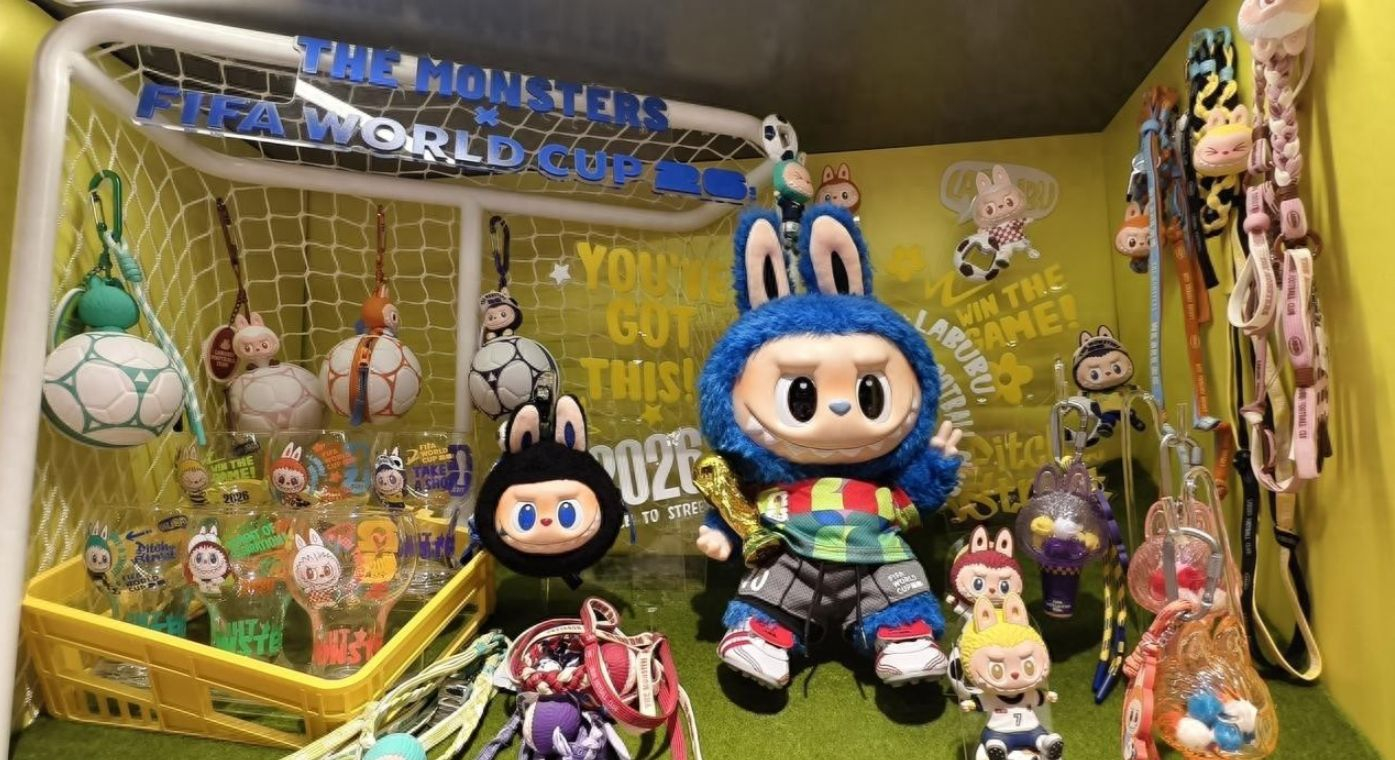
What’s most surprising is that LABUBU, once a global phenomenon, is now selling poorly.
THE MONSTERS series, which includes LABUBU: revenue in the first half was RMB 4.45 billion. Although it still ranked first in the company, it fell 7.5% year over year. Remember, last year, LABUBU was the top-tier IP that had global consumers lining up to buy and had pushed Pop Mart’s share price up to HK$339.
The other long-established IP, MOLLY, is even worse—revenue was RMB 900 million, down 33.7% year over year.
The heat is fading off—faster than people imagined.
▍For overseas markets, they became the biggest drag
If LABUBU cooling off is “the return to normal,” then the overseas market’s performance is even more worrying.
In the first half of the year, revenue from the Asia-Pacific market was RMB 2.58 billion, down 9.7% year over year; revenue from the Americas was RMB 1.89 billion, down 16.5% year over year. The main drag came from online channels. Online revenue in Asia-Pacific plunged 39.8%, with the Shopee platform down 62.1% in particular; online revenue in the Americas fell 45.6%.
In its earnings report, the company attributes the decline to “the waning of external traffic dividends.” In simple terms, that overseas boom driven by short videos and social media last year is rapidly fading. And overseas had been the most important story line supporting Pop Mart’s overvaluation. Now, that line is starting to loosen.
▍FX translation loss of 720 million yuan—profits were bitten hard
Another “culprit” behind profits coming in below expectations is a whopping RMB 720 million FX translation loss.
In the same period last year, Pop Mart had an FX translation gain of RMB 120 million. One in and one out—just this item alone differed by nearly RMB 840 million. That’s also why revenue grew 23.8%, but net profit growth was only 8.9%. Too much profit has been eaten up by exchange rates.
▍A few highlights, but not enough to cover up the flaws
Of course, there are also a few rays of light in the earnings report:
China held up the banner. Revenue in China was RMB 12.2 billion, up 47.3% year over year; online “blind box vending machines” surged 83.3%, and Douyin grew 74%.
New IP “Starry Man” explodes. Revenue was RMB 2.65 billion, up 580.6% year over year, vaulting to the No. 2 IP position.
Plush products have become the new engine. Revenue was RMB 9.825 billion, accounting for 57.2% of total revenue.
The founder announced a share buyback. The plan is to repurchase HK$2 billion–HK$5 billion over the next 6 months.
But these highlights look somewhat powerless in the face of what comes in the next quarter’s outlook.
▍Q3 outlook: management admits first that “we won’t be able to meet it”
At the performance briefing on August 20, founder Wang Ning made statements that made the market gasp for air:
First, the full-year revenue growth target of 20% set at the start of the year will most likely not be met. It has categorized 2026 as an “operational adjustment year,” openly saying that “improving sales is not the top priority.”
Second, the pressure in the second half is greater than in the first half. Last year’s Q3 was a high base period when LABUBU went wildly viral globally. This year’s same period has to face that “giant’s shoulders,” and the year-on-year numbers will only look worse.
Third, institutional forecasts have already “voted with their feet.”
Deutsche Bank forecasts that Q3 revenue will decline 35% year over year;
As early as July, BofA Securities downgraded the rating to “Neutral,” believing that second-half revenue may record a year-on-year decline;
CITIC Securities also believes that, with a high base, the second half will turn flat or negative growth.
This means Pop Mart is very likely to see its first-ever year-on-year decline in quarterly revenue in Q3 2026 since it listed. From “high-speed growth” to “negative growth,” it’s only one hype-cycle of a blockbuster IP.
▍Market reaction: short positions stacked up like mountains
Before the earnings report was released, nearly a quarter of the company’s tradable shares had already been sold short. On the day the report was published, the share price closed at HK$153.7; it has fallen 16.6% year-to-date. It is nearly halved from the historical high of HK$339.
On the other hand, well-known investor Duan Yongping went from saying he “couldn’t understand it” to personally going to U.S. stores to count heads. Ultimately, in May 2026, he took a stake, becoming the second-largest shareholder. His multi-billion HKD bet is on Pop Mart’s long-term value, but the near-term pain is clearly more intense than expected.
LABUBU really can’t sell anymore, but what’s even more worrying is: where is the next blockbuster that can take the baton? Starry Man has lit up, but its scale is still small—whether it can offset the declines of LABUBU and MOLLY is still an unknown.
Pop Mart has set 2026 as a “rest and recuperation year.” Judging from this earnings report and the Q3 outlook, this break may end up lasting longer than anyone expects.
(This article is compiled based on publicly available earnings reports and institutional forecasts and does not constitute any investment advice.) $SOL