
I used to think a blockchain’s real strength was tested when everything was working normally.
But the more I learn about network design, the more I feel the difficult moments matter even more.
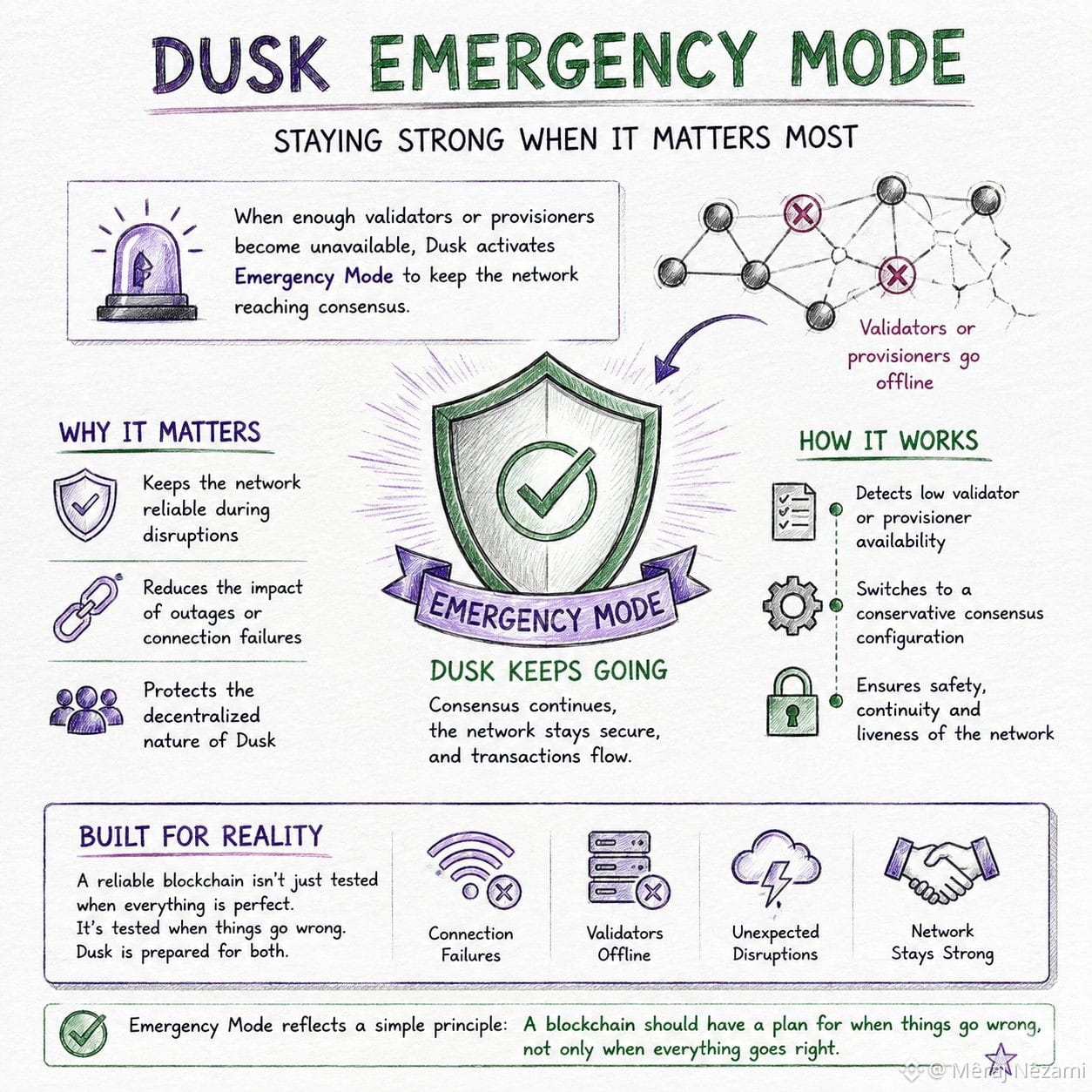
Dusk has an interesting idea for those situations: Emergency Mode.
If enough validators or provisioners become unavailable, the network doesn’t simply keep operating as if nothing happened.
Emergency Mode is designed to help Dusk continue reaching consensus when normal participation is disrupted.
What I find interesting is the thinking behind it.
A reliable network shouldn’t depend on perfect conditions.
Validators can go offline, connections can fail and unexpected problems can happen.
For me, that makes Emergency Mode more than just a technical feature.
It reflects a simple principle: a blockchain should have a plan for when things go wrong not only when everything goes right.
Es topic se related infographic image bana do background colour white pepar style
#dusk $DUSK @Dusk
But the more I learn about network design, the more I feel the difficult moments matter even more.
Dusk has an interesting idea for those situations: Emergency Mode.
If enough validators or provisioners become unavailable, the network doesn’t simply keep operating as if nothing happened.
Emergency Mode is designed to help Dusk continue reaching consensus when normal participation is disrupted.
What I find interesting is the thinking behind it.
A reliable network shouldn’t depend on perfect conditions.
Validators can go offline, connections can fail and unexpected problems can happen.
For me, that makes Emergency Mode more than just a technical feature.
It reflects a simple principle: a blockchain should have a plan for when things go wrong not only when everything goes right.
Es topic se related infographic image bana do background colour white pepar style
#dusk $DUSK @Dusk