
小恐龙说趋势
327 Posts
 LIVE
LIVE小恐龙说趋势
6 年市场经验,公众号.比特小恐龙,记录市场的真实逻辑,研究下一步会去哪
12 Following
2.0K+ Followers
1.7K+ Liked
Posts
All
Live
A coin’s price drops 27%, yet on-chain data surges—have you seen this kind of split before? XRP has pulled off this kind of act just this year.
Price and fundamentals run in opposite directions—so who’s wrong? Today we lay out the data and take a look.
Since the start of this year, XRP is down 27%. By early September, the July closing price was $1.06—42.7% lower than at the end of last year.
But on-chain, it’s a completely different story. On the XRP Ledger, the daily average transaction volume is up 21%, climbing to 2.4 million transactions. The number of validating nodes has increased from 119 to 141.
Price falls, ecosystem grows—this scene isn’t new in crypto circles, but reaching this level of split is rare.
The biggest variable is the stablecoin RLUSD. It has been migrating heavily to the XRP chain. In July alone, about $907 million was issued on the XRP Ledger, accounting for 58.9% of RLUSD’s total supply. Earlier in the year, this share was only 18.4%—in half a year, the balance between offense and defense has flipped.
The total stablecoin float on the XRP chain briefly exceeded $1 billion in July, setting a historical record. It’s still at $798 million now.
Meanwhile, institutions haven’t been idle either. For cross-border payments, tokenized assets, and clearing channels—one by one, they’re being integrated into the ecosystem.
To put it simply: the project team is using foot votes to move infrastructure onto the XRP chain, no matter what the coin price is doing.
Long-time players’ experience is that on-chain data often leads price—ecosystem first grows, and price follows.
But others argue back: ecosystem prosperity doesn’t necessarily mean the token will rise, because the money earned may not flow to token holders.
When price and fundamentals clash, who do you believe? Chat in the comments with your judgment.
Click the profile picture to watch the live stream.
Every day, I’ll take you to follow XRP hot topics—not just what’s happening in the news, but helping you understand the logic and opportunities behind it 👉🦖
#XRP #stablecoin
Price and fundamentals run in opposite directions—so who’s wrong? Today we lay out the data and take a look.
Since the start of this year, XRP is down 27%. By early September, the July closing price was $1.06—42.7% lower than at the end of last year.
But on-chain, it’s a completely different story. On the XRP Ledger, the daily average transaction volume is up 21%, climbing to 2.4 million transactions. The number of validating nodes has increased from 119 to 141.
Price falls, ecosystem grows—this scene isn’t new in crypto circles, but reaching this level of split is rare.
The biggest variable is the stablecoin RLUSD. It has been migrating heavily to the XRP chain. In July alone, about $907 million was issued on the XRP Ledger, accounting for 58.9% of RLUSD’s total supply. Earlier in the year, this share was only 18.4%—in half a year, the balance between offense and defense has flipped.
The total stablecoin float on the XRP chain briefly exceeded $1 billion in July, setting a historical record. It’s still at $798 million now.
Meanwhile, institutions haven’t been idle either. For cross-border payments, tokenized assets, and clearing channels—one by one, they’re being integrated into the ecosystem.
To put it simply: the project team is using foot votes to move infrastructure onto the XRP chain, no matter what the coin price is doing.
Long-time players’ experience is that on-chain data often leads price—ecosystem first grows, and price follows.
But others argue back: ecosystem prosperity doesn’t necessarily mean the token will rise, because the money earned may not flow to token holders.
When price and fundamentals clash, who do you believe? Chat in the comments with your judgment.
Click the profile picture to watch the live stream.
Every day, I’ll take you to follow XRP hot topics—not just what’s happening in the news, but helping you understand the logic and opportunities behind it 👉🦖
#XRP #stablecoin
Bitcoin and Gold Recently getting stuck more and more tightly together 🪙
In Bitwise’s data, their 90-day correlation has hit the highest level since 2020— the first time in six years they’ve moved this synchronously.
The backdrop: long-term U.S. Treasury yields have been rising, and the Finance Minister has ramped up efforts to buy long-dated Treasuries. Global capital has started repricing. Then, in the week that followed, Bitcoin surged 22%, its strongest one-week performance since March 2024.
Gold also climbed 5%. Meanwhile U.S. stocks just sat there. The relationship between Bitcoin and the U.S. Dollar Index has quietly flipped to the opposite direction.
By late August, Bitcoin even pushed up to $80,000 in one shot—up 25% for the month. After a pullback to $76,000, it’s now back around the $80,000 level, repeatedly testing it.
A research chief put it very clearly: when macro conditions are truly tense, capital has little interest in distinguishing between Bitcoin and gold. Everyone is busy trying to hedge the risk of currency value erosion. In that environment, Bitcoin is increasingly like a magnified version of gold.
Bigger volatility, more aggressive responsiveness—but the underlying “safe-haven” logic is the same.
Of course, some folks pour cold water. Glassnode noted that during the August rally, Bitcoin’s correlation with U.S. stocks at one point fell to nearly zero. Historically, when the bond market starts acting up, this kind of decoupling usually doesn’t last. Don’t rush to declare it has permanently changed its nature.
That said, analysts who study U.S. equities have also observed that over the past six months, Bitcoin’s linkage to the stock market has been even lower than gold’s—and lower than Treasuries. That suggests it’s developing its own personality; it’s no longer just a follower of the stock market.
My take: whether or not it fully decouples, one main thread is real. In an era when U.S. dollar credit is being consumed over and over again, the story of hard assets will only get louder and louder.
Bitcoin is the younger version of gold—big personality, strong imagination. This theme is worth watching closely.
Every day, I’ll bring you insights into Bitcoin hotspots. Not just what’s happening in the news— but also help you understand the logic and the opportunities behind it 👀🚀
Click the link below to follow me👇🏻
👉 加入小恐龙粉丝群
#比特币 #黄金 #宏观
In Bitwise’s data, their 90-day correlation has hit the highest level since 2020— the first time in six years they’ve moved this synchronously.
The backdrop: long-term U.S. Treasury yields have been rising, and the Finance Minister has ramped up efforts to buy long-dated Treasuries. Global capital has started repricing. Then, in the week that followed, Bitcoin surged 22%, its strongest one-week performance since March 2024.
Gold also climbed 5%. Meanwhile U.S. stocks just sat there. The relationship between Bitcoin and the U.S. Dollar Index has quietly flipped to the opposite direction.
By late August, Bitcoin even pushed up to $80,000 in one shot—up 25% for the month. After a pullback to $76,000, it’s now back around the $80,000 level, repeatedly testing it.
A research chief put it very clearly: when macro conditions are truly tense, capital has little interest in distinguishing between Bitcoin and gold. Everyone is busy trying to hedge the risk of currency value erosion. In that environment, Bitcoin is increasingly like a magnified version of gold.
Bigger volatility, more aggressive responsiveness—but the underlying “safe-haven” logic is the same.
Of course, some folks pour cold water. Glassnode noted that during the August rally, Bitcoin’s correlation with U.S. stocks at one point fell to nearly zero. Historically, when the bond market starts acting up, this kind of decoupling usually doesn’t last. Don’t rush to declare it has permanently changed its nature.
That said, analysts who study U.S. equities have also observed that over the past six months, Bitcoin’s linkage to the stock market has been even lower than gold’s—and lower than Treasuries. That suggests it’s developing its own personality; it’s no longer just a follower of the stock market.
My take: whether or not it fully decouples, one main thread is real. In an era when U.S. dollar credit is being consumed over and over again, the story of hard assets will only get louder and louder.
Bitcoin is the younger version of gold—big personality, strong imagination. This theme is worth watching closely.
Every day, I’ll bring you insights into Bitcoin hotspots. Not just what’s happening in the news— but also help you understand the logic and the opportunities behind it 👀🚀
Click the link below to follow me👇🏻
👉 加入小恐龙粉丝群
#比特币 #黄金 #宏观

Verified
Yet another global banking giant personally steps in to sell coins 🏦
Standard Chartered, a multinational heavyweight that began in London, has launched spot trading for Bitcoin and Ethereum in the UAE
Services are aimed at institutional clients, via legitimate, regulated channels licensed through the Dubai International Financial Centre—maximum “compliance flavor”
The bank itself says it is the first global bank in the region to offer this kind of compliant spot trading
It’s also the first among globally systemically important banks—its weight is for everyone to judge
Remember: two years ago, it only began building digital-asset custody in the UAE; back then, it was still just helping customers hold onto their coins
Now it has moved directly from custody to the spot trading counter—this is not a small step
Most importantly, institutional clients can place orders directly on the bank’s existing electronic trading platform
No need to switch systems, no need to route through an exchange—just a few clicks on familiar bank terminals and it’s done
For traditional large capital, trust matters more than returns; when the bank itself opens the door, that’s when they dare to step inside
Actually, Standard Chartered has been laying groundwork for a long time: in June, it helped local licensed platforms connect fiat on- and off-ramps
This past half year, the UAE hasn’t been idle either—licenses are being issued one after another, and the regulatory framework is becoming clearer and clearer
In July, a digital bank received in-principle approval; in August, more platforms submitted license applications—nobody wants to miss the train
For big banks to move, the prerequisite is that the rules are established first; Dubai is clearly aiming to become a global crypto hub
As more big banks open their counters, the entry points for institutions will only widen further
For ordinary players, the more compliant “big channels,” the thicker the market foundation
This isn’t something that happens overnight—it’s walls being dismantled one centimeter at a time
Every day I’ll take you to watch crypto finance hotspots—not only what’s happening in the news, but also help you understand the underlying logic and opportunities 👀🚀
Click the links below to follow me 👇🏻
👉 加入小恐龙粉丝群
#比特币 #以太坊 #传统金融 #institutional_entry
Standard Chartered, a multinational heavyweight that began in London, has launched spot trading for Bitcoin and Ethereum in the UAE
Services are aimed at institutional clients, via legitimate, regulated channels licensed through the Dubai International Financial Centre—maximum “compliance flavor”
The bank itself says it is the first global bank in the region to offer this kind of compliant spot trading
It’s also the first among globally systemically important banks—its weight is for everyone to judge
Remember: two years ago, it only began building digital-asset custody in the UAE; back then, it was still just helping customers hold onto their coins
Now it has moved directly from custody to the spot trading counter—this is not a small step
Most importantly, institutional clients can place orders directly on the bank’s existing electronic trading platform
No need to switch systems, no need to route through an exchange—just a few clicks on familiar bank terminals and it’s done
For traditional large capital, trust matters more than returns; when the bank itself opens the door, that’s when they dare to step inside
Actually, Standard Chartered has been laying groundwork for a long time: in June, it helped local licensed platforms connect fiat on- and off-ramps
This past half year, the UAE hasn’t been idle either—licenses are being issued one after another, and the regulatory framework is becoming clearer and clearer
In July, a digital bank received in-principle approval; in August, more platforms submitted license applications—nobody wants to miss the train
For big banks to move, the prerequisite is that the rules are established first; Dubai is clearly aiming to become a global crypto hub
As more big banks open their counters, the entry points for institutions will only widen further
For ordinary players, the more compliant “big channels,” the thicker the market foundation
This isn’t something that happens overnight—it’s walls being dismantled one centimeter at a time
Every day I’ll take you to watch crypto finance hotspots—not only what’s happening in the news, but also help you understand the underlying logic and opportunities 👀🚀
Click the links below to follow me 👇🏻
👉 加入小恐龙粉丝群
#比特币 #以太坊 #传统金融 #institutional_entry

In crypto, the “money-printing machine” isn’t in a mining farm anymore—it’s in a token-issuing app software.
On Robinhood’s new chain there’s an app called Pons. Spend one dollar and you can create a token. It goes live in just a few minutes so people can buy and sell it.
That’s it: such a tiny tool. In the past 24 hours it collected nearly $6 million in fees—ranking fourth among all protocols online. Only Tether, Uniswap, and Circle are ahead.
It has left many older, well-known token-issuing platforms far behind, even surpassing the blockchain it runs on. Its main chain only brings in about $4 million per day, but it took $5.95 million.
Why is it so profitable? Because it doesn’t just charge a “startup” fee. Every transaction, it also takes a cut.
It mints 25,000 new tokens per day. Daily trading volume is over $500 million. Since it launched in July, it has already created 640,000 tokens.
This isn’t “issuing tokens”—this is like setting up an assembly line. Name it however you want, copy memes however you want. Cats and dogs can all be turned into coins.
Some of the biggest things on-chain are all just jokes. Even one cat coin has a market cap of over $200 million. 🐱
Even crazier: the platform’s own coin has surged 3x in a week.
How does it pump? The platform uses the fees it collects to buy its own coin on the market, then it directly destroys it.
It has already burned close to 30% of the supply. Left hand collects money, right hand burns coins. Demand “creates” itself.
Of course, among the tens of thousands of tokens, most of them come out, run around for a bit, then die quickly. Only a few manage to stick around.
But with token-issuing costs so ridiculously low, everyone becomes a project owner. The whole scene itself shows how insane the traffic is.
They said “tokenized stocks” would be the main attraction. In the end, meme coins stole the spotlight.
Where the traffic is, the money is. That rule holds both on-chain and off-chain—everything looks the same.
Every day, I’ll take you to track crypto hotspots. Not just to see what happened in the news, but to help you understand the logic and opportunities behind it 👀🚀
Click the link below to follow me👇🏻
👉 加入小恐龙粉丝群
#meme币 #山寨币 #加密市场
On Robinhood’s new chain there’s an app called Pons. Spend one dollar and you can create a token. It goes live in just a few minutes so people can buy and sell it.
That’s it: such a tiny tool. In the past 24 hours it collected nearly $6 million in fees—ranking fourth among all protocols online. Only Tether, Uniswap, and Circle are ahead.
It has left many older, well-known token-issuing platforms far behind, even surpassing the blockchain it runs on. Its main chain only brings in about $4 million per day, but it took $5.95 million.
Why is it so profitable? Because it doesn’t just charge a “startup” fee. Every transaction, it also takes a cut.
It mints 25,000 new tokens per day. Daily trading volume is over $500 million. Since it launched in July, it has already created 640,000 tokens.
This isn’t “issuing tokens”—this is like setting up an assembly line. Name it however you want, copy memes however you want. Cats and dogs can all be turned into coins.
Some of the biggest things on-chain are all just jokes. Even one cat coin has a market cap of over $200 million. 🐱
Even crazier: the platform’s own coin has surged 3x in a week.
How does it pump? The platform uses the fees it collects to buy its own coin on the market, then it directly destroys it.
It has already burned close to 30% of the supply. Left hand collects money, right hand burns coins. Demand “creates” itself.
Of course, among the tens of thousands of tokens, most of them come out, run around for a bit, then die quickly. Only a few manage to stick around.
But with token-issuing costs so ridiculously low, everyone becomes a project owner. The whole scene itself shows how insane the traffic is.
They said “tokenized stocks” would be the main attraction. In the end, meme coins stole the spotlight.
Where the traffic is, the money is. That rule holds both on-chain and off-chain—everything looks the same.
Every day, I’ll take you to track crypto hotspots. Not just to see what happened in the news, but to help you understand the logic and opportunities behind it 👀🚀
Click the link below to follow me👇🏻
👉 加入小恐龙粉丝群
#meme币 #山寨币 #加密市场

$ETH The rebound is getting weaker and weaker; the real issue may be in derivatives
Ethereum’s recent price action has started to look a bit awkward
The price is currently hovering around $2,400, repeatedly consolidating. But the market’s interest in derivatives is cooling off, and at the same time overall risk sentiment in the U.S. market is weakening—so ETH’s upward momentum in the short term is clearly not as strong as before
Click the links below to follow me👇🏻
:加入聊天室
Previously, ETH pulled back from around $2,550. On September 2, it dipped to around $2,356. In the past 24 hours, the liquidation size of ETH futures reached approximately $94.2 million, with long liquidations clearly accounting for the majority
Open interest in ETH still remains around $32.5 billion, indicating that leveraged funds have not fully exited the market
This creates a rather delicate situation
As price drops, leverage starts getting cleared—but open positions in the market are still quite large
If ETH can reclaim $2,450 and then break above $2,550, this pullback could simply be another round of a leveraged shakeout
But if the $2,400 level can’t hold and continues to fail, the market may start looking again toward the $2,350 and even the $2,200 area
And there is an even bigger pressure right now
The U.S. market is waiting for employment data, while oil prices are still hovering around $95 and U.S. Treasury yields are also at high levels. These factors will all affect how the market judges the Federal Reserve’s policy
If rate expectations remain hawkish, high-volatility assets will naturally face greater pressure
So the real key for ETH right now is not only whether it can rise
It’s whether $2,400 can hold, and whether leverage in the derivatives market can continue to come down
If leverage declines while spot demand starts returning, it may actually create room for the next leg of the rebound
But if price keeps weakening and open interest keeps stacking up again, then you need to be careful about the next round of long liquidations
Click the avatar to watch the live stream, and follow me
Every day, I’ll help you track the crypto market’s hotspots—not just what happens in the news, but also the logic and opportunities behind it 👀🚀 #ETH
Ethereum’s recent price action has started to look a bit awkward
The price is currently hovering around $2,400, repeatedly consolidating. But the market’s interest in derivatives is cooling off, and at the same time overall risk sentiment in the U.S. market is weakening—so ETH’s upward momentum in the short term is clearly not as strong as before
Click the links below to follow me👇🏻
:加入聊天室
Previously, ETH pulled back from around $2,550. On September 2, it dipped to around $2,356. In the past 24 hours, the liquidation size of ETH futures reached approximately $94.2 million, with long liquidations clearly accounting for the majority
Open interest in ETH still remains around $32.5 billion, indicating that leveraged funds have not fully exited the market
This creates a rather delicate situation
As price drops, leverage starts getting cleared—but open positions in the market are still quite large
If ETH can reclaim $2,450 and then break above $2,550, this pullback could simply be another round of a leveraged shakeout
But if the $2,400 level can’t hold and continues to fail, the market may start looking again toward the $2,350 and even the $2,200 area
And there is an even bigger pressure right now
The U.S. market is waiting for employment data, while oil prices are still hovering around $95 and U.S. Treasury yields are also at high levels. These factors will all affect how the market judges the Federal Reserve’s policy
If rate expectations remain hawkish, high-volatility assets will naturally face greater pressure
So the real key for ETH right now is not only whether it can rise
It’s whether $2,400 can hold, and whether leverage in the derivatives market can continue to come down
If leverage declines while spot demand starts returning, it may actually create room for the next leg of the rebound
But if price keeps weakening and open interest keeps stacking up again, then you need to be careful about the next round of long liquidations
Click the avatar to watch the live stream, and follow me
Every day, I’ll help you track the crypto market’s hotspots—not just what happens in the news, but also the logic and opportunities behind it 👀🚀 #ETH

Verified
$SPX $NDX After three straight days of declines in U.S. stocks, the market starts to rebound, but the real test hasn’t come yet
On Thursday, U.S. stock futures edged higher, ending the downward pressure from three consecutive days. Dow Jones futures rose by about 0.2%, S&P 500 futures gained about 0.1%, and Nasdaq 100 futures also saw a modest rebound.
On the surface, it looks like market sentiment is repairing, but we can’t yet say the correction is over—because investors are truly waiting for the upcoming U.S. employment data.
Click the link below to follow me 👇🏻
:加入聊天室
This employment report is especially important.
Recently, ADP data showed that U.S. private-sector job growth in August added only 38,000 jobs, well below market expectations. And on Friday, the Nonfarm Payrolls report will be released; it will become a key reference for the market to judge the Federal Reserve’s next policy move.
If employment continues to cool, the market may again increase expectations for future rate cuts. With lower rate expectations, bond yields typically fall, which usually gives more breathing room to high-valuation tech stocks.
But if employment data remains strong, or if wage and inflation pressures don’t ease meaningfully, the Fed’s policy space could be limited—and the rebound the stock market just started could face renewed pressure.
There’s another variable we can’t ignore right now.
Oil prices are still at elevated levels. Brent crude is around $95, and tensions in the Middle East continue to add uncertainty to energy prices. If oil prices stay high, inflation pressure could once again affect how the market judges interest rates.
So the real plot for U.S. stocks right now isn’t whether there’s a rebound after three straight losses.
Instead, it’s this: after the employment data comes out, what answer will the market get?
With employment cooling and yields falling, tech stocks may be able to breathe a bit more.
With employment too strong and oil prices staying high, the market may again confront interest-rate pressure.
And this shift will also flow through to BTC and the entire risk-asset market.
Click the avatar to watch the livestream—follow me.
Every day, I’ll help you track the biggest happenings in the crypto world. Not just what news is out there, but also the logic and opportunities behind it 👀🚀
On Thursday, U.S. stock futures edged higher, ending the downward pressure from three consecutive days. Dow Jones futures rose by about 0.2%, S&P 500 futures gained about 0.1%, and Nasdaq 100 futures also saw a modest rebound.
On the surface, it looks like market sentiment is repairing, but we can’t yet say the correction is over—because investors are truly waiting for the upcoming U.S. employment data.
Click the link below to follow me 👇🏻
:加入聊天室
This employment report is especially important.
Recently, ADP data showed that U.S. private-sector job growth in August added only 38,000 jobs, well below market expectations. And on Friday, the Nonfarm Payrolls report will be released; it will become a key reference for the market to judge the Federal Reserve’s next policy move.
If employment continues to cool, the market may again increase expectations for future rate cuts. With lower rate expectations, bond yields typically fall, which usually gives more breathing room to high-valuation tech stocks.
But if employment data remains strong, or if wage and inflation pressures don’t ease meaningfully, the Fed’s policy space could be limited—and the rebound the stock market just started could face renewed pressure.
There’s another variable we can’t ignore right now.
Oil prices are still at elevated levels. Brent crude is around $95, and tensions in the Middle East continue to add uncertainty to energy prices. If oil prices stay high, inflation pressure could once again affect how the market judges interest rates.
So the real plot for U.S. stocks right now isn’t whether there’s a rebound after three straight losses.
Instead, it’s this: after the employment data comes out, what answer will the market get?
With employment cooling and yields falling, tech stocks may be able to breathe a bit more.
With employment too strong and oil prices staying high, the market may again confront interest-rate pressure.
And this shift will also flow through to BTC and the entire risk-asset market.
Click the avatar to watch the livestream—follow me.
Every day, I’ll help you track the biggest happenings in the crypto world. Not just what news is out there, but also the logic and opportunities behind it 👀🚀

Verified
The $EURC Circle has taken another step toward cross-chain payments
Circle has recently expanded CCTP—its cross-chain transfer protocol—further to support EURC. Previously, CCTP mainly enabled native movement of USDC across different blockchains. Now, EURC can also be transferred cross-chain via the same mechanism, without creating a bunch of different versions of wrapped tokens.
Click the link below to follow me 👇🏻
:加入聊天室
This looks like just a protocol upgrade, but the underlying meaning is actually significant.
Traditional cross-chain bridges usually require first locking assets on one chain, then issuing corresponding wrapped assets on another chain. Along the way, they also involve liquidity and security issues related to third-party bridges.
CCTP, however, uses a native burn-and-mint mechanism: EURC on the source chain is burned, and the target chain mints an equal amount of EURC. That means users still receive assets that are natively issued by Circle.
Currently, CCTP support for EURC starts with Ethereum and Base. This means the euro stablecoin is beginning to gain a more standardized cross-chain liquidity infrastructure.
Because what stablecoins truly need to solve in the future isn’t just stability.
They also need to solve how to move money quickly across different blockchains.
The dollar has USDC, and the euro has EURC. If these assets can move natively between different networks, then cross-chain payments, DeFi, trading settlement, and enterprise treasury management will all get an additional, more unified infrastructure.
Moreover, EURC is backed by the euro system.
If Europe’s digital asset market continues to expand, EURC’s usage scenarios may grow even more.
So while this CCTP support for EURC looks like a technical update on the surface, in reality it’s more like Circle is gradually turning stablecoins from digital cash on a single chain into a global settlement tool that can flow freely across different blockchains.
Of course, EURC’s current scale is still much smaller than USDC. Whether it can truly achieve large-scale adoption depends on European market demand and support for more chains.
The stablecoin wars may be shifting—from who issues more, to who has stronger capital-flow infrastructure.
Click the avatar to watch the livestream and follow me.
Every day, I’ll help you track the biggest crypto market hotspots—so you don’t just see what’s happening in the news, but also understand the logic and the opportunities behind it 👀🚀
Circle has recently expanded CCTP—its cross-chain transfer protocol—further to support EURC. Previously, CCTP mainly enabled native movement of USDC across different blockchains. Now, EURC can also be transferred cross-chain via the same mechanism, without creating a bunch of different versions of wrapped tokens.
Click the link below to follow me 👇🏻
:加入聊天室
This looks like just a protocol upgrade, but the underlying meaning is actually significant.
Traditional cross-chain bridges usually require first locking assets on one chain, then issuing corresponding wrapped assets on another chain. Along the way, they also involve liquidity and security issues related to third-party bridges.
CCTP, however, uses a native burn-and-mint mechanism: EURC on the source chain is burned, and the target chain mints an equal amount of EURC. That means users still receive assets that are natively issued by Circle.
Currently, CCTP support for EURC starts with Ethereum and Base. This means the euro stablecoin is beginning to gain a more standardized cross-chain liquidity infrastructure.
Because what stablecoins truly need to solve in the future isn’t just stability.
They also need to solve how to move money quickly across different blockchains.
The dollar has USDC, and the euro has EURC. If these assets can move natively between different networks, then cross-chain payments, DeFi, trading settlement, and enterprise treasury management will all get an additional, more unified infrastructure.
Moreover, EURC is backed by the euro system.
If Europe’s digital asset market continues to expand, EURC’s usage scenarios may grow even more.
So while this CCTP support for EURC looks like a technical update on the surface, in reality it’s more like Circle is gradually turning stablecoins from digital cash on a single chain into a global settlement tool that can flow freely across different blockchains.
Of course, EURC’s current scale is still much smaller than USDC. Whether it can truly achieve large-scale adoption depends on European market demand and support for more chains.
The stablecoin wars may be shifting—from who issues more, to who has stronger capital-flow infrastructure.
Click the avatar to watch the livestream and follow me.
Every day, I’ll help you track the biggest crypto market hotspots—so you don’t just see what’s happening in the news, but also understand the logic and the opportunities behind it 👀🚀

Australia’s regulator is taking this seriously this time—issuing a final ultimatum to crypto businesses.
Companies that are still relying on regulatory leniency to get by must submit their licence applications by September 30. If they’re a little late but haven’t completed the process, they will continue operating starting October 1— even if that means violating the Financial Services Act.
The consequences are spelled out clearly: both civil and criminal liabilities could be in play. The maximum fines can reach up to 10% of a company’s annual turnover—this isn’t something to shrug off.
The regulator has essentially put its words on the table: it’s clearly determined to move for a real cleanup.
And the warning isn’t aimed only at exchanges. Wallet service providers, custodians, and market makers are all in the crosshairs. If your business touches financial services, don’t expect to keep taking detours around the rules.
In fact, the legitimate players have already started moving. From the crypto guidance update last October to now, more than 45 companies have submitted licence applications. If you still want to keep fighting like a guerrilla, the window is closing.
By April next year, a new digital asset framework law will take effect. Custody platforms and tokenization platforms alike will all have to move into the licensed system.
Some people see this as crackdown; I see it as an invitation ticket. Compliance costs are higher, but the requirements also keep shady operators and scammers out of the door. Every industry follows the same pattern: chaos first, then governance. Once the rules truly land, only big institutions will dare to enter with confidence.
To put it even more plainly: in this round, Australia is directly slotting crypto into the framework of traditional financial licences—much like the treatment given to brokerage wealth management products. If you want a transition period, you need to queue up first and submit your applications.
Globally, this regulatory push is a relay race: whoever moves slowly will end up being passive behind the others.
In crypto, the step from the wild frontier to licensed operations is unavoidable. Those who understood this early have already quietly lined up.
Every day, I’ll bring you coverage of crypto regulatory hotspots—not just what’s happening in the news, but also the logic and opportunities behind it 👀🚀
Click the link below to follow me👇🏻
👉 加入小恐龙粉丝群
#澳洲 #加密监管 #牌照 #compliance
Companies that are still relying on regulatory leniency to get by must submit their licence applications by September 30. If they’re a little late but haven’t completed the process, they will continue operating starting October 1— even if that means violating the Financial Services Act.
The consequences are spelled out clearly: both civil and criminal liabilities could be in play. The maximum fines can reach up to 10% of a company’s annual turnover—this isn’t something to shrug off.
The regulator has essentially put its words on the table: it’s clearly determined to move for a real cleanup.
And the warning isn’t aimed only at exchanges. Wallet service providers, custodians, and market makers are all in the crosshairs. If your business touches financial services, don’t expect to keep taking detours around the rules.
In fact, the legitimate players have already started moving. From the crypto guidance update last October to now, more than 45 companies have submitted licence applications. If you still want to keep fighting like a guerrilla, the window is closing.
By April next year, a new digital asset framework law will take effect. Custody platforms and tokenization platforms alike will all have to move into the licensed system.
Some people see this as crackdown; I see it as an invitation ticket. Compliance costs are higher, but the requirements also keep shady operators and scammers out of the door. Every industry follows the same pattern: chaos first, then governance. Once the rules truly land, only big institutions will dare to enter with confidence.
To put it even more plainly: in this round, Australia is directly slotting crypto into the framework of traditional financial licences—much like the treatment given to brokerage wealth management products. If you want a transition period, you need to queue up first and submit your applications.
Globally, this regulatory push is a relay race: whoever moves slowly will end up being passive behind the others.
In crypto, the step from the wild frontier to licensed operations is unavoidable. Those who understood this early have already quietly lined up.
Every day, I’ll bring you coverage of crypto regulatory hotspots—not just what’s happening in the news, but also the logic and opportunities behind it 👀🚀
Click the link below to follow me👇🏻
👉 加入小恐龙粉丝群
#澳洲 #加密监管 #牌照 #compliance

$IO In the AI era, the most expensive thing may not be GPUs, but being locked in
A survey of IT teams showed that 94% of organizations worry about vendor lock-in, and that number is already high enough to be impossible to ignore
Group chat: 加入聊天室
And AI has amplified this problem even further
Because with traditional cloud computing, lock-in may only mean the hassle of migrating databases and servers
But in the AI era, you also have to consider GPU resources, models, training data, API interfaces, and the entire inference workflow
Once everything is tied to one vendor, switching platforms in the future may be more than just changing an account
AI computing power itself is becoming an increasingly scarce resource
What companies truly need is not a single cloud provider, but the ability to find suitable GPUs at any time and flexibly allocate compute power across different vendors
This is also why decentralized GPU infrastructure like IO is worth paying attention to
What it tries to solve is not simply whether GPUs exist, but to give AI teams more sources of compute power and more flexible choices, reducing reliance on a single vendor
Behind this is actually a change in infrastructure logic
In the past, cloud computing emphasized putting everything into one ecosystem
Now AI is increasingly emphasizing running workloads wherever compute is cheaper and using resources wherever they are abundant
If AI continues to expand rapidly, then the compute market may ultimately not consist of just a few giant platforms
Multi-cloud, distributed GPUs, and open compute networks could all become part of this market
So what is truly worth watching about $IO is not simply how good “decentralization” sounds
It is whether, as AI compute becomes more expensive, companies are actually willing to proactively break away from dependence on a single vendor in order to lower costs and improve flexibility
If this trend holds, the opportunity in the compute market may have only just begun
Click my avatar to watch the livestream and follow me
Every day I bring you the hottest topics in the crypto world, not just what happened in the news, but also the logic and opportunities behind it 👀🚀
A survey of IT teams showed that 94% of organizations worry about vendor lock-in, and that number is already high enough to be impossible to ignore
Group chat: 加入聊天室
And AI has amplified this problem even further
Because with traditional cloud computing, lock-in may only mean the hassle of migrating databases and servers
But in the AI era, you also have to consider GPU resources, models, training data, API interfaces, and the entire inference workflow
Once everything is tied to one vendor, switching platforms in the future may be more than just changing an account
AI computing power itself is becoming an increasingly scarce resource
What companies truly need is not a single cloud provider, but the ability to find suitable GPUs at any time and flexibly allocate compute power across different vendors
This is also why decentralized GPU infrastructure like IO is worth paying attention to
What it tries to solve is not simply whether GPUs exist, but to give AI teams more sources of compute power and more flexible choices, reducing reliance on a single vendor
Behind this is actually a change in infrastructure logic
In the past, cloud computing emphasized putting everything into one ecosystem
Now AI is increasingly emphasizing running workloads wherever compute is cheaper and using resources wherever they are abundant
If AI continues to expand rapidly, then the compute market may ultimately not consist of just a few giant platforms
Multi-cloud, distributed GPUs, and open compute networks could all become part of this market
So what is truly worth watching about $IO is not simply how good “decentralization” sounds
It is whether, as AI compute becomes more expensive, companies are actually willing to proactively break away from dependence on a single vendor in order to lower costs and improve flexibility
If this trend holds, the opportunity in the compute market may have only just begun
Click my avatar to watch the livestream and follow me
Every day I bring you the hottest topics in the crypto world, not just what happened in the news, but also the logic and opportunities behind it 👀🚀
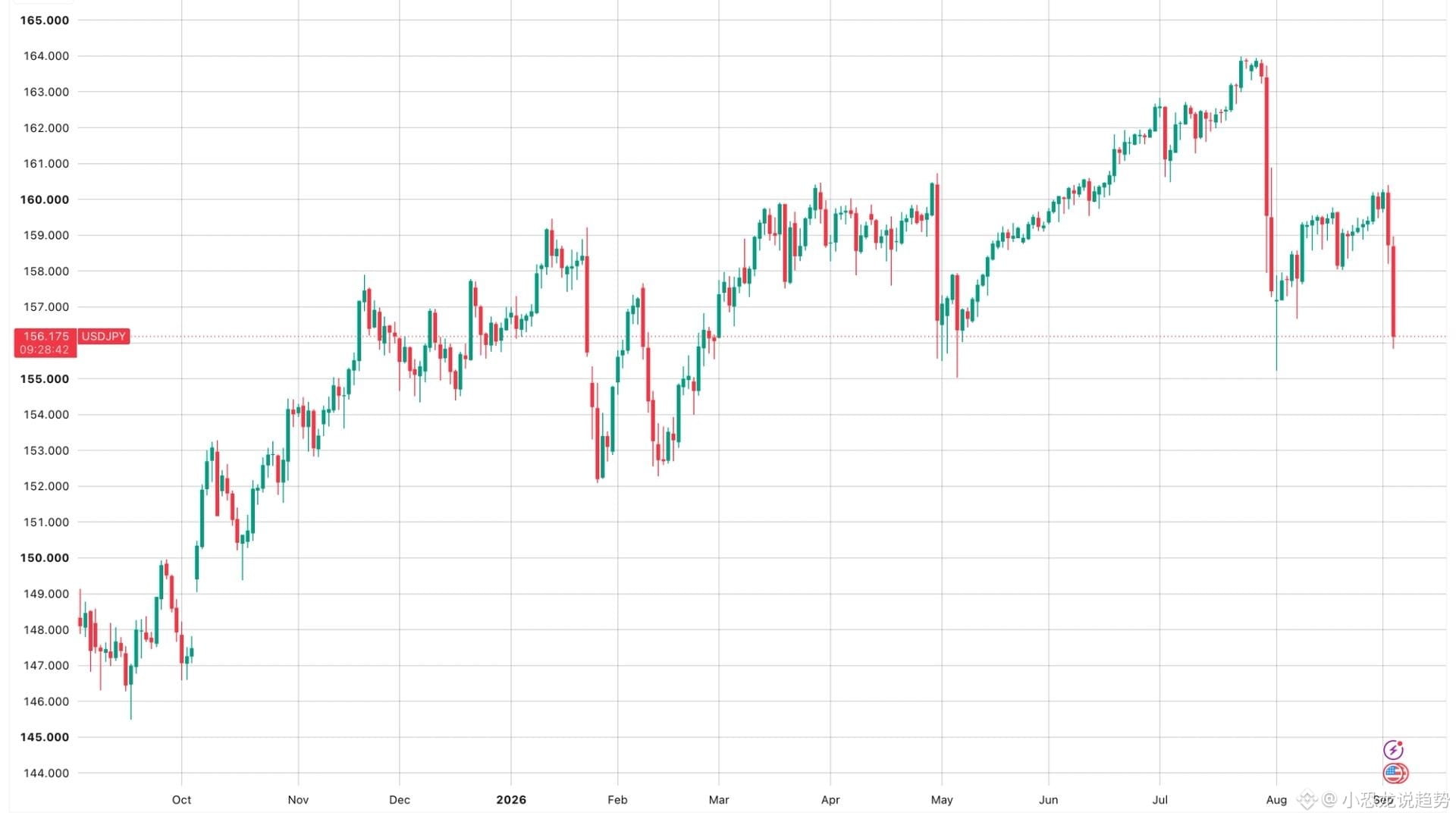
The market today is acting a bit in reverse. The Japanese yen is surging hard. Even Bitcoin and gold are rising too.
The USD/JPY pair dropped more than two points over the past two days, sliding all the way toward around 156.
The US Dollar Index also sagged down to around 99, right at the key level of the 200-day moving average.
In the old playbook, when the yen spikes sharply, it usually means carry-trade funding is about to run into trouble—risk assets usually run first.
But this time is different. The yen is strong, the dollar is weak, and both Bitcoin and gold are USD-denominated assets.
Once the dollar softens, they get comfortable first.
Even EUR, GBP, and AUD versus the dollar are all climbing.
Put simply, this isn’t a one-on-one fight in crypto—it’s the dollar itself that’s weakening first.
Global capital is repositioning. If your assets are not denominated in USD, you get to breathe a little first.
Today, this long-time old feud—gold and Bitcoin—rarely stands on the same side.
But don’t get carried away—risk is lurking in the background.
If the yen continues to surge, funds that borrowed cheap yen to go on a global buying spree could turn around and close positions at any moment.
In the big liquidation wave of August 2024, Bitcoin fell about 20% within a few days. A lesson from the past—everyone still remembers.
The market has already started counting the days. The Bank of Japan meeting on September 18 is coming up, and expectations for a 25-basis-point rate hike are heating up.
For BTC, the real master switch is still the US Dollar Index.
As long as it holds above the 200-day moving average, the story can continue. If it can’t, then you’ll have to rewrite the script.
My take: this kind of macro JPY-driven volatility may be amplified—don’t just go wild with contracts.
And don’t panic-cut on spot. First, keep an eye on the dollar’s direction and the capital flows.
Follow where the money goes, not where emotions run. That’s far more reliable.
Every day, I’ll take you to track crypto macro hotspots. Not just what’s happening in the news, but also the logic and opportunities behind it 👀🚀
Click the link below to follow me👇🏻
👉 加入小恐龙粉丝群
#比特币 #日元 #美元指数 #macro
The USD/JPY pair dropped more than two points over the past two days, sliding all the way toward around 156.
The US Dollar Index also sagged down to around 99, right at the key level of the 200-day moving average.
In the old playbook, when the yen spikes sharply, it usually means carry-trade funding is about to run into trouble—risk assets usually run first.
But this time is different. The yen is strong, the dollar is weak, and both Bitcoin and gold are USD-denominated assets.
Once the dollar softens, they get comfortable first.
Even EUR, GBP, and AUD versus the dollar are all climbing.
Put simply, this isn’t a one-on-one fight in crypto—it’s the dollar itself that’s weakening first.
Global capital is repositioning. If your assets are not denominated in USD, you get to breathe a little first.
Today, this long-time old feud—gold and Bitcoin—rarely stands on the same side.
But don’t get carried away—risk is lurking in the background.
If the yen continues to surge, funds that borrowed cheap yen to go on a global buying spree could turn around and close positions at any moment.
In the big liquidation wave of August 2024, Bitcoin fell about 20% within a few days. A lesson from the past—everyone still remembers.
The market has already started counting the days. The Bank of Japan meeting on September 18 is coming up, and expectations for a 25-basis-point rate hike are heating up.
For BTC, the real master switch is still the US Dollar Index.
As long as it holds above the 200-day moving average, the story can continue. If it can’t, then you’ll have to rewrite the script.
My take: this kind of macro JPY-driven volatility may be amplified—don’t just go wild with contracts.
And don’t panic-cut on spot. First, keep an eye on the dollar’s direction and the capital flows.
Follow where the money goes, not where emotions run. That’s far more reliable.
Every day, I’ll take you to track crypto macro hotspots. Not just what’s happening in the news, but also the logic and opportunities behind it 👀🚀
Click the link below to follow me👇🏻
👉 加入小恐龙粉丝群
#比特币 #日元 #美元指数 #macro
U.S. internet banks and leading crypto platforms officially announce a partnership
The exchange’s parent company connects directly to the bank’s USD settlement network—24/7 transfers with no downtime
Institutional clients no longer have to wait for the bank to open. Want to move money in the middle of the night? You can do it anytime. For large capital, this is a necessity.
At the same time, the platform has launched the stablecoin issued by the bank itself
When the bank’s customers buy crypto, they also gain an institutional-grade liquidity source
In other words, the two sides have opened doors for each other: you provide the banking pipeline, and I bring the crypto-circulation traffic—each gets what it needs
The bank’s head executive put it plainly: “Financial markets never sleep. Why should financial systems clock out on time?”
Straightforward as it sounds, it’s not nonsense. Previously, USD transfers had to wait for clearing windows; on weekends and holidays, funds could only sit idle.
Now it’s 7×24, anytime the money can move. Stablecoins and the banking system—this is what truly connects the circuit.
Don’t underestimate this bank. Under regulatory pressure a few years ago, it once pulled back its crypto business.
Now it’s back with a new approach: issuing its own stablecoin, building its own settlement network, and bringing in a top platform
Even the bank is willing to turn back—what else could the direction be telling us?
Over the past two years, the big trend is very clear: exchanges are trying to drill into stock-derivatives payment routes with all their might
Meanwhile, banks and fintech are pushing in the opposite direction—settling on the stablecoin rails
Everyone wants to be a one-stop financial supermarket—no one wants to be just a conduit operator.
My take: stablecoins are the master key that pushes open doors on both sides
In the future, the salary-paying apps you use might let you buy coins on the side
The profits you earn on exchanges can also flow directly back into the banking system. The wall is being lowered bit by bit.
Every day I’ll bring you coverage of crypto-finance hot spots—not just what’s happening in the news, but also the logic and opportunities behind it 👀🚀
Click the links below to follow me👇🏻
👉 加入小恐龙粉丝群
#稳定币 #加密银行 #传统金融 #institutional_investors_enter_market
The exchange’s parent company connects directly to the bank’s USD settlement network—24/7 transfers with no downtime
Institutional clients no longer have to wait for the bank to open. Want to move money in the middle of the night? You can do it anytime. For large capital, this is a necessity.
At the same time, the platform has launched the stablecoin issued by the bank itself
When the bank’s customers buy crypto, they also gain an institutional-grade liquidity source
In other words, the two sides have opened doors for each other: you provide the banking pipeline, and I bring the crypto-circulation traffic—each gets what it needs
The bank’s head executive put it plainly: “Financial markets never sleep. Why should financial systems clock out on time?”
Straightforward as it sounds, it’s not nonsense. Previously, USD transfers had to wait for clearing windows; on weekends and holidays, funds could only sit idle.
Now it’s 7×24, anytime the money can move. Stablecoins and the banking system—this is what truly connects the circuit.
Don’t underestimate this bank. Under regulatory pressure a few years ago, it once pulled back its crypto business.
Now it’s back with a new approach: issuing its own stablecoin, building its own settlement network, and bringing in a top platform
Even the bank is willing to turn back—what else could the direction be telling us?
Over the past two years, the big trend is very clear: exchanges are trying to drill into stock-derivatives payment routes with all their might
Meanwhile, banks and fintech are pushing in the opposite direction—settling on the stablecoin rails
Everyone wants to be a one-stop financial supermarket—no one wants to be just a conduit operator.
My take: stablecoins are the master key that pushes open doors on both sides
In the future, the salary-paying apps you use might let you buy coins on the side
The profits you earn on exchanges can also flow directly back into the banking system. The wall is being lowered bit by bit.
Every day I’ll bring you coverage of crypto-finance hot spots—not just what’s happening in the news, but also the logic and opportunities behind it 👀🚀
Click the links below to follow me👇🏻
👉 加入小恐龙粉丝群
#稳定币 #加密银行 #传统金融 #institutional_investors_enter_market

$IREN I don’t want to dig #BTC anymore; I’m starting to bet on AI compute power
IREN’s AI cloud business could potentially reach annual revenue of $1.7 billion by 2030, while expanding cloud computing capacity to around 2GW. It’s expected that IREN will gradually wind down its Bitcoin mining business by the end of 2026
Group chat: 加入聊天室
Mining is becoming increasingly dependent on the BTC price, electricity costs, and total network hash rate. But AI cloud computing is now consuming a large amount of GPU and data center resources
IREN has been accelerating in this direction. Its AI cloud revenue reached $128.8 million in a single quarter, up significantly year over year. In the same period, Bitcoin mining revenue was about $578.2 million. This shows that while the company still relies mainly on mining revenue, its business structure is changing rapidly
IREN’s AI cloud business revenue grew quarter-over-quarter by 110% recently, reaching $70.5 million. Moreover, the company’s previously announced goal of $4 billion in annual recurring revenue for fiscal year 2026 has already been fully signed
So now an interesting phenomenon has emerged
Previously, when everyone looked at Bitcoin miners, the first reaction was whether BTC would rise, whether the hashrate was high, and what the mining cost was
Now Wall Street is looking at whether the electricity, land, and data center resources held by these mining companies can actually be turned into AI infrastructure
You could even say that some mining companies are shifting from selling compute power to the BTC network, to selling compute power to AI companies
That’s also why the valuation logic for companies like IREN is changing
But risks can’t be ignored either
Fast AI cloud growth doesn’t necessarily mean $1.7 billion in revenue can definitely be achieved. And AI infrastructure requires sustained massive capital investment—financing costs, GPU depreciation, customer concentration, and future AI compute demand can all affect final profitability
So what’s truly worth watching isn’t whether IREN will stop mining BTC
But whether it can prove one thing
Can a transition from a Bitcoin mining company to an AI compute company really be a more profitable business?
If this path works, in the future, more and more miners may rush to shift their electricity and data center resources from BTC to AI
Click the profile picture to watch the livestream, and follow me. Every day, I’ll help you track the hottest topics in the crypto space—not just what’s happening, but also the underlying logic and opportunities 👀🚀
IREN’s AI cloud business could potentially reach annual revenue of $1.7 billion by 2030, while expanding cloud computing capacity to around 2GW. It’s expected that IREN will gradually wind down its Bitcoin mining business by the end of 2026
Group chat: 加入聊天室
Mining is becoming increasingly dependent on the BTC price, electricity costs, and total network hash rate. But AI cloud computing is now consuming a large amount of GPU and data center resources
IREN has been accelerating in this direction. Its AI cloud revenue reached $128.8 million in a single quarter, up significantly year over year. In the same period, Bitcoin mining revenue was about $578.2 million. This shows that while the company still relies mainly on mining revenue, its business structure is changing rapidly
IREN’s AI cloud business revenue grew quarter-over-quarter by 110% recently, reaching $70.5 million. Moreover, the company’s previously announced goal of $4 billion in annual recurring revenue for fiscal year 2026 has already been fully signed
So now an interesting phenomenon has emerged
Previously, when everyone looked at Bitcoin miners, the first reaction was whether BTC would rise, whether the hashrate was high, and what the mining cost was
Now Wall Street is looking at whether the electricity, land, and data center resources held by these mining companies can actually be turned into AI infrastructure
You could even say that some mining companies are shifting from selling compute power to the BTC network, to selling compute power to AI companies
That’s also why the valuation logic for companies like IREN is changing
But risks can’t be ignored either
Fast AI cloud growth doesn’t necessarily mean $1.7 billion in revenue can definitely be achieved. And AI infrastructure requires sustained massive capital investment—financing costs, GPU depreciation, customer concentration, and future AI compute demand can all affect final profitability
So what’s truly worth watching isn’t whether IREN will stop mining BTC
But whether it can prove one thing
Can a transition from a Bitcoin mining company to an AI compute company really be a more profitable business?
If this path works, in the future, more and more miners may rush to shift their electricity and data center resources from BTC to AI
Click the profile picture to watch the livestream, and follow me. Every day, I’ll help you track the hottest topics in the crypto space—not just what’s happening, but also the underlying logic and opportunities 👀🚀

$BTC $ETH Standard Chartered Bank begins bringing crypto trading to the Middle East
Standard Chartered Bank has announced that its spot trading services for Bitcoin and Ethereum for institutional clients will be expanded from the UK to the UAE
This means institutional clients can now participate directly in BTC and ETH spot trading through a global systemically important bank, rather than only accessing crypto assets via platforms outside the traditional financial system
Group chat👇🏻
:加入聊天室
What’s truly noteworthy is that Standard Chartered only rolled out this business through its UK branch last July—by then, it had already become one of the first global systemically important banks to offer institutional-grade BTC and ETH deliverable spot trading services
Now, less than two years later, the business has moved further into the UAE. The signals behind it are actually quite clear
Traditional financial institutions are shifting from past hesitation to gradually building trading and custody infrastructure for crypto assets directly
And the UAE itself is a very proactive market for the development of digital assets globally
This expansion is not just about adding another trading location—it’s about connecting the bank’s own financial infrastructure more deeply with the crypto market
In the future, if more large banks follow suit, BTC and ETH may increasingly resemble assets that formally enter institutional asset allocation frameworks, rather than being only high-risk alternative investments
So when looking at the crypto market now, you can’t just focus on price movement
What’s really worth watching is that more and more traditional financial giants are moving into it
When banks begin providing trading, custody, settlement, and even tokenization services, the game rules in the market may also be slowly changing
Click the avatar to watch the live stream and follow me. Every day I’ll help you track the hottest stories in the crypto space—not just what’s happening in the news, but also the logic and opportunities behind it 👀🚀 #StandardCharted
Standard Chartered Bank has announced that its spot trading services for Bitcoin and Ethereum for institutional clients will be expanded from the UK to the UAE
This means institutional clients can now participate directly in BTC and ETH spot trading through a global systemically important bank, rather than only accessing crypto assets via platforms outside the traditional financial system
Group chat👇🏻
:加入聊天室
What’s truly noteworthy is that Standard Chartered only rolled out this business through its UK branch last July—by then, it had already become one of the first global systemically important banks to offer institutional-grade BTC and ETH deliverable spot trading services
Now, less than two years later, the business has moved further into the UAE. The signals behind it are actually quite clear
Traditional financial institutions are shifting from past hesitation to gradually building trading and custody infrastructure for crypto assets directly
And the UAE itself is a very proactive market for the development of digital assets globally
This expansion is not just about adding another trading location—it’s about connecting the bank’s own financial infrastructure more deeply with the crypto market
In the future, if more large banks follow suit, BTC and ETH may increasingly resemble assets that formally enter institutional asset allocation frameworks, rather than being only high-risk alternative investments
So when looking at the crypto market now, you can’t just focus on price movement
What’s really worth watching is that more and more traditional financial giants are moving into it
When banks begin providing trading, custody, settlement, and even tokenization services, the game rules in the market may also be slowly changing
Click the avatar to watch the live stream and follow me. Every day I’ll help you track the hottest stories in the crypto space—not just what’s happening in the news, but also the logic and opportunities behind it 👀🚀 #StandardCharted

$NIO.US The financial report isn’t that bad, yet the stock was still dumped
In the second quarter, NIO’s revenue reached $4.7 billion, up 69% year over year, and its adjusted profit has also been close to breakeven for the third consecutive quarter—suggesting the company’s operations are clearly improving
But what the market is really worried about is whether next quarter’s performance will miss expectations. NIO expects third-quarter revenue of about $5.0 billion, while the market had originally expected around $5.3 billion. As a result, the stock continued to fall; on September 2 it dropped another ~4.9%, closing at $3.86
Click the link below to follow me 👇🏻
:加入聊天室
What’s more troubling is that Wall Street is now starting to readjust its view of NIO
JPMorgan downgraded NIO’s rating from Buy to Hold and cut its target price from $7 to $4.50. One of the reasons is that demand in China’s passenger vehicle market is weak, and price competition is becoming increasingly fierce
This is actually more worth noting than a one-day drop, because the market is shifting its focus—from whether NIO can increase sales in the past, to whether those sales can truly translate into sustainable profits
However, NIO isn’t without its bright spots
In the second quarter, auto gross margin improved to about 18.5%. Revenue rose 69% year over year, and full-year vehicle deliveries are still growing. New models, as well as the ONVO and Firefly brands, are helping NIO expand the price range it covers
So at this point, $NIO is entering a critical validation phase
If deliveries continue to grow and profit margins can be maintained, the market may re-rate it
But if China’s new energy vehicle market keeps battling in price wars and demand doesn’t show a clear improvement, then just sales growth alone may not be enough to support the stock
What’s most important to watch now isn’t when #NIO will rebound
But when it can truly prove that it has moved from a new-energy automaker that has been burning cash continuously, to a company that can start generating stable profits
Click the profile picture to watch the livestream and follow me. Every day, I’ll take you through the crypto market highlights—not just what’s happening in the news, but also the logic and opportunities behind it 👀🚀
In the second quarter, NIO’s revenue reached $4.7 billion, up 69% year over year, and its adjusted profit has also been close to breakeven for the third consecutive quarter—suggesting the company’s operations are clearly improving
But what the market is really worried about is whether next quarter’s performance will miss expectations. NIO expects third-quarter revenue of about $5.0 billion, while the market had originally expected around $5.3 billion. As a result, the stock continued to fall; on September 2 it dropped another ~4.9%, closing at $3.86
Click the link below to follow me 👇🏻
:加入聊天室
What’s more troubling is that Wall Street is now starting to readjust its view of NIO
JPMorgan downgraded NIO’s rating from Buy to Hold and cut its target price from $7 to $4.50. One of the reasons is that demand in China’s passenger vehicle market is weak, and price competition is becoming increasingly fierce
This is actually more worth noting than a one-day drop, because the market is shifting its focus—from whether NIO can increase sales in the past, to whether those sales can truly translate into sustainable profits
However, NIO isn’t without its bright spots
In the second quarter, auto gross margin improved to about 18.5%. Revenue rose 69% year over year, and full-year vehicle deliveries are still growing. New models, as well as the ONVO and Firefly brands, are helping NIO expand the price range it covers
So at this point, $NIO is entering a critical validation phase
If deliveries continue to grow and profit margins can be maintained, the market may re-rate it
But if China’s new energy vehicle market keeps battling in price wars and demand doesn’t show a clear improvement, then just sales growth alone may not be enough to support the stock
What’s most important to watch now isn’t when #NIO will rebound
But when it can truly prove that it has moved from a new-energy automaker that has been burning cash continuously, to a company that can start generating stable profits
Click the profile picture to watch the livestream and follow me. Every day, I’ll take you through the crypto market highlights—not just what’s happening in the news, but also the logic and opportunities behind it 👀🚀

NIOUS-0.38%
$LULU.US I changed to a new CEO, but the real problem may not be that simple
Lululemon is now in a rather awkward phase. A new CEO is about to take over, but the company’s most core North American market has already shown clear signs of slowdown
In the latest quarter, total revenue growth was only 4%, reaching $2.5 billion. Meanwhile, North America same-store sales fell 6%, and revenue in the Americas also declined 3%. Profit margins faced dual pressure from both tariffs and increased discounting, and the full-year performance outlook has already been cut again
Click the link below to follow me👇🏻
:加入聊天室
This leadership change itself also hasn’t fully reassured the market
The new CEO, Heidi O'Neill, comes from Nike. She will officially take office on September 8, and what Lululemon needs to solve is not just declining sales, but also the brand’s pace of innovation, product appeal, and soft demand among North American consumers.
This is actually LULU’s biggest highlight right now
If the new CEO can get product innovation back on track and improve North America’s sales performance, then the current slump may instead become an opportunity for a reset in valuation
But if the North American market continues to stay weak, even if international business grows, it may not be enough to fully offset problems in the core market
Currently, LULU’s stock price is clearly below its one-year high. It closed around $118 on September 1, down about 48% from the 52-week high of $225.98
So what’s truly worth watching next isn’t whether the stock price rises or falls on the day the new CEO officially takes over
It’s whether she can make North American consumers once again willing to buy LULU
If sales regain momentum, the market may re-rate the company’s valuation
If sales continue to deteriorate, then this CEO change may only push the problems further down the road
Click the avatar to watch the live stream and follow me
Every day I’ll take you to track the latest hotspots in the crypto world—more than just seeing what happened in the news, I’ll help you understand the underlying logic and opportunities 👀🚀 #BTC #ETH🔥🔥🔥🔥🔥🔥
Lululemon is now in a rather awkward phase. A new CEO is about to take over, but the company’s most core North American market has already shown clear signs of slowdown
In the latest quarter, total revenue growth was only 4%, reaching $2.5 billion. Meanwhile, North America same-store sales fell 6%, and revenue in the Americas also declined 3%. Profit margins faced dual pressure from both tariffs and increased discounting, and the full-year performance outlook has already been cut again
Click the link below to follow me👇🏻
:加入聊天室
This leadership change itself also hasn’t fully reassured the market
The new CEO, Heidi O'Neill, comes from Nike. She will officially take office on September 8, and what Lululemon needs to solve is not just declining sales, but also the brand’s pace of innovation, product appeal, and soft demand among North American consumers.
This is actually LULU’s biggest highlight right now
If the new CEO can get product innovation back on track and improve North America’s sales performance, then the current slump may instead become an opportunity for a reset in valuation
But if the North American market continues to stay weak, even if international business grows, it may not be enough to fully offset problems in the core market
Currently, LULU’s stock price is clearly below its one-year high. It closed around $118 on September 1, down about 48% from the 52-week high of $225.98
So what’s truly worth watching next isn’t whether the stock price rises or falls on the day the new CEO officially takes over
It’s whether she can make North American consumers once again willing to buy LULU
If sales regain momentum, the market may re-rate the company’s valuation
If sales continue to deteriorate, then this CEO change may only push the problems further down the road
Click the avatar to watch the live stream and follow me
Every day I’ll take you to track the latest hotspots in the crypto world—more than just seeing what happened in the news, I’ll help you understand the underlying logic and opportunities 👀🚀 #BTC #ETH🔥🔥🔥🔥🔥🔥

The tokenization wave bites into another tough nut—this time, it’s disaster bonds
These are the special types of bonds insurers use to hedge against hurricanes, earthquakes, and floods
A law firm plus a tokenization platform have said they’ll test-issue the first batch at the start of next year, with ownership recorded directly on-chain
Don’t think this is niche—look at the numbers first
With this kind of bond, the previous minimum investment threshold was $250,000—basically an exclusive game for insurance giants and pension funds
The platform claims that after going on-chain, they can cut it down to $5,000—fifty times lower
The mechanics are also quite particular
On-chain ledgers can directly serve as legal proof of ownership
Reconciliation and settlement, which used to take days, can be compressed to seconds—cutting out a whole room full of intermediaries
Whoever holds it owns it—written in code in black and white, recognized even by courts
Why target disaster bonds in particular?
Because disaster coverage is getting more expensive
This year, global natural disaster losses are expected to exceed $450 billion, and less than 40% is insurable
If insurers can’t carry it anymore, they have to package the risk and share it with more investors
The deeper the pool, the lower the threshold, and the more spread out the risk—an old rule of finance
Even deeper, disaster bonds have basically nothing to do with crypto market cycles
Bull or bear, interest payments still roll in—making them naturally good material for diversified allocation
For ordinary people, this may not be an immediate “get rich” opportunity, but it’s absolutely worth keeping an eye on 🌊
In traditional finance, assets reserved for the big players are being broken up piece by piece and put on-chain
Stocks are finished, bonds are finished, and now it’s insurance’s turn—what comes next is already very clear
Don’t wait until the threshold gets raised again, and then regret not understanding earlier
Every day, I’ll bring you tokenization hotspots—not just what happens in the news, but the logic and opportunities behind it 👀🚀
Click the link below to follow me👇🏻
👉 加入小恐龙粉丝群
#RWA #代币化 #巨灾债券 #InstitutionalCapitalIn
These are the special types of bonds insurers use to hedge against hurricanes, earthquakes, and floods
A law firm plus a tokenization platform have said they’ll test-issue the first batch at the start of next year, with ownership recorded directly on-chain
Don’t think this is niche—look at the numbers first
With this kind of bond, the previous minimum investment threshold was $250,000—basically an exclusive game for insurance giants and pension funds
The platform claims that after going on-chain, they can cut it down to $5,000—fifty times lower
The mechanics are also quite particular
On-chain ledgers can directly serve as legal proof of ownership
Reconciliation and settlement, which used to take days, can be compressed to seconds—cutting out a whole room full of intermediaries
Whoever holds it owns it—written in code in black and white, recognized even by courts
Why target disaster bonds in particular?
Because disaster coverage is getting more expensive
This year, global natural disaster losses are expected to exceed $450 billion, and less than 40% is insurable
If insurers can’t carry it anymore, they have to package the risk and share it with more investors
The deeper the pool, the lower the threshold, and the more spread out the risk—an old rule of finance
Even deeper, disaster bonds have basically nothing to do with crypto market cycles
Bull or bear, interest payments still roll in—making them naturally good material for diversified allocation
For ordinary people, this may not be an immediate “get rich” opportunity, but it’s absolutely worth keeping an eye on 🌊
In traditional finance, assets reserved for the big players are being broken up piece by piece and put on-chain
Stocks are finished, bonds are finished, and now it’s insurance’s turn—what comes next is already very clear
Don’t wait until the threshold gets raised again, and then regret not understanding earlier
Every day, I’ll bring you tokenization hotspots—not just what happens in the news, but the logic and opportunities behind it 👀🚀
Click the link below to follow me👇🏻
👉 加入小恐龙粉丝群
#RWA #代币化 #巨灾债券 #InstitutionalCapitalIn

$BTC Australia has laid out a clear timeline for the crypto industry
The latest reminder from Australia’s regulator, ASIC, is that eligible digital asset businesses must submit an application for an Australian Financial Services Licence by September 30, or adjust their existing licence arrangements; otherwise, they may face risks of violating financial services regulations.
This is not just rhetoric. The regulatory transition period is now entering its final stage. More than 45 licence applications related to digital asset services have already been submitted, and the number of applications continues to grow #BTC
Click the link below to follow me 👇🏻
:加入聊天室
In fact, the key point worth paying attention to is that Australia has not directly kept the crypto industry out of the financial system.
Instead, ASIC previously extended the transition arrangements to September 30, giving trading platforms, custodians, and other digital asset service providers time to move into the new licensing framework. Some businesses can also complete the transition through authorized representatives or intermediary arrangements via licensed entities.
But after September 30, the rules of the game will be different.
If a business continues to provide financial services that require licensing without completing the relevant application or compliance arrangements, it may face regulatory enforcement actions.
Also, note that not all crypto products are covered by this transition. Certain crypto lending and yield products, as well as most derivatives, are still subject to different regulatory scopes
From the perspective of the broader market, this sends a very clear signal: global regulation is gradually moving from the previously vague areas toward licensing and institutionalization.
In the short term, compliance costs for some smaller crypto businesses may increase.
But in the long run, if trading platforms, custodians, and financial institutions can operate under clear rules, it may actually reduce concerns for traditional capital entering this market.
So the real change in Australia this time may not be whether the crypto industry should exist, but what kinds of crypto businesses will be eligible to stay in this market.
Click on the avatar to watch the livestream and follow me.
Every day, I’ll take you to track highlights in the crypto space—not just what happens in the news, but also help you understand the underlying logic and opportunities 👀🚀
The latest reminder from Australia’s regulator, ASIC, is that eligible digital asset businesses must submit an application for an Australian Financial Services Licence by September 30, or adjust their existing licence arrangements; otherwise, they may face risks of violating financial services regulations.
This is not just rhetoric. The regulatory transition period is now entering its final stage. More than 45 licence applications related to digital asset services have already been submitted, and the number of applications continues to grow #BTC
Click the link below to follow me 👇🏻
:加入聊天室
In fact, the key point worth paying attention to is that Australia has not directly kept the crypto industry out of the financial system.
Instead, ASIC previously extended the transition arrangements to September 30, giving trading platforms, custodians, and other digital asset service providers time to move into the new licensing framework. Some businesses can also complete the transition through authorized representatives or intermediary arrangements via licensed entities.
But after September 30, the rules of the game will be different.
If a business continues to provide financial services that require licensing without completing the relevant application or compliance arrangements, it may face regulatory enforcement actions.
Also, note that not all crypto products are covered by this transition. Certain crypto lending and yield products, as well as most derivatives, are still subject to different regulatory scopes
From the perspective of the broader market, this sends a very clear signal: global regulation is gradually moving from the previously vague areas toward licensing and institutionalization.
In the short term, compliance costs for some smaller crypto businesses may increase.
But in the long run, if trading platforms, custodians, and financial institutions can operate under clear rules, it may actually reduce concerns for traditional capital entering this market.
So the real change in Australia this time may not be whether the crypto industry should exist, but what kinds of crypto businesses will be eligible to stay in this market.
Click on the avatar to watch the livestream and follow me.
Every day, I’ll take you to track highlights in the crypto space—not just what happens in the news, but also help you understand the underlying logic and opportunities 👀🚀

The hackers behind the “Third Wave” Coldcard vulnerability have finally made a move
On-chain monitoring found that he started routing the stolen bitcoins through THORChain and converting them into Ethereum
This time the amount moved isn’t large—about one-tenth; the remaining nine-tenths are still sitting where they were
Don’t underestimate that one-tenth. It’s the first time the third-wave hackers have moved on-chain funds.
Before, at most they just tested the waters—siphoning a tiny amount into a mixer, while the main group kept pretending to be inactive.
Now someone couldn’t hold back first 😂
What’s even funnier is that this guy’s technical skills aren’t great.
He wanted to swap everything in one go, but the system kept refunding him.
So he had to keep retrying, one transaction at a time.
On-chain analysts were laughing as they watched—while “being spectators,” they also noted down the new addresses and reported them to law enforcement.
Let’s sort out the background first: Coldcard’s vulnerability this time.
Over a thousand bitcoins were stolen, and more than 8,000 addresses were affected. At the time, the value exceeded 100 million USD.
The main force stayed on standby—the stolen funds were frozen in the wallets, gathering dust.
Analysts watched for nearly a month, waiting for the day the funds finally moved.
Why move now? Nobody can say for sure.
Maybe they think the spotlight has passed, or maybe they want to quietly rotate holdings while market liquidity is good.
But in this line of work, once you move, you’re basically turning on a spotlight for yourself.
Trying to erase traces is far harder than most people imagine.
For regular people, this is a reminder: don’t store all large assets in the same type of wallet.
A cold wallet isn’t a perfect magic safety deposit box.
Firmware updates must be handled carefully, and private key backups must be taken seriously.
Comment below—will you spread out your large-amount coins for storage?
Every day, I’ll bring you the latest crypto security hotspots—not just to see what happened in the news, but to help you understand the logic and the opportunities behind it 👀🚀
Click the link below to follow me👇🏻
👉 加入小恐龙粉丝群
#比特币 #Coldcard #钱包安全 #On-chain analysis
On-chain monitoring found that he started routing the stolen bitcoins through THORChain and converting them into Ethereum
This time the amount moved isn’t large—about one-tenth; the remaining nine-tenths are still sitting where they were
Don’t underestimate that one-tenth. It’s the first time the third-wave hackers have moved on-chain funds.
Before, at most they just tested the waters—siphoning a tiny amount into a mixer, while the main group kept pretending to be inactive.
Now someone couldn’t hold back first 😂
What’s even funnier is that this guy’s technical skills aren’t great.
He wanted to swap everything in one go, but the system kept refunding him.
So he had to keep retrying, one transaction at a time.
On-chain analysts were laughing as they watched—while “being spectators,” they also noted down the new addresses and reported them to law enforcement.
Let’s sort out the background first: Coldcard’s vulnerability this time.
Over a thousand bitcoins were stolen, and more than 8,000 addresses were affected. At the time, the value exceeded 100 million USD.
The main force stayed on standby—the stolen funds were frozen in the wallets, gathering dust.
Analysts watched for nearly a month, waiting for the day the funds finally moved.
Why move now? Nobody can say for sure.
Maybe they think the spotlight has passed, or maybe they want to quietly rotate holdings while market liquidity is good.
But in this line of work, once you move, you’re basically turning on a spotlight for yourself.
Trying to erase traces is far harder than most people imagine.
For regular people, this is a reminder: don’t store all large assets in the same type of wallet.
A cold wallet isn’t a perfect magic safety deposit box.
Firmware updates must be handled carefully, and private key backups must be taken seriously.
Comment below—will you spread out your large-amount coins for storage?
Every day, I’ll bring you the latest crypto security hotspots—not just to see what happened in the news, but to help you understand the logic and the opportunities behind it 👀🚀
Click the link below to follow me👇🏻
👉 加入小恐龙粉丝群
#比特币 #Coldcard #钱包安全 #On-chain analysis

$BTC The deeper it falls, the more people quietly buy
The most interesting thing in the market lately is this: when retail investors start getting nervous as a pullback begins, some large holders are treating the drop as an opportunity to reposition
Data shows that wallets holding more than 1,000 BTC have recently displayed clear accumulation behavior, and even the largest holding cohort continued adding chips as BTC declined. This kind of capital flow creates a stark contrast with the sentiment of ordinary investors
Click the link below to follow me 👇🏻
:加入聊天室
What’s even more worth noting is that now BTC has returned to around $780,000, and the market is again testing the key psychological level of $800,000
If the whales continue absorbing the sell-off chips from the market, and spot ETF capital keeps flowing back, then the momentum for a breakout above may gradually strengthen
But you also can’t simply understand it as: since the whales bought, BTC must go up
In the past, there have also been cases where after whale accumulation, the market continued to range—or even fell further. So what really needs to be watched is whether whale accumulation can resonate with ETF inflows, trading volume, and the price structure
The most interesting part of the market right now is right here
Retail investors are focused on when #BTC will keep falling
But big money may be watching when others, out of fear, will hand those chips back
If this type of capital behavior continues, whether BTC can reclaim and hold above $800,000 next will become a very important signal to watch
Click the avatar to watch the livestream and follow me. Every day I’ll help you track the biggest crypto stories—not just what happens in the news, but also how to understand the underlying logic and opportunities 👀🚀
The most interesting thing in the market lately is this: when retail investors start getting nervous as a pullback begins, some large holders are treating the drop as an opportunity to reposition
Data shows that wallets holding more than 1,000 BTC have recently displayed clear accumulation behavior, and even the largest holding cohort continued adding chips as BTC declined. This kind of capital flow creates a stark contrast with the sentiment of ordinary investors
Click the link below to follow me 👇🏻
:加入聊天室
What’s even more worth noting is that now BTC has returned to around $780,000, and the market is again testing the key psychological level of $800,000
If the whales continue absorbing the sell-off chips from the market, and spot ETF capital keeps flowing back, then the momentum for a breakout above may gradually strengthen
But you also can’t simply understand it as: since the whales bought, BTC must go up
In the past, there have also been cases where after whale accumulation, the market continued to range—or even fell further. So what really needs to be watched is whether whale accumulation can resonate with ETF inflows, trading volume, and the price structure
The most interesting part of the market right now is right here
Retail investors are focused on when #BTC will keep falling
But big money may be watching when others, out of fear, will hand those chips back
If this type of capital behavior continues, whether BTC can reclaim and hold above $800,000 next will become a very important signal to watch
Click the avatar to watch the livestream and follow me. Every day I’ll help you track the biggest crypto stories—not just what happens in the news, but also how to understand the underlying logic and opportunities 👀🚀

What does it look like when traditional finance gets anxious?
Big players sue regulators in court
CME, the big US futures exchange, sues the CFTC to allow crypto perpetual futures contracts
The CFTC counters by asking the court to dismiss the case—and adds a comment: it’s nothing but troublemaking🤨
The regulators’ logic is straightforward: you can’t explain what losses you’ve actually suffered—so why would the court take the case?
Besides, that approval order is written in black and white that CME can also offer the same products.
No customers came to you to buy—so you didn’t list it. Now you’re blaming others for taking business? Who would believe that grievance?
CME is unhappy. It says perpetual contracts are essentially swaps, so they should be regulated under swap rules.
The regulator counters with another blow: even if you reclassify it again, it can’t erase your competitive disadvantage.
If you can just change the name and turn the tables, then what’s the point of the market?
In plain terms, it’s a classic case of an established player panicking.
Crypto perpetuals used to belong to offshore exchanges. Now, US regulators are personally opening the door and moving the track into a compliance framework.
CME’s lawsuit—rather than sounding like rights protection—looks more like fear that new players will enter and take a slice.
What’s even more interesting is that even if they win the lawsuit, nothing really changes.
Others’ products have already started running under the new rules. If you win the ruling, the market won’t rewind.
Big players suing regulators is actually a sign that crypto derivatives have grown so large they keep traditional players up at night.
My take: news like this is often a milestone on the path of an industry maturing.
Once the door to compliance opens, more traditional institutions will follow.
For crypto in the long run, this is a good thing.
Don’t panic about short-term volatility—focus on the direction, not the price action on any single day.
Every day I’ll bring you coverage of crypto regulatory hotspots—not just what the news is, but the logic and opportunities behind it 👀🚀
Click the link below to follow me👇🏻
👉 加入小恐龙粉丝群
#比特币 #永续合约 #加密监管 #Institutions_enter
Big players sue regulators in court
CME, the big US futures exchange, sues the CFTC to allow crypto perpetual futures contracts
The CFTC counters by asking the court to dismiss the case—and adds a comment: it’s nothing but troublemaking🤨
The regulators’ logic is straightforward: you can’t explain what losses you’ve actually suffered—so why would the court take the case?
Besides, that approval order is written in black and white that CME can also offer the same products.
No customers came to you to buy—so you didn’t list it. Now you’re blaming others for taking business? Who would believe that grievance?
CME is unhappy. It says perpetual contracts are essentially swaps, so they should be regulated under swap rules.
The regulator counters with another blow: even if you reclassify it again, it can’t erase your competitive disadvantage.
If you can just change the name and turn the tables, then what’s the point of the market?
In plain terms, it’s a classic case of an established player panicking.
Crypto perpetuals used to belong to offshore exchanges. Now, US regulators are personally opening the door and moving the track into a compliance framework.
CME’s lawsuit—rather than sounding like rights protection—looks more like fear that new players will enter and take a slice.
What’s even more interesting is that even if they win the lawsuit, nothing really changes.
Others’ products have already started running under the new rules. If you win the ruling, the market won’t rewind.
Big players suing regulators is actually a sign that crypto derivatives have grown so large they keep traditional players up at night.
My take: news like this is often a milestone on the path of an industry maturing.
Once the door to compliance opens, more traditional institutions will follow.
For crypto in the long run, this is a good thing.
Don’t panic about short-term volatility—focus on the direction, not the price action on any single day.
Every day I’ll bring you coverage of crypto regulatory hotspots—not just what the news is, but the logic and opportunities behind it 👀🚀
Click the link below to follow me👇🏻
👉 加入小恐龙粉丝群
#比特币 #永续合约 #加密监管 #Institutions_enter
Log in to explore more content