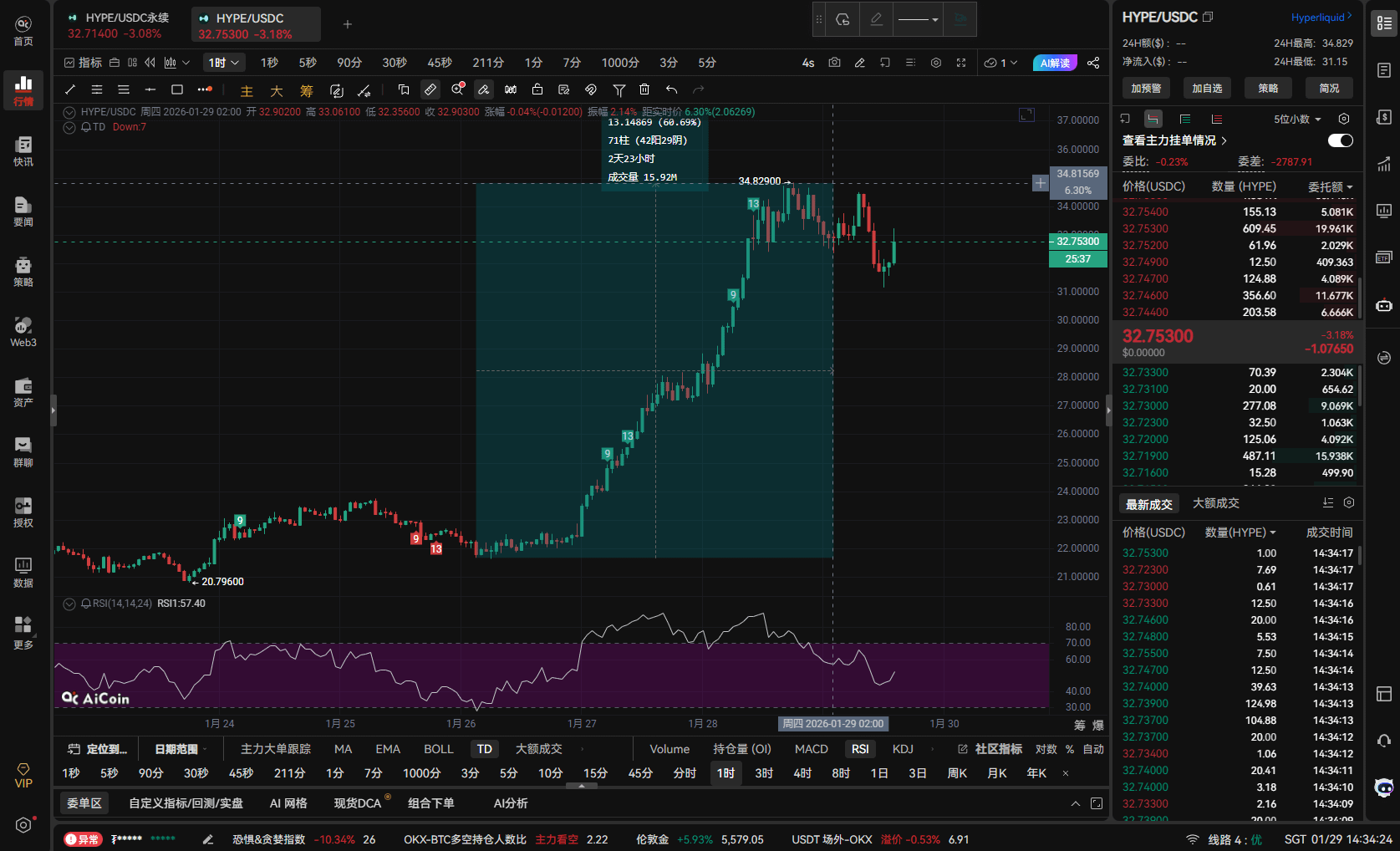
Recently, the cryptocurrency market has been in a wide-ranging fluctuation, but Hyperliquid (HYPE) has experienced an exceptionally strong independent trend. HYPE surged from around $22 to a peak of $34.8 in just three days, with a cumulative increase of over 60%.
1. Data review: Volume, price, and position three-line resonance
Unlike most short-cycle tokens that rise, this round of HYPE's increase is supported by extremely solid trading data.
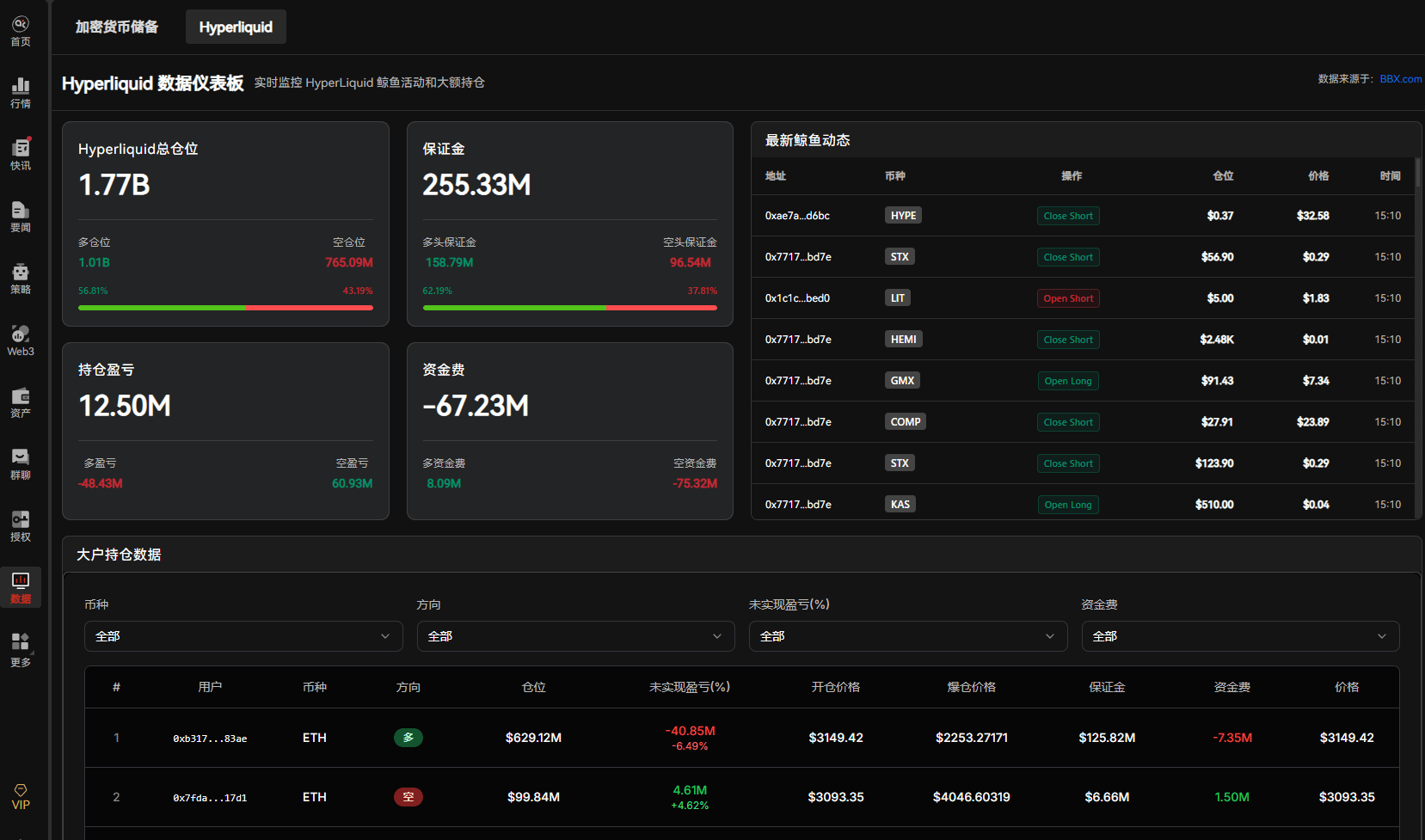
Volume peaked: In late January, Hyperliquid's total daily trading volume exceeded $1.78 billion, setting a new historical high.
Open interest (OI) surged: Driven by HIP-3 (permissions open market), the OI in related markets skyrocketed from $260 million a month ago to a range of $790 million to $930 million. This also set a new historical high.
Price Resilience: HYPE rapidly rose from over $20 to around $34.8 within three days, then fell back to the $32–33 range, still at a phase high.
2. Core Logic: Why has silver become the core catalyst for HYPE?
Hyperliquid introduced bulk commodities and RWA (real-world assets) markets through the HIP-3 framework, with its true core variable being commodity perpetual contracts, especially silver.
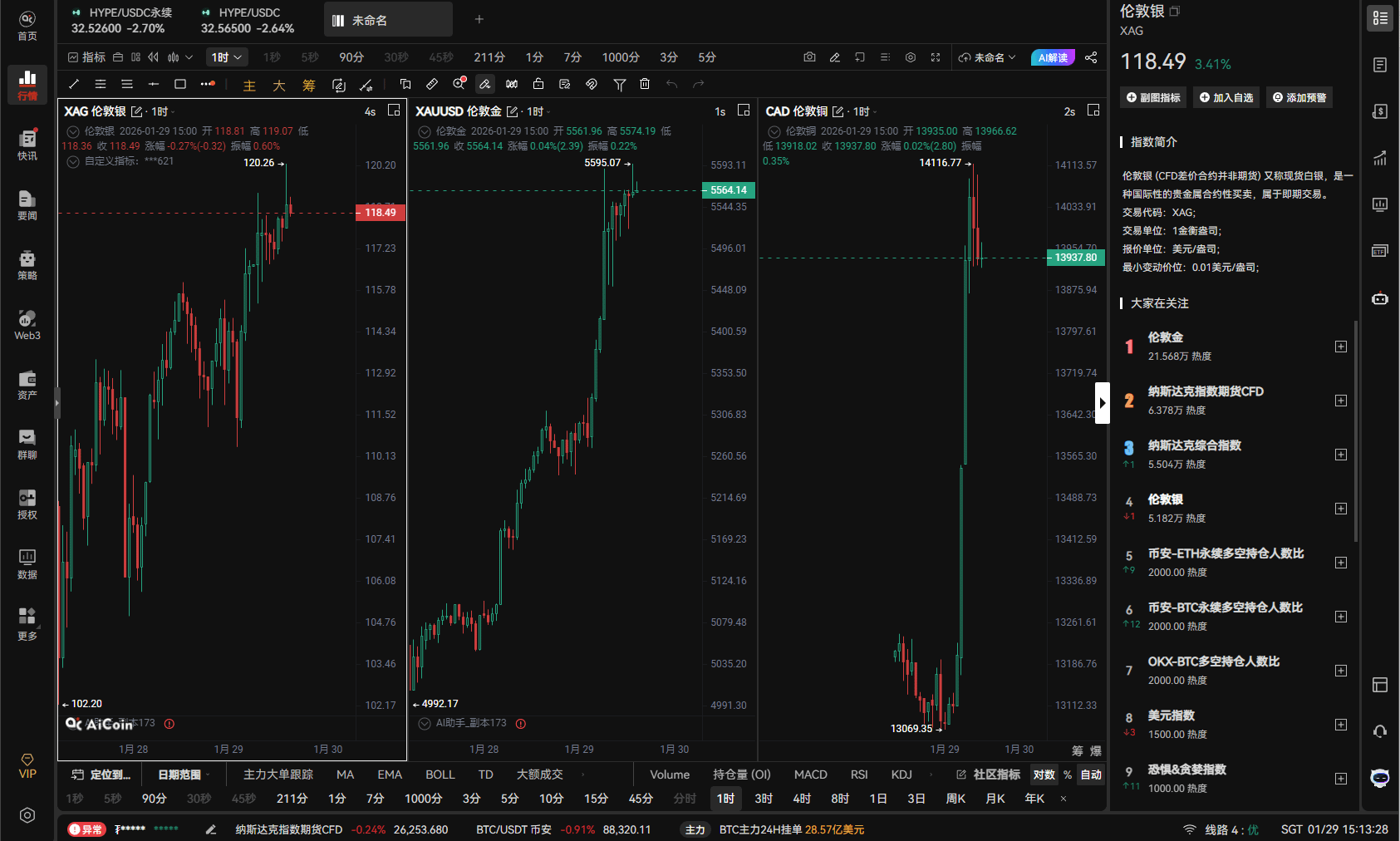
The 24-hour trading volume of silver perpetual contracts once broke $1.2 billion, with a single variety accounting for the vast majority of the platform's trading volume.
During certain periods, the trading volume of silver exceeded that of mainstream crypto assets like Bitcoin and Ethereum, becoming one of the most active markets on the platform.
During the same period, commodity contracts like gold, copper, and natural gas also recorded trading volumes ranging from tens of millions to over a hundred million, forming a clear resonance in the bulk commodity sector.
This indicates that funds are not 'speculating on silver', but viewing Hyperliquid as a decentralized commodity derivatives exchange to express their judgment on precious metals and macro commodity trends.
3. How does high trading volume reflect on HYPE's price?
The rise of HYPE is not simply a matter of 'token price following platform popularity', but stems from the positive feedback mechanism of its token economic structure.
Real Fee Growth: High-frequency trading of commodities and crypto perpetual contracts brings continuous and considerable fee income.
Buyback/Distribution Mechanism: The vast majority of the platform's fee income is used to buy back HYPE or distribute to stakers. High-frequency commodity trading generates massive cash flow, directly enhancing the Real Yield attributes of HYPE.
Threshold Staking: According to the current HIP-3 rules, third-party teams must stake 500,000 HYPE to deploy new markets. With the launch of more commodity markets such as gold, copper, and natural gas, the passive locking of HYPE due to institutional demand is increasing.
When trading volume, OI, and revenue models strengthen synchronously, some funds begin to view HYPE as a 'platform growth stock' rather than just a functional token. The resulting cycle is:
Rising trading volume → Increased fees → Improved buyback/distribution expectations → Enhanced HYPE cash flow attributes → Price and market cap uplift → Attracting more funds and traders.

The recent surge of HYPE once again confirms that 'trading authenticity' is the long-term moat for Web3 products. When a DEX allows traders to operate silver contracts as smoothly as in the US stock market, its token is no longer just a speculative symbol, but a dividend right of the ecosystem.