


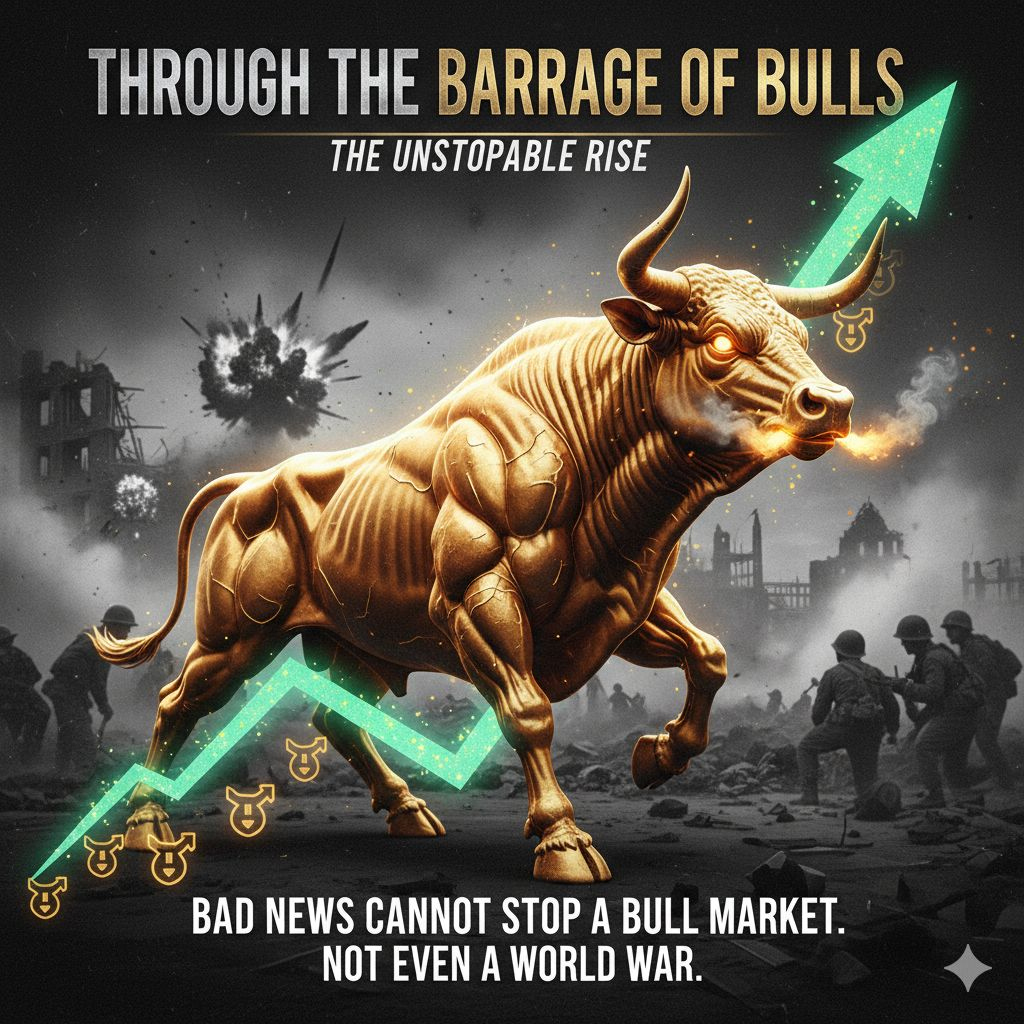
Wall Street legend Jesse Livermore once said a stunning remark: 'Bad news cannot stop a bull market, not even a world war can.'
At first glance absurd, but if you pull up the S&P or Dow Jones index from the past hundred years and overlay it with the timelines of previous wars, you will find that the direction of the candlestick is only one: northeast (long-term upward).
Why? Because the only thing traders need to do is not to panic over the news, but to assess the general trend.
What is the general trend? How can one make big money in a noisy market? Today, combining Livermore's wisdom with my twenty years of practical experience, let's talk about how ordinary people can grasp the five key points to 'change their destiny.'
1. The so-called 'great trend' is the resonance of these three dimensions.
Many people only look at K-lines when watching the market; that is tactical; the real great trend contains three levels: Era > Economy > Market.
1. Era dividend: We want to make money from technological progress.
Throughout human history, there have been three dividends: steam engine, electricity, internet. If you made the right investments at these nodes, wealth grows exponentially.
Where is the current era dividend? It lies in these three points:
Revolution in production efficiency: Technological leaps represented by AI and robotics.
Revolution in quality of life: Genetic technology and biopharmaceuticals allow people to live longer and better.
Energy revolution:Since we need to abandon coal and oil, efficient photovoltaic conversion and energy storage technology are the necessities among necessities.
Having curiosity allows you to discover the next era.
2. Economic cycle: Understand 'financial dictatorship.'
The current market has changed. Since the prevalence of MMT (Modern Monetary Theory), economic cycles have been 'smoothed out' and turned into a one-man show by central banks.
This is a kind of 'financial dictatorship.' Constantly printing money, lacking money, and then printing money again leads to currency devaluation and asset bubbles. We must keep an eye on the Federal Reserve because the global market has actually been manipulated. This sounds pessimistic, but for traders, bubbles are opportunities until the day they collapse.
3. Market trend: Prices fluctuate around value.
This is the technical aspect. Judging trend reversals, looking at key positions, watching iconic actions.

2. Don't do simulated trading; only real money can buy 'IQ.'
Livermore said: 'The only way to validate your judgment is to put your money in.'
I never recommend beginners do simulated trading because emotions can affect IQ.
When you do simulated trading, your mind is calm, IQ is 180; once real money enters, watching the account fluctuate red and green, your heartbeat speeds up, and your IQ may instantly drop to 0.
Trading training without fear and greed is meaningless.
Even if you only buy one lot, one share, you must throw money in. Only when you feel pain and excitement can you correct your trading system.
3. The secret to making big money: Don't pull the noodles straight to eat.
"No one can catch every fluctuation. Don't try to catch the first and last eighth; the cost is too high."
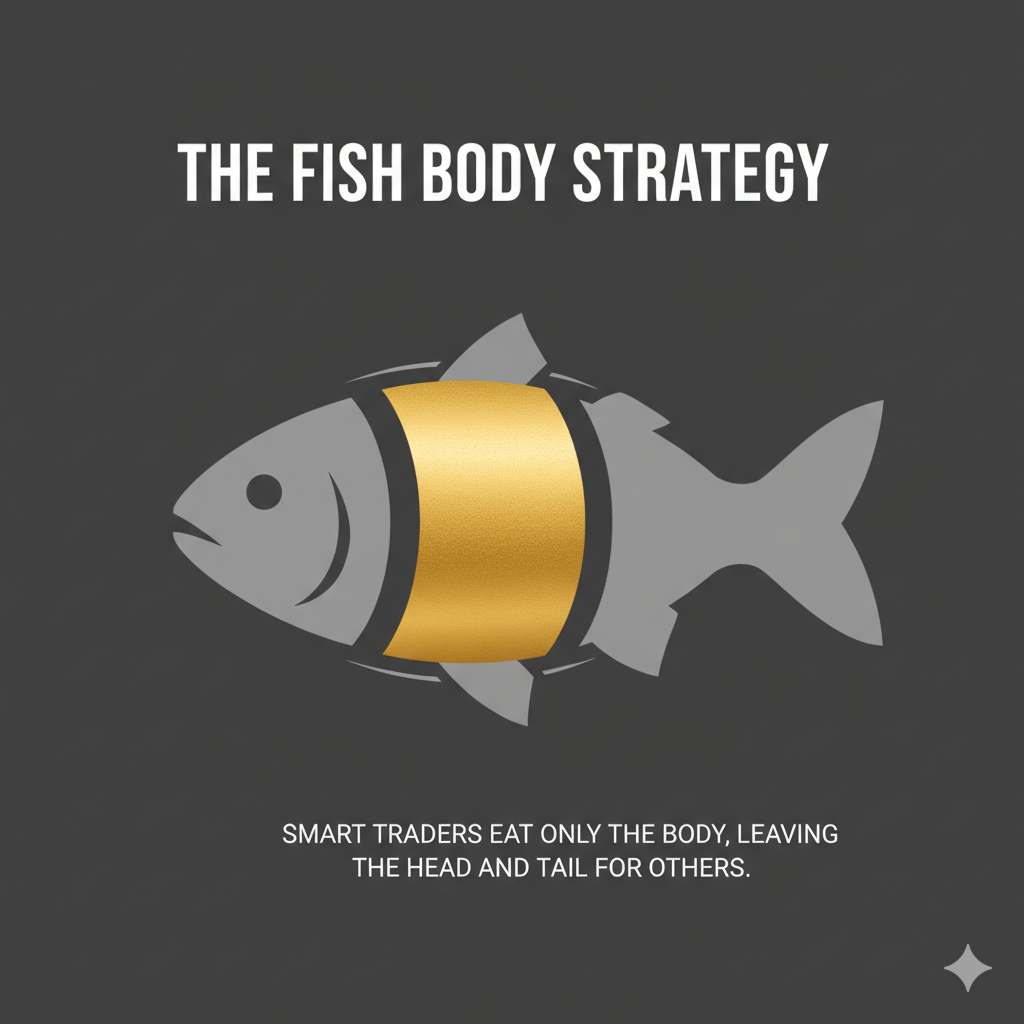
All top traders eat the 'flesh of the fish.'
Margin of error: We pursue 'fuzzy correctness.' When you try to precisely catch the bottom and escape the top, you have already lost.
Big money relies on belief: The trades that truly make me big money are often those where I pinpoint a good business that aligns with the era's dividends, invest money that I wouldn't mind losing, and then let it be.
Endure volatility: Wanting to pull the noodles straight to eat (doing all the swings) is a pipe dream. You must endure downward pullbacks to catch the upward main wave.
4. Exclusive mindset: Use 'psychological wallet' to manage your greed.
When you’re going in the right direction, the market will generously reward you—quickly and profitably.
How to add positions at this time? How to take profits? I have a **'psychological wallet'** strategy:
Suppose I want to buy 5 trades:
The first trade of 10 dollars bought in, correct, made a profit.
The second trade of 15 dollars bought in. Treat it as an independent wallet.
If the market continues to rise, great; if the market turns back and falls below 15 dollars, immediately withdraw the second trade, but leave the first trade untouched.
Always have 'reverse thinking':
When you're making money and feeling good about it, immediately think in reverse: 'If I were short, where would be my best entry point?'
That point is usually your best exit point for longs.
Going long is no exception!
5. How to judge a bull market? The four-wheel drive theory.
A bull market is not guessed; it is walked out. If you are in the US stock market (or the global market), remember this ELVS model:
Earnings: Is the company really making money?
Liquidity: Is there a lot of money in the market? Is the Federal Reserve providing liquidity?
Valuations: Is the price expensive?
Sentiment: This is the most important.
What is reflexivity?
Rising needs reasons, but those reasons don’t necessarily have to be 'right'; as long as everyone believes it, that's enough.
When everyone rushes into the market for a reason (even if it's wrong), the market will rise; after it rises, this reason
It looks more 'correct,' thus attracting more people.
The market never makes sense; it only talks about emotions and money.

Finally
Trading is not just looking at charts; it's also about insight into human nature.
World wars cannot change a bull market because the instinct in human nature to pursue wealth and avoid pain is timeless.
Find that 'super track' belonging to our era, invest real money, endure the bumps in between, and don’t be greedy for the sesame seeds at the beginning and end.
This is the entire secret to making big money in large fluctuations.