#binancep2pantoan @Binance Vietnam
There was a habit I used to think was nothing serious: when my counterparty said the transfer had been made, I would quickly open my banking app to check and then release the crypto.
After a few transactions, I realized that the “checking” part is actually where the easiest mistakes happen.
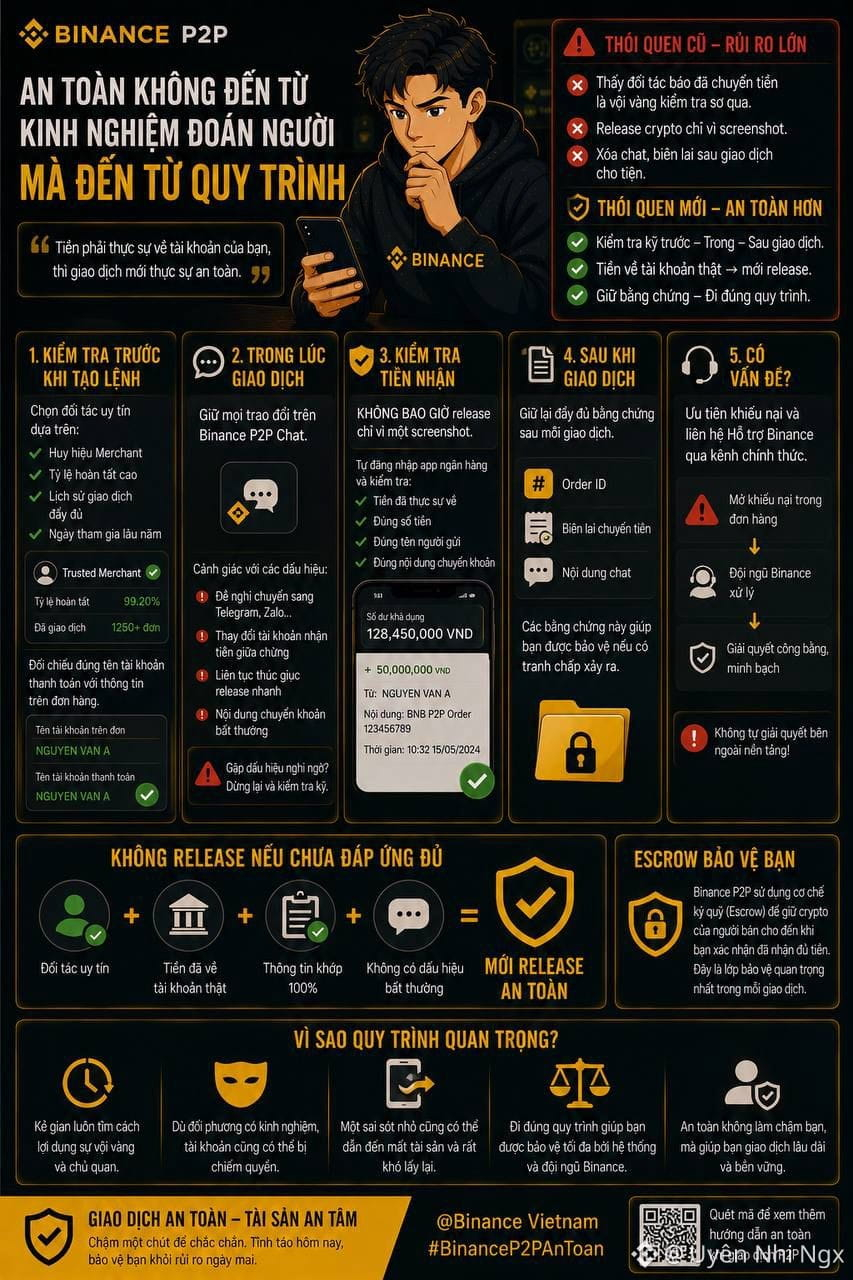
Now, before every order, I review the counterparty’s profile, the completion rate, and the transaction history. More importantly, I verify that the payment account name matches the information on the order.
During the trade, I keep everything on Binance. If the counterparty suggests moving it to Telegram, changing the receiving account mid-way, or constantly pushing me to release quickly, I stop and pause.
And I never release based solely on a screenshot. The money has to truly show up in my account for the transaction to continue.
Another lesson I learned is: don’t delete the evidence after the transaction is done. I keep the Order ID, the receipt, and the chat content. If anything is unclear, I prioritize filing a dispute and contacting Support instead of handling it externally on my own.
The more I trade on P2P, the safer I feel—but that safety doesn’t come from guessing people’s intentions. It comes from not skipping the process.
There was a habit I used to think was nothing serious: when my counterparty said the transfer had been made, I would quickly open my banking app to check and then release the crypto.
After a few transactions, I realized that the “checking” part is actually where the easiest mistakes happen.
Now, before every order, I review the counterparty’s profile, the completion rate, and the transaction history. More importantly, I verify that the payment account name matches the information on the order.
During the trade, I keep everything on Binance. If the counterparty suggests moving it to Telegram, changing the receiving account mid-way, or constantly pushing me to release quickly, I stop and pause.
And I never release based solely on a screenshot. The money has to truly show up in my account for the transaction to continue.
Another lesson I learned is: don’t delete the evidence after the transaction is done. I keep the Order ID, the receipt, and the chat content. If anything is unclear, I prioritize filing a dispute and contacting Support instead of handling it externally on my own.
The more I trade on P2P, the safer I feel—but that safety doesn’t come from guessing people’s intentions. It comes from not skipping the process.