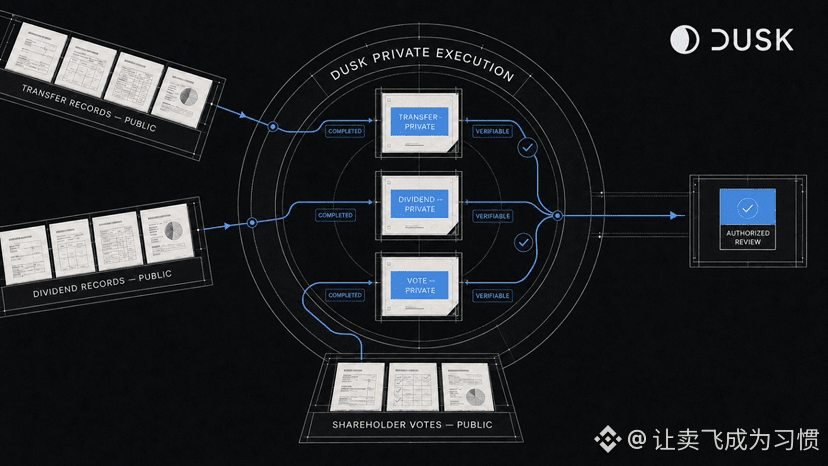
Just finished scrolling the Dusk node browser top to bottom. Blocks are continuous, consensus hasn’t stopped, and settlement is still running. Both Moonlight and Phoenix are already attached to this native L1. When I close the page, I’m actually more clear-headed: the chain is running, but between it and the real, usable business there’s still a distance that many people today are too lazy to measure. Dusk EVM is still rotating on the testnet, Hedger is still filling it in, and Dusk Trade is still too early to pull out for acceptance testing. The toolchain moving forward by a step is real—but even if the document numbered @Dusk is arranged neatly, it can’t conjure the depth in the order book. It’s more like an instrument prepared for regulated funds: it’s powered on and has completed a no-load self-test, but real samples haven’t been put in yet; continuous batch runs and reconciliation haven’t been proven in external conditions. The indicator light is green, so you can’t estimate how much it could take in based on mass-production standards. #dusk $BTC
When the market is good, it’s easiest to mistake yet another module just gone live for something already mature. On Dusk, there still isn’t decent real成交 visible on-chain, and stable fees are out of the question. $DUSK Its foundation has been laid more solidly than most chains, and the line for compliant privacy hasn’t gone off track—but digging the canal and letting the water rise on its own are never the same thing. Dusk EVM needs to be cut over to the mainnet, and it has to be external projects that truly deploy the contracts and run them; Hedger needs to produce real market-making activity that others can verify; slippage and the risk-control line must stand up to being flipped through and examined; Dusk Trade must at least complete one full cycle of asset dispatch, then settlement, and finally exit. No matter how beautiful the drawings are, in the end you have to see whether there’s a bottleneck in the middle—from dispatching the transaction to getting the money back. No-load records shouldn’t be counted toward the already-delivered portion.
When the market is good, it’s easiest to mistake yet another module just gone live for something already mature. On Dusk, there still isn’t decent real成交 visible on-chain, and stable fees are out of the question. $DUSK Its foundation has been laid more solidly than most chains, and the line for compliant privacy hasn’t gone off track—but digging the canal and letting the water rise on its own are never the same thing. Dusk EVM needs to be cut over to the mainnet, and it has to be external projects that truly deploy the contracts and run them; Hedger needs to produce real market-making activity that others can verify; slippage and the risk-control line must stand up to being flipped through and examined; Dusk Trade must at least complete one full cycle of asset dispatch, then settlement, and finally exit. No matter how beautiful the drawings are, in the end you have to see whether there’s a bottleneck in the middle—from dispatching the transaction to getting the money back. No-load records shouldn’t be counted toward the already-delivered portion.