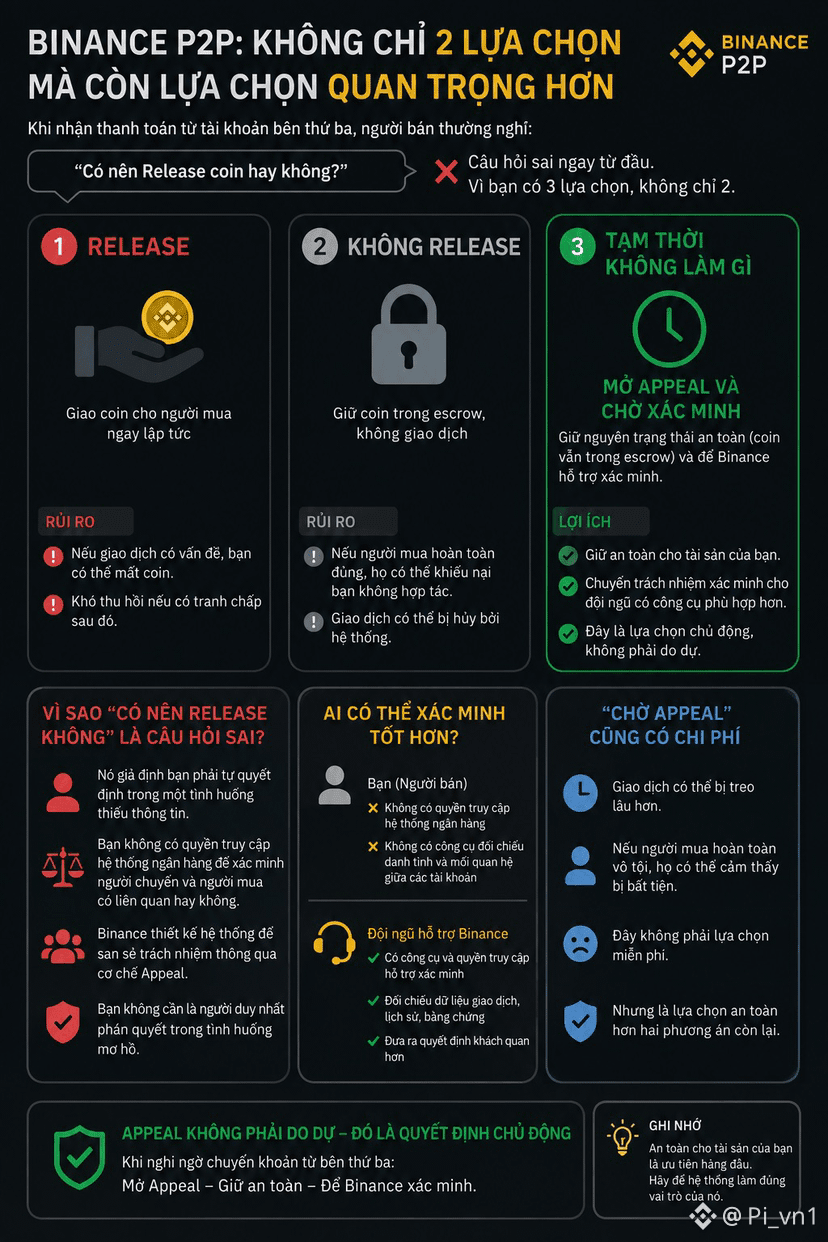
I notice something notable about how the “sender name mismatch” situation on Binance P2P can be viewed not only from a transaction perspective, but from the standpoint of individual responsibility: even if the seller is unintentionally at fault, they are still in a position where they must consider their own responsibility if there is a problem with the funds—not just the buyer’s responsibility.
If a seller releases coins for a transaction and it is later determined that the source of the funds is problematic, whether they knew in advance about the sender-name mismatch can become a factor to be considered. Two scenarios differ in terms of personal responsibility: a seller who detected the anomaly but still chose to release, versus someone who had absolutely no idea. Even if the final outcome is identical, the sense of responsibility is not.
That is why proactively opening an Appeal as soon as an anomaly is discovered protects not only from a transaction standpoint, but also creates a record showing that the seller acted responsibly when they noticed an issue, instead of ignoring it. This record has value not only internally within Binance, but could also matter if the situation escalates to the point where external authorities need to be involved.
Self-reflection: this is a cautious, somewhat pessimistic viewpoint—because in most cases, a name mismatch is actually just a harmless mistake. Therefore, this approach shouldn’t lead sellers to panic excessively about every similar transaction.
I’m waiting to see whether Binance P2P clarifies the extent of the seller’s responsibility in these situations, so users can correctly understand the boundary between reasonable caution and excessive worry.
#binancep2pantoan @Binance Vietnam #btc
If a seller releases coins for a transaction and it is later determined that the source of the funds is problematic, whether they knew in advance about the sender-name mismatch can become a factor to be considered. Two scenarios differ in terms of personal responsibility: a seller who detected the anomaly but still chose to release, versus someone who had absolutely no idea. Even if the final outcome is identical, the sense of responsibility is not.
That is why proactively opening an Appeal as soon as an anomaly is discovered protects not only from a transaction standpoint, but also creates a record showing that the seller acted responsibly when they noticed an issue, instead of ignoring it. This record has value not only internally within Binance, but could also matter if the situation escalates to the point where external authorities need to be involved.
Self-reflection: this is a cautious, somewhat pessimistic viewpoint—because in most cases, a name mismatch is actually just a harmless mistake. Therefore, this approach shouldn’t lead sellers to panic excessively about every similar transaction.
I’m waiting to see whether Binance P2P clarifies the extent of the seller’s responsibility in these situations, so users can correctly understand the boundary between reasonable caution and excessive worry.
#binancep2pantoan @Binance Vietnam #btc