#dusk $DUSK @Dusk Yesterday, I met an old classmate for the first time in a year.
We started talking about his job, and one thing he told me made me think about how easily a financial transaction can look “done” before the actual exchange is complete.
I started looking at tokenized markets through that lens.
A token can be issued.
A trade can be agreed.
But neither necessarily means the financial exchange has settled.
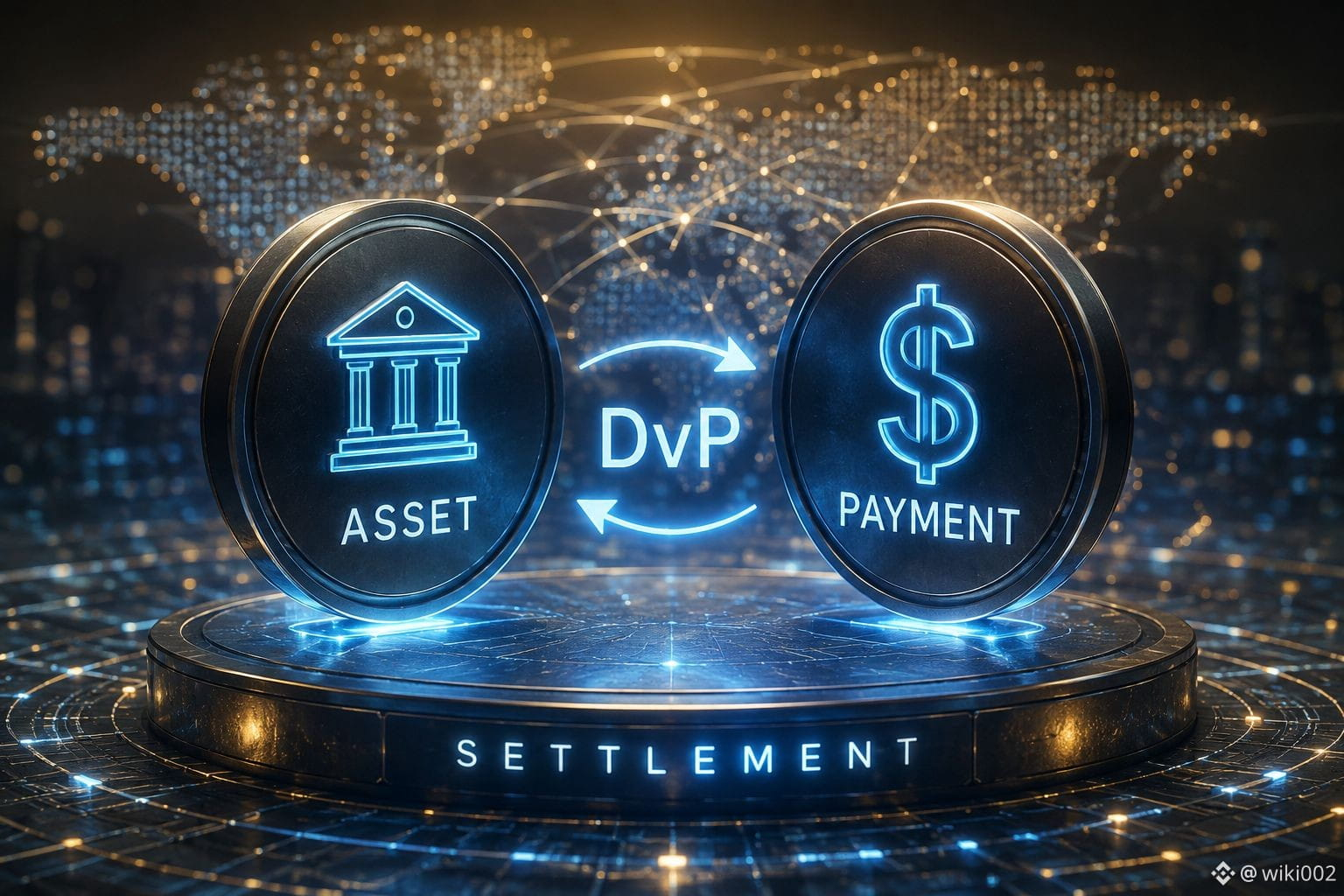
What I find important here is that two things still have to happen:
The buyer receives the asset.
The seller receives the payment.
The critical question is whether those two events can be coordinated so that one side does not complete while the other remains pending.
That is the logic behind delivery-versus-payment.
If the asset moves first, the seller carries payment risk.
If payment moves first, the buyer carries delivery risk.
If both depend on separate systems and intermediaries, the transaction is only as synchronized as those systems allow.
This is where I think atomic execution becomes important.
The goal is not simply to record that a trade happened.
It is to make the exchange itself capable of reaching a clearly defined final state:
asset delivered + payment delivered.
The more I looked at Dusk in the context of regulated financial markets, the more this distinction stood out to me.
Putting an asset on-chain is only the beginning.
The real financial utility appears when the infrastructure can coordinate the exchange around that asset with less dependence on fragmented settlement processes.
That is why I keep coming back to one question:
Can the financial exchange around that
token reach final settlement as one
coordinated event? ⚖️
Tokenization creates the representation.
Settlement creates the completed transaction.
#Settlement #DvP #DigitalAssets #Blockchain
We started talking about his job, and one thing he told me made me think about how easily a financial transaction can look “done” before the actual exchange is complete.
I started looking at tokenized markets through that lens.
A token can be issued.
A trade can be agreed.
But neither necessarily means the financial exchange has settled.
What I find important here is that two things still have to happen:
The buyer receives the asset.
The seller receives the payment.
The critical question is whether those two events can be coordinated so that one side does not complete while the other remains pending.
That is the logic behind delivery-versus-payment.
If the asset moves first, the seller carries payment risk.
If payment moves first, the buyer carries delivery risk.
If both depend on separate systems and intermediaries, the transaction is only as synchronized as those systems allow.
This is where I think atomic execution becomes important.
The goal is not simply to record that a trade happened.
It is to make the exchange itself capable of reaching a clearly defined final state:
asset delivered + payment delivered.
The more I looked at Dusk in the context of regulated financial markets, the more this distinction stood out to me.
Putting an asset on-chain is only the beginning.
The real financial utility appears when the infrastructure can coordinate the exchange around that asset with less dependence on fragmented settlement processes.
That is why I keep coming back to one question:
Can the financial exchange around that
token reach final settlement as one
coordinated event? ⚖️
Tokenization creates the representation.
Settlement creates the completed transaction.
#Settlement #DvP #DigitalAssets #Blockchain