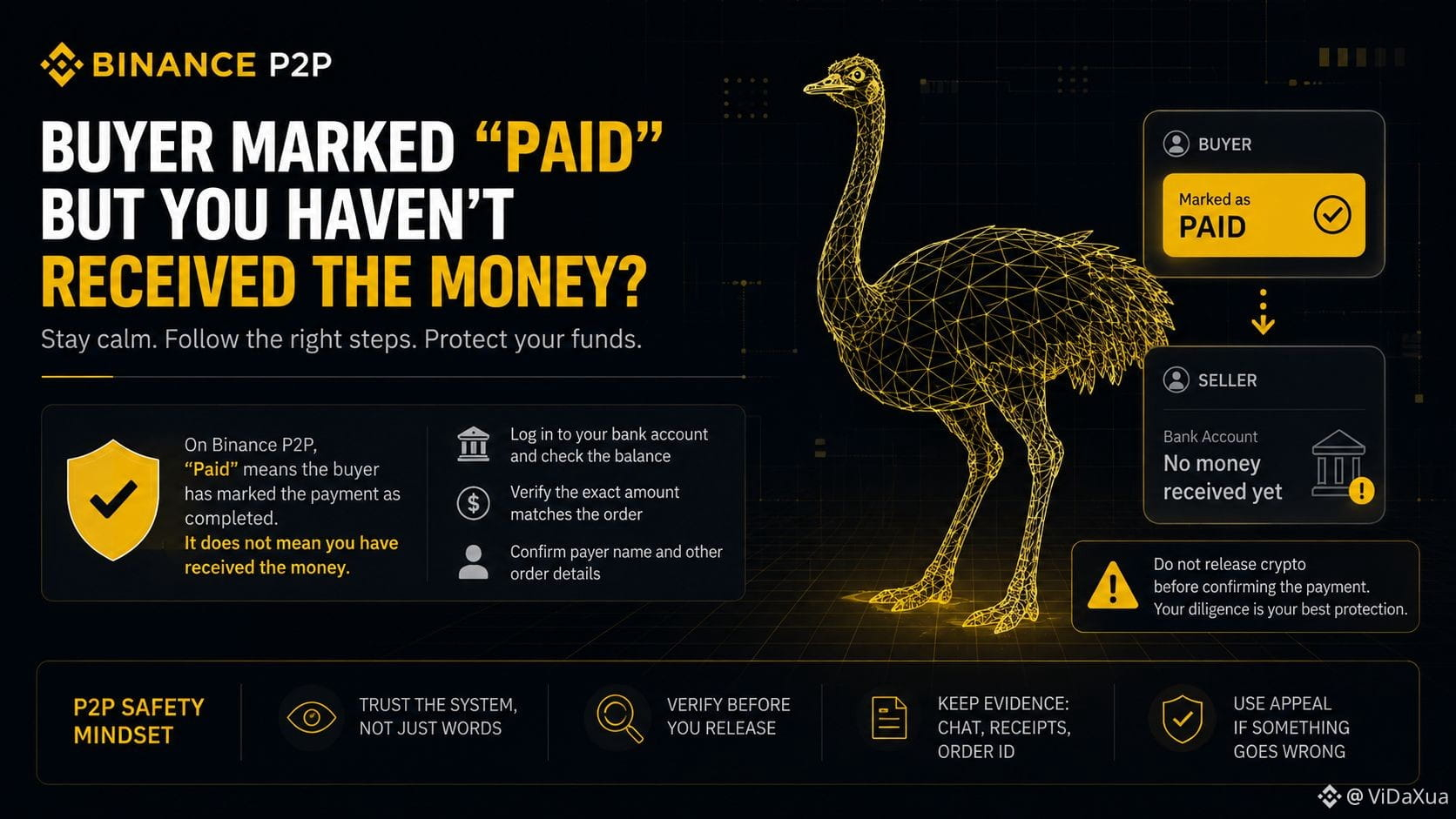
I used to think that simply seeing the status “Paid” on Binance P2P was enough to feel secure while waiting for the next step. But the more I observed, the more I realized that understanding the issue that way oversimplifies it.
According to Binance’s guidance, the seller still needs to confirm that the payment has actually been received before releasing the crypto. So the problem isn’t with the “Paid” button itself, but with the gap between a signal on the system and the real money in the bank account.
It sounds fairly convincing to think that the “Paid” status reflects a completed transaction. However, it’s still only one step in the process. Binance also emphasizes verifying that the funds have been received before releasing.
I gradually realized that a safer mental model isn’t about “trusting or not trusting the buyer,” but about reducing the amount of trust that needs to be used. It’s not that notifications are proof; rather, proof must be cross-checked with the amount, the payer, and the Order information.
It seems the friction here isn’t what slows the trade down, but a protective layer against reckless behavior.
Still, I can’t help but wonder: if a signal can appear before reality, then how many other details might users be inadvertently overlooking?
#binancep2pantoan @Binance Vietnam $BTC