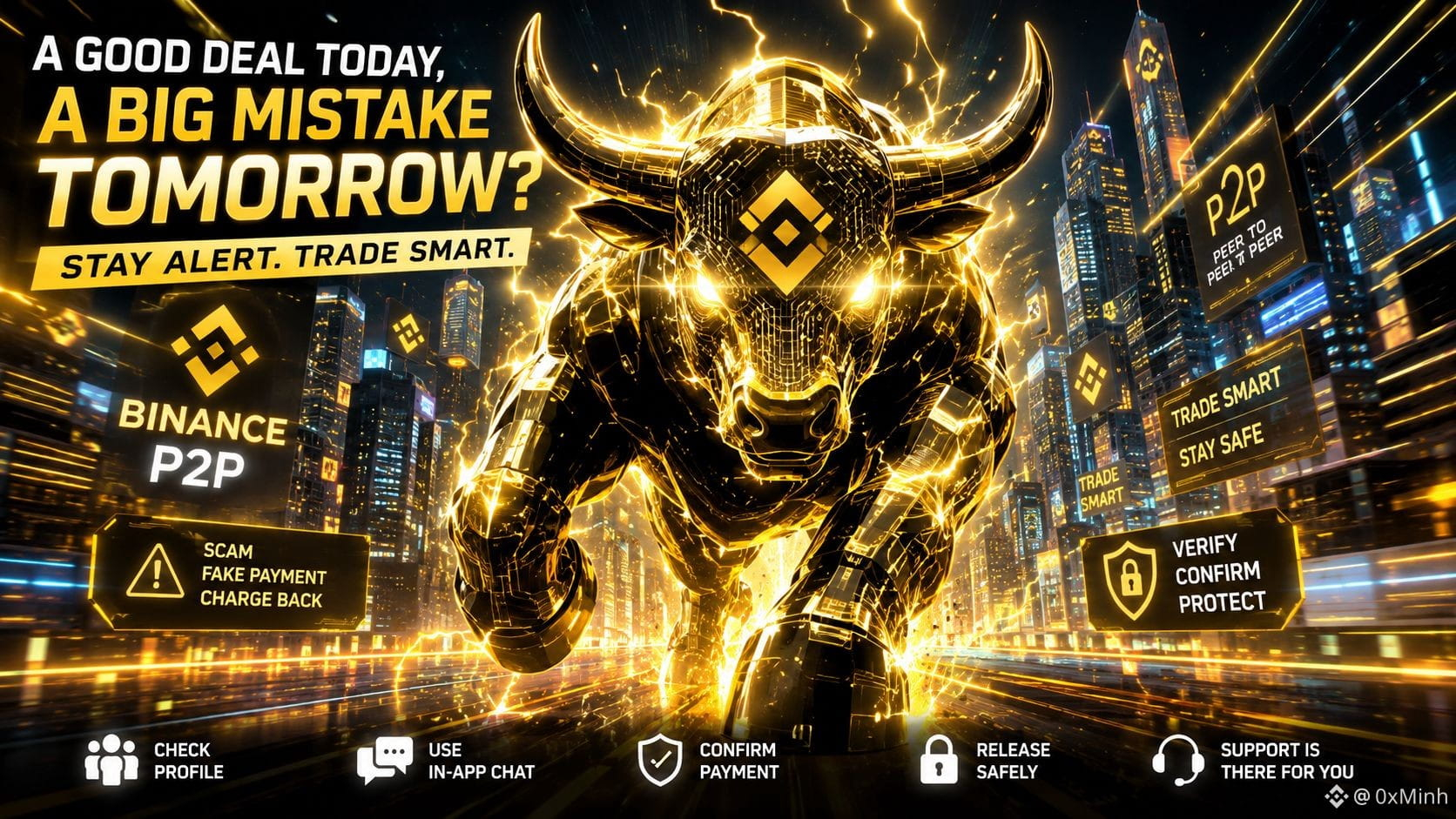
Previously, I often thought that a smooth transaction also reflected the trustworthiness of the other party. If the buyer paid correctly and the transaction completed, I almost automatically assumed that everything afterward would be fine and nothing to worry about—until a recent Binance P2P transaction made me rethink that.
I remember that I sold 500 USDT, and the buyer paid normally. While I was checking the money at the bank, they started asking whether I usually trade crypto. Then they introduced a new project and wanted to get my phone number and Telegram so they could talk privately.
At first, I didn’t think it was a big issue, but then I realized that invitation was completely outside the scope of the transaction taking place.
I didn’t know whether the project they wanted to introduce was good or bad, so I didn’t judge it—and I also didn’t share a phone number or Telegram. I went back to check exactly what needed checking: the actual received amount, the sender information, and then only after that did I confirm completion. Before that, the 500 USDT was still held by the system in Escrow until I confirmed.
What I take away isn’t that I should suspect every buyer, but that you shouldn’t use a valid transaction to generalize about other things.
The fact that the buyer transferred the correct amount only confirms that this transaction followed the proper process; it doesn’t help me evaluate the project they just introduced.
So, I still keep the chat log, the transaction code, and any documents in case there’s an issue that needs to be disputed or I need to contact Binance P2P support.
From this experience, I remind myself that for matters outside the transaction, it’s probably better to keep a bit of skepticism and verify for myself before trusting.
#binancep2pantoan @Binance Vietnam $BTC
I remember that I sold 500 USDT, and the buyer paid normally. While I was checking the money at the bank, they started asking whether I usually trade crypto. Then they introduced a new project and wanted to get my phone number and Telegram so they could talk privately.
At first, I didn’t think it was a big issue, but then I realized that invitation was completely outside the scope of the transaction taking place.
I didn’t know whether the project they wanted to introduce was good or bad, so I didn’t judge it—and I also didn’t share a phone number or Telegram. I went back to check exactly what needed checking: the actual received amount, the sender information, and then only after that did I confirm completion. Before that, the 500 USDT was still held by the system in Escrow until I confirmed.
What I take away isn’t that I should suspect every buyer, but that you shouldn’t use a valid transaction to generalize about other things.
The fact that the buyer transferred the correct amount only confirms that this transaction followed the proper process; it doesn’t help me evaluate the project they just introduced.
So, I still keep the chat log, the transaction code, and any documents in case there’s an issue that needs to be disputed or I need to contact Binance P2P support.
From this experience, I remind myself that for matters outside the transaction, it’s probably better to keep a bit of skepticism and verify for myself before trusting.
#binancep2pantoan @Binance Vietnam $BTC