I used to glance at a trading profile for maybe 2 seconds before confirming an order on Binance P2P. These days I do not move that fast.
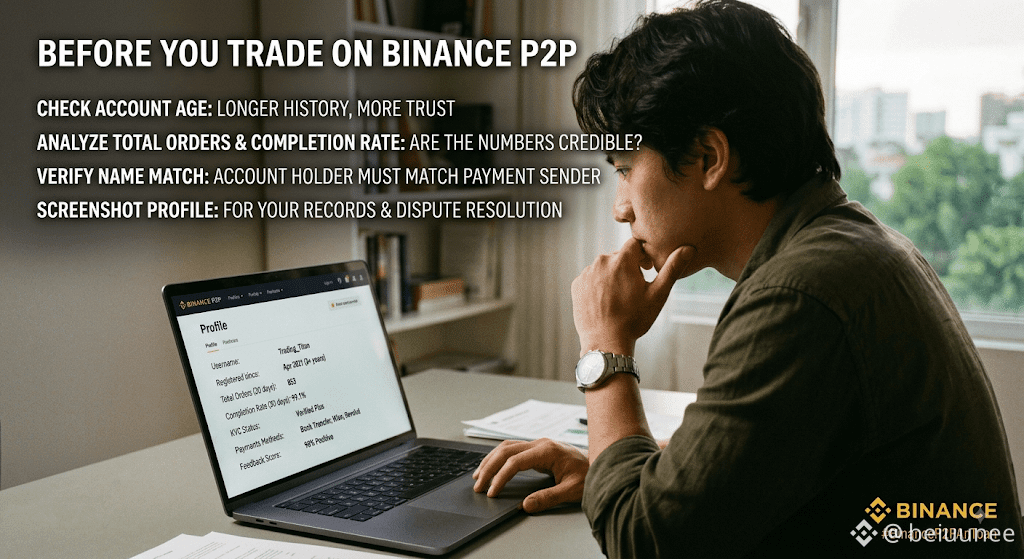
A profile on Binance P2P carries more information than it first appears to. Account age tells you whether you are dealing with someone who has built a track record or someone who registered yesterday. Completion rate and total number of orders matter together, not separately, since a high percentage on only 3 trades means far less than the same percentage across 300. Binance P2P also runs KYC on every user, holds the seller's crypto in escrow until payment is confirmed, and keeps every exchange inside a chat log that both sides and support can reference later. Reading a profile properly means checking whether the name tied to the account matches the name on any payment received, since a mismatch is one of the fastest ways to catch a stolen account or a third party payment scheme before it becomes a real problem.
I once nearly completed a large trade with an account that had been open for less than a week, offering a rate that beat the market by a wide margin. It looked appealing until I noticed the payment would be coming from a name that did not match the registered account holder at all. I canceled and reported it. My habit now is simple: open the profile before opening the order, check the account age and order history together, confirm the paying name matches, and screenshot the profile itself for my own records in case a dispute comes up later. If anything about a profile looks inconsistent, I reach out to Binance support before going any further, rather than trading first and asking questions after. A few extra seconds spent reading a profile properly costs nothing next to the alternative, and over time that habit has become as automatic as checking the price itself before placing an order.
#binancep2pantoan @Binance Vietnam $PORTAL
A profile on Binance P2P carries more information than it first appears to. Account age tells you whether you are dealing with someone who has built a track record or someone who registered yesterday. Completion rate and total number of orders matter together, not separately, since a high percentage on only 3 trades means far less than the same percentage across 300. Binance P2P also runs KYC on every user, holds the seller's crypto in escrow until payment is confirmed, and keeps every exchange inside a chat log that both sides and support can reference later. Reading a profile properly means checking whether the name tied to the account matches the name on any payment received, since a mismatch is one of the fastest ways to catch a stolen account or a third party payment scheme before it becomes a real problem.
I once nearly completed a large trade with an account that had been open for less than a week, offering a rate that beat the market by a wide margin. It looked appealing until I noticed the payment would be coming from a name that did not match the registered account holder at all. I canceled and reported it. My habit now is simple: open the profile before opening the order, check the account age and order history together, confirm the paying name matches, and screenshot the profile itself for my own records in case a dispute comes up later. If anything about a profile looks inconsistent, I reach out to Binance support before going any further, rather than trading first and asking questions after. A few extra seconds spent reading a profile properly costs nothing next to the alternative, and over time that habit has become as automatic as checking the price itself before placing an order.
#binancep2pantoan @Binance Vietnam $PORTAL