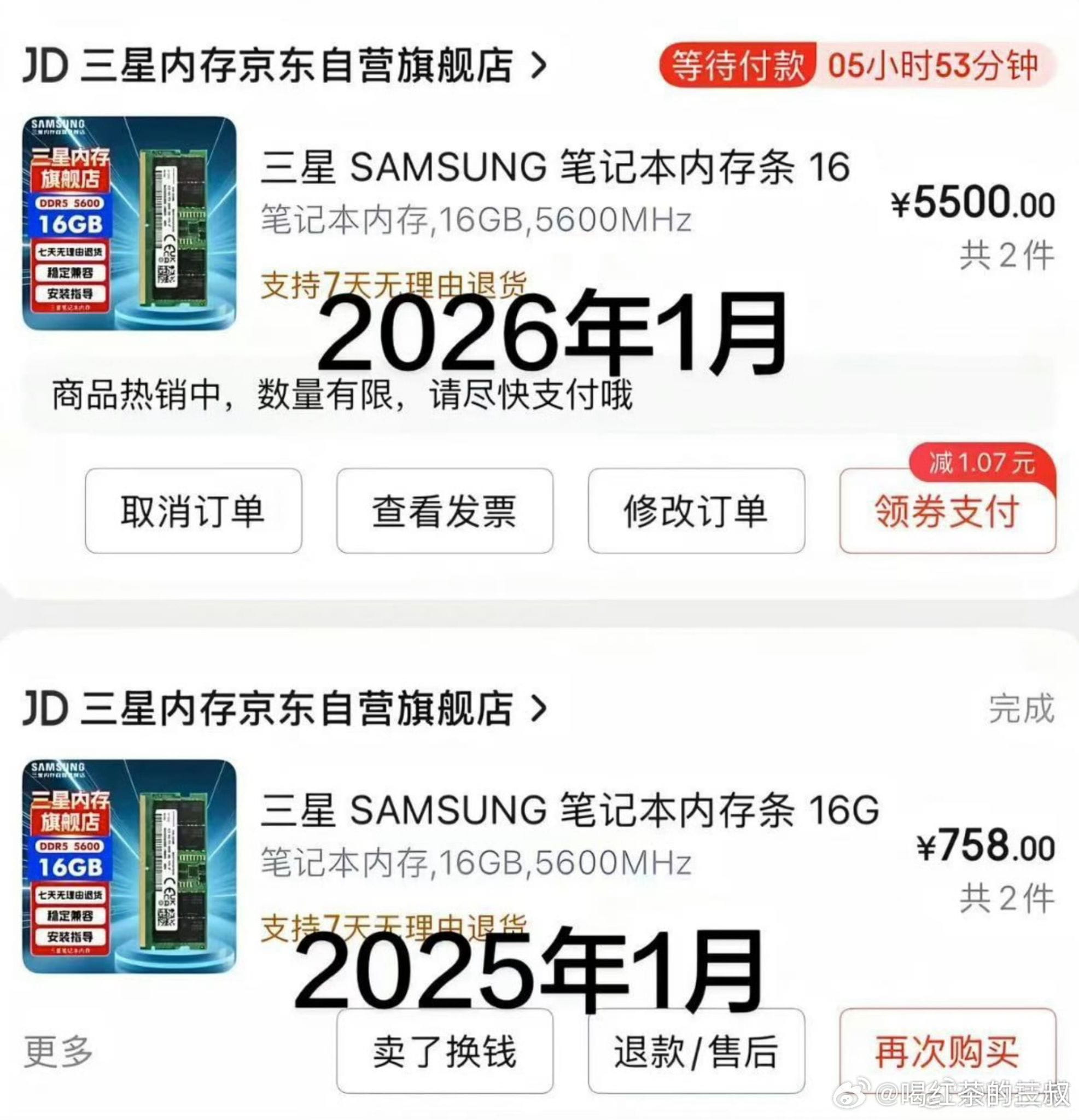
The reason this image is so striking is not due to exaggeration, but because it is brutally real: the same Samsung 16G DDR5 memory stick, within a year, has seen its price jump from 758 yuan to 5500 yuan, with an increase not at the inflation level, but at the financial asset level. You thought you were buying computer components, but what you actually hold is 'hardware futures'.
On the surface, this is the result of supply and demand imbalance, capacity allocation, and AI servers occupying production lines; but looking deeper, it is a reflection of the recalibration of physical resources in the era of computing power. Memory is no longer just an accessory of consumer electronics, but the core consumable of the computing power system—AI does not consume emotions, does not tell stories, it only consumes video memory and RAM, and it consumes tons of it.
Ironically, most people are completely unprepared for this change. In the past, wealth was measured by real estate, gold, and stocks; now it may require an additional criterion: do you have computing power hard currency in hand? When capital, models, and data can all be virtualized, what truly becomes a bottleneck are these seemingly 'most ordinary' industrial components.
Thus, the absurdity of this screenshot does not stem from the price, but from the cognitive gap: the old world is still discussing consumption upgrades, while the new world is already pricing the future with memory sticks.
In summary: when memory sticks start to be priced like gold, what is truly scarce is no longer money, but access to computing power.
On the surface, this is the result of supply and demand imbalance, capacity allocation, and AI servers occupying production lines; but looking deeper, it is a reflection of the recalibration of physical resources in the era of computing power. Memory is no longer just an accessory of consumer electronics, but the core consumable of the computing power system—AI does not consume emotions, does not tell stories, it only consumes video memory and RAM, and it consumes tons of it.
Ironically, most people are completely unprepared for this change. In the past, wealth was measured by real estate, gold, and stocks; now it may require an additional criterion: do you have computing power hard currency in hand? When capital, models, and data can all be virtualized, what truly becomes a bottleneck are these seemingly 'most ordinary' industrial components.
Thus, the absurdity of this screenshot does not stem from the price, but from the cognitive gap: the old world is still discussing consumption upgrades, while the new world is already pricing the future with memory sticks.
In summary: when memory sticks start to be priced like gold, what is truly scarce is no longer money, but access to computing power.