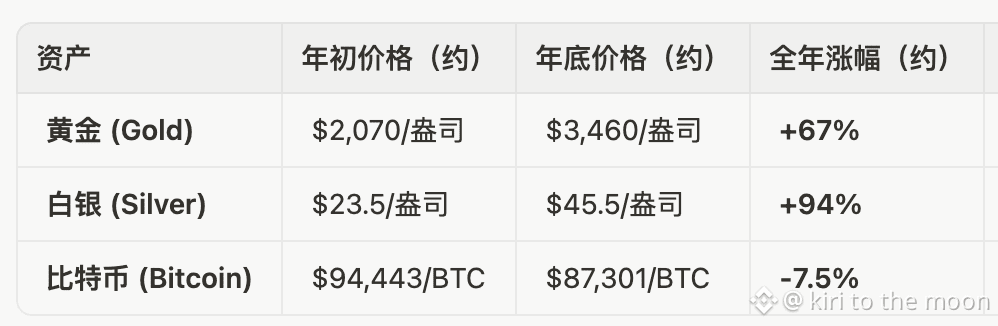
The asset market throughout 2025 shows significant differentiation, with traditional safe-haven assets like gold and silver performing strongly, rising 67% and 94%, respectively.
The strong performance of gold and silver is mainly attributed to the 'perfect storm' of the macro environment in 2025, while Bitcoin has failed to benefit from it.
1. Macroeconomic Drivers of Gold and Silver
Start of the Federal Reserve's rate-cutting cycle: In 2025, the Federal Reserve began lowering interest rates, with the federal funds rate targeting a range of 3.50%–3.75% by the end of the year. The decline in real yields is the primary driver behind the rise in gold prices, as it reduces the opportunity cost of holding non-yielding assets (like gold).
Geopolitical risks and central bank gold purchases: Ongoing global geopolitical tensions have prompted central banks worldwide to continue large-scale purchases of gold as a reserve asset to hedge against dollar risks. This structural sovereign demand provides solid bottom support for gold.
Surge in industrial demand for silver: Silver is not only a precious metal but also an important industrial metal. With the acceleration of global investments in green energy technologies such as solar energy and electric vehicles, the industrial demand for silver experienced a structural shortage in 2025, driving its price increase beyond that of gold.
2. Macroeconomic Decoupling of Bitcoin and Sensitivity to Liquidity
Failure of the 'digital gold' narrative: Against the macro backdrop of rising traditional safe-haven assets, Bitcoin has failed to rise in tandem, indicating that investors still prioritize gold over Bitcoin when seeking true safety and policy hedging.
Lagging effects of tightening liquidity: Although the Federal Reserve began cutting interest rates, the global liquidity environment did not immediately ease enough to support a significant rise in high-risk assets. Bitcoin's sensitivity to liquidity conditions and risk appetite is much higher than that of gold, showing stronger selling pressure during year-end liquidity exhaustion.
In 2025, Bitcoin's price increase lagged behind that of gold and silver, primarily due to the misalignment of macro drivers and the differentiation of asset characteristics. This differentiation indicates that the market is reallocating roles among these three assets: gold as the main macro hedging tool, silver as an industrial and speculative accelerator, while Bitcoin resembles a highly liquid, high-risk tech stock, requiring favorable liquidity conditions to achieve significant price increases #BTC走势分析
The strong performance of gold and silver is mainly attributed to the 'perfect storm' of the macro environment in 2025, while Bitcoin has failed to benefit from it.
1. Macroeconomic Drivers of Gold and Silver
Start of the Federal Reserve's rate-cutting cycle: In 2025, the Federal Reserve began lowering interest rates, with the federal funds rate targeting a range of 3.50%–3.75% by the end of the year. The decline in real yields is the primary driver behind the rise in gold prices, as it reduces the opportunity cost of holding non-yielding assets (like gold).
Geopolitical risks and central bank gold purchases: Ongoing global geopolitical tensions have prompted central banks worldwide to continue large-scale purchases of gold as a reserve asset to hedge against dollar risks. This structural sovereign demand provides solid bottom support for gold.
Surge in industrial demand for silver: Silver is not only a precious metal but also an important industrial metal. With the acceleration of global investments in green energy technologies such as solar energy and electric vehicles, the industrial demand for silver experienced a structural shortage in 2025, driving its price increase beyond that of gold.
2. Macroeconomic Decoupling of Bitcoin and Sensitivity to Liquidity
Failure of the 'digital gold' narrative: Against the macro backdrop of rising traditional safe-haven assets, Bitcoin has failed to rise in tandem, indicating that investors still prioritize gold over Bitcoin when seeking true safety and policy hedging.
Lagging effects of tightening liquidity: Although the Federal Reserve began cutting interest rates, the global liquidity environment did not immediately ease enough to support a significant rise in high-risk assets. Bitcoin's sensitivity to liquidity conditions and risk appetite is much higher than that of gold, showing stronger selling pressure during year-end liquidity exhaustion.
In 2025, Bitcoin's price increase lagged behind that of gold and silver, primarily due to the misalignment of macro drivers and the differentiation of asset characteristics. This differentiation indicates that the market is reallocating roles among these three assets: gold as the main macro hedging tool, silver as an industrial and speculative accelerator, while Bitcoin resembles a highly liquid, high-risk tech stock, requiring favorable liquidity conditions to achieve significant price increases #BTC走势分析