

Let me talk about the recently popular project STONKBROKER. It launched on July 18, and in less than a month its market cap has already surpassed $89 million. After taking a look at the whole project, I feel it’s still relatively creative. Although the level of innovation isn’t that high, compared to the current crypto scene—which is like stagnant water—it’s already considered “standing out among the short.”
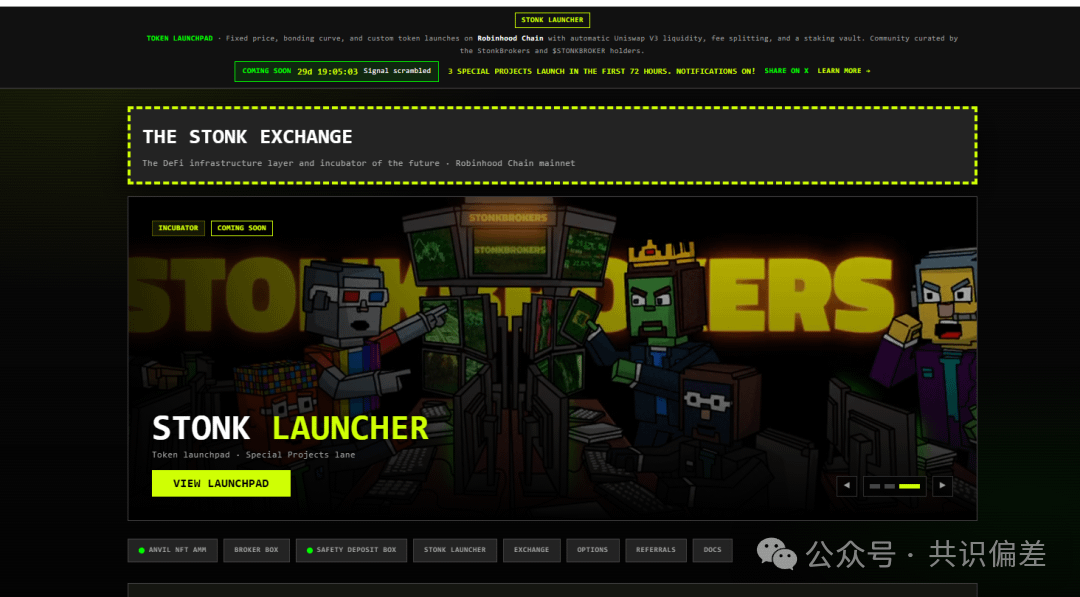
Stonkbroker is an NFT project on the Robinhood chain. At the time of its launch, it minted 4,444 NFTs—each NFT has its own wallet. It’s an ERC-6551 NFT.
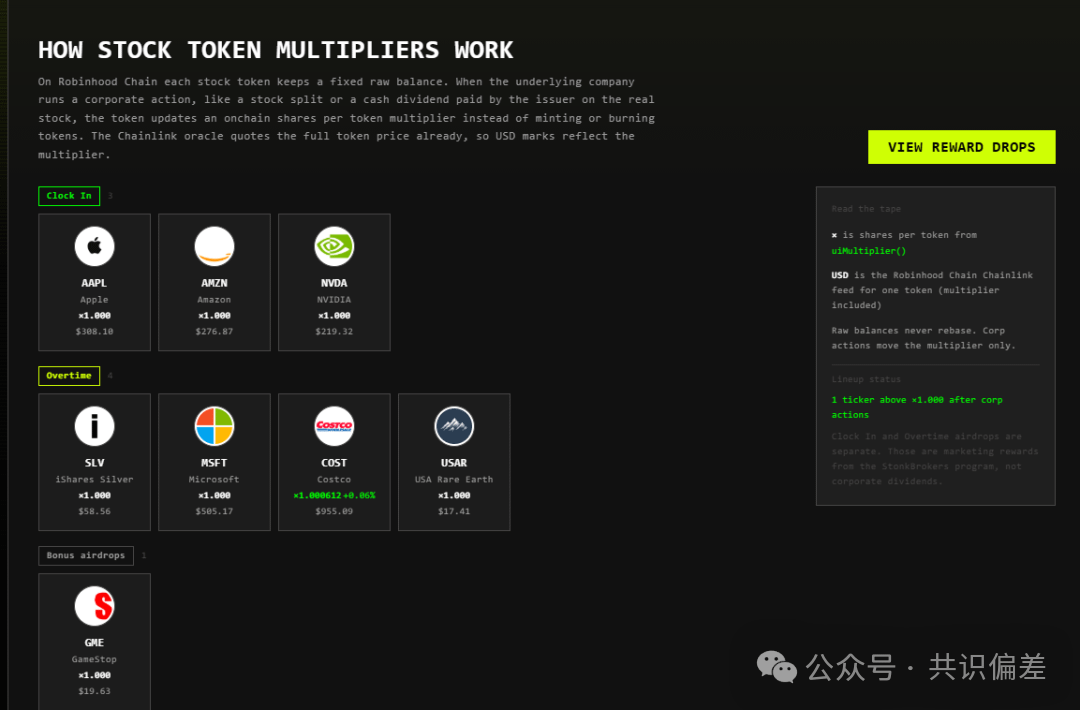
One of the most interesting things about this project is that it’s not just an NFT—it can also receive various assets, such as tokens, on-chain stocks, on-chain earnings, DeFi, and other玩法. Where it’s hottest right now is this: if you hold the NFT, the official will send your NFT wallet a certain amount of U.S.-stock tokens, like TSLA, AAPL, and AMZN (AMAZ) stocks.
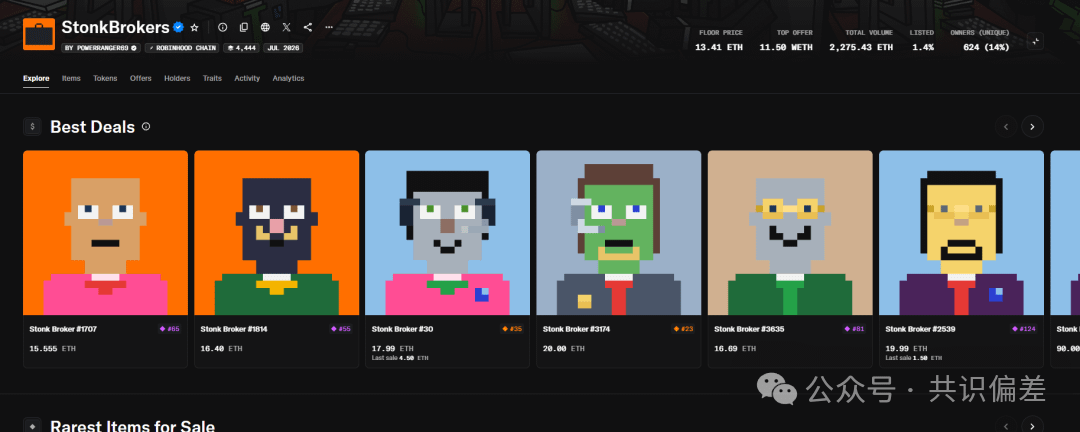
At the time of issuance, this NFT could be exchanged on the official website for 666,666 $stonk tokens + a certain amount of ETH gas to mint the NFT. Currently on OpenSea, one is selling for 15-20 ETH, and the most expensive one sold for 90 ETH.
After buying the NFT, you need to activate the rewards. It is divided into multiple tiers here: the lowest tier requires 66,666 tokens and gives 1x airdrop rewards, while the highest T4 tier gives 3.3x airdrop rewards, but requires spending 1.66 million tokens.
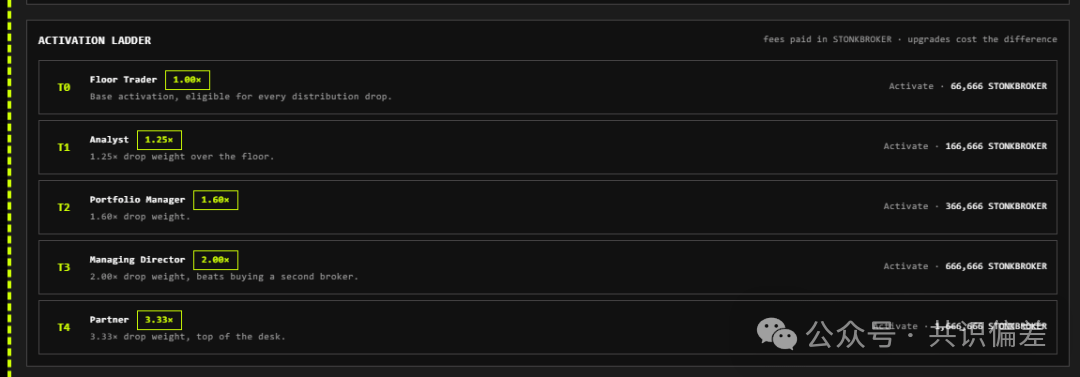
Then once this NFT is sold, it needs to be reactivated before rewards can be claimed again. In other words, the tokenomics design has a “deflationary” mechanism.
Then the project uses 5% of NFT trading fees to buy on-chain stocks, which are used for the system’s airdrops. So here it builds a positive flywheel: the more NFT trading there is, the more fees are generated, and the more buyback rewards there are, which can stimulate the NFT price to rise. Then more tokens are consumed as well, so you can see that in less than a month, the price of the stonk token increased by 50 times.
Current Product Lines
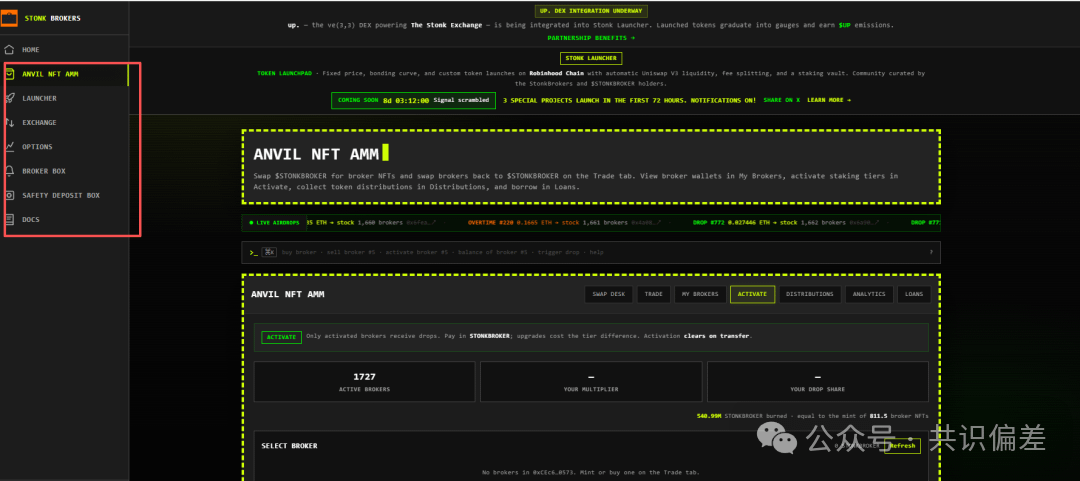
1. ANVIL AMM: currently the core function, can be used for swap, trade, activation, lending, and other gameplay
2. SoknkLauncher: launched on August 11, enabling others to issue assets as well and enrich its ecosystem.
Why can the project become popular?
I think stonk hit three narratives at once: meme + Robinhood + tokenized stocks. First, the Robin ecosystem has indeed been very popular recently, and meme has also continued to be hot. Combined with a formalized U.S. stock token catalyst, the project suddenly went viral.
Risk Points
But I still think the project has risk points. The cycle-driven model looks impressive: NFTs are traded to buy on-chain U.S. stocks, and NFT holders receive airdrops. Then the NFT price will keep rising, and no one will want to sell. Holding an NFT is like holding a golden shovel. The NFT price rises and you profit, and you also profit from the airdrops, so why sell?
If it doesn’t get sold, no fees are generated, and then there are no airdrops. Of course, some people may see that there is no airdrop income, so they sell the NFT. But that turns it into a game of strategy among holders. For example, I can just hold on, let others sell first, and then I take the rewards.
So this mechanism may hinder the circulation of NFTs.
To conclude, I think the project as a whole has some innovation, especially in its gameplay, bringing something new to the rather lifeless NFT market or crypto space. But at its core, it is still very meme-driven, because the current number of NFT holders is only in the hundreds, which is not conducive to expanding the user base later on. However, they are also building a launcher to see whether they can bring out more projects. The main reason NFTs have not been doing well is still that NFT supply is limited, so the number of participants is destined not to be as large as MEME coins.
Then the project overall is still at a very early stage. Although it has already risen dozens of times, the risks going forward are still very high.$ETH