#binancep2pantoan @Binance Vietnam
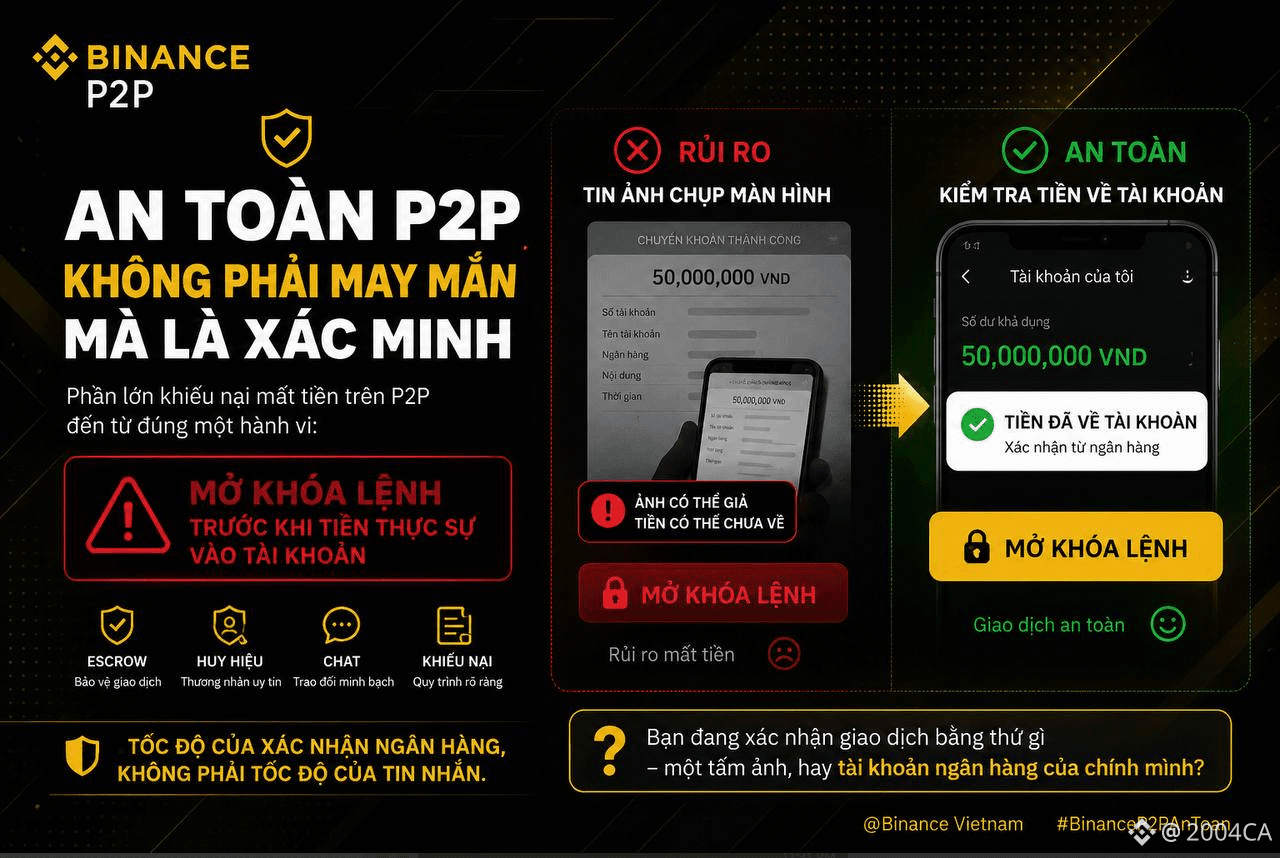
I started paying attention to P2P safety not because I read the regulations, but because of one simple number: most complaints about losing money on P2P don’t come from a system error—they come from one specific behavior: unlocking the order before the money actually reaches the account.
The issue isn’t whether the platform has Escrow or not. Binance P2P has had escrow mechanisms, merchant badges, a chat system, and an established dispute process for a long time. The problem is that users are still handling a financial transaction at the speed of a message—not at the speed of a bank confirmation.
But this is where things get a little more complicated. Not everyone does it recklessly on purpose. Most people simply trust a screenshot because the counterparty seems urgent, seems reliable, seems like “nothing can go wrong.” That’s not carelessness—that’s a natural reflex when a mandatory verification step is missing.
The question isn’t whether you trust the counterparty. The question is: what are you using to confirm the transaction—an image, or your own bank account?
I started paying attention to P2P safety not because I read the regulations, but because of one simple number: most complaints about losing money on P2P don’t come from a system error—they come from one specific behavior: unlocking the order before the money actually reaches the account.
The issue isn’t whether the platform has Escrow or not. Binance P2P has had escrow mechanisms, merchant badges, a chat system, and an established dispute process for a long time. The problem is that users are still handling a financial transaction at the speed of a message—not at the speed of a bank confirmation.
But this is where things get a little more complicated. Not everyone does it recklessly on purpose. Most people simply trust a screenshot because the counterparty seems urgent, seems reliable, seems like “nothing can go wrong.” That’s not carelessness—that’s a natural reflex when a mandatory verification step is missing.
The question isn’t whether you trust the counterparty. The question is: what are you using to confirm the transaction—an image, or your own bank account?